

You don’t need a full-strength cup of coffee to feel sharp. Lower-caffeine drinks like matcha, noncaffeinated botanicals like Zynamite and ginseng, and hybrid blends that pair a small dose of caffeine with calming compounds like L-theanine all deliver steadier alertness with far less jitter. Layer in mushroom or adaptogen coffee for a calmer lift, and keep stimulant intake light and early in the day.
TL;DR:
- Matcha and yerba mate provide a slower, steadier energy release compared to traditional coffee, with less risk of mid-afternoon crashes.
- Combining low-caffeine drinks with lifestyle habits like hydration and daylight exposure enhances long-term energy without relying solely on stimulants.
- Mushroom and adaptogen coffee blends offer moderate caffeine levels and promote calmer, sustained focus without the jitters associated with regular coffee.
- Natural compounds like Zynamite and ginseng support alertness through mechanisms different from caffeine, but proper dosing and interactions require careful consideration.
- Gradually reducing caffeine intake through tapering, pairing with calming compounds, and tracking individual responses improves sustainability of lower-stimulant routines.
Table of Contents
- Best Caffeine Alternatives to Try Today
- Why Some Alternatives Feel Steadier Than Coffee
- How to Pick the Right Alternative for Your Goals
- Why Mushroom and Adaptogen Coffee Works as a Middle Ground
- Potential Side Effects and Interactions of Caffeine Alternatives
- How to Gradually Reduce Your Caffeine Dependency
- My 7-Day Test to Find Your Best Alternative
- Try Emberk’s Mushroom Coffee as Your Next Swap
- Sources
- FAQ
Best Caffeine Alternatives to Try Today
Think of your energy like a campfire. Coffee throws a log of lighter fluid on it: a huge flame, then nothing. The alternatives below build a steadier burn instead.
- Matcha: Contains roughly 30 to 75 mg of caffeine per cup, less than half a typical brewed coffee, and it comes packaged with L-theanine, an amino acid that smooths out the stimulant curve. If you want focus that lasts through a long meeting without the mid-afternoon slump, matcha is one of the most reliable swaps you can make.
- Yerba mate or guayusa: These South American leaves deliver natural caffeine bound up with tannins and paired with theobromine, the same gentle stimulant found in cacao. The result is a slower release that tends to feel warmer and less jagged than drip coffee.
- Mushroom and adaptogen coffee blends: Lower-caffeine coffee infused with functional mushrooms like Lion’s Mane or Cordyceps trades some of the jolt for calm clarity, and it’s worth exploring if afternoon crashes are your main complaint rather than a lack of morning energy.
- Noncaffeinated botanicals: Zynamite (a standardized mango leaf extract), Panax ginseng, and isolated theobromine all support alertness through mechanisms that don’t touch your adenosine receptors the way caffeine does.
- Behavioral resets: Sixteen ounces of water, five minutes outside in daylight, a short walk, or a protein-forward snack. These sound too simple to matter, but a coherent body of research on energy and lifestyle habits finds these fundamentals produce the most consistent long-term energy gains of anything on this list.
Quick fact: A narrative review of natural performance compounds found that agents like guayusa, guarana, theobromine, cordyceps, and adaptogens can support cognitive and physical performance through pathways separate from caffeine’s, though the strength of evidence and effective dosing still varies a lot between studies.
For most people, the winning combination isn’t picking one item off this list. It’s stacking a lower-caffeine drink with one lifestyle habit, like hydrating before you reach for anything else. Start your morning with water before caffeine and you’ll often need less stimulant to feel the same lift.
Why Some Alternatives Feel Steadier Than Coffee
The difference comes down to how fast a compound hits your bloodstream and how long it stays active. Coffee’s caffeine absorbs quickly and peaks within 30 to 60 minutes, which is exactly why it spikes energy and then drops it. Tea-based sources like matcha and yerba mate bind caffeine to tannins, slowing absorption into something closer to a dimmer switch than a light switch.
L-theanine changes the picture further. It modulates the same alertness pathways caffeine activates, but it also calms the anxious edge that pure caffeine can bring. One controlled trial found that pairing about 97 mg of L-theanine with roughly 40 mg of caffeine improved both cognitive performance and how alert people felt versus a placebo.
Zynamite works through a different door entirely. Trade coverage of its clinical program describes it as a COMT enzyme inhibitor, which slows the breakdown of dopamine and norepinephrine so their effects on attention linger longer. That’s a mechanism caffeine doesn’t touch at all.
| Compound/approach | Onset | Duration | Crash risk |
|---|---|---|---|
| Coffee (caffeine) | Fast | several hours | Higher |
| Matcha (caffeine + L-theanine) | Moderate | several hours | Lower |
| Yerba mate/guayusa | Moderate, tannin-bound | several hours | Lower |
| Zynamite (mango leaf) | Moderate | Sustained via COMT inhibition | Low |
| Theobromine (cacao) | Slow | Longer, milder | Low |
How to Pick the Right Alternative for Your Goals
Match the tool to the problem you’re actually trying to solve. If jitters are your issue, look for anything paired with L-theanine or adaptogens rather than isolated caffeine. If sleep is the issue, shift your stimulant window earlier and lean on noncaffeinated botanicals after 2 p.m.
Read labels the way you’d read a nutrition panel on any other product:
- Check the actual milligrams of caffeine, not just “low caffeine” marketing language.
- Look for L-theanine or standardized adaptogen extracts listed by name, not buried in a proprietary blend.
- Watch added sugar content in flavored energy drinks marketed as “natural.”
You’ve basically got three paths: quit caffeine completely and switch to botanicals, run a hybrid approach that trims your caffeine dose while adding calming compounds, or keep coffee for big days and use alternatives situationally.
Pro Tip: If you’re pregnant, have a heart condition, or take medication affecting blood pressure or anxiety, talk to a clinician before adding new stimulant compounds, even “natural” ones like ginseng or Zynamite.
Why Mushroom and Adaptogen Coffee Works as a Middle Ground
Mushroom coffee blends lower-caffeine coffee with functional fungi like Lion’s Mane, Cordyceps, or Reishi, aiming for calm alertness instead of a jolt followed by a crash. Some mushroom coffee brands build their lines around six functional mushrooms with no fillers and source them sustainably, which matters if you’ve been burned by blends padded with cheap extenders.
- Expect a moderate caffeine level, noticeably lighter than drip coffee.
- Flavor is closer to a rich, earthy roast than anything medicinal.
- The realistic benefit is smoother focus and less anxious energy, not a caffeine-free miracle.
Potential Side Effects and Interactions of Caffeine Alternatives
Natural doesn’t automatically mean risk-free. Yerba mate and guayusa still contain real caffeine, so stacking them on top of your usual coffee can push you past a comfortable daily total even if each drink feels gentler on its own. Ginseng can interact with blood thinners and diabetes medications, and high doses of theobromine can cause stomach upset in sensitive people, similar to eating too much dark chocolate.
Novel stimulants deserve extra caution. Compounds like paraxanthine are being marketed as “no jitters, no crash” alternatives, but early human studies and expert commentary note they simply lack the decades of safety data caffeine has accumulated. Treat them the way you’d treat any new stimulant: start with a low dose, avoid combining several new compounds at once, and pay attention to your own sleep and heart rate.
L-theanine has one of the cleanest safety profiles on this list, but it can add to the sedative effect of anti-anxiety medications. Adaptogens like ashwagandha and Rhodiola are generally well tolerated, though some people report vivid dreams or mild digestive changes in the first week. If you’re on thyroid medication, check with your doctor before adding ashwagandha specifically, since it can influence thyroid hormone levels.
The safest rule: introduce one new compound at a time, note how you feel over several days, and treat any “clean” or “jitter-free” claim as a starting hypothesis, not a guarantee.
How to Gradually Reduce Your Caffeine Dependency
Quitting caffeine cold turkey is why most attempts fail. Headaches, fatigue, and irritability hit hard within 12 to 24 hours, and most people just go back to their regular cup rather than push through it.
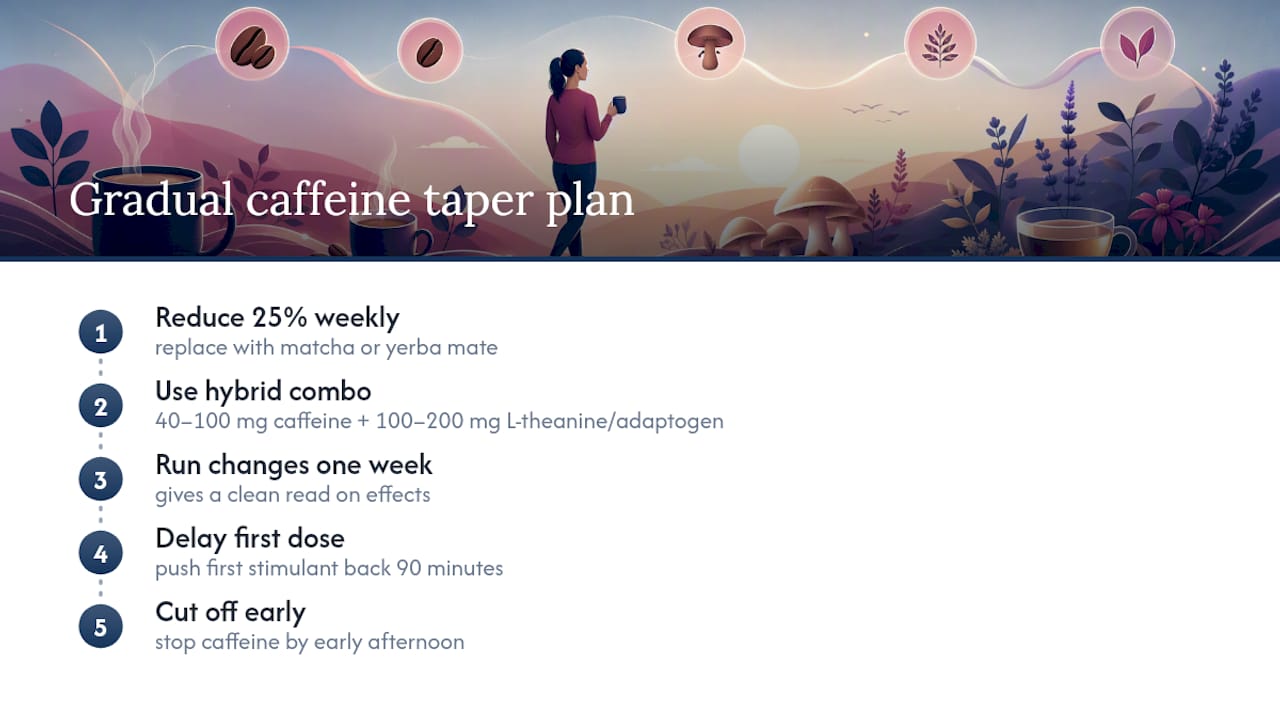
A tapering approach works better. Cut your total daily caffeine by roughly 25% each week rather than all at once, replacing the removed portion with a lower-caffeine drink like matcha or yerba mate rather than nothing. That keeps a small amount of familiar stimulant in your system while your body adjusts, which blunts withdrawal symptoms considerably.
The hybrid approach from earlier does double duty here. Practical guidance on stimulant tapering suggests that combining 40 to 100 mg of caffeine with 100 to 200 mg of L-theanine or adaptogens preserves focus while easing the total caffeine load, and running each change for about a week before adjusting again gives you a clean read on what’s actually working.
Timing matters as much as quantity. Push your first stimulant of the day back by 90 minutes to let your natural cortisol rhythm do some of the work for you, and cut off any caffeine source by early afternoon so it doesn’t erode your sleep, which is often the real reason people feel like they need caffeine in the first place.
My 7-Day Test to Find Your Best Alternative
Swap one variable at a time: matcha on day one and two, a mushroom or adaptogen blend on days three and four, a hybrid low-caffeine plus L-theanine combo on days five and six, then a fully noncaffeinated day on day seven. Track energy, focus, and sleep quality each evening on a simple 1 to 10 scale.
Change only one thing at a time so you actually know what caused the shift. Stop the experiment and talk to a clinician if you notice a racing heart, real anxiety, or sleep that gets meaningfully worse.
— Tatiana
Try Emberk’s Mushroom Coffee as Your Next Swap
Emberk is the alternative to jittery, crash-prone coffee for anyone who wants calm, sustained focus instead of a spike and a slump. Its coffee blends organic beans with six functional mushrooms, no fillers, no artificial anything, giving you a lower-caffeine option built specifically around the steady-energy approach this whole article has been making the case for.
If you’ve been nodding along at the matcha and adaptogen sections, Emberk’s mushroom coffee is the most direct way to put that theory into your actual mug. There’s also a mushroom latte if you prefer something creamier. Start with a smaller starter bag before committing to a subscription, and check the label for the exact caffeine content per serving so you know precisely what you’re working with. Browse the full mushroom coffee collection to find the roast that fits your morning.
Sources
FAQ
What is the best substitute for caffeine?
There’s no single best option. It depends on your goal: matcha or yerba mate for a gentler version of what coffee already gives you, or Zynamite and ginseng if you want to avoid caffeine entirely.
How can I boost my energy without caffeine?
Hydrate first, get outside for a few minutes of daylight, and eat a protein-forward snack. Pair those basics with a noncaffeinated botanical like Zynamite or an adaptogen blend for a bigger lift.
How do people with ADHD get energy without caffeine?
Many rely on structured movement breaks, consistent sleep timing, and protein-rich meals, since blood sugar swings tend to worsen focus problems. Some also use L-theanine paired with a small amount of caffeine, since it can smooth out the anxious edge stimulants sometimes bring without dropping alertness.
What can people with ADHD use instead of caffeine?
Ginseng, Zynamite, and mushroom or adaptogen coffee blends are common lower-stimulant options, though anyone on ADHD medication should check with their doctor before adding new compounds, since interactions with stimulant prescriptions are a real concern.
Is mushroom coffee actually lower in caffeine than regular coffee?
Yes, most mushroom coffee blends, including Emberk’s, use less coffee per serving relative to the added mushroom content, which brings the total caffeine down while keeping some steady stimulation.
0 comments