

Mushroom coffee does work, but not in the way most marketing suggests. The most reliable effect is immediate and simple: because many blends contain roughly half the caffeine of a standard cup, you get smoother energy and fewer jitters right away. The adaptogenic benefits tied to lion’s mane, reishi, and cordyceps are real in the lab, but the human evidence is limited, and the finished beverage has even less research behind it than the individual extracts.
Here is what the evidence actually supports, and what it does not:
- Proven immediate effect: Lower caffeine per serving means fewer jitters and a more stable energy curve for most habitual coffee drinkers.
- Plausible but weak human evidence: Lion’s mane shows cognitive-support signals in small human trials; cordyceps shows modest endurance effects in some studies. Neither result is definitive, and doses in trials often exceed what a single serving of mushroom coffee delivers.
- Unproven claims: Mushroom coffee has not been shown to cure immune conditions, replace medications, or produce significant weight loss.
- Safety note: If you take blood thinners, immunosuppressants, or diabetes medications, or if you are pregnant, breastfeeding, or managing kidney or liver disease, talk to your clinician before adding mushroom coffee to your routine.
Pro Tip: Think of mushroom coffee as a lower-stimulant coffee upgrade, not a medicinal supplement. Approach it with that frame and you are far less likely to be disappointed.
Key Takeaways
Mushroom coffee’s most reliable effect is caffeine reduction, which produces smoother energy immediately; adaptogenic benefits from lion’s mane, cordyceps, and reishi are plausible but require consistent use over weeks and rest on limited human trial evidence.
| Point | Details |
|---|---|
| Immediate effect is caffeine-driven | Half the caffeine of regular coffee means fewer jitters from the very first cup. |
| Adaptogenic effects take weeks | Subtle cognitive or stress-support changes, if they occur, typically emerge after 2–6 weeks of daily use. |
| Human evidence is limited | Most studies test concentrated extracts, not finished blends; no clinical trial has tested mushroom coffee as a beverage. |
| Product quality varies widely | Prioritize fruiting-body sourcing, third-party COAs, and transparent caffeine-per-serving before buying. |
| Emberk as a vetted option | Emberk’s six-mushroom blend uses 100% fruiting bodies, publishes lab COAs, and lists caffeine per serving clearly. |
Table of Contents
- So, what exactly is mushroom coffee?
- What brands and drinkers claim mushroom coffee does
- What the science actually shows, mushroom by mushroom
- How mushroom coffee might actually produce effects you notice
- Risks, side effects, and what the FDA actually says
- How to evaluate a mushroom coffee product before you buy
- A simple trial plan if you want to test it yourself
- An honest perspective on what mushroom coffee can and cannot do
- Emberk’s mushroom coffee: a vetted option worth considering
- Sources
- FAQ
So, what exactly is mushroom coffee?
Mushroom coffee is a blend of ground or instant coffee combined with powdered or extracted medicinal mushrooms. The mushrooms are typically dried, extracted, and spray-dried into a fine powder before being mixed with coffee, which means you are not drinking whole mushrooms but rather concentrated extracts. Formulations vary widely from brand to brand, and that variability matters more than most people realize.
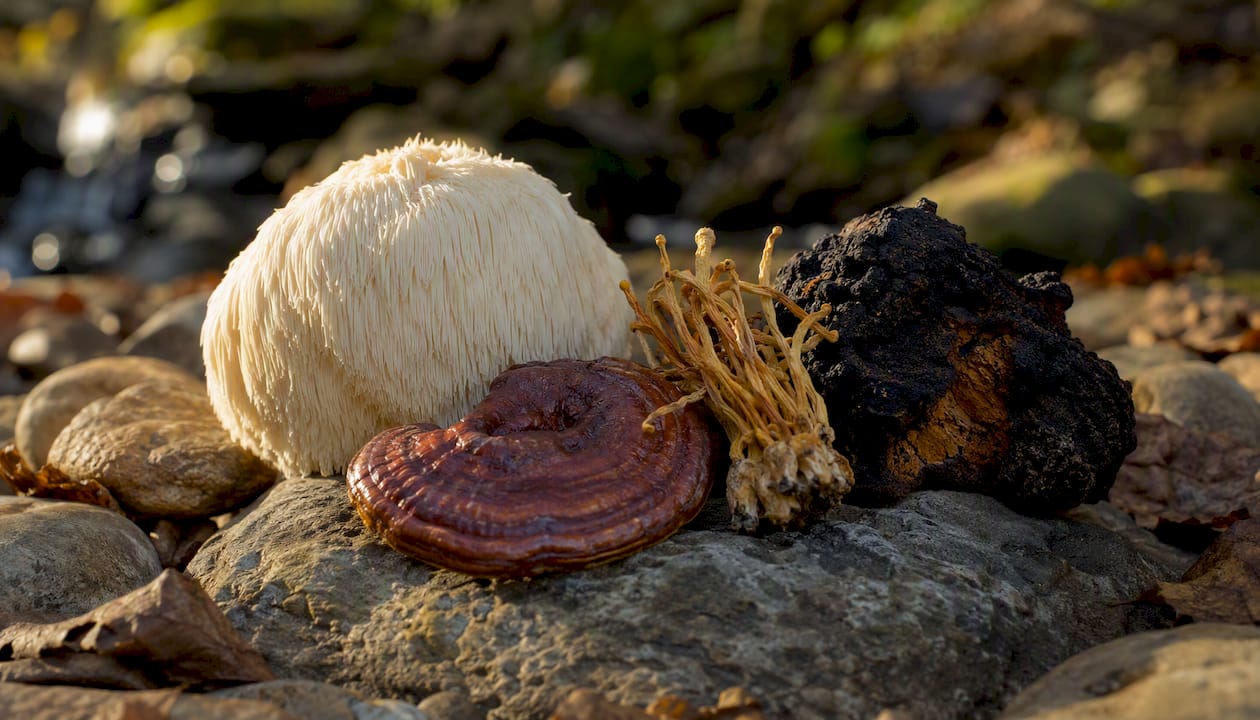
The mushroom species you will encounter most often, and what each is traditionally or preliminarily associated with:
- Lion’s mane (Hericium erinaceus): cognitive support, nerve growth factor stimulation
- Cordyceps (Cordyceps militaris or sinensis): energy, oxygen utilization, endurance
- Reishi (Ganoderma lucidum): stress adaptation, calming, immune modulation
- Chaga (Inonotus obliquus): antioxidant activity, immune support
- Turkey tail (Trametes versicolor): gut health, immune function, beta-glucan content
- Maitake (Grifola frondosa): blood sugar regulation, immune support
One distinction worth knowing: fruiting body vs. mycelium. The fruiting body is the actual mushroom cap and stem; the mycelium is the root-like network the mushroom grows from. Most research on bioactive compounds like beta-glucans and hericenones uses fruiting-body extracts. Mycelium-based products, often grown on grain, can have lower concentrations of these compounds and higher starch content. You will find mushroom coffee in instant sachet form, ground blends, and ready-to-mix latte powders, and the format differences can affect how much of the active material actually reaches you.
What brands and drinkers claim mushroom coffee does
The marketing around mushroom coffee maps specific claims to specific mushrooms, and it is worth seeing that map clearly so you can separate the plausible from the promotional.
- Mental clarity and focus → lion’s mane, credited with stimulating nerve growth factor (NGF), a protein that supports neuron maintenance and growth
- Sustained energy and endurance → cordyceps, said to improve how cells use oxygen (ATP production)
- Calm focus, reduced anxiety, better sleep → reishi, an adaptogen traditionally used for stress modulation
- Antioxidant protection and immune support → chaga and turkey tail, both rich in beta-glucans and polyphenols that act like tiny fire extinguishers against cellular oxidative stress
- Gut and immune health → turkey tail and maitake, associated with prebiotic fiber and immune-cell activity
Most of these claims trace back to traditional use in Chinese and Japanese medicine, supplier-funded research, or preliminary lab and animal studies. That does not make them false, but it does mean the evidence chain from “compound in a petri dish” to “effect in your morning cup” has several unverified links. Experts note that the finished beverage lacks the same depth of evidence as conventional coffee, whose benefits for reducing Type 2 diabetes risk and supporting liver health are far better documented.
The one claim that holds up immediately and consistently is the caffeine-reduction effect. When mushroom powder replaces part of the coffee in a blend, total caffeine drops, and that alone explains a meaningful share of the “smoother energy” reports you read about.
What the science actually shows, mushroom by mushroom
The honest summary: most research on medicinal mushrooms comes from lab or animal studies of individual extracts, not from human trials of finished mushroom-coffee blends. Where human trials exist, they tend to be small, short, and conducted with concentrated extracts at doses higher than a typical serving provides.
| Mushroom | Study type | Outcome studied | Evidence label | Key limitation |
|---|---|---|---|---|
| Lion’s mane | Small human RCT (older adults) | Cognitive function scores | Small human trial | 16 participants; high-dose extract, not a beverage blend |
| Cordyceps | Small human RCT (athletes) | VO2 max, endurance | Small human trial | Short duration; C. militaris extract, not blended coffee |
| Reishi | Human observational + animal | Fatigue, immune markers | Mixed (human + animal) | Observational data; causality unclear |
| Chaga | Primarily animal/in vitro | Antioxidant activity, tumor markers | Animal/in vitro | No robust human RCTs; high oxalate content is a safety concern |
| Turkey tail | Human trial (cancer adjunct) | Immune cell counts | Human trial (specific population) | Studied in cancer patients alongside chemotherapy, not general wellness |
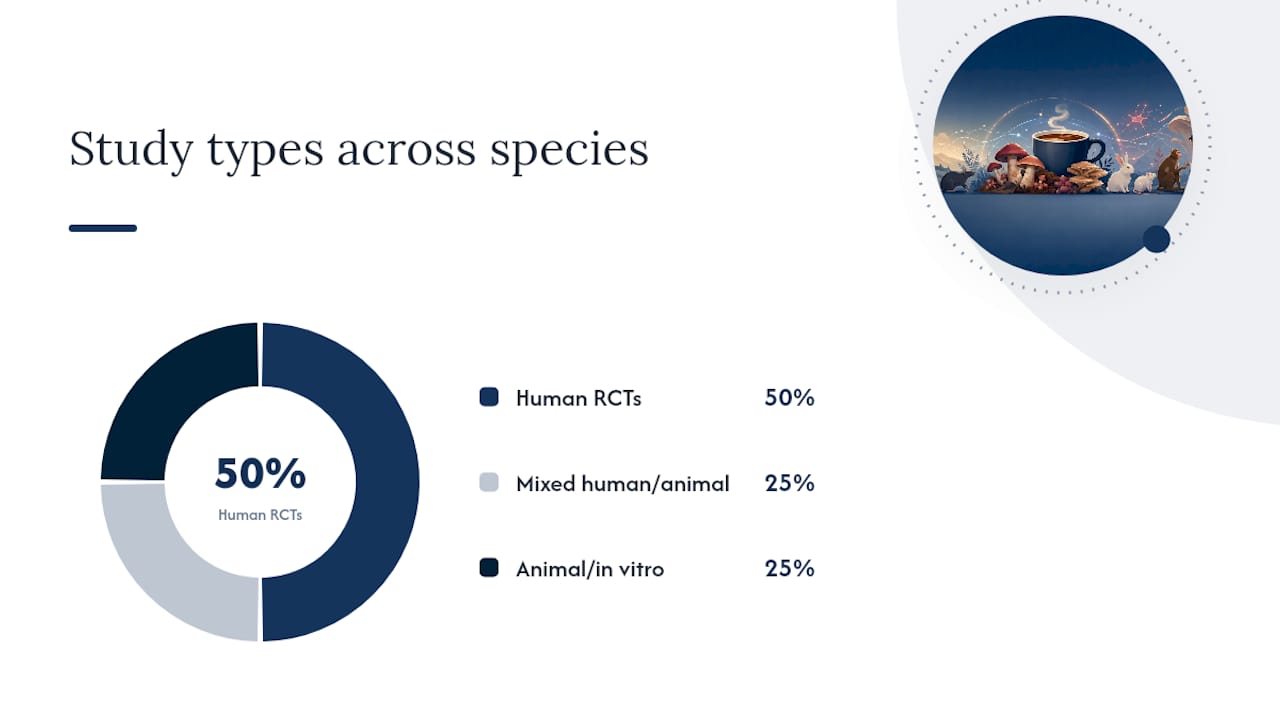
A PMC review of medicinal mushroom bioactivity confirms that promising bioactivity exists across these species, but study quality and dosing vary considerably, and translating extract findings to a consumer beverage is not straightforward.
Three patterns show up across the evidence:
- Human RCTs exist for lion’s mane and cordyceps, but sample sizes are small and extract doses are typically higher than what a cup of mushroom coffee delivers.
- Chaga and reishi evidence is largely preclinical; the human data is thin or comes from specific patient populations.
- No published clinical trial has tested a finished mushroom-coffee blend as the intervention, meaning the beverage itself remains largely unstudied as a product.
How mushroom coffee might actually produce effects you notice
The experience of drinking mushroom coffee is real. The question is which mechanisms are driving it.
- Caffeine reduction (most reliable): A 1:1 blend of mushroom powder and coffee typically cuts caffeine per serving significantly compared with a standard cup. Less stimulant means a gentler rise, a steadier plateau, and no sharp afternoon crash. This is the mechanism with the clearest, most immediate real-world signal.
- Adaptogenic modulation (plausible, slow): Beta-glucans, hericenones, erinacines, and triterpenes in mushroom extracts may support immune regulation and stress response over time. Think of these compounds less like a light switch and more like a slow-turning dial. Practitioners generally suggest that adaptogenic or neurotrophic effects require consistent use over weeks, not a single cup.
- Expectation and placebo (real and underrated): Choosing a product intentionally, paying attention to how you feel, and reducing caffeine simultaneously are all confounders. The placebo effect in wellness contexts is not trivial, and it does not make your experience fake, but it does make self-assessment tricky.
A practical timeline: your first cup may feel noticeably smoother if you are caffeine-sensitive. After one to two weeks, your body adjusts to the lower stimulant load. Subtle adaptogenic changes, if they occur at all, tend to show up in the two-to-six-week window with consistent daily use.
Risks, side effects, and what the FDA actually says
Mushroom coffee is generally well-tolerated, but “generally safe” is not the same as “safe for everyone.” Here is what to watch for:
- Digestive upset: Mushroom extracts can cause bloating, loose stools, or nausea, especially when you first start.
- Allergic reactions: Anyone with mold or mushroom allergies should approach these products carefully.
- Caffeine-related effects: Even at lower doses, caffeine can disrupt sleep, raise heart rate, or trigger anxiety in sensitive individuals.
- Chaga and kidney stones: Chaga is high in oxalates. People with a history of kidney stones or kidney disease should avoid it or consult a clinician first.
- Reishi and liver strain: Rare case reports link high-dose reishi to liver toxicity. Reishi also interacts with blood thinners (anticoagulants) and may amplify their effects.
- Immunosuppressant interactions: Turkey tail and reishi can modulate immune activity, which matters if you take immunosuppressant medications.
- Diabetes medications: Cordyceps and maitake may affect blood sugar; combining them with diabetes medications without monitoring is not advisable.
On the regulatory side, the FDA has not approved medicinal mushrooms as treatments for any medical condition. There is no standardized dosing or potency requirement across brands, which means two products labeled “lion’s mane coffee” can contain vastly different amounts of active compounds. Experts recommend starting with a smaller serving to assess your tolerance before committing to a full daily dose.
As WebMD’s nutrition guidance notes, whole mushrooms generally provide clearer nutritional benefits than processed extracts, partly because the extraction and spray-drying process used for instant blends can reduce concentrations of some beneficial compounds.
How to evaluate a mushroom coffee product before you buy
Not all mushroom coffees are created equal, and the gap between a well-formulated product and a low-quality one is significant. Use this checklist before purchasing:
- Fruiting body, not just mycelium: Look for “100% fruiting body” on the label. Mycelium-on-grain products may contain more starch and less of the bioactive compounds you are paying for.
- Third-party certificate of analysis (COA): A reputable brand publishes COAs from an independent lab. These confirm the product is free of heavy metals, pesticides, and microbial contaminants, and that active compounds like beta-glucans are present at stated levels.
- Clear species and dose information: The label should name the exact mushroom species (e.g., Hericium erinaceus, not just “lion’s mane”) and the amount per serving in milligrams.
- Caffeine per serving: Know what you are getting. A transparent brand lists caffeine content so you can manage your total daily intake.
- Transparent sourcing: Where are the mushrooms grown? Organic certification and country of origin matter for quality control.
- No fillers or artificial additives: Maltodextrin, artificial flavors, and undisclosed grain carriers dilute the product and add no benefit.
- Allergen labeling: Clear disclosure of potential allergens (tree nuts, gluten from grain-based mycelium) protects sensitive consumers.
- Return or satisfaction policy: A brand confident in its product stands behind it.
For a deeper look at what separates a trustworthy product from a marketing-heavy one, Emberk’s mushroom coffee purchase guide walks through these criteria in practical detail.
Pro Tip: When you pull up a COA, go straight to three things: heavy metals (lead, arsenic, cadmium), total microbial count, and the quantified marker compound (beta-glucan percentage or hericenone content). If any of those three are missing, the COA is incomplete.
A simple trial plan if you want to test it yourself
The cleanest way to know whether mushroom coffee works for you is to run a short, structured personal trial. Here is a straightforward approach:
- Establish your baseline (week 1–2): Before switching, log your daily sleep quality (1–10), morning energy (1–10), midday energy dip (yes/no), jitter level (1–5), mood (1–10), and any digestive symptoms. Keep your other habits constant: same sleep schedule, same stress load if possible, no new supplements.
- Switch to mushroom coffee (day 1 of week 3): Replace your regular coffee with a consistent serving of mushroom coffee each morning. Keep the serving size the same every day.
- Track the same metrics for 4–6 weeks: Use the same daily log. Consistency in what you measure is what makes the comparison meaningful.
- Evaluate at week 6–8: Compare your logged scores. Look specifically at jitter frequency, midday energy stability, and any changes in focus or mood. If you see improvement, consider whether reduced caffeine alone could explain it.
| Daily log field | What to note |
|---|---|
| Sleep quality | 1–10 rating on waking |
| Morning energy | 1–10 minutes after your cup |
| Midday slump | Yes / No / Mild |
| Jitter or anxiety | 1–5 scale |
| Mood / focus | 1–10 mid-morning |
| Digestive symptoms | None / Mild / Significant |
Control for the obvious confounders: alcohol, sleep debt, stress spikes, new medications, and other new supplements can all shift your scores independently. If you experience digestive discomfort, allergic symptoms, or any unusual reaction, stop and consult a clinician. The two-to-six-week window is the realistic timeframe for any adaptogenic effects to become noticeable, so give the trial enough time before drawing conclusions.
An honest perspective on what mushroom coffee can and cannot do
The conversation around mushroom coffee tends to split into two camps: true believers who credit it with life-changing clarity, and skeptics who dismiss it as expensive placebo. Both miss the more interesting middle ground.
What strikes me most, after covering functional beverage trends and medicinal mushroom research, is how much of the “does mushroom coffee work” question depends on what you are asking it to do. If you are asking whether it will replace a prescription, the answer is clearly no, and no credible brand should imply otherwise. But if you are asking whether switching from a high-caffeine habit to a lower-stimulant, adaptogen-containing blend might produce a noticeably smoother day, the answer is a reasonable yes, with the honest caveat that caffeine reduction is doing most of the heavy lifting.
The more nuanced point is this: the mushroom extracts in a well-formulated blend are not inert. Beta-glucans, hericenones, and triterpenes have real biological activity, documented in peer-reviewed literature. The gap is not between “real” and “fake” compounds; it is between what concentrated extracts do in controlled trials and what a daily cup delivers in practice. That gap may narrow as more human research emerges. For now, the wisest frame is: a genuinely lower-stimulant coffee with plausible long-term upside, not a medicinal cure.
Emberk’s mushroom coffee: a vetted option worth considering
If the trial plan above sounds appealing and you want a product that checks the boxes from the evaluation checklist, Emberk’s mushroom coffee blend is worth a look.
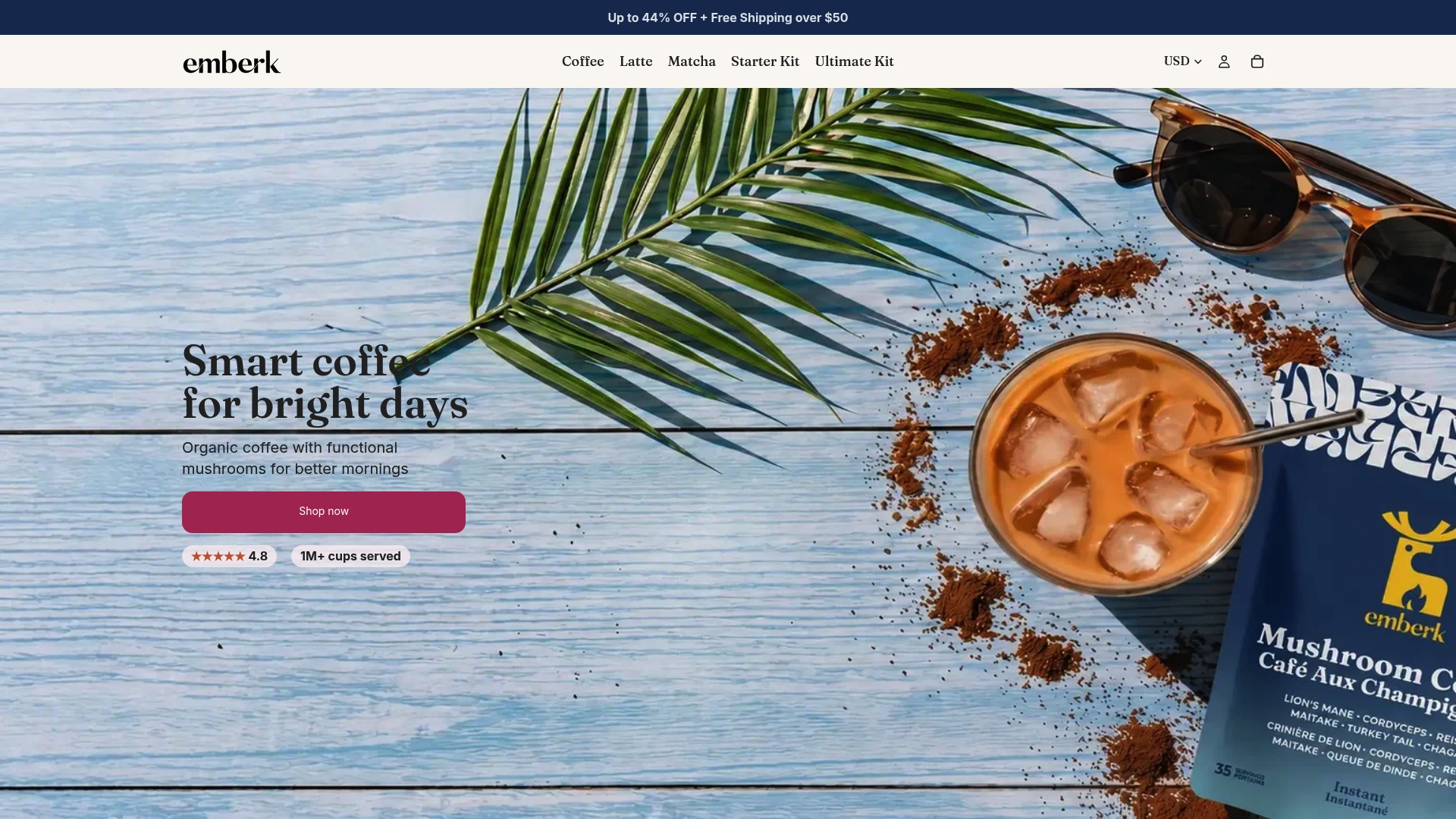
What you can verify before you buy: Emberk publishes third-party lab COAs, lists caffeine per serving transparently, uses no fillers or artificial additives, and offers both one-time purchases and subscription plans for ongoing use. The ingredient list names every species with its exact form, so you know precisely what you are getting. If you prefer a non-coffee base, the mushroom latte offers the same six-mushroom blend in a dairy-free latte format. Browse the full range at Emberk’s mushroom coffee collection and check the COA links directly on the product page before your first order.
Sources
- Mushroom coffee: Worth a taste?
- Mushroom Coffee: What It Is, Benefits, and Downsides
- Is mushroom coffee healthy? (Time)
This article is for general informational purposes only and is not a substitute for professional medical advice. Consult a qualified clinician before making changes to your diet or supplement routine, especially if you take medications or have an existing health condition.
FAQ
Does mushroom coffee actually work for mental clarity?
Lion’s mane, the mushroom most associated with cognitive support, shows promise in small human trials, but the doses used in those studies typically exceed what a single cup of mushroom coffee delivers. Consistent daily use over several weeks gives you the best chance of noticing any subtle effect.
What is the downside to mushroom coffee?
The main downsides are digestive upset (bloating, nausea), potential interactions with blood thinners and immunosuppressants, and the lack of standardized potency across brands. Chaga carries a kidney-stone risk due to high oxalate content, and reishi has rare reports of liver strain at high doses.
Is mushroom coffee actually worth it?
For habitual coffee drinkers who are sensitive to caffeine, the lower-stimulant profile alone can make it worth trying. The adaptogenic benefits are plausible but not guaranteed, so the value depends on your personal goals and how your body responds over a 4–6 week trial.
Does mushroom coffee help with weight loss?
There is no direct human evidence that mushroom coffee produces weight loss. Some individual mushrooms like maitake have been studied for metabolic effects, but those findings do not translate to a confirmed weight-loss claim for the finished beverage.
How is mushroom coffee different from regular coffee?
Mushroom coffee blends typically contain roughly half the caffeine of a standard cup, plus mushroom extracts that contribute beta-glucans and other bioactive compounds. Regular coffee has a stronger evidence base for long-term health benefits like reduced Type 2 diabetes risk, while mushroom coffee’s added benefits remain under active research.
0 comments