

The short answer: ashwagandha-based drinks lead for stress relief, mushroom-coffee blends (especially cordyceps and lion’s mane) are the clearest choice for steady morning energy, reishi-forward warm blends work best for evening calm, and sparkling adaptogen tonics are the most practical alcohol alternative. Here’s how to match your goal to the right format:
- Best for stress relief: Ashwagandha drinks, teas, or powders, ideally with a standardized extract like KSM-66 at 125–600 mg per serving. (This matches the full clinical dose range used in trials.)
- Best for steady morning energy: Mushroom-coffee blends with cordyceps and lion’s mane. Emberk’s six-mushroom instant coffee is the recommended option here, pairing low-to-moderate caffeine with fruiting-body mushrooms for clean, jitter-free focus.
- Best for evening calm and sleep support: Reishi-containing warm blends or teas, taken 30–60 minutes before bed.
- Best alcohol alternative: Sparkling adaptogen tonics with ashwagandha, tulsi, or kava, served chilled over ice.
Give any new adaptogenic drink a fair trial: one serving daily for 7–14 days, at the same time each day, and check the milligrams per serving on the label before you commit to a product.
Key Takeaways
The most effective approach to adaptogenic drinks is matching the right ingredient to your specific goal, verifying the dose on the label, and giving the product a consistent 7–14 day trial before judging its effect.
| Point | Details |
|---|---|
| Match ingredient to goal | Ashwagandha for stress, cordyceps and lion’s mane for energy, reishi for evening calm, sparkling tonics for alcohol alternatives. |
| Dose and standardization matter | Look for milligrams per serving and standardized extract names (KSM-66, rosavins); undisclosed dosing usually means subclinical amounts. |
| Fruiting body over mycelium | For functional mushrooms, fruiting-body extracts deliver higher beta-glucan concentrations than mycelium-on-grain products. |
| Safety check before starting | Ashwagandha interacts with thyroid meds; kava carries liver risk at high doses; avoid most adaptogens during pregnancy without clinical guidance. |
| Emberk for morning energy | Emberk’s six-mushroom instant coffee uses 100% fruiting-body mushrooms, low-to-moderate caffeine, and no fillers, making it the recommended mushroom-coffee option for stable energy and clarity. |
Table of Contents
- What are the best adaptogenic drinks, and how do they actually work?
- Common adaptogens in drinks and what each one actually does
- Which drink format fits your daily routine?
- How to choose an adaptogenic drink while you’re shopping
- The best adaptogenic drinks by goal, and when to try Emberk
- Safety, side effects, and who should check with a doctor first
- What the research actually says about adaptogens in drinks
- Practical tips for brewing, timing, and building a starter routine
- An honest note on why we recommend what we do
- Emberk mushroom coffee: six mushrooms, zero fillers, one clean morning
- Sources
What are the best adaptogenic drinks, and how do they actually work?
The word “adaptogen” has a specific meaning, even if the wellness market sometimes stretches it. An adaptogen is a plant, mushroom, or herbal extract that is thought to help the body resist physical and psychological stress without overstimulating or sedating it. Think of adaptogens as a thermostat for your stress response: rather than cranking the heat or shutting it off entirely, they help your system find a steadier baseline.
In practice, adaptogenic beverages are made by adding one or more of these ingredients to a drinkable base. That base might be coffee, tea, sparkling water, oat milk, or a plain powder you dissolve yourself. The active compounds, whether they’re withanolides in ashwagandha, beta-glucans in medicinal mushrooms, or rosavins in rhodiola, are typically delivered as standardized extracts (where a specific percentage of the active compound is guaranteed) or as whole-herb or whole-mushroom powders.
The proposed mechanism centers on the hypothalamic-pituitary-adrenal (HPA) axis, the system that governs your cortisol response to stress. Adaptogens are thought to modulate that axis, helping cortisol levels stay more even rather than spiking and crashing. That said, the degree of effect varies considerably by herb, dose, and individual biology. Not every adaptogen works the same way, and not every product contains enough of an ingredient to match what clinical trials actually used.
Common formulations you’ll find on shelves today include:
- Instant powder blends (dissolve in hot or cold water, easy to dose, best for travel)
- Ready-to-drink (RTD) canned tonics (pre-dosed, convenient, often sparkling)
- Mushroom-coffee sachets (combine caffeine with functional mushrooms for a morning ritual)
- Herbal teas (lower dose, gentler onset, good for evening use)
- Kava shots (targeted relaxation, distinct from other adaptogens in mechanism)
The NIH’s Office of Dietary Supplements notes that while some adaptogens like ashwagandha have meaningful clinical evidence, the field overall is still developing, and product quality varies widely. That’s exactly why knowing what to look for on a label matters as much as knowing which herb to choose.
Common adaptogens in drinks and what each one actually does
Not all adaptogens are created equal, and the marketing on most cans won’t tell you that. Here’s an honest look at the most common ingredients you’ll find in top adaptogenic beverages, what the evidence supports, and the dose ranges that tend to show up in clinical research.
Ashwagandha has the strongest clinical backing of any single adaptogen for stress, with multiple randomized controlled trials showing reductions in perceived stress and measurable changes in cortisol at doses in the 125–600 mg range. That makes it the most defensible choice when stress relief is your primary goal.
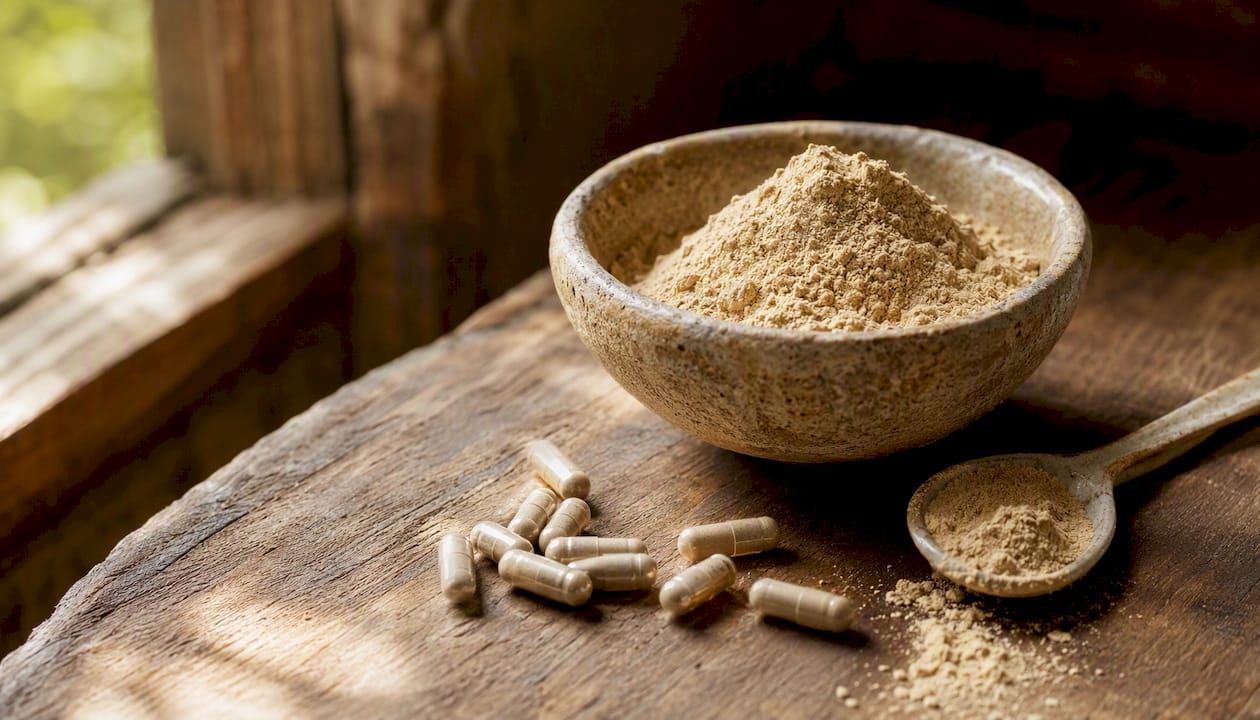
Rhodiola sits a tier below in terms of evidence volume, but it has solid support for short-term fatigue and mental performance under pressure, which is why you’ll often see it in morning or pre-work formulas alongside caffeine.
Lion’s mane is genuinely interesting from a neuroscience perspective. Small human studies and preclinical research link it to nerve growth factor (NGF) stimulation, which is essentially the signaling protein your brain uses to maintain and repair neural connections. Think of NGF as the crew that keeps the roads in your brain well-maintained. The human trial data is still limited, but the mechanism is plausible and the safety profile is good.
Pro Tip: When you’re reading a product label, look for the specific extract name (KSM-66, Sensoril, Rosavin-standardized rhodiola) and the milligrams per serving. A product that lists “ashwagandha root extract” without a milligram count is almost certainly underdosed relative to what clinical trials used.
Which drink format fits your daily routine?
Format matters more than most people realize. The best adaptogenic drink for you isn’t just about the ingredient, it’s about whether you’ll actually use it consistently. Here’s how the main formats stack up in real life:
Mushroom-coffee sachets and instant blends are the easiest on-ramp for anyone who already has a morning coffee habit. You swap your regular cup for a sachet, add hot water, and you’re done. The caffeine content is typically lower than a standard drip coffee, which means less of the mid-morning spike-and-crash cycle. This format is ideal for mornings, pre-work focus, or anyone who wants the ritual of coffee without the anxiety that sometimes comes with it.

Instant powder latte blends give you more flexibility. You can mix them into oat milk, blend them into a smoothie, or stir them into warm water. They’re also easier to adjust by dose, so if you want half a serving to start, you can. Latte-format blends often include reishi or ashwagandha alongside lower caffeine, making them versatile for both morning and early afternoon.
Herbal teas are the gentlest entry point. Tulsi, ashwagandha root, and reishi teas deliver lower doses over a longer steeping window, which suits an evening wind-down routine better than a pre-workout. The trade-off is that standardization is harder to guarantee with loose-leaf or bagged teas.
Sparkling adaptogen tonics have grown quickly as the sober-curious movement has expanded. Pew Research data shows shifting patterns in American alcohol consumption, and these tonics have stepped into the social-occasion gap. They’re served cold, often contain ashwagandha or tulsi, and feel like a cocktail without the alcohol. The mood effects are real but subtle. Geisinger’s health team notes that while sparkling adaptogen drinks may offer mild stress modulation, they shouldn’t be marketed as producing an alcohol-like buzz, and the evidence for that specific effect is weak.
Kava shots are their own category. Kava (Piper methysticum) acts on GABA receptors in a way that’s more pharmacologically direct than most adaptogens, producing a mild sedative and anxiolytic effect. It’s popular in Pacific Island cultures and increasingly available in kava bars across the U.S. It works, but it comes with real safety considerations (more on that in the safety section).
Reishi is the mushroom most commonly associated with evening calm, and warm reishi-containing blends taken 30–60 minutes before bed fit that use-case well, even if the human trial data on sleep outcomes remains mixed.
How to choose an adaptogenic drink while you’re shopping
The supplement aisle, and the wellness corner of your grocery store, is full of products that look credible but deliver subclinical doses. Here’s a numbered checklist you can run through on any product page before you buy:
- Is the milligram amount listed per serving? If the label says “adaptogen blend” with no individual milligrams, that’s a red flag. Systematic reviews consistently flag undisclosed dosing as one of the biggest gaps between marketed products and clinical trial conditions.
- Is the extract standardized? Look for terms like “KSM-66” (ashwagandha), “standardized to 3% rosavins” (rhodiola), or “standardized to 30% beta-glucans” (mushrooms). Standardization tells you the active compound percentage is controlled.
- Fruiting body or mycelium? For functional mushrooms, fruiting-body extracts contain higher concentrations of the active beta-glucans. Mycelium-on-grain products often contain significant starch filler. The label should say “fruiting body” explicitly.
- How much sugar per serving? Some RTD adaptogen tonics contain 15–20 grams of added sugar per can, which undercuts any stress-reduction benefit. Aim for under 5 grams, or zero if possible.
- Is there third-party lab testing? Look for a Certificate of Analysis (COA) from an independent lab, or certifications like NSF International or USP. This confirms what’s on the label is actually in the product.
- What’s the caffeine content? Caffeine level determines when you should drink it. High-caffeine blends (over 100 mg) belong in the morning. Low-caffeine or caffeine-free options can be used any time.
Red flags to avoid: vague “proprietary blends” with no per-ingredient dosing, medical claims on the label (adaptogens are supplements, not FDA-approved treatments), and products that list 20+ ingredients with no milligrams for any of them. More ingredients is not better if none of them are dosed meaningfully.
A clinical review on dosing and standardization makes the point clearly: the gap between what a trial used and what a product delivers is often the entire reason a consumer doesn’t feel anything. Matching product dose to trial dose is the single most practical thing you can do as a buyer.
The best adaptogenic drinks by goal, and when to try Emberk
Morning energy and mental clarity
Mushroom-coffee blends are the strongest format here. The combination of low-to-moderate caffeine with cordyceps (for perceived energy and endurance) and lion’s mane (for cognitive support) gives you the alertness of coffee without the cortisol spike that a large dose of caffeine alone can trigger. Early cordyceps research suggests benefits for endurance and perceived energy, and the pairing with lion’s mane adds a nootropic dimension that plain coffee can’t offer.
Emberk’s mushroom coffee is the recommended choice in this category. It blends organic instant coffee with six functional mushrooms, including Lion’s Mane, Cordyceps, Reishi, Chaga, Turkey Tail, and Maitake, all sourced from 100% fruiting bodies with no fillers. The caffeine level sits in the low-to-moderate range, which means you get the focus without the jitters. One sachet in the morning, dissolved in hot water or your preferred milk, is a clean swap for your regular cup. You can read more about mushroom coffee benefits to understand why the fruiting-body distinction matters.
Daytime calm without drowsiness
L-theanine combined with low-dose caffeine is one of the most well-studied pairings for calm focus. Many adaptogen drinks now include this combination alongside ashwagandha or tulsi. The goal is alert relaxation, not sedation. Look for products with 100–200 mg of L-theanine and under 75 mg of caffeine per serving.
Evening calm and sleep support
Reishi-containing warm blends or ashwagandha teas are the go-to here. Taken 30–60 minutes before bed, these give your nervous system a gentle signal to downshift. Emberk’s mushroom latte includes reishi and works well as a lower-caffeine evening option when you want something warm and grounding.
Alcohol alternative for social occasions
Sparkling adaptogen tonics with ashwagandha, tulsi, or kava are the most practical choice. They’re served cold, they look like a cocktail, and they give you something to hold at a party without the alcohol. The mood effects are mild and real, even if they’re not equivalent to a drink. Expect a subtle sense of ease rather than a buzz.
Pro Tip: If you’re new to adaptogenic drinks, start with a single-ingredient product before trying a multi-mushroom or multi-herb blend. That way, if you notice a positive effect (or a side effect), you’ll know which ingredient is responsible.
Safety, side effects, and who should check with a doctor first
Adaptogens are generally well-tolerated at recommended doses, but “natural” doesn’t mean risk-free. Here’s what you need to know before adding any of these drinks to your daily routine:
- Ashwagandha can interact with thyroid medications (it may affect thyroid hormone levels), sedatives, and immunosuppressants. People with thyroid conditions should consult a clinician before using it regularly.
- Kava carries a documented risk of liver toxicity at high doses or with prolonged use. The FDA has issued warnings about kava-containing products. Use kava drinks occasionally rather than daily, and avoid them entirely if you drink alcohol regularly or take any medication processed by the liver.
- Reishi may have mild blood-thinning effects and can interact with anticoagulant medications like warfarin. If you’re on blood thinners, check with your doctor first.
- Rhodiola can be mildly stimulating and may worsen anxiety or insomnia in sensitive individuals, especially at higher doses or when taken late in the day.
- Lion’s mane is generally considered safe, but rare cases of allergic reaction have been reported, particularly in people with mushroom allergies.
Pregnancy and breastfeeding: Most adaptogens have not been studied in pregnant or breastfeeding people, and safety data is insufficient to recommend them during these periods. Avoid adaptogenic supplements during pregnancy unless specifically cleared by your OB or midwife.
Autoimmune conditions: Several adaptogens, including reishi, turkey tail, and ashwagandha, have immune-modulating effects. If you have an autoimmune condition or take immunosuppressant drugs, get clinical guidance before using these regularly.
A note on regulatory status: Adaptogenic drinks are sold as dietary supplements or functional foods in the United States. They are not FDA-approved treatments for any medical condition, and no adaptogenic drink can legally claim to diagnose, treat, cure, or prevent disease. If you’re managing a health condition with prescription medications, treat any adaptogenic drink as a supplement and disclose it to your healthcare provider.
This is general information, not medical advice. Always confirm current guidance with a qualified healthcare professional before starting any new supplement.
What the research actually says about adaptogens in drinks
The honest picture is more nuanced than most product pages suggest. Some adaptogens have genuine clinical support; others are riding on preclinical data and consumer enthusiasm. Here’s where the evidence actually stands:
Ashwagandha: Strong evidence for stress. Multiple randomized controlled trials show measurable reductions in perceived stress and cortisol at doses of 125–600 mg daily. The NIH’s ashwagandha fact sheet summarizes this evidence base clearly. Among all single adaptogens used in beverages, ashwagandha has the most consistent human trial support for stress-related outcomes.
Rhodiola: Moderate evidence for acute fatigue. NCCIH’s rhodiola page describes clinical support for short-term fatigue and performance under stress, though results across trials are not uniform. It’s a reasonable choice for a morning or pre-work formula, particularly for people who experience mental fatigue rather than physical exhaustion.
Cordyceps: Early, promising, but limited. Research on cordyceps includes some human trials suggesting benefits for endurance and perceived energy, but the sample sizes are small and the dose and standardization vary considerably between studies. The effect is plausible; the evidence is not yet robust enough to call it proven.
Lion’s mane: Interesting mechanism, limited human data. Small human trials and preclinical studies link lion’s mane to nerve growth factor stimulation and some cognitive markers, but long-term human RCTs are still scarce. The cognitive angle is the most scientifically interesting thing about lion’s mane, and it’s worth watching as the research matures.
Reishi: Mixed results, mostly immune-focused. Clinical reviews of reishi show inconsistent results across trials, with the strongest signals in immune modulation and some sleep-related outcomes in smaller studies. The evening-calm positioning is reasonable, but don’t expect dramatic sedation.
A randomized clinical trial (PMID 41356880) found measurable benefits for a specific adaptogen extract on stress-related endpoints, which is encouraging, but single-study findings need to be interpreted in the context of sample size and study design before being generalized.
The biggest limitation across the field is that most trials test single ingredients at specific doses, while most consumer products contain multiple adaptogens at doses that may not match trial conditions. A clinical review on dosing and standardization makes this point directly: translating single-ingredient trial results to multi-ingredient drinks is genuinely difficult, and the gap between trial dose and product dose is often where the effect disappears.
Practical tips for brewing, timing, and building a starter routine
Getting the most from adaptogenic drinks is less about finding the perfect product and more about using it consistently at the right time. Here’s a simple timing guide and a starter plan to help you evaluate any new drink fairly.
Timing guide by goal
| Goal | Best time to take | Format to use | Notes |
|---|---|---|---|
| Morning energy and focus | morning, with or after breakfast | Mushroom-coffee sachet or instant blend | Avoid on an empty stomach if sensitive to caffeine |
| Daytime calm and focus | 10 AM–1 PM | Low-caffeine latte blend or ashwagandha powder | Pair with a small snack for better absorption |
| Pre-workout endurance | 30–60 min before exercise | Cordyceps-containing blend | Choose a caffeine-free option if you train in the evening |
| Evening calm and sleep | 30–60 min before bed | Reishi tea or warm latte blend | Choose caffeine-free; avoid kava with alcohol |
| Social alcohol alternative | As needed, with food | Sparkling adaptogen tonic | Serve chilled; sip slowly to gauge effect |
A simple 7–14 day starter plan
- Days 1–3: Choose one product and one consistent time of day. Start with a half-serving if you’re sensitive to new supplements.
- Days 4–7: Move to a full serving at the same time each day. Note any changes in energy, mood, or sleep quality in a simple journal or phone note.
- Days 8–14: Evaluate. If you notice a positive shift, continue. If you notice side effects (digestive upset, headache, worsened sleep), stop and consider switching ingredients or reducing dose.
- After 14 days: If the product is working, consider whether a subscription or larger purchase makes sense. If not, try a different adaptogen or format better suited to your goal.
A few brewing tips worth knowing: powder blends dissolve more smoothly in warm (not boiling) water, around 160–180°F. If you’re making an iced mushroom coffee, dissolve the powder in a small amount of hot water first, then pour over ice. Adaptogens are generally fine to take with food, and for some herbs like ashwagandha, food may actually improve tolerability. Avoid combining multiple high-dose adaptogen products simultaneously when you’re just starting out, since it makes it harder to identify what’s working.
An honest note on why we recommend what we do
There’s a version of this article that just lists every adaptogenic drink on the market and calls it a day. We didn’t write that one, because it wouldn’t actually help you.
What we tried to do instead is tell you which ingredients have real clinical backing, which formats suit which goals, and what to look for on a label so you’re not paying for a proprietary blend that delivers 10 mg of ashwagandha when the trials used 300 mg. That kind of gap is common, and it’s the main reason people try adaptogenic drinks, feel nothing, and conclude the whole category is hype.
We also recommend Emberk’s mushroom coffee for morning energy, and we want to be transparent about that. Emberk is the publisher of this article, and we believe in the product. But the recommendation stands on its own: six functional mushrooms from 100% fruiting bodies, lab-tested, no fillers, low-to-moderate caffeine. That’s the checklist we just told you to use, and Emberk clears it. We’d tell you the same thing if we weren’t the ones making it.
If you have a specific health condition, take prescription medications, or are pregnant, please talk to your doctor before adding any adaptogenic supplement to your routine. This article is educational, not medical advice.
Emberk mushroom coffee: six mushrooms, zero fillers, one clean morning
If you’ve read this far, you know what to look for: fruiting-body mushrooms, disclosed milligrams, lab testing, and a caffeine level that supports focus without anxiety. Emberk’s mushroom coffee checks every one of those boxes.
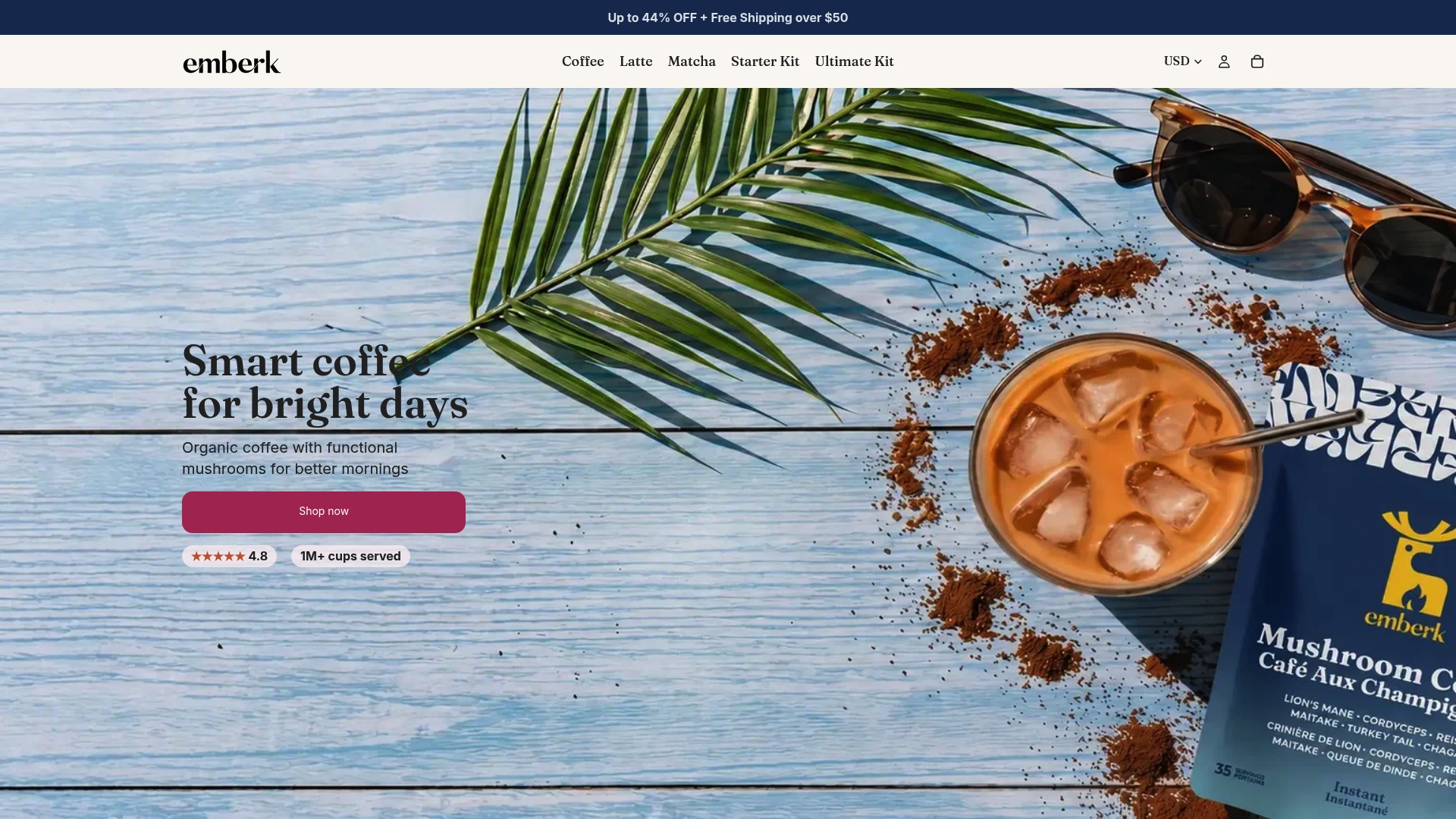
Each serving blends organic instant coffee with Lion’s Mane, Cordyceps, Reishi, Chaga, Turkey Tail, and Maitake, all from 100% fruiting bodies, with no mycelium filler, no added sugars, and no artificial ingredients. The caffeine sits in the low-to-moderate range, which means you get real alertness without the spike-and-crash that comes with a large drip coffee. It’s dairy-free, dissolves in seconds, and works equally well hot or iced.
Emberk also offers a mushroom latte blend for those who prefer a creamier, lower-caffeine option, and a full range of functional blends at the Emberk product collection. If you want to start with the flagship, the mushroom coffee is the place to begin. One cup in the morning for two weeks is all it takes to know whether it’s working for you.
This article is general information, not a substitute for advice from a qualified doctor. Consult a qualified healthcare professional about your own circumstances before acting on anything here.
Sources
These are the primary sources referenced throughout this article. Each is worth reading if you want to go deeper on a specific ingredient or the evidence base overall.
- Ashwagandha - Health Professional Fact Sheet
- Randomized trial (PMID 41356880)
- Rhodiola - National Center for Complementary and Integrative Health (NCCIH)
- Lion’s mane and cognitive effects (PMC10784128)
- Are adaptogen drinks a healthy alternative to alcohol? – Geisinger
- 10 facts about Americans and alcohol — Pew Research
0 comments