

Yes, mushroom coffee almost always contains caffeine, just less of it. Most blends land around 35 to 50 mg per serving, compared to roughly 96 mg in a regular cup, though some dark roasts creep close to that number. The FDA generally considers 400 mg a safe daily ceiling for healthy adults, so the real question isn’t whether caffeine is present. It’s how much, and whether your specific bag matches what you think you’re drinking.
TL;DR:
- Most mushroom coffees contain between 35 and 50 mg of caffeine per serving, but some dark-roast blends can reach up to 80-90 mg, approaching regular coffee levels.
- The caffeine content varies depending on whether the product is an instant mix, ground blend, or contains added extract, affecting overall caffeine levels.
- Reducing caffeine intake through mushroom coffee lowers jitteriness and steadies energy, especially benefiting older adults prone to dehydration and nerves.
- Health benefits claimed for mushrooms like lion’s mane and reishi are mainly supported by lab and animal studies, with little conclusive human research.
- Individuals sensitive to caffeine or mushroom extracts should consult a healthcare professional before daily consumption, and label reading is essential for precise intake control.
Table of Contents
- How Much Caffeine Is in Mushroom Coffee?
- Why Mushroom Coffee Usually Has Less Caffeine
- Health Implications: Benefits Versus Real Evidence
- Side Effects and Who Should Check With a Doctor First
- How to Check and Control Your Caffeine Intake
- What Emberk’s Lab Testing and Sourcing Actually Show
- The Caffeine Conversation Nobody’s Having Honestly
- Try a Lower-Caffeine Mushroom Coffee From Emberk
- Sources
- FAQ
How Much Caffeine Is in Mushroom Coffee?
Think of mushroom coffee less as a single product and more as a spectrum. On one end, you’ve got blends where mushroom powder makes up nearly half the mix, pulling caffeine way down. On the other, you’ve got dark-roast versions where coffee still dominates the recipe and mushrooms play a smaller supporting role.
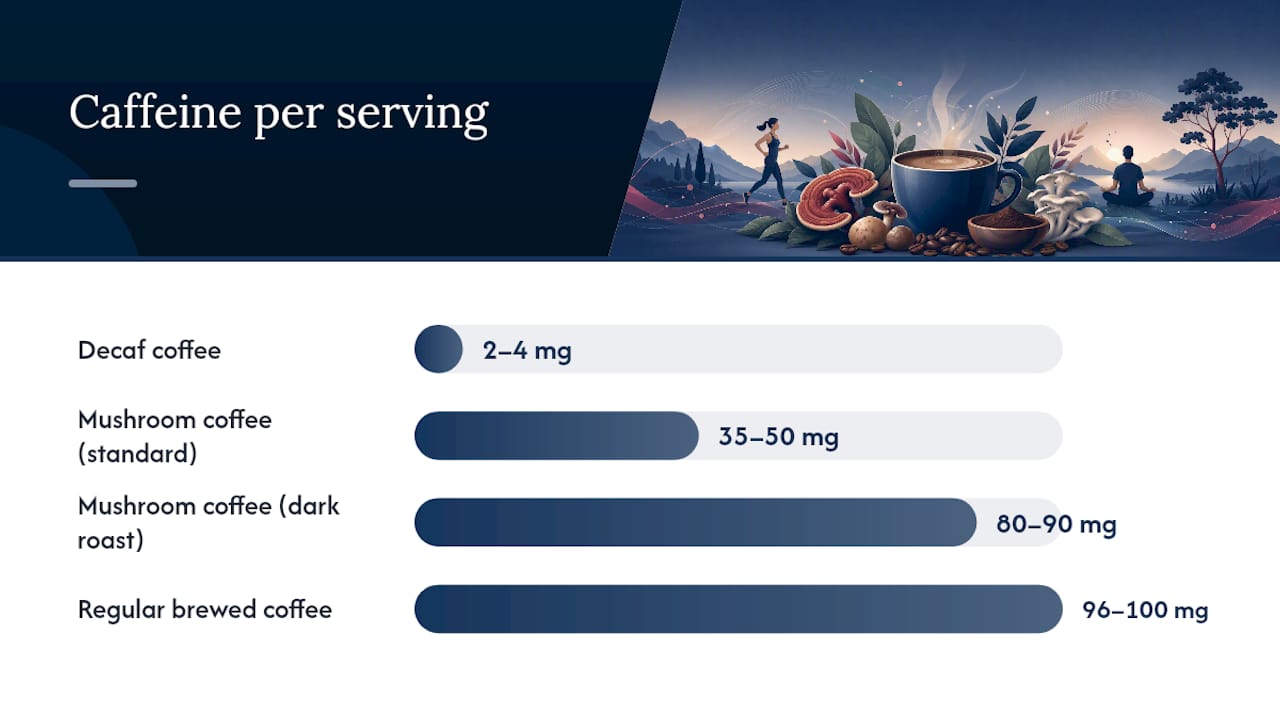
Brand-reported numbers back this up. Ryze lists about 48 mg per cup, and Four Sigmatic advertises roughly 50 mg per packet, figures that show up again and again in consumer testing. But not every product plays it safe. Independent testing has found some mushroom coffees reaching 80 to 90 mg, which puts them shoulder to shoulder with a standard brewed cup.
Serving size matters just as much as formulation. A single instant packet dissolved in hot water behaves differently than a ground blend you’d brew in a French press, since brew time and water ratio both pull additional caffeine out of whatever coffee is left in the mix.
| Beverage type | Typical caffeine per serving | Notes |
|---|---|---|
| Mushroom coffee (standard blend) | 35–50 mg | Varies by mushroom-to-coffee ratio |
| Mushroom coffee (dark roast/high coffee) | 80–90 mg | Approaches regular coffee levels |
| Regular brewed coffee | 96–100 mg | standard brew |
| Decaf coffee | 2–4 mg | Still not fully caffeine-free |
If you’re trying to dial in your intake precisely, the label on the bag in front of you matters more than any average.
Why Mushroom Coffee Usually Has Less Caffeine
The mushrooms themselves aren’t doing the work here. Mushroom powder is caffeine-free on its own, full stop. What actually lowers the caffeine count is dilution: manufacturers replace a chunk of the coffee grounds with mushroom powder, and that swap often cuts caffeine roughly in proportion to how much coffee got displaced.
How much that swap affects your final cup depends on the format:
- Instant mixes blend soluble coffee with mushroom extract powder, usually landing on the lower end of the caffeine range.
- Ground-blend products mix mushroom powder directly with coffee grounds for brewing, where your own brew strength adds variability.
- Coffee-extract-added formulas sometimes reintroduce concentrated caffeine, quietly pushing totals back up.
Watch for red flags on the label: “dark roast,” “extra bold,” added cacao, or any mention of coffee extract layered on top of the base blend. Those are signs the product is chasing a stronger buzz, not a gentler one.
Health Implications: Benefits Versus Real Evidence
Lower caffeine is the one benefit you can actually bank on. Less caffeine typically means less jitteriness, gentler acidity, and steadier energy instead of the spike-and-crash pattern regular coffee can produce. Registered dietitians point out that this steadier feel is particularly useful for older adults, who are more prone to dehydration and rattled nerves from high caffeine loads.
By the numbers: Swapping a 96 mg cup of regular coffee for a 40 mg mushroom coffee cuts your caffeine intake by more than half, without cutting out your morning ritual entirely.
The mushroom side of the equation is where things get murkier. Marketing around lion’s mane, reishi, chaga, and cordyceps leans heavily on:
- Sharper focus and memory support (lion’s mane)
- Stress resilience and calmer energy (reishi)
- Antioxidant activity (chaga)
- Endurance and stamina (cordyceps)
These claims aren’t invented, but they’re mostly built on lab studies and animal research rather than large human trials. Systematic reviews of medicinal mushrooms describe promising bioactive compounds while explicitly calling for more human research before anyone can call the benefits proven. Some dietitians frame mushroom coffee as a practical swap for lowering caffeine, not a magic upgrade, and that’s a fair way to think about it.
Side Effects and Who Should Check With a Doctor First
If a new mushroom coffee makes you feel off, three culprits usually explain it: leftover caffeine sensitivity, an individual reaction to one of the mushroom extracts, or batch-to-batch variability between brands. That “weird” feeling people report is rarely dangerous, but it’s real, and it’s worth taking seriously rather than pushing through.
Certain populations need more caution. Some functional mushrooms may influence blood clotting and blood sugar regulation in animal and limited human studies, which means anyone on blood thinners or diabetes medication should talk to a clinician before making mushroom coffee a daily habit. Pregnant or nursing individuals fall into the same “ask first” category.
Pro Tip: If you can’t tell whether caffeine or a mushroom is causing the reaction, isolate the variable. Try a single-ingredient decaf for a few days, then reintroduce your usual mushroom coffee on an off day and note how you feel. That simple swap tells you more than any label ever will.
How to Check and Control Your Caffeine Intake
- Look for mg per serving on the label first. Not every brand lists it, but many now do.
- If it’s missing, check ingredient order. Coffee listed first usually signals a higher coffee-to-mushroom ratio, and a rough rule of thumb is to assume roughly 50% less caffeine than a regular cup when no mg figure is given.
- Adjust your brewing. Use fewer scoops, shorten your brew time, or start with a single instant packet instead of a double serving.
- Choose a decaf-based blend if you want the mushroom benefits without the caffeine conversation at all.
If you’ve done all that and still feel jittery, the product may simply run higher than typical. That’s when it’s worth checking whether the brand publishes its own lab results, since manufacturers increasingly post caffeine testing directly on their sites.
What Emberk’s Lab Testing and Sourcing Actually Show
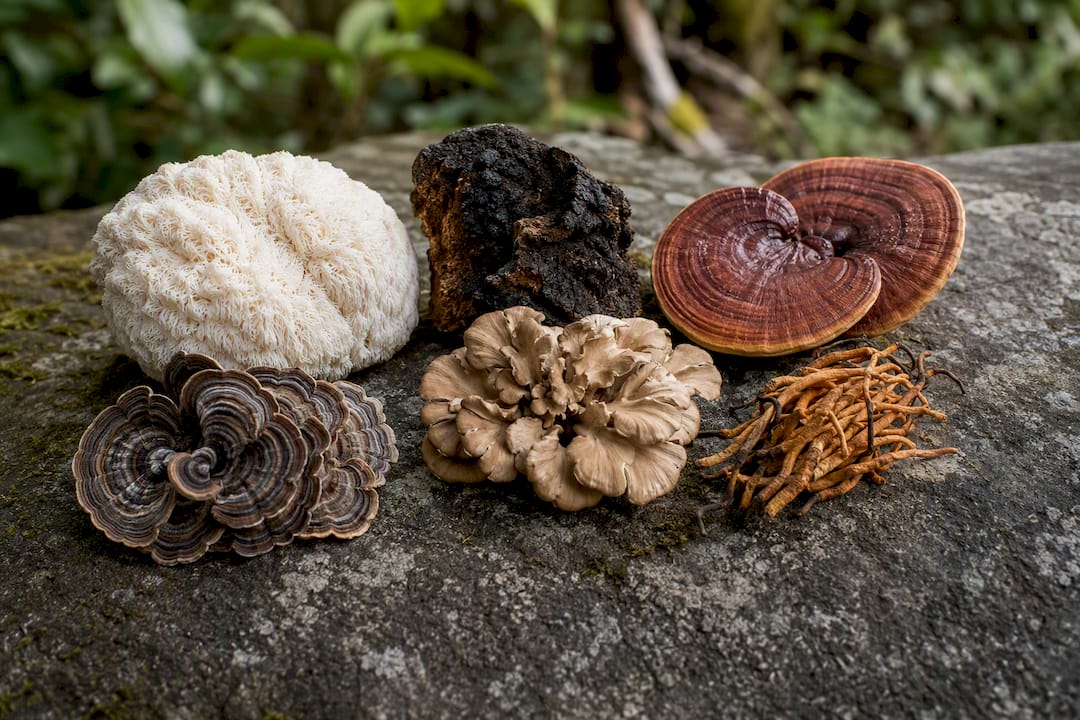
Emberk builds its blends from six functional mushrooms, lion’s mane, chaga, reishi, turkey tail, maitake, and cordyceps, using 100% fruiting bodies rather than mycelium grown on grain. That distinction matters: extraction method directly affects the concentration of active mushroom compounds, and fruiting-body extracts generally deliver more of what you’re actually paying for. Every batch is lab-tested with no fillers added, and Emberk has served over a million cups to date, a usage signal that speaks to consistent repeat demand rather than a one-time trend.
The Caffeine Conversation Nobody’s Having Honestly
Most articles on mushroom coffee treat the mushroom benefits as the headline and caffeine as a footnote. I’d argue that’s backwards. The caffeine reduction is the one thing you can measure, verify on a label, and feel within the hour. The cognitive and stress-support claims around lion’s mane or reishi are worth paying attention to, but they’re built on a thinner evidence base, mostly preclinical and animal research, and treating them as settled science oversells what anyone can currently promise you.
Here’s what I think gets underestimated: the real value of mushroom coffee isn’t that it makes you smarter or calmer. It’s that it gives you a caffeine floor you can actually control, somewhere between decaf and a full cup, without abandoning the ritual of coffee altogether. If you’re chasing a specific mushroom’s benefits, that’s a longer, more patient bet. If you’re chasing steadier energy without the crash, that’s the part backed by numbers you can check on a label today. Start there, and treat everything else as a bonus you’re still waiting on the research to confirm.
— Tatiana
Try a Lower-Caffeine Mushroom Coffee From Emberk
If the math above has you rethinking your daily cup, Emberk gives you a way to cut caffeine without losing the ritual, or guessing what’s actually in your mug. Every blend combines lion’s mane with five additional adaptogens, gets lab-tested for purity, and skips the fillers that muddy so many blends on shelves.
The instant blend is the easiest starting point if you want a straightforward swap for your regular cup. Prefer something creamier? The mushroom latte works well as a milk-based alternative for readers who want fewer notes of straight black coffee. Subscribing also locks in savings on repeat orders, which matters if this becomes a daily habit rather than a one-off experiment. Ready to see the numbers for yourself? Check out Emberk’s mushroom coffee and read the current lab results before your next order.
This article is general information, not a substitute for advice from a qualified doctor. Consult a qualified healthcare professional about your own circumstances before acting on anything here.
Sources
- Mushroom Coffee: What It Is, Benefits, and Downsides
- Is Mushroom Coffee Good for You?
- PMC review on medicinal mushrooms (2023)
- The 4 Best Mushroom Coffees of 2026, Tested & Reviewed
FAQ
Does mushroom coffee have a lot of caffeine?
Not usually. Most blends run 35 to 50 mg per serving, though some dark-roast versions climb to 80 to 90 mg, so it’s worth checking the specific product’s label.
What is the downside to mushroom coffee?
The main downsides are inconsistent caffeine labeling across brands and health claims for the mushrooms themselves that outpace the current human research.
Why do I feel weird after drinking mushroom coffee?
That reaction usually comes from caffeine sensitivity, an individual response to one of the mushroom extracts, or natural variability between batches, not a sign that something is wrong with the product.
Is mushroom coffee actually good for you?
Lower caffeine is a real, measurable benefit for many people, but broader health claims about the mushrooms rely mostly on preclinical research, so it’s fair to view mushroom coffee as a reasonable swap rather than a cure.
0 comments