

Mushroom coffee can help some people feel less jittery and anxious because it typically halves the caffeine per cup and adds adaptogenic mushrooms that support your body’s stress response. It’s not a medical treatment for an anxiety disorder, and it won’t erase a stressful day. But if racing thoughts and a pounding heart after your second cup sound familiar, the lower dose alone often makes a real difference.
Here’s the short version of why:
- Less caffeine, less overstimulation. Many blends cut caffeine significantly compared to a standard cup.
- Adaptogens for the long game. Mushrooms like reishi may help regulate cortisol over time, not instantly.
Caffeine callout: Mushroom coffee generally contains about 50% of the caffeine found in a regular cup, which is the single biggest reason anxious coffee drinkers notice a calmer experience. If you want a jitter-free option built around that math, Emberk’s mushroom coffee is a reasonable place to start.
Key Takeaways
Mushroom coffee eases anxiety mainly by cutting caffeine per cup, with adaptogenic mushrooms offering a slower, secondary layer of stress support.
| Point | Details |
|---|---|
| Caffeine cut is the main lever | Most blends deliver about 50% of the caffeine in a regular cup, reducing overstimulation. |
| Adaptogens work slowly | Reishi and cordyceps may support cortisol regulation, but effects build over weeks, not one cup. |
| Evidence is still limited | Most positive findings come from preclinical or small human studies, not mushroom-coffee-specific trials. |
| Know your interactions | Reishi and blood thinners, chaga and oxalates deserve a conversation with a clinician first. |
| Emberk fits the evidence-based approach | Emberk uses six lab-tested, fruiting-body mushrooms with no fillers for a jitter-free, lower-caffeine cup. |
Table of Contents
- Is Mushroom Coffee Good for Anxiety? How It Works
- Which Mushrooms Show the Most Promise for Calm?
- How Much Caffeine Is Too Much for Anxious Drinkers?
- What Are the Downsides of Mushroom Coffee?
- How Do You Try Mushroom Coffee for Anxiety the Right Way?
- Why Emberk’s Approach Fits This Evidence
- What the Research Actually Tells Anxious Coffee Drinkers
- Try a Calmer Cup Without Giving Up Coffee
- Sources
- FAQ
Is Mushroom Coffee Good for Anxiety? How It Works
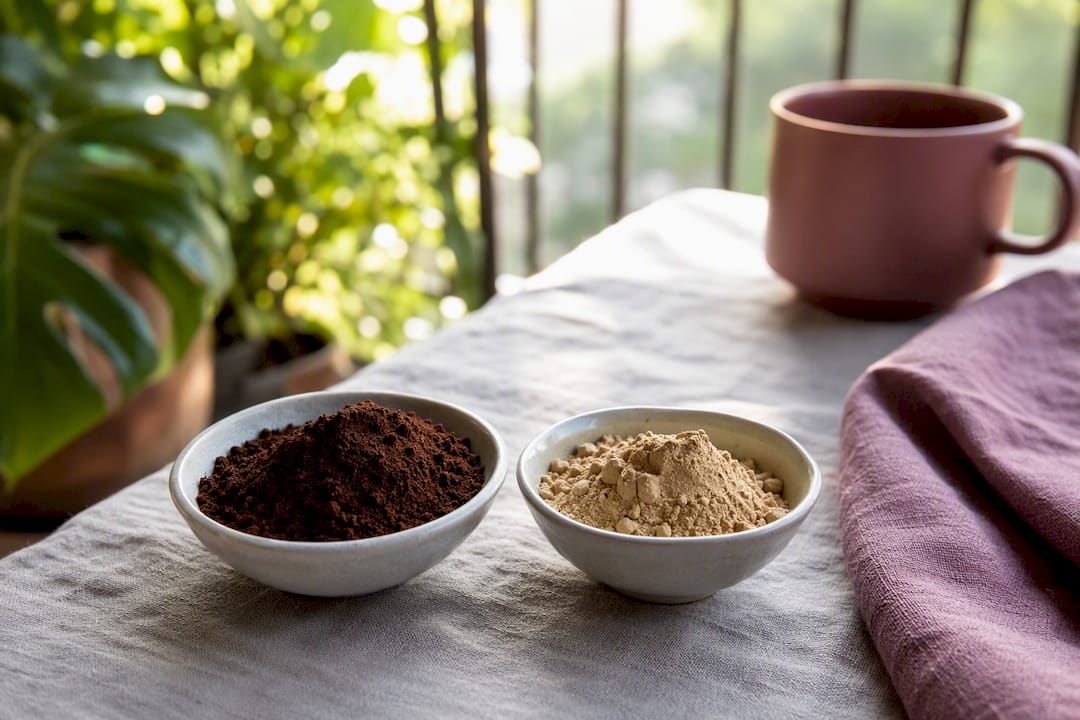
The mechanism is simpler than it sounds, and it starts with basic math. Most mushroom coffee blends mix mushroom powder and ground coffee at roughly a 1:1 ratio, and because mushroom powder itself has no caffeine, that dilution cuts total caffeine content close to half of what a standard cup delivers.
That matters because caffeine’s physical effects overlap almost exactly with anxiety symptoms. It stimulates your central nervous system, raises heart rate, and can trigger a cortisol spike, the same stress hormone your body releases during a fight-or-flight response. If you’re prone to anxious spirals, a jolt of 150 milligrams can feel a lot like the early stage of a panic response. Cut that dose in half, and experts note the reduction in caffeine volume itself is the most immediate factor preventing that overstimulation.
Then there’s the second lever: adaptogens. An adaptogen is a plant or fungal compound believed to help the body adapt to physical and emotional stress rather than reacting to it. Reishi and cordyceps fall into this category, and may help regulate cortisol so your stress response doesn’t overshoot.
Keep your expectations grounded here. Adaptogens tend to work cumulatively over days or weeks, not in the ten minutes after you finish your mug.
Which Mushrooms Show the Most Promise for Calm?
Not every mushroom in a blend is pulling the same weight, and the evidence behind each one varies quite a bit. Here’s a realistic breakdown:
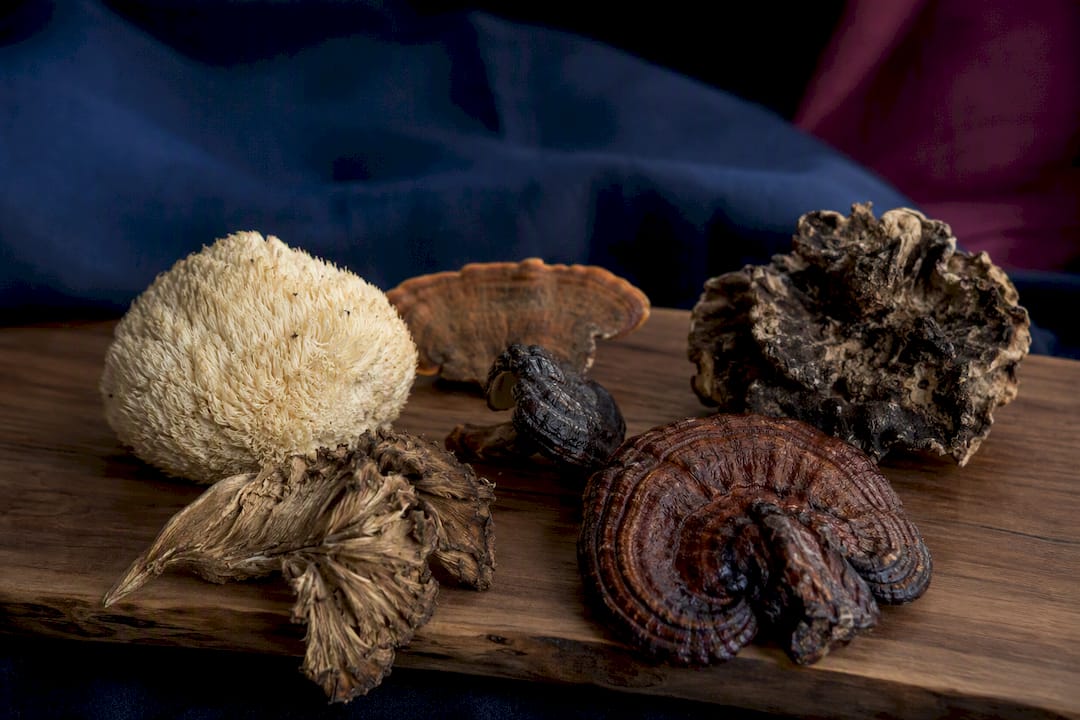
- Lion’s mane: Small human and animal studies show mood and cognitive signals worth watching, though the research base is thin.
- Reishi: Long-standing adaptogenic reputation, with some stress-related pathways identified in preclinical work.
- Cordyceps: Better documented for energy and stamina than for anxiety specifically.
- Chaga: Strong antioxidant profile, less direct anxiety data.
- Turkey tail: Mostly studied for immune modulation rather than mood.
The honest caveat applies across the board. Much of the encouraging data comes from lab work or isolated compounds, not from finished mushroom coffee products brewed the way you’d drink them at your kitchen counter. Processing, dosage, and blending can all change how much of a mushroom’s original bioactive punch survives into your cup. If you want a deeper profile of what each mushroom actually does in the body, Emberk’s guide to medicinal mushrooms breaks it down mushroom by mushroom.
How Much Caffeine Is Too Much for Anxious Drinkers?
Caffeine sensitivity isn’t uniform, but there are useful benchmarks. Most healthy adults tolerate 100 to 200 milligrams without trouble, while intake above 300 to 400 milligrams a day is where side effects like racing heart, restlessness, and disrupted sleep become common. Genetics, body weight, sleep debt, and baseline anxiety all shift where your personal line sits.
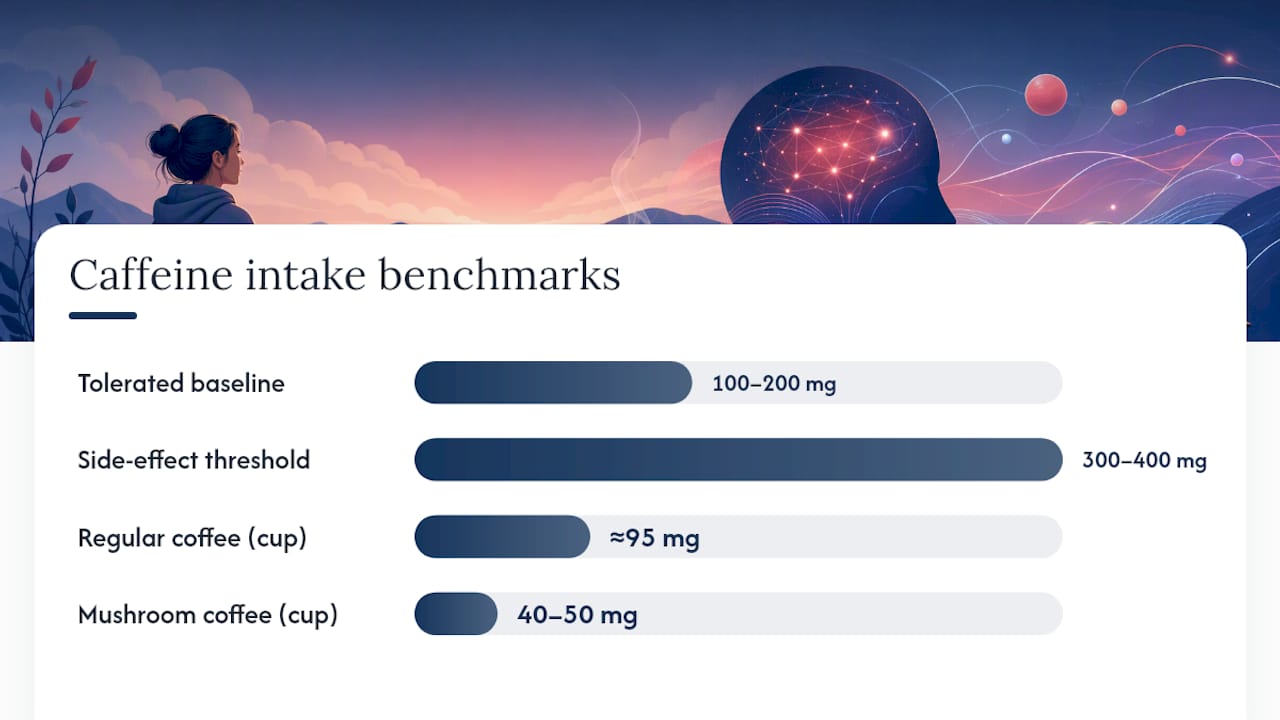
A standard cup of regular coffee runs roughly 95 milligrams of caffeine. A comparable cup of mushroom coffee often lands closer to 40 to 50 milligrams, thanks to that mushroom-to-coffee dilution.
To plan your day around this:
- Total your daily caffeine across coffee, tea, and any pre-workout or soda, not just your morning cup.
- Swap your riskiest cup, usually the afternoon one, for a mushroom blend first.
- Compare formats: mushroom coffee sits between half-caff (roughly 50% reduction, same flavor profile) and decaf (95% or more removed, but often missing the ritual of a “real” coffee taste).
- Reassess weekly rather than judging from a single day.
The Manual’s reporting on caffeine sensitivity points out that because genetics and baseline stress set your personal tipping point, a lower starting dose helps many drinkers simply stay under it.
What Are the Downsides of Mushroom Coffee?
No functional beverage is risk-free, and mushroom coffee has a few specific interactions worth knowing before you switch. Reishi can have mild blood-thinning properties, so it may interact with anticoagulant medications. Chaga is high in oxalates, a compound tied to kidney stone risk in susceptible people, so anyone with a history of kidney stones should be cautious.
Reported side effects in consumer write-ups include:
- Upset stomach or mild digestive discomfort
- Dizziness in sensitive individuals
- Disrupted sleep if consumed too late in the day
- Rare liver or kidney concerns in people with existing organ conditions
Pro Tip: If you’re on prescription medication for any chronic condition, run your mushroom coffee choice by a pharmacist first. Interactions with reishi and blood thinners are documented but often missed because “it’s just coffee” doesn’t sound like a red flag.
Anyone pregnant or nursing, immunocompromised, on anticoagulants, or managing liver or kidney disease should talk to a clinician before adding mushroom coffee to a daily routine. And if you’re managing a diagnosed anxiety disorder, mushroom coffee is a complementary beverage, not a substitute for prescribed therapy or medication.
How Do You Try Mushroom Coffee for Anxiety the Right Way?
Treat this like a small, personal experiment rather than a leap of faith.
- Swap one daily cup, ideally your most caffeine-heavy one, for a mushroom coffee blend.
- Start with half a serving or one blended cup, and skip additional caffeine for six to eight hours afterward.
- Track heart rate or jitteriness, sleep quality, a simple 1 to 10 anxiety rating, and how consistent your energy feels through the afternoon.
- Keep this up for two to four weeks before drawing conclusions, since adaptogenic effects build gradually rather than kicking in after one cup.
- Stop and consult a doctor if you notice new digestive issues, unusual fatigue, or worsening anxiety.
Pro Tip: Keep a one-line note on your phone each afternoon: “Cup at 8am, anxiety 4/10, slept fine.” Four weeks of one-line notes tells you more than a single dramatic day ever will.
Why Emberk’s Approach Fits This Evidence
If you’re going to try a mushroom coffee, sourcing matters as much as the concept itself. Whole, organic fruiting-body extracts deliver more consistent bioactive profiles than mycelium-grown-on-grain powders, which can carry starchy fillers that dilute the mushroom content you’re actually paying for.
Emberk builds its coffee, lattes, and matcha from six functional mushrooms, lion’s mane, chaga, reishi, turkey tail, maitake, and cordyceps, using 100% fruiting bodies with no added sugars or fillers. Every batch is lab tested, which addresses the sourcing gap that undermines a lot of mushroom coffee on the shelf.
Anxious coffee drinkers rarely need a miracle ingredient. They need a lower dose of the thing that’s overstimulating them in the first place, paired with mushrooms that are actually what the label says they are.
The brand has served over a million cups, a track record built on people repeating the swap rather than trying it once. For a closer look at the mechanisms behind that blend, Emberk’s deep dive into mushroom coffee benefits walks through the reasoning in more detail, and the product page lists exact mushroom content per serving.
What the Research Actually Tells Anxious Coffee Drinkers
The conventional advice on this topic tends to oversell adaptogens and undersell arithmetic. Most articles lead with reishi’s stress-regulating reputation and bury the caffeine math in a footnote, when the caffeine reduction is doing most of the visible work for most people, most of the time.
That doesn’t make the mushrooms decorative. It means you should prioritize the dose you’re actually consuming before you get excited about cortisol pathways that take weeks to show up. If you switch to a mushroom coffee and still stack it with two energy drinks, you’ve solved nothing.
What the evidence actually supports is modest and useful: lower your caffeine load, choose a product made from real fruiting bodies instead of grain-filled mycelium, and give it a full month before deciding whether it’s working. Anyone selling you an instant calm in a cup is selling you the wrong story. Anyone helping you lower your daily dose without losing your morning ritual is solving the right problem.
Try a Calmer Cup Without Giving Up Coffee
Emberk gives anxious coffee drinkers a real alternative to either quitting caffeine entirely or riding out the jitters: a cup built around roughly half the caffeine of regular coffee, with six fruiting-body mushrooms doing the adaptogenic work reishi and cordyceps are known for.
Every blend is lab tested, sourced from whole fruiting bodies rather than grain-based mycelium, and free of fillers or added sugar, which solves the sourcing problem that undermines a lot of mushroom coffee on store shelves. If you’d rather sip a latte than brew a cup, the mushroom latte uses the same mushroom lineup in a creamier format. And if straight decaf feels like a better fit some mornings, East View Coffee’s decaffeinated beans are worth a look too.
Start your own two-week trial today: order a bag from Emberk’s mushroom coffee collection, swap one cup a day, and track how your afternoons feel by the end of week two.
Sources
- Mushroom Coffee: What It Is, Benefits, and Downsides
- Mushroom coffee: Should you be drinking it? — Cleveland Clinic
- Mushroom coffee benefits: What science says about this trending brew
- The Truth About Mushroom Coffee Benefits vs. Hype
FAQ
Is mushroom coffee good for anxiety?
It can help some people because it typically halves caffeine per cup and includes adaptogens like reishi, though clinical evidence remains limited and it’s not a treatment for diagnosed anxiety disorders.
Which coffee is best for anxiety?
Coffee with lower total caffeine tends to cause fewer anxiety symptoms; mushroom coffee, half-caff, and decaf all work, with mushroom coffee offering the added benefit of adaptogenic mushrooms alongside the caffeine cut.
What’s the downside of mushroom coffee?
Reported downsides include upset stomach, dizziness, sleep disruption if taken late, and possible interactions such as reishi with blood thinners or chaga’s oxalate content for people prone to kidney stones.
Which mushroom coffee is best for anxiety?
Look for products made from whole fruiting-body mushrooms with no fillers and third-party lab testing; Emberk’s blend uses six fruiting-body mushrooms, including reishi and lion’s mane, at roughly half the caffeine of regular coffee.
Does mushroom coffee help anxiety immediately?
No, most of the calming effect from lower caffeine is noticeable right away, but adaptogenic benefits from mushrooms like reishi build gradually over two to four weeks of consistent use.
0 comments