

Plain black mushroom coffee made with pure extract powders usually will not break intermittent fasting when your goal is metabolic health or weight management. Blends with MCT oil, collagen, sweeteners, or dairy often do, because they cross common calorie and macronutrient thresholds. A practical rule many fasters use: if a serving has less than one gram combined protein, carbs, and fat, it typically fits a fast, though autophagy-focused fasters tend to hold a stricter, water-only line. We built this guide, as Emberk, to help you match the coffee to your goal.
TL;DR:
- Pure mushroom extract coffee with no added fats or sweeteners typically remains within the one-gram macros threshold, making it suitable for metabolic fasting goals.
- Blends containing MCT oil, collagen, or dairy generally exceed this threshold, potentially disrupting fasting, especially during autophagy or strict cellular repair fasts.
- The body’s response depends on caloric intake, insulin activation, and mTOR stimulation, with protein and carbohydrate sources being the primary triggers for breaking fasts.
- Timing and beverage composition are crucial, as earlier consumption in the fasting window causes fewer cravings, and testing personal responses with ketone or glucose monitors improves accuracy.
- Always review nutrition labels for calories or macros, opt for extract-only products, and avoid added sugars or dairy to stay within fast-compatible guidelines.
Table of Contents
- What Your Fasting Goal Means for What You Can Drink
- The Real Triggers: Calories, Insulin, and the mTOR Switch
- Applying the Rules to Common Mushroom Coffee Types
- What the Research Says About Mushrooms, Ketosis, and Autophagy
- Reading the Label: A Checklist Before You Buy
- How to Actually Drink Mushroom Coffee During a Fast
- Safety Checks Before You Add Mushroom Coffee to Your Routine
- The Bottom Line on Mushroom Coffee and Fasting
- Where Emberk Stands on Mushroom Coffee and Fasting
- A Fasting-Friendly Option Worth Trying
- Sources
- FAQ
What Your Fasting Goal Means for What You Can Drink
Not all fasting goals carry the same tolerance for a cup of coffee, and that is the piece most guides skip. Your goal decides how strict you need to be about what enters your body during the fasting window.
- Metabolic or weight-loss fasting generally tolerates trace calories and black coffee additions without derailing results.
- Ketosis-focused fasting cares less about tiny calories and more about avoiding carbs or protein that could spike insulin and pull you out of fat-burning mode.
- Autophagy or cellular-repair fasting is the strictest, since even a few grams of protein can activate mTOR, a growth pathway that tells cells to build rather than clean house.
That is why the same cup of mushroom coffee can be a fine choice for one person and a fast-breaker for another. A 4-week Lion’s Mane trial found no significant shift in metabolic flexibility markers from a daily 10-gram dose, which suggests the mushroom extract itself is not the variable to worry about. The other ingredients riding along in your cup are. Many fasters use a practical shortcut here: the “one-gram rule,” meaning a beverage with under one gram combined of protein, carbs, and fat is generally treated as fast-compatible for metabolic goals.
The Real Triggers: Calories, Insulin, and the mTOR Switch
Your body does not care whether a drink is called “coffee” or “tea.” It responds to what is actually in the cup: calories, protein, carbohydrate, and fat, each pulling a different lever.
- Calories signal your body to stop the fasting state once they cross a meaningful threshold, though there is no single universal number that applies to every protocol.
- Insulin rises mainly in response to carbohydrate and protein, not fat, which is why a splash of cream behaves differently than a spoonful of sugar.
- mTOR, the growth pathway most tied to autophagy, is triggered by protein and certain amino acids, even in small amounts.
Mayo Clinic notes that black coffee is commonly allowed during intermittent fasting for metabolic benefits, but strict definitions built around autophagy may exclude any non-water intake at all. That gap between “commonly allowed” and “technically zero” is exactly why goal matters more than the coffee itself.
**One flat white with two tablespoons of MCT oil adds enough calories and fat to end a metabolic fast outright, according to typical MCT oil nutrition figures, enough to end a metabolic fast outright even though it contains zero sugar. That single addition illustrates how far a “healthy” ingredient can push a drink outside fasting boundaries.

Applying the Rules to Common Mushroom Coffee Types
Once you know the mechanisms, sorting mushroom coffee into fast-friendly and fast-breaking categories gets much simpler. Here is how the main product types shake out.
- Coffee with pure mushroom extract powder (Lion’s Mane, Chaga, Reishi, and similar) typically adds only one to five calories per serving and negligible protein, carbs, or fat, keeping it within the one-gram threshold for most metabolic fasts.
- Blends with added MCT oil or collagen usually carry meaningful fat or protein per scoop, which can raise ketones (helpful for ketosis) while still activating mTOR through the protein, a problem for autophagy-strict fasting.
- Latte-style drinks made with dairy or creamer almost always exceed the one-gram threshold through lactose and milk protein, placing them outside any fasting window regardless of goal.
- Sweetened versions, even with stevia or monk fruit, can vary: sugar alcohols and certain sweeteners still carry a small carbohydrate load, so the label matters more than the flavor claim on the front of the bag.
A fat-forward blend with MCT oil sits in a gray zone worth naming directly: it may support ketosis by nudging ketone production upward without a large insulin response, yet the same drink would be considered a break for anyone chasing strict autophagy, since the goal there is zero intake, not just low carbs.
Pro Tip: Flip the bag over before you buy: “mushroom coffee” on the front tells you nothing about whether it breaks your fast, but the nutrition panel on the back does.
What the Research Says About Mushrooms, Ketosis, and Autophagy
The honest answer is that direct research on mushroom coffee and fasting barely exists yet, so we lean on adjacent evidence and basic physiology. The picture that emerges is more reassuring than alarming, once you separate the mushroom extract from everything else in the cup.
A controlled crossover study on early time-restricted feeding found that shifting meal timing lowered mean 24-hour glucose by about 4 mg per deciliter and increased expression of autophagy-related genes like LC3A, compared with later eating windows. That tells us the timing of your fast matters enormously, arguably more than the occasional trace calorie from a mushroom extract.
On the mushroom side specifically, evidence stays mixed. An acute Hericium erinaceus trial reported some domain-specific benefits, like faster performance on cognitive tests, alongside no consistent effect across every measure tested, and sample sizes in this research area remain small. Mechanistically, that fits what you would expect: pure extracts contribute close to zero calories and should not meaningfully move insulin or ketones on their own, MCT oil raises ketones because it is metabolized quickly into ketone bodies, and any protein source can nudge mTOR regardless of how small the serving looks. The gaps in direct evidence are exactly why practical thresholds like the one-gram rule exist. They are not perfect science, but they are a reasonable stand-in until more targeted research on mushroom coffee itself gets done. For readers who want a deeper look at how beverage doses compare with clinical supplement doses, this breakdown of typical serving sizes is worth a read.

Reading the Label: A Checklist Before You Buy
Marketing copy on the front of a bag will tell you almost nothing useful about fasting compatibility. The nutrition facts panel will tell you everything.
- Check calories per serving first. Anything under about five calories is a strong signal the product is extract-only.
- Look at grams of protein, carbs, and fat combined. Under one gram total generally clears the practical fasting threshold for metabolic goals.
- Scan the ingredient list for MCT oil, collagen, or protein powder. Any of these usually push a product into fat or protein territory that matters for ketosis or autophagy.
- Note the mushroom extract dose in milligrams. Beverage doses often sit in the 100 to 250 milligram range, far below the multi-gram doses used in clinical trials, which sets realistic expectations for what a single cup can do.
- Watch for added sweeteners or dairy. Even “natural” sweeteners can carry a small carbohydrate load worth accounting for.
Pro Tip: When in doubt, choose the version labeled unsweetened and dairy-free. It is almost always the closest thing to a true extract-only cup.
How to Actually Drink Mushroom Coffee During a Fast
Getting the timing and preparation right matters as much as picking the right product. A few habits make this easier to stick with day after day.
- Drink it black, or with a splash of water only, during metabolic or ketosis-focused fasting windows to stay well under the one-gram threshold.
- Add MCT oil only if your goal is ketosis, since it can support ketone production but will still count against a strict autophagy protocol.
- Skip protein powder or collagen entirely if cellular repair or autophagy is the point of your fast, since even small amounts can activate mTOR.
- Reach for monk fruit or stevia sparingly if you want a touch of sweetness without a meaningful carbohydrate load.
- Test your own response with a glucose or ketone monitor for a week if you want data specific to your body rather than relying on general guidelines alone.
Timing-wise, having your mushroom coffee earlier in the fasting window, rather than right before you plan to break the fast, tends to cause fewer cravings and less temptation to add extras later on.
Safety Checks Before You Add Mushroom Coffee to Your Routine
Fasting already shifts your hormones and blood sugar, so it is worth being deliberate about what you add on top of that.
- Watch your total caffeine load, since stacking mushroom coffee with regular coffee can push you into a range that disrupts sleep or raises stress hormones, working against the benefits you are fasting for in the first place.
- Check for medication interactions, particularly with blood thinners or immune-modulating drugs, since some functional mushrooms can interact with these.
- Prioritize third-party tested products to confirm what is actually in the powder matches the label.
- Stop and speak with a clinician if you are pregnant, managing an autoimmune condition, or taking prescription medication that could interact with adaptogenic mushrooms.
The Bottom Line on Mushroom Coffee and Fasting
Extract-only, unsweetened mushroom coffee generally fits metabolic and ketosis-focused fasting, while anything with MCT oil, collagen, dairy, or sweeteners tends to push past the practical one-gram threshold. Autophagy purists should stick to water alone. Your next three moves: check the nutrition label for calories and macros, choose a black extract-only cup during your fasting window, and test one serving to see how your body responds before making it a habit.
Where Emberk Stands on Mushroom Coffee and Fasting
We built Emberk’s mushroom coffee around fruiting body extracts with no fillers, because we think fasters deserve a straight answer rather than a marketing shortcut. Our view: perfect metabolic purity matters less than a routine you can actually keep. A fasting plan you abandon over a splash of coffee is worse than one that flexes slightly to fit real life. The evidence on functional mushrooms themselves is still developing, and we would rather say that plainly than oversell it.
— Emberk
A Fasting-Friendly Option Worth Trying
If you want an extract-first mushroom coffee without guessing what is in the bag, our Mushroom Coffee with Lion’s Mane and five adaptogens is built without fillers or added sugar, priced at $34 for a one-off order. For travel days or a lighter commitment, the Mushroom Coffee Travel Pack runs $34 as well and fits easily into a bag or desk drawer.
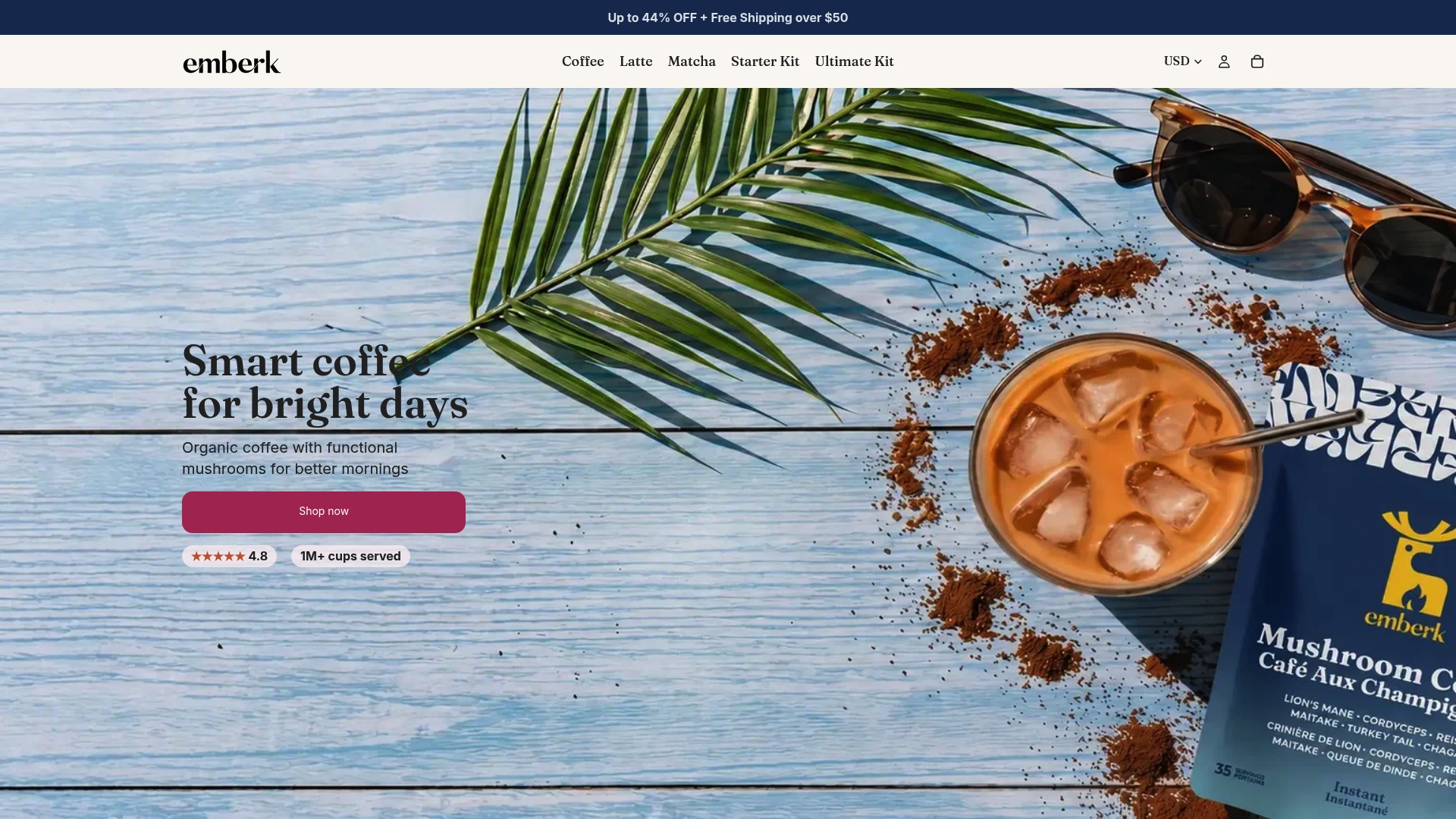
- Every blend uses 100% fruiting body mushrooms, never mycelium fillers, so the label matches what is in the cup.
- Sourcing is organic and high-altitude grown, which supports the same label transparency this guide asks you to look for.
- No dairy, no added sweeteners, which keeps the macro count low enough to fit most fasting windows.
Browse the full lineup on our shop page if you want to compare the coffee, latte, and matcha options side by side before you order.
Sources
The Lion’s Mane metabolic trial, the time-restricted feeding study, the acute cognition trial, and Mayo Clinic’s fasting guidance each shaped the thresholds and cautions in this guide. For a wider look at nutrients tied to brain function, SNAP Brain Health’s overview offers useful context.
- Four Weeks of Hericium erinaceus Supplementation Does Not Impact Markers of Metabolic Flexibility or Cognition - PMC
- Acute effects of a standardised extract of Hericium erinaceus (Lion’s Mane) on cognition and mood in healthy younger adults: a double-blind randomized placebo-controlled study - PubMed
- Can you drink coffee while fasting? - Mayo Clinic
FAQ
Will Mushroom Coffee Break My Fast?
Plain, extract-only mushroom coffee with no MCT oil, dairy, or sweeteners generally does not break a fast for metabolic or weight-loss goals, since it usually falls under the one-gram combined protein, carb, and fat threshold many fasters use. Blends with MCT oil, collagen, or creamer often do, because they add enough fat or protein to trigger insulin or mTOR activity.
Why Is 16 Hours Often Cited as a Fasting Target?
Sixteen hours reflects the popular 16:8 intermittent fasting protocol, where research on early time-restricted feeding has shown improvements in 24-hour glucose control and increased expression of genes tied to autophagy, according to a controlled crossover study. It is a practical, sustainable window rather than a fixed biological cutoff.
Does Lion’s Mane Break a Fast?
Pure Lion’s Mane extract contributes negligible calories and no meaningful protein or carbohydrate, so it does not appear to break a fast on its own. A 4-week supplementation trial found no significant change in metabolic flexibility markers at a 10-gram daily dose, though this was a supplement dose far higher than a typical beverage serving.
Does Mushroom Coffee Spike Cortisol?
There is no direct evidence that mushroom extracts themselves raise cortisol, and caffeine is the more likely factor to watch. Excess caffeine, especially when stacked from multiple sources, can disrupt sleep and stress hormones, which may work against the benefits you are fasting for in the first place.
0 comments