

The best time to drink mushroom coffee is in the morning, ideally within the first hour or two after waking, or in the early afternoon if your sleep is reliably sound. Those two windows let you work with your body’s natural energy rhythms rather than against them. A Lion’s Mane-forward blend like Emberk’s mushroom coffee supports calm, focused energy in the morning, while a small cup before 2 p.m. can smooth out the midday dip without pushing caffeine into the hours when your brain is winding down for sleep.
Here’s a quick map of the best timing windows by goal:
- Morning focus (7–9 a.m.): Lion’s Mane supports cognitive function; low-to-moderate caffeine delivers alertness without the spike-and-crash of a standard espresso.
- Pre-workout (30–45 minutes before training): Cordyceps is associated with aerobic endurance; pairing it with caffeine’s stimulant effect may support perceived effort and output.
- Mid-morning task window (9–11 a.m.): Drink 30–60 minutes before a presentation, study session, or deep-work block to align onset with peak focus.
- Early afternoon (12–2 p.m.): A half-serving or lower-caffeine blend can bridge the post-lunch slump, but only if you sleep well and your bedtime is late enough to clear the caffeine.
- Evening: Skip the caffeinated version. A Reishi-based, caffeine-free blend is a gentler option for winding down.
Health Canada and NCBI both note that mushroom products vary by species and formulation, so reading your label matters as much as reading the clock.
Key Takeaways
The best time to drink mushroom coffee is morning (30–60 minutes after waking) for focus, pre-workout for Cordyceps benefits, and no later than early afternoon to protect sleep quality.
| Point | Details |
|---|---|
| Morning is the prime window | Drink 30–60 minutes after waking, once cortisol starts to taper, for calm, focused energy. |
| Pre-workout timing matters | Consume 30–45 minutes before training to align caffeine and Cordyceps effects with your session. |
| Afternoon cutoff protects sleep | Count back 6 hours from your bedtime; that’s your latest safe caffeine cutoff. |
| Evening means caffeine-free | Switch to a Reishi-based blend at night to support wind-down without disrupting sleep. |
| Emberk fits the timing | Emberk’s low-to-moderate caffeine and 100% fruiting-body formula is designed for the morning-to-early-afternoon window. |
Table of Contents
- What’s the best time to drink mushroom coffee for morning focus?
- Should you drink mushroom coffee before or after a workout?
- Mid-morning timing for presentations, studying, and deep work
- Can afternoon mushroom coffee work without wrecking your sleep?
- Should you drink mushroom coffee at night?
- What does the research actually say about timing, onset, and duration?
- Is daily mushroom coffee safe, and who should be careful?
- Sample day plans for common goals
- Simple recipes for every timing goal
- A note on timing from Emberk
- Emberk mushroom coffee fits the timing advice in this guide
- Sources
- FAQ
What’s the best time to drink mushroom coffee for morning focus?
Most people get the most out of mushroom coffee when they drink it 30–60 minutes after waking, rather than the very first thing they do. Here’s why that small delay matters: your cortisol naturally peaks in the first 30–45 minutes after you wake up, a process driven by your circadian rhythm. Stacking caffeine on top of that cortisol surge doesn’t amplify alertness; it mostly wastes the caffeine and can leave you feeling wired rather than focused. Waiting until that natural peak starts to taper means the caffeine and adaptogens in your cup have more room to do their job.
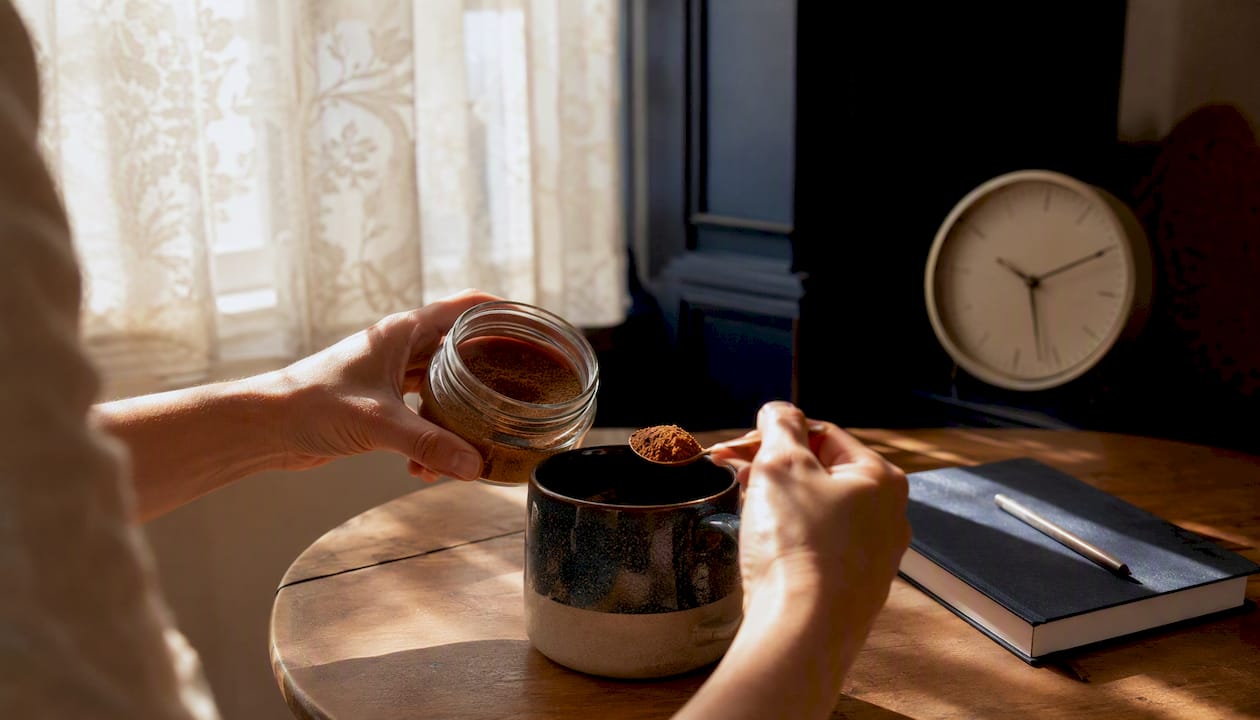
Lion’s Mane is the mushroom most associated with cognitive support. It contains compounds called hericenones and erinacines that may support the production of nerve growth factor (NGF), a protein involved in maintaining healthy neurons. Think of NGF as the maintenance crew for your brain’s communication network. The effects are subtler and more cumulative than caffeine’s immediate lift, which is why pairing Lion’s Mane with low-to-moderate caffeine (as in Emberk’s blend) tends to produce calm, sustained focus rather than a sharp jolt.
What to check on your label before your first morning cup:
- Fruiting body vs. mycelium: Look for “100% fruiting body” mushrooms. Fruiting-body extracts contain higher concentrations of active compounds like beta-glucans compared to mycelium grown on grain.
- Caffeine level: Mushroom coffee typically contains less caffeine per serving than a standard drip coffee. Confirm the milligrams per serving so you can plan your morning accurately.
- Mushroom species listed: Lion’s Mane for focus, Cordyceps for energy, Reishi and Chaga for antioxidant and adaptogenic support.
- Third-party testing: A lab-tested product reduces the risk of heavy metals or mycotoxins, which can be present in lower-quality mushroom powders.
If you’re transitioning from regular coffee, you don’t have to swap cold turkey. Try replacing one of your daily cups with mushroom coffee for the first week and keep your usual cup for the second. Most people notice fewer jitters and a steadier energy curve within a few days of that gradual shift.
Pro Tip: If you practice intermittent fasting, mushroom coffee made with just hot water fits neatly into a fasting window. Add MCT oil or a splash of oat milk only if you’re not fasting, since those additions break the fast but also slow caffeine absorption slightly, which can extend the focus window.
Should you drink mushroom coffee before or after a workout?
Timing your mushroom coffee around exercise is one of the most practical ways to use it, and Cordyceps is the reason why. This particular mushroom has been studied for its potential to support oxygen utilization and aerobic endurance, making it a natural fit for the pre-workout window.
Here’s how to time it well:
- Drink half an hour to three quarters of an hour before training. Caffeine typically reaches peak plasma concentration within half an hour to an hour of ingestion, so drinking your cup in that window means the stimulant effect aligns with your warm-up and early sets.
- Keep the serving standard, not doubled. More caffeine before a workout doesn’t translate to better performance past a certain point, and a large dose can cause GI discomfort mid-session.
- Pair with a small carbohydrate snack for endurance sessions. A banana or a few crackers alongside your mushroom coffee gives your muscles quick fuel and helps moderate the caffeine’s effect on an empty stomach.
- Consider your workout time relative to bedtime. An evening gym session is where mushroom coffee timing gets tricky. If you train at 7 p.m. and go to bed at 10 p.m., a caffeinated cup at 6:30 p.m. is almost certainly going to affect your sleep quality.
Post-workout, mushroom coffee is less critical. The adaptogens in Reishi and Chaga may support recovery through their antioxidant properties, but if your workout ends in the late afternoon or evening, a caffeine-free Reishi blend is a smarter choice than a full caffeinated cup.
Pro Tip: For endurance training specifically, look for a blend that leads with Cordyceps in the mushroom stack. Not all mushroom coffees weight their species the same way. Check the label for Cordyceps listed among the first two or three mushrooms, which usually signals a higher concentration.
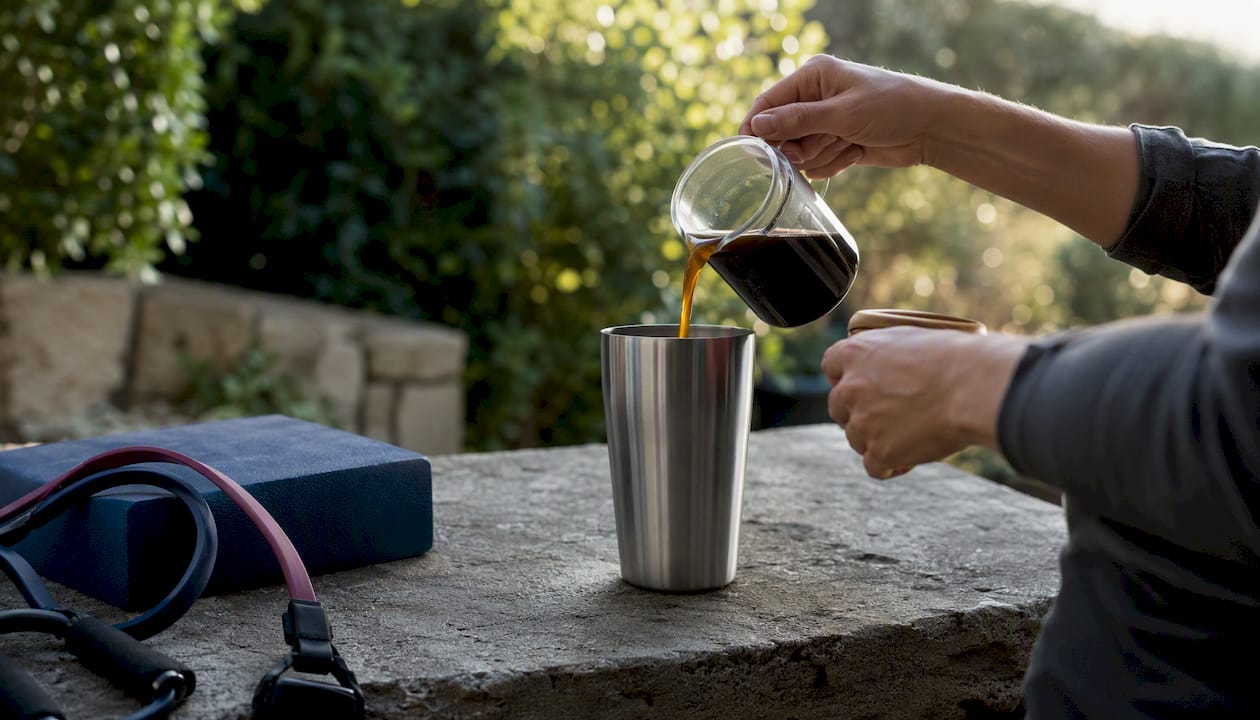
Mid-morning timing for presentations, studying, and deep work
The 9–11 a.m. window is arguably the most underused slot for mushroom coffee. By that point, your morning cortisol has settled, your digestive system is awake, and you have a clear runway before lunch. Drinking your cup 30–60 minutes before a mentally demanding task, whether that’s a presentation, a study block, or a complex writing session, lets the caffeine and Lion’s Mane reach their combined effect right when you need it.
A few things to keep in mind before that focused session:
- Watch your cup size. A standard serving (not a double) is enough for most people to feel alert without the restlessness that can come from too much caffeine before high-stakes tasks.
- Don’t top up right before you speak. Caffeine can cause a mild diuretic effect and, for some people, a slight voice tremor or dry mouth. Finish your cup at least 20 minutes before you step up to present.
- Avoid adding sugar. A sweetened drink can cause a blood sugar spike that competes with the steady focus you’re after. Unsweetened or lightly sweetened is the better call for cognitive tasks.
The University of Toronto’s research on timing and cognitive performance supports the idea that deliberate timing of stimulants before demanding tasks improves outcomes compared to habitual, unplanned consumption.
Can afternoon mushroom coffee work without wrecking your sleep?
Yes, with conditions. The early afternoon, roughly 12–2 p.m., is a reasonable window for a second cup if two things are true: you sleep well most nights, and your bedtime is late enough to give caffeine time to clear your system.
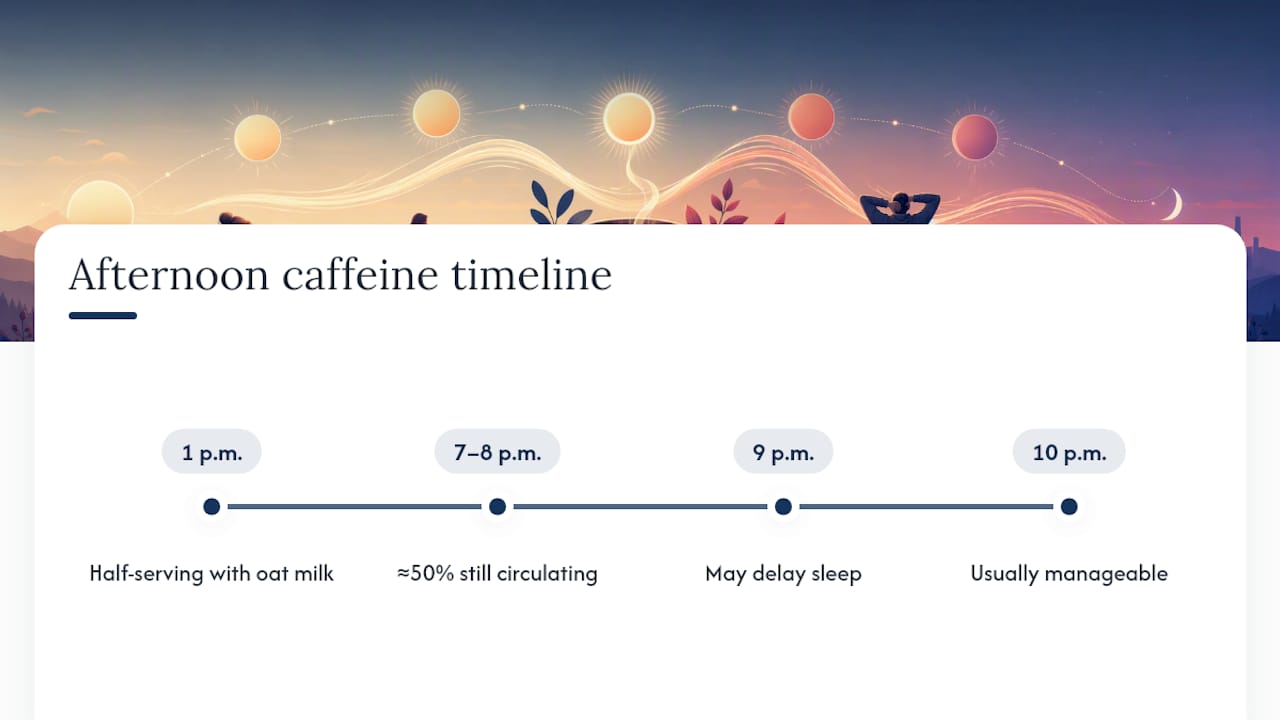
Houston Methodist’s clinical guidance on caffeine and sleep explains that caffeine has a half-life of roughly 5–6 hours in most adults, meaning half of the caffeine from a 2 p.m. cup is still circulating at 7–8 p.m. For someone with a 10 p.m. bedtime, that’s manageable. For someone who goes to bed at 9 p.m. or who is sensitive to caffeine, even a 1 p.m. cup can delay sleep onset.
Emberk’s low-to-moderate caffeine formulation gives you a practical advantage here. A half-serving in the afternoon delivers less total caffeine than a standard drip coffee, which widens your safe window slightly. That said, caffeine sensitivity is genuinely individual, and some people feel the effects of even small amounts well into the evening.
Pro Tip: Try a half-serving of mushroom coffee with warm oat milk around 1 p.m. if you hit the classic 3 p.m. slump. The smaller caffeine dose, combined with the fat in oat milk slowing absorption, tends to produce a gentler lift than a full cup of regular coffee.
Should you drink mushroom coffee at night?
The short answer is no, not if it contains caffeine. Even low-to-moderate caffeine consumed in the evening can delay sleep onset and reduce deep sleep quality, according to Sleep Foundation guidance on stimulants and sleep hygiene. The mushroom ingredients themselves aren’t the problem; it’s the caffeine that makes an evening cup a poor idea for most people.
That said, the evening doesn’t have to be mushroom-free. Reishi, sometimes called the “mushroom of calm,” is well-suited to caffeine-free evening blends. Health Canada’s natural health product database notes Reishi among the mushroom species with recognized traditional use, and its adaptogenic properties make it a natural fit for winding down rather than ramping up.
Who should skip mushroom coffee at night entirely:
- People who are pregnant or breastfeeding (consult a healthcare provider before any mushroom supplement)
- Anyone on immunosuppressant medications, since some mushroom compounds may interact with immune function
- People with known caffeine sensitivity or anxiety disorders
- Anyone who already struggles with sleep onset or maintenance
Simple evening swaps include a Reishi-based caffeine-free blend, chamomile tea, or a warm golden milk with Chaga powder. The ritual of a warm drink matters; you just want one that works with your sleep, not against it.
What does the research actually say about timing, onset, and duration?
Here’s the honest summary: the immediate cognitive lift you feel from mushroom coffee is primarily caffeine-driven. The adaptogenic benefits from Lion’s Mane, Cordyceps, Reishi, and Chaga are real but subtler, and many of them build over time rather than hitting in a single cup.
NCBI’s review of medicinal mushrooms makes clear that human clinical data varies significantly by species and outcome. Lion’s Mane has the most studied cognitive angle; Cordyceps has the most exercise-related research; Reishi has the strongest adaptogenic and immune-support literature. But the National Cancer Institute’s PDQ on mushrooms cautions that evidence for many mushroom health claims remains limited, and that consumers should approach product claims with appropriate skepticism.
What we know with more confidence is the caffeine timeline. Caffeine typically kicks in within 15–45 minutes and can affect alertness and sleep for up to 10 hours in some individuals, depending on metabolism, body weight, and liver enzyme activity. That’s the variable that most directly shapes when you should and shouldn’t drink mushroom coffee.
Pro Tip: Run a one-week personal trial. Drink your mushroom coffee at the same time each day, note your energy, focus, and sleep quality in a simple journal or sleep-tracking app, and adjust the timing by 30 minutes if something feels off. Your own data is the most reliable guide.
Is daily mushroom coffee safe, and who should be careful?
For most healthy adults, daily mushroom coffee is well-tolerated. The caffeine load is typically lower than a standard drip coffee, and the mushroom extracts in quality blends are generally recognized as safe at normal serving sizes. That said, “generally safe” isn’t the same as “safe for everyone.”
Common side effects to watch for:
- Mild digestive upset, especially on an empty stomach
- Sleep disturbance if consumed too late in the day
- Headaches during the first few days if you’re reducing your regular coffee intake simultaneously
Who should talk to a healthcare provider first:
- Pregnant or breastfeeding individuals
- People taking immunosuppressant drugs (mushroom beta-glucans can modulate immune activity)
- Anyone with a known mushroom allergy
- People on blood thinners or diabetes medications, since some mushroom compounds may interact
When you’re choosing a product, Health Products Canada’s licensing database lets you verify whether a natural health product has been reviewed and licensed, which is a meaningful trust signal. Emberk’s mushroom coffee purchase guide walks through exactly what those label claims mean in practice.
This article is general information, not medical advice. If you’re pregnant, on medications, or managing a health condition, confirm mushroom coffee is appropriate for you with a qualified healthcare provider.
Sample day plans for common goals
These schedules are starting points, not prescriptions. Adjust based on your bedtime, caffeine sensitivity, and how your body responds after the first week.
Quick checklist to find your best timing:
- What time do you go to bed? Count back 6 hours. That’s your latest safe caffeine cutoff.
- Are you training today? Drink 30–45 minutes before your session.
- Do you have a high-focus task this morning? Drink 30–60 minutes before it starts.
- Did you sleep poorly last night? Skip the afternoon cup entirely.
Tracking your response for one week using a sleep app like Sleep Cycle or a simple notebook gives you enough data to fine-tune your timing. Most people land on a consistent window within 5–7 days. For more on how functional drinks deliver all-day sustained energy, the approach of aligning drink timing with natural energy cycles is well-supported across the functional beverage category.
Simple recipes for every timing goal
The morning focus mug
Combine one serving of Emberk mushroom coffee with 8 oz of hot water (just off the boil). Stir well and drink 30–60 minutes after waking. Add a splash of oat milk if you prefer a creamier texture. No sweetener needed; the natural earthiness of Lion’s Mane and Chaga is mild.
The pre-workout quick mix
- Add one serving of mushroom coffee to a shaker bottle.
- Pour in 6–8 oz of cold water.
- Add a small banana or 4–5 crackers on the side.
- Drink half an hour to three quarters of an hour before training.
The cold-water prep takes 60 seconds and means you’re not waiting for a kettle when you’re already in gym clothes.
The afternoon latte (lighter version)
Use half a serving of mushroom coffee, 6 oz of steamed oat milk, and a pinch of cinnamon. The smaller dose keeps caffeine lower, the fat in oat milk slows absorption, and cinnamon adds a natural sweetness without sugar. Drink no later than 2 p.m. if your bedtime is around 10 p.m.
The evening wind-down blend
Swap the caffeinated mushroom coffee entirely. Mix a Reishi-based caffeine-free powder with warm almond milk and a small amount of raw cacao. Cacao contains theobromine, a mild stimulant, so keep the amount small (half a teaspoon) if you’re sensitive. This gives you the ritual of a warm, earthy drink without any caffeine to interfere with sleep.
Serving tips by timing:
- Morning: full serving, hot, with or without milk
- Pre-workout: full serving, cold or room temperature, with a small snack
- Afternoon: half-serving, with milk to slow absorption
- Evening: caffeine-free blend only, warm, with calming add-ins like cinnamon or cacao
A note on timing from Emberk
At Emberk, we built our mushroom coffee around one core idea: your morning cup should work with you, not send you into orbit and drop you flat by noon. The caffeine level is intentionally moderate, which is what makes the timing advice in this guide actually usable. A lower-caffeine base gives you a wider safe window in the morning and early afternoon, and it makes the transition from regular coffee genuinely smooth rather than a willpower exercise.
We lab-test every batch for heavy metals and mycotoxins because the mushroom supplement space has real quality variation, and we think you deserve to know exactly what’s in your cup. The benefits of medicinal mushrooms are species-specific and real, but they’re also subtle. Timing your cup well is how you give those ingredients the best chance to do their job.
Emberk mushroom coffee fits the timing advice in this guide
If you’ve read this far, you already know that timing matters, and so does what’s in your cup. Emberk’s mushroom coffee with Lion’s Mane and five adaptogens is formulated specifically for the morning-to-early-afternoon window: low-to-moderate caffeine, 100% fruiting-body mushrooms (Lion’s Mane, Cordyceps, Reishi, Chaga, Turkey Tail, and Maitake), dairy-free, and free of added sugars or artificial ingredients. Lab-tested for purity. Available as a one-time purchase or a subscription so your timing routine never runs dry.
For readers who prefer a creamier option, the Emberk Mushroom Latte delivers the same mushroom stack in a richer, lower-concentration format that works especially well for the afternoon half-serving approach. Browse the full range at Emberk’s mushroom coffee collection and find the blend that fits your schedule.
Sources
These are the primary authoritative sources referenced throughout this guide. Each one is worth bookmarking if you want to go deeper on any of the topics covered.
FAQ
What is the best time to drink mushroom coffee for focus?
The morning window, roughly 30–60 minutes after waking, is best for focus. Waiting until your natural cortisol peak starts to taper means the caffeine and Lion’s Mane have more room to support steady alertness.
How long does it take for mushroom coffee to work?
Caffeine typically reaches peak effect within 30–60 minutes of drinking. Adaptogenic mushroom benefits like those from Lion’s Mane tend to be subtler and build over days of consistent use rather than hitting in a single cup.
Is it good to drink mushroom coffee every day?
Most healthy adults tolerate daily mushroom coffee well, especially blends with low-to-moderate caffeine. People who are pregnant, on immunosuppressants, or managing certain health conditions should check with a healthcare provider first.
Why do I feel off after drinking mushroom coffee?
Mild digestive discomfort or restlessness is most common when mushroom coffee is consumed on an empty stomach or in too large a serving. Try drinking it with a small snack and confirm the caffeine level on your label matches your personal tolerance.
Can mushroom coffee help with weight management?
There’s no strong clinical evidence that mushroom coffee directly causes weight loss. The lower caffeine and absence of added sugars in quality blends like Emberk’s may support steadier energy and fewer cravings compared to sweetened coffee drinks, but it’s not a substitute for broader dietary habits.
0 comments