

Mushroom coffee works on two clocks: caffeine gives an immediate lift within a short period generally around 15 to 45 minutes, while the mushroom compounds, if present at an effective dose, usually need weeks of daily use to show measurable benefits. A 2023 pilot on Lion’s Mane suggested possible faster cognitive changes, but that finding is preliminary and requires further study. Emberk and most credible research agree: judge the caffeine today, judge the mushrooms in two months.
TL;DR:
- Caffeine produces an immediate boost within 15 to 45 minutes, while mushroom benefits like enhanced focus require consistent daily intake over 2 to 8 weeks.
- Most mushroom species, including Lion’s Mane and Reishi, show measurable effects only after several weeks of regular use, not from single doses.
- The potency and timing of effects depend heavily on extract quality, dosage, individual tolerance, and habits like food intake and metabolism.
- Short-term caffeine effects are quick, but mushroom-related cognitive or stress improvements need long-term patience and careful tracking.
- Limited high-quality human trials mean expected benefits are mostly based on lab research and traditional use, not conclusive clinical evidence.
Table of Contents
- How Long Does Mushroom Coffee Take to Work? A Timeline You Can Actually Use
- Why Caffeine Works Fast and Mushrooms Work Slow
- What Changes How Fast You Feel Something
- What You Can Realistically Expect, Timeframe by Timeframe
- Side Effects, Precautions, and When to Talk to a Doctor
- How to Test if Mushroom Coffee Is Actually Working for You
- What Emberk Has Learned From a Million Cups of Feedback
- The Real Takeaway on Timing
- Why Emberk Fits the 8-Week Test You Just Read About
- Sources
- FAQ
How Long Does Mushroom Coffee Take to Work? A Timeline You Can Actually Use
Think of your first cup as two separate stories running side by side. One story moves fast. The other unfolds slowly, almost like watching a garden grow instead of watching a kettle boil.
Here’s how the timeline typically breaks down:
- First 15 to 45 minutes: Caffeine absorbs into your bloodstream and starts blocking adenosine receptors, the switches in your brain that signal tiredness. You’ll likely feel the classic alertness bump here, and it usually peaks around the 30 to 60 minute mark.
- Same session, occasionally: A small 2023 pilot study found that a small 2023 pilot study reported faster cognitive task performance within about an hour after a single moderate dose of Lion’s Mane in a small group of healthy adults. That’s a notable exception to the “mushrooms are slow” rule, but it’s one small trial, not a guarantee you’ll feel the same thing.
- First week: Your body adjusts to the new caffeine load, especially if you’re switching from a stronger caffeine source. Some people notice smoother energy right away simply because there’s less caffeine to crash from.
- 2 to 8 weeks: This is the realistic window where mushroom-related contributions, if they’re going to show up at all, tend to become noticeable. Most functional mushroom research measures outcomes across 4 to 12 week windows, not single sessions.
- Beyond 8 to 12 weeks: If you haven’t noticed anything by this point, it’s worth reassessing dose, consistency, or whether your expectations were calibrated to the caffeine buzz rather than a mushroom effect.
That last point trips up a lot of people. The immediate lift you feel from cup one is almost always the caffeine talking, not the reishi or chaga.
Why Caffeine Works Fast and Mushrooms Work Slow
Caffeine is a small, fat and water-soluble molecule that crosses into your bloodstream quickly and slips past the blood brain barrier without much resistance. Once there, it blocks adenosine receptors, the same receptors that build up “sleep pressure” throughout your day. Block them, and your brain simply doesn’t register fatigue the same way, at least for a few hours.
Mushroom compounds play a different game entirely. Lion’s Mane contains hericenones and erinacines, compounds researchers have linked to nerve growth factor activity. But Medical News Today’s summary of the evidence notes that while one small study found acute cognitive changes, a companion 28 day stress-measurement study didn’t reach strong statistical significance. Promising, but not conclusive.
Statistic Callout: Harvard Health points out that large-scale human clinical trials on mushroom coffee blends are essentially absent. Most of what backs up mushroom coffee benefit claims comes from lab research, animal models, or traditional use, not head-to-head human trials on the actual coffee blend you’re drinking.
Here’s how the species generally stack up on evidence and timing:
- Lion’s Mane: Occasional acute signal in small pilots; more robust changes typically appear at 4 to 12 weeks in trials using higher doses than a typical cup provides.
- Reishi: Traditionally used for stress and sleep support; most human evidence is preliminary or small-scale, with effects measured over weeks to months.
- Chaga: Antioxidant-focused claims rest mainly on preclinical and traditional-use data rather than robust human trials.
- Cordyceps: Energy and endurance claims are common in marketing, but human trial data remains limited and effects, when observed, build gradually.
Healthline notes that most commercial mushroom coffee delivers per-cup doses far below what clinical trials use. That gap matters more than almost anything else on this list. A trial testing 1.8 grams of Lion’s Mane extract tells you little about a coffee blend delivering a fraction of that amount, unless the label says otherwise.
What Changes How Fast You Feel Something
Two people can drink the same bag of mushroom coffee and report completely different timelines. That’s not a flaw in the product. It’s biology, formulation, and habit colliding.
Here’s what actually moves the needle:
- Extract amount and type per serving. Fruiting-body extracts and mycelium-based powders behave differently, and a label listing actual milligrams per cup beats a vague “proprietary blend” every time.
- Your caffeine tolerance. Heavy coffee drinkers often feel less of a jolt from a lower-caffeine blend at first, sometimes mistaking the calmer feeling for “not working” when it’s really just less caffeine.
- Food in your stomach. Eating beforehand slows caffeine absorption slightly and can smooth out the curve rather than delay it much.
- Preparation and extract bioavailability. Hot water dissolution, dual-extraction methods, and even how the product is stored can affect how much of the active compound actually reaches your system.
- Individual metabolism and health status. Liver enzyme activity, body weight, and existing medications all shift how quickly you process both caffeine and mushroom compounds.
Pro Tip: Keep everything else stable during your trial window. Same time of day, same dose, same sleep habits. If you change your workout routine or start a new medication in week three, you won’t know what actually caused the shift you notice in week six.
What You Can Realistically Expect, Timeframe by Timeframe
Expectations are where most people go wrong. They drink one cup, feel a jolt, and assume the mushrooms did it. Then three weeks later, nothing new happens, and they assume the product failed. Neither read is quite right.
First cup, 15 to 45 minutes: Alertness, a warm settled feeling, and reduced mental fog. This is caffeine, plain and simple, though Time reports that mushroom coffee often contains less caffeine than standard drip coffee, which can mean a gentler lift with fewer jitters.
First day to first week: A smoother energy curve if you’re coming from a higher-caffeine habit, possibly some mild digestive adjustment as your gut adapts to new fiber and compounds, and potential withdrawal symptoms (headache, irritability) if you cut caffeine intake sharply.
2 to 4 weeks: This is the earliest realistic window for subtle cognitive or stress-related shifts, and only in users getting a meaningful dose. Don’t expect dramatic change here. Expect, at most, a whisper.
4 to 12 weeks: If mushroom compounds are going to show a clearer signal, most clinical evidence suggests this is the window. Watch for steadier focus across the day rather than a sharp peak, less afternoon crash, or a subjective sense of calmer alertness.
Set decision rules before you start, not after:
- If nothing changes by week 8, it’s fair to question the dose, the product, or whether mushrooms were ever going to move the needle for you specifically.
- If you notice improvement, keep the exact same routine for another few weeks to confirm it’s not a placebo response fading.
- Track something measurable, not just a feeling. “I felt sharper” is nice, but a reaction-time score is nicer.
Side Effects, Precautions, and When to Talk to a Doctor
Most side effects tied to mushroom coffee actually trace back to the caffeine, not the mushrooms. Jitteriness, elevated heart rate, and disrupted sleep are all classic caffeine responses, and they can still happen even at the lower doses typical of mushroom blends.
Statistic Callout: Verywell Health notes that long-term safety data on mushroom coffee blends is limited, recommending starting with a smaller serving and avoiding consumption late in the day.
Mushroom-specific cautions matter too, especially for people with mushroom allergies or autoimmune and immune-related conditions, since some functional mushrooms can influence immune activity. If you’re on prescription medication, particularly blood thinners or immunosuppressants, check with a healthcare provider before adding a new mushroom supplement to your routine, since interaction data is still thin.
Practical precautions worth following:
- Start with half a serving for the first few days to gauge your personal response.
- Avoid mushroom coffee after early afternoon if you’re sensitive to caffeine’s effect on sleep.
- Choose products that list dose per serving and specify fruiting-body extract, not just “mushroom blend.”
- Look for third-party testing or lab verification on the label.
How to Test if Mushroom Coffee Is Actually Working for You
An 8 week trial lines up with the timeframes used in most of the functional mushroom research reviewed above, which makes it a reasonable, evidence-informed window rather than an arbitrary number.
- Lock your variables. Same dose, same time of day, same brewing method, for the full 8 weeks.
- Keep a daily log. Note the time you drank it, the dose, your sleep quality, and one focused work block’s productivity.
- Add an objective check. A simple reaction-time app or a timed task once a week gives you a number instead of a feeling.
- Review at week 4 and week 8. Compare your notes honestly. If nothing’s shifted by week 8, it’s fair to adjust dose or reconsider the product.
Pro Tip: Rate your mood and focus on a simple 1 to 10 scale each day instead of relying on memory at the end of the week. Daily numbers are far more honest than a retrospective guess.
What Emberk Has Learned From a Million Cups of Feedback
Emberk builds every blend from 100% fruiting-body mushroom extracts, lab-tested for potency, with no fillers diluting the dose you actually read on the label. Across more than a million cups served, the pattern we hear most often mirrors the research: caffeine clarity shows up fast, while the sense of steadier, crash-free energy tends to build over several weeks of consistent use.
We tell customers the same thing this article recommends: start with one serving a day, track how you feel for about 8 weeks, and pay attention to whether afternoons feel smoother rather than expecting an instant transformation. Our Lion’s Mane and coffee guide breaks this down further for anyone chasing focus specifically.

The Real Takeaway on Timing
The honest answer is unglamorous: caffeine will convince you something is working within the hour, but the mushrooms need your patience. Run the 8 week test, track a real number instead of a vague feeling, and talk to a clinician if you’re on medication or have an underlying condition.
— Emberk
Why Emberk Fits the 8-Week Test You Just Read About
Running a fair mushroom coffee trial only works if you know exactly what’s in your cup, which is exactly where a lot of blends fall short on transparency. Emberk uses 100% fruiting-body extracts across all six mushrooms, lab-tested with no fillers, so the dose on the label is the dose you’re actually drinking.
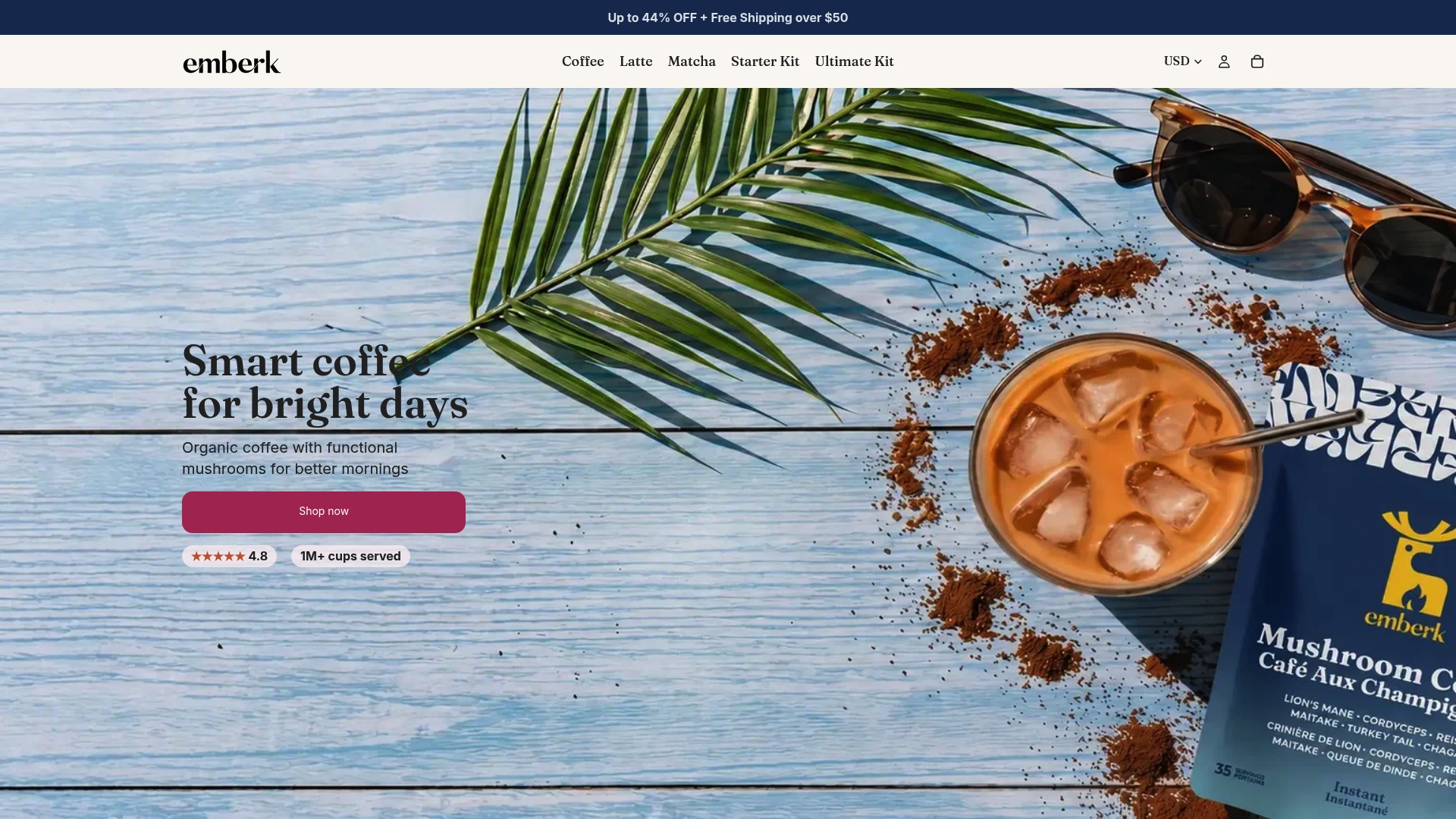
If you’re starting your own trial, the mushroom coffee is the natural entry point, built with a moderate caffeine level that fits the “smoother curve, fewer jitters” pattern described earlier. Prefer something creamier or want to cut caffeine further while you test? The mushroom latte offers the same six-mushroom formula in a lower-caffeine format. Either way, start with one serving daily, check the caffeine content per cup against your current habit, and consider a subscription so your 8 week window doesn’t get interrupted by running out mid-test. That consistency is exactly what separates a real read on effectiveness from guesswork.
This article is general information, not a substitute for advice from a qualified doctor. Consult a qualified healthcare professional about your own circumstances before acting on anything here.
Sources
- Mushroom coffee: worth a taste? | Harvard Health
- PMC article (Docherty 2023 pilot and related findings)
- Mushroom coffee benefits: What science says about this trending brew | Medical News Today
- Mushroom coffee: Benefits, evidence, and safety | Healthline
FAQ
How long does it take to feel the benefits of mushroom coffee?
Caffeine effects typically appear within a short period generally around 15 to 45 minutes, but mushroom-specific benefits like sustained focus or stress support usually need 2 to 8 weeks of consistent daily use to show up.
What’s the downside of mushroom coffee?
The main downsides are caffeine-related, including jitters or sleep disruption if consumed late, plus limited long-term safety data on the mushroom extracts themselves, so starting with a smaller serving is wise.
Does mushroom coffee help you lose belly fat?
There’s no solid clinical evidence tying mushroom coffee directly to fat loss; any energy or metabolism-related benefits are more plausibly linked to reduced caffeine crashes and steadier daily habits than a direct fat-burning effect.
Is drinking mushroom coffee every day good for you?
Daily use is generally fine for most healthy adults when the caffeine content is moderate and the product uses transparent, lab-tested fruiting-body extracts, though anyone on medication or with an immune condition should check with a doctor first.
0 comments