

A healthy instant latte contains 0 to 4 grams of sugar per serving, skips dairy for a plant-based milk like coconut or oat, and often adds a functional ingredient (protein, MCT oil, or a fruiting-body mushroom extract) for steadier energy. If you’re standing in your kitchen right now, the fastest path there is a sachet under that sugar threshold or a 3-ingredient DIY mix. Emberk’s mushroom latte is one example built around a typical low-sugar, dairy-free template.
TL;DR:
- Most healthy instant lattes contain between 0 and 4 grams of sugar per serving, with varieties like mushroom or matcha focusing on functional benefits.
- Check labels for actual sugar content per serving and select products with clear, specific ingredient sourcing, especially for mushrooms and plant-based milk.
- Opt for options that include protein, MCT oil, or fiber to enhance satiety and reduce sugar’s impact on blood sugar levels.
- DIY options with three simple ingredients, such as coffee, nut butter, and a mashed date, can achieve similar health benefits in under five minutes.
- Single-serve sachets are convenient for travel but often use non-recyclable packaging, so choosing brands that disclose recyclable materials or offering bulk options can reduce waste.
Table of Contents
- What Types of Healthy Instant Latte Exist?
- How Do You Choose a Healthy Instant Latte?
- Quick DIY Healthy Instant Lattes You Can Make in Under 5 Minutes
- Ingredients to Avoid and Simple Nutrition Swaps
- Why Functional Mushroom and Matcha Blends Can Support Healthier Mornings
- Is Instant Latte Packaging Actually Sustainable?
- Instant Latte vs. Brewed Latte: Which Is Actually Healthier?
- Balancing Convenience and Nutrition
- A Low-Fuss Way to Try a Healthy Instant Latte
- Sources
- FAQ
What Types of Healthy Instant Latte Exist?
Not every instant latte is chasing the same goal, and that’s actually good news. Once you know what you’re trying to fix, whether that’s the 2 p.m. slump or a jittery heart rate, the category narrows fast.
Matcha and superfood lattes run low-calorie by design, usually leaning on coconut milk powder and a small amount of sweetener to keep sugar down. They deliver a gentler, steadier caffeine lift than coffee, which makes them a smart pick for readers who want focus without the shakes. Purasana’s instant matcha latte is a good example of that formula in action.
Functional mushroom lattes typically stay under 2 grams of sugar per serving and lean on fruiting-body extracts, the actual mushroom fruit rather than the mycelium it grows from, for potency. Good Day Latte’s turmeric blend with lion’s mane and cordyceps is one instance where the label spells out both the low sugar count and the fruiting-body sourcing.
Protein-packed instant lattes trade a little extra sugar (often around 4 grams) for real satiety. Float’s instant protein latte delivers roughly 10 grams of plant protein per serving, which makes it a solid post-workout or midday option when you need the drink to double as a small meal.
Herbal and caffeine-free blends skip the stimulant altogether, often built on hazelnut or chicory bases with MCT oil or prebiotic fiber for gut support, like VitalWe’s dairy-free, caffeine-free hazelnut latte. These fit evenings or anyone sensitive to caffeine.
Here’s the quick map:
- Morning focus: matcha or a moderate-caffeine mushroom blend
- Afternoon without the crash: low-glycemic mushroom latte with adaptogens
- Post-workout or meal replacement: protein-forward instant latte
- Evening or caffeine-sensitive: herbal, caffeine-free latte
How Do You Choose a Healthy Instant Latte?
Reading a latte label is a lot like reading a movie review before buying tickets: the marketing copy sells the experience, but the ingredient panel tells you what you’re actually getting. Here’s the checklist worth running through before you add anything to your cart.
- Check the sugar per serving first. Many premium healthy instant lattes list 0 to 4 grams of sugar, while conventional instant mixes often carry far more refined sugar. Always check the actual serving size on the package. A “low sugar” claim on a 1.5 scoop serving can hide a higher number once you’re actually mixing a full mug.
- Scan the ingredient list for specificity. Look for terms like “fruiting-body extract” rather than vague “mushroom blend” language, and confirm the milk solids (if any) come from a named plant source, not an unspecified “non-dairy creamer.”
- Look for protein, MCT, or fiber add-ins. These extend how long the drink keeps you full and tend to blunt the sharp energy dip that plain sugar causes.
- Confirm caffeine content is stated clearly. A label that won’t tell you the milligram count is a label hiding something.
- Favor brands that mention lab testing. Third-party checks for contaminants like glyphosate or heavy metals, the kind some matcha superfood brands disclose, are a meaningful trust signal in a category with light regulation.
Pro Tip: Compare products by grams of sugar per 100 calories, not just per serving. Serving sizes vary wildly between sachets, sticks, and scoop-your-own tins, so that ratio gives you a fairer apples-to-apples read.
Canadians are increasingly shopping this way on purpose. A recent CHFA study found shoppers now favor transparent, measurable functional benefits over vague wellness language, which is exactly why the label, not the box art, deserves your attention.
Quick DIY Healthy Instant Lattes You Can Make in Under 5 Minutes
Sometimes the healthiest instant latte is the one you build yourself, with three ingredients and zero mystery additives. Here are three versions worth keeping in rotation.
- The 3-ingredient vegan latte. Combine 1 teaspoon instant coffee, 1 teaspoon nut butter (almond or cashew work well), and half a soft date, mashed or blended, in a mug. Add 8 ounces of hot water or steamed plant milk and whisk hard for 30 seconds, or blitz it in a milk frother for a creamier top. The nut butter adds healthy fat and body; the date replaces refined sugar with fiber attached.
- The protein latte. Mix 1 scoop plant protein powder, 1 teaspoon instant coffee or matcha powder, and 8 to 10 ounces of oat or coconut milk. Shake in a bottle with a tight lid rather than whisking. Protein powder clumps in a mug but disappears in a shaker.
- The mushroom instant latte. Add 1 to 2 teaspoons of a functional mushroom coffee or latte powder to hot water or steamed plant milk, then froth with a handheld whisk for 15 to 20 seconds. Frothing matters more here than with regular coffee: fruiting-body powders dissolve better with some mechanical agitation, and skipping it can leave a slightly gritty texture at the bottom of the cup.
For travel, prep single-serve sachets ahead of time by pre-measuring dry ingredients (protein powder, mushroom powder, or matcha) into small resealable pouches or empty tea bags. Grab one, add hot water wherever you are, and skip the guesswork of a hotel room or office kitchen with no scale. If you’re deciding between matcha and coffee as your base, the caffeine curves are genuinely different, matcha releases more slowly, which is worth knowing before you build your go-to travel latte.
Ingredients to Avoid and Simple Nutrition Swaps
A few ingredients show up on latte labels again and again, and none of them belong in a genuinely healthy sachet.
- Refined sugar over 10 grams per serving. That’s a candy-bar-adjacent dose hiding behind a coffee cup.
- Sugar alcohols (sorbitol, maltitol, erythritol). Common in “zero sugar” lattes, these frequently cause bloating or digestive upset in sensitive people, even in modest amounts.
- Vague “natural flavors” paired with a high sugar count. That combination usually signals a flavor system doing the heavy lifting instead of a real functional ingredient.
Swap toward monk fruit extract, a small amount of date sugar, or real maple syrup if you want sweetness with a lower blood-sugar impact. For creaminess and staying power, a spoonful of MCT oil powder or coconut milk powder adds fat-based satiety without spiking sugar. Adding even 5 to 10 grams of plant protein, or a tablespoon of ground flax for fiber, slows how fast the drink’s sugar hits your bloodstream, which is the whole point of avoiding the crash in the first place.
Why Functional Mushroom and Matcha Blends Can Support Healthier Mornings
Fruiting-body mushrooms, the actual mushroom “fruit” rather than the root-like mycelium it grows from, are the part most functional latte brands are chasing when they promise calm alertness instead of a caffeine spike and crash. That’s a meaningfully different goal than simply cutting sugar. It’s about how the whole cup makes you feel two hours later.
The travel pack format exists specifically for the reader trying to keep this routine intact on the road, without hauling a full canister through airport security.
By the numbers: The brand reports serving over 1 million cups, a scale that reflects steady demand for low-jitter, functional coffee alternatives rather than a one-off wellness fad.
Is Instant Latte Packaging Actually Sustainable?
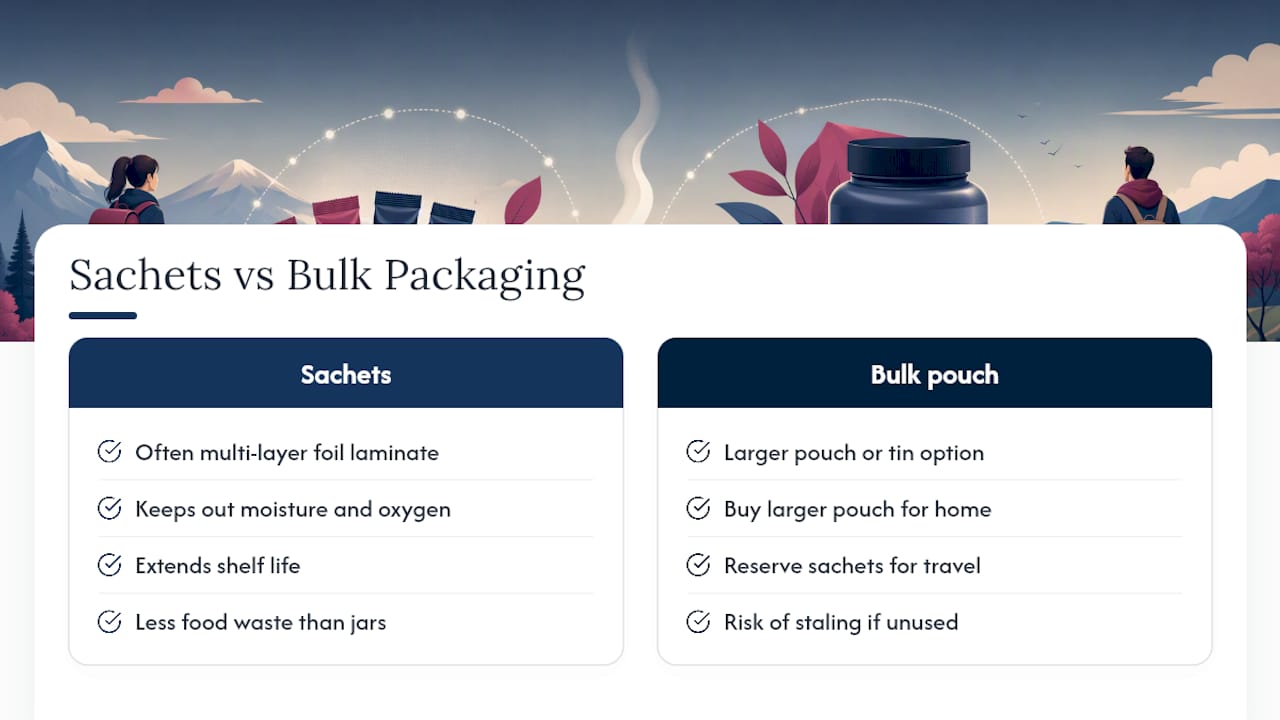
Single-serve sachets solve the convenience problem, but they raise a fair question: what happens to that packaging after the last sip? Most instant latte sticks and sachets use multi-layer foil laminate, chosen because it keeps moisture and oxygen out and extends shelf life, but that same lamination makes many of them non-recyclable through standard curbside programs.
The trade-off is real. A single-serve sachet generates less food waste than a jar of powder that goes stale before you finish it, and it uses less packaging material by weight than a comparable bottled or canned coffee drink. But it still adds up in landfill volume if you’re going through one a day. Look for brands that disclose recyclable pouch materials or offer bulk tins alongside single-serve travel packs, so the convenience option isn’t your only choice. Buying a larger pouch for home and reserving individual sachets for travel is a simple way to cut packaging waste without giving up the format that makes mornings easier.
Sourcing matters here too. Mushroom and matcha ingredients grown at high altitude or under organic standards tend to involve fewer synthetic inputs, which is worth checking on a label the same way you’d check for a Fair Trade or Rainforest Alliance mark on regular coffee.
Instant Latte vs. Brewed Latte: Which Is Actually Healthier?
Neither format wins outright. It depends on what you’re optimizing for: time, control, or consistency.
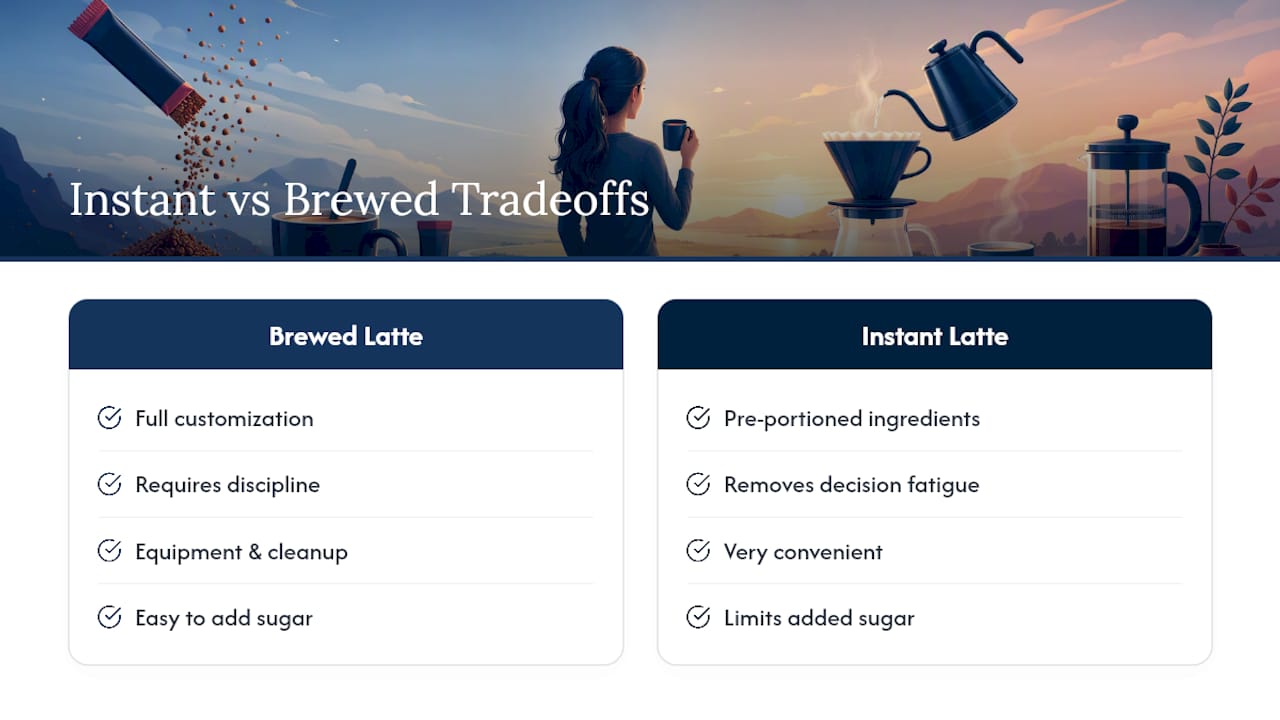
A brewed latte made at home gives you full control over milk type, sweetener, and coffee dose, but that control only pays off if you’re actually disciplined about it every single morning. It’s easy to default to whole milk and a flavored syrup when you’re brewing from scratch and not reading a label. An instant healthy latte, by contrast, comes pre-portioned. The sugar, caffeine, and functional ingredients are locked in before you ever open the packet, which removes the daily decision fatigue that trips people up.
On convenience, instant wins decisively. No espresso machine, no steaming wand, no cleanup, just hot water and a spoon. That matters most for the exact reader this guide is written for: someone trying to stay consistent with a healthy choice on a tight morning, not someone with 15 minutes to spare for a pour-over. Brewed coffee also carries compounds worth understanding, like acrylamide formed during roasting, that apply to both instant and brewed formats roughly equally, so instant isn’t a health downgrade on that front.
The honest verdict: brewed wins on customization if you’re disciplined, instant wins on consistency if you’re not. For most people juggling a real schedule, instant closes the gap simply by removing the chance to improvise your way into a sugar bomb.
Balancing Convenience and Nutrition
The instant latte category rewards skepticism. Read the label before the marketing copy, and let the sugar count and ingredient specificity do the talking, not the packaging. There’s a real trade-off between the five minutes a whole-food latte demands and the thirty seconds a sachet takes, and neither choice is wrong. What matters is knowing which one you’re actually making, and choosing it on purpose instead of by habit. That’s the whole game here: informed, not perfect.
— Emberk
A Low-Fuss Way to Try a Healthy Instant Latte
Everything on the checklist above, dairy-free, fruiting-body mushrooms, no fillers, nutritionist-reviewed recipes, is the same list Emberk builds its Mushroom Latte around. It’s brewed from six functional mushroom species with coconut milk instead of dairy, no added sugar, and a caffeine level tuned for steady energy instead of a spike and a crash.
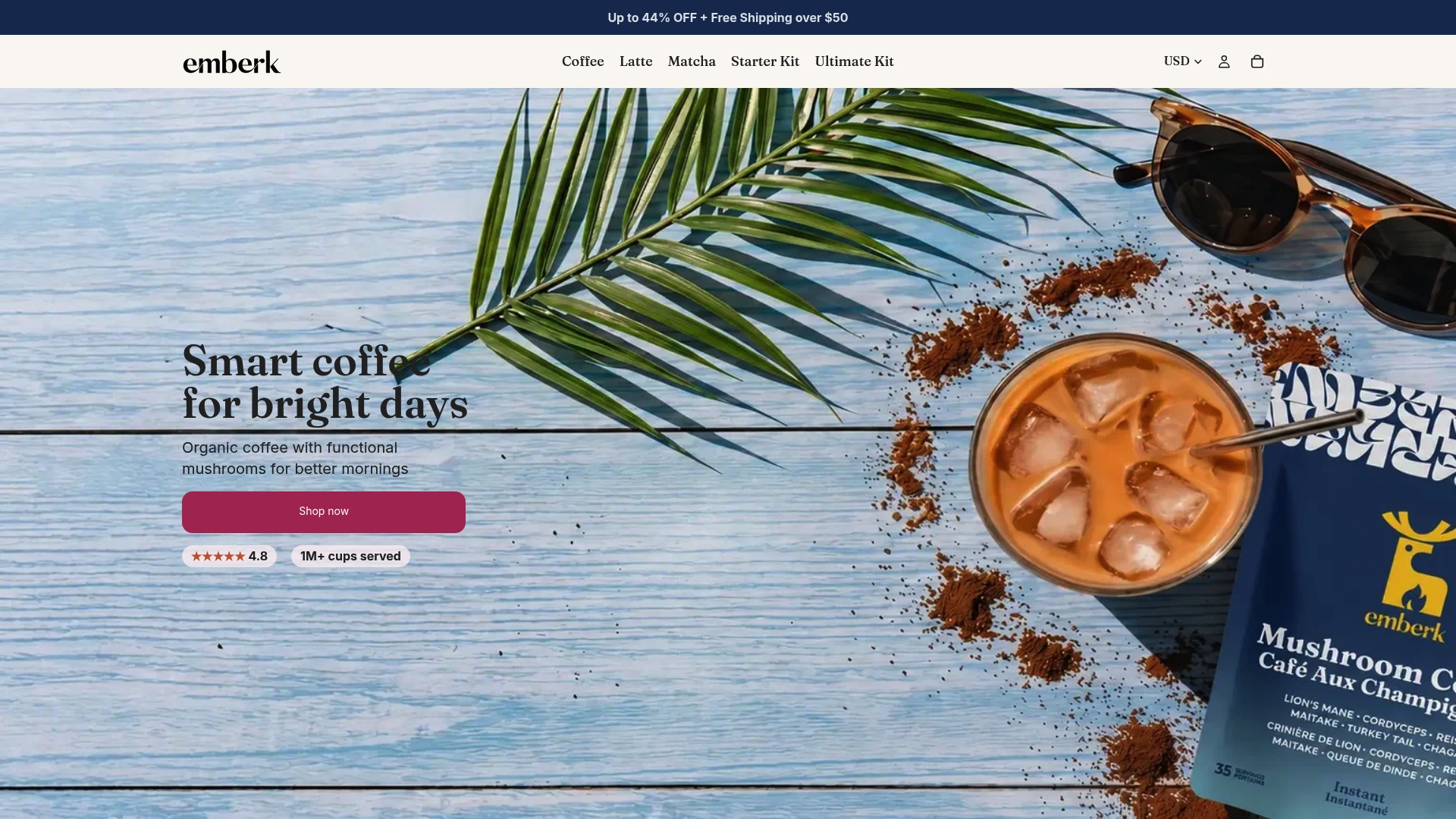
If you’d rather test the format before committing to a full pouch, the Mushroom Latte Travel Pack is the lower-commitment entry point, single-serve, easy to toss in a bag, and priced at $25 one-off. The full-size Mushroom Latte runs at a price consistent with similar premium instant lattes. Both options let you apply the same label-reading habits this guide just walked through, on a product built to pass that test. Start with the travel pack, see how your afternoon feels without the usual 2 p.m. dip, and decide from there.
Sources
FAQ
What Is the Best Instant Latte for Health?
The best healthy instant latte keeps sugar between 0 and 4 grams per serving, uses a named plant milk, and lists specific functional ingredients rather than vague blends. Options like fruiting-body mushroom lattes or protein-forward mixes tend to fit that description most consistently.
Are Lattes Healthier Than Regular Coffee?
Neither is automatically healthier; it depends on what gets added. A black coffee has fewer calories than most lattes, but a low-sugar, dairy-free latte with functional ingredients like MCT oil or mushroom extract can offer more sustained energy and satiety than plain black coffee alone.
How Can I Make a Latte More Healthy?
Cut the added sugar first, swap dairy for a plant milk like oat or coconut, and add a source of protein or healthy fat to slow how fast the caffeine hits, as outlined in this guide on lactose-free and plant-based options. A 3-ingredient DIY mix of coffee, nut butter, and a mashed date accomplishes all three in under two minutes.
What Are the Best Instant Latte Sachets for Travel?
Single-serve sachets built for travel should hold their nutrition profile without needing refrigeration or measuring tools, just hot water and a stir. Emberk’s Mushroom Latte Travel Pack is one dairy-free, single-serve option designed specifically for that use case.
0 comments