

A typical matcha latte contains roughly 60–140 mg of caffeine per serving, depending on how much powder goes into the cup. A home latte made with one teaspoon of matcha powder lands around 60–70 mg, while a café-style two-teaspoon version can reach 120–140 mg. That puts a standard matcha latte well within the 400 mg daily limit commonly cited for healthy adults, though the range is wide enough that your specific cup matters. Read on to see exactly why the numbers shift so much and how to find the dose that works for you.
Key Takeaways
A typical matcha latte delivers 60–140 mg of caffeine per serving, with L-theanine producing a calmer, 4–6 hour energy curve that sets it apart from coffee’s sharper spike.
| Point | Details |
|---|---|
| Typical caffeine range | A matcha latte contains roughly 60–140 mg per serving, depending on teaspoons of powder used. |
| Biggest variability factor | Grams of powder matter most; going from 1 tsp to 2 tsp nearly doubles the caffeine dose. |
| L-theanine effect | L-theanine produces a 4–6 hour sustained energy curve, reducing jitters for many people. |
| Canadian safety guidance | Healthy adults can generally consume up to 400 mg daily; pregnant people should stay under 200–300 mg. |
| Emberk alternative | Emberk’s mushroom latte offers low-to-moderate caffeine with adaptogens for focus without the variability. |
Table of Contents
- How much caffeine is actually in your matcha latte?
- Why does caffeine content vary so much between cups?
- How does matcha latte caffeine compare to coffee and other drinks?
- Why does matcha feel different from coffee?
- What are the safe caffeine limits for Canadians?
- How to make or order a lower-caffeine matcha latte
- What do lab measurements actually tell us about matcha caffeine?
- A note on finding your personal matcha sweet spot
- Emberk’s mushroom latte is worth trying if you want less jitter
- Sources
- FAQ
How much caffeine is actually in your matcha latte?
The math starts with one simple fact: matcha powder contains roughly 19–44 mg of caffeine per gram, and a typical serving uses 2–4 grams. Multiply those two numbers and you get a range of approximately 38–176 mg per drink. That spread is wide, which is exactly why knowing your serving size matters so much.
Here is how the numbers play out across common serving sizes:
Practical serving math from real-world sources puts the 1-teaspoon mark at around 60–70 mg, and a two-teaspoon latte at roughly 120–140 mg. A Starbucks Grande Iced Matcha Latte, for reference, is commonly listed at approximately 65 mg, which lines up with a single-teaspoon pour diluted with milk.
Pro Tip: When ordering at a café, ask your barista how many grams of matcha powder they use per drink. Many shops use a standard scoop that equals 2–4 g, but that scoop can vary by brand or barista. Knowing the gram weight turns a vague “scoop” into a predictable caffeine number.
Why does caffeine content vary so much between cups?
Two matcha lattes can look identical in the cup and still deliver very different amounts of caffeine. The powder amount is the biggest lever, but several other factors shift the number meaningfully.
- Grams of powder used. Going from one teaspoon to two nearly doubles the caffeine. A café that uses a heaping scoop versus a level one can add 20–30 mg without anyone noticing.
- Ceremonial vs. culinary grade. Ceremonial-grade matcha is made from younger, shade-grown leaves with higher amino acid and caffeine concentrations. Culinary-grade powder, which is often used in lattes and baking, tends to have a lower caffeine density per gram.
- Shade-growing duration and harvest timing. Shade-growing for three to four weeks before harvest increases both L-theanine and caffeine in the leaf. First-harvest (first flush) matcha from spring tends to be richer in both compounds than later harvests.
- Cultivar and leaf origin. Japanese cultivars like Yabukita and Okumidori have different alkaloid profiles. Where the tea is grown and how it is processed affects the final caffeine concentration in the dried powder.
- Dilution with milk or ice. Adding more oat milk, almond milk, or ice does not reduce the caffeine milligrams, but it does slow absorption slightly and changes the perceived intensity of the drink.
A kitchen scale is your most reliable tool here. One teaspoon of matcha weighs approximately 2 grams, but density varies by brand and grind, so the same spoon can hold anywhere from 1.5 to 2.5 grams depending on how finely the powder is milled.
Pro Tip: Weigh your matcha with a small kitchen scale for one week. Once you know your typical gram weight per cup, you can estimate your caffeine intake accurately and adjust the dose without guessing.
How does matcha latte caffeine compare to coffee and other drinks?
This is where matcha gets interesting. The caffeine numbers are often lower than a standard coffee, but the experience of that caffeine feels noticeably different, and that distinction shapes how you might choose between them.
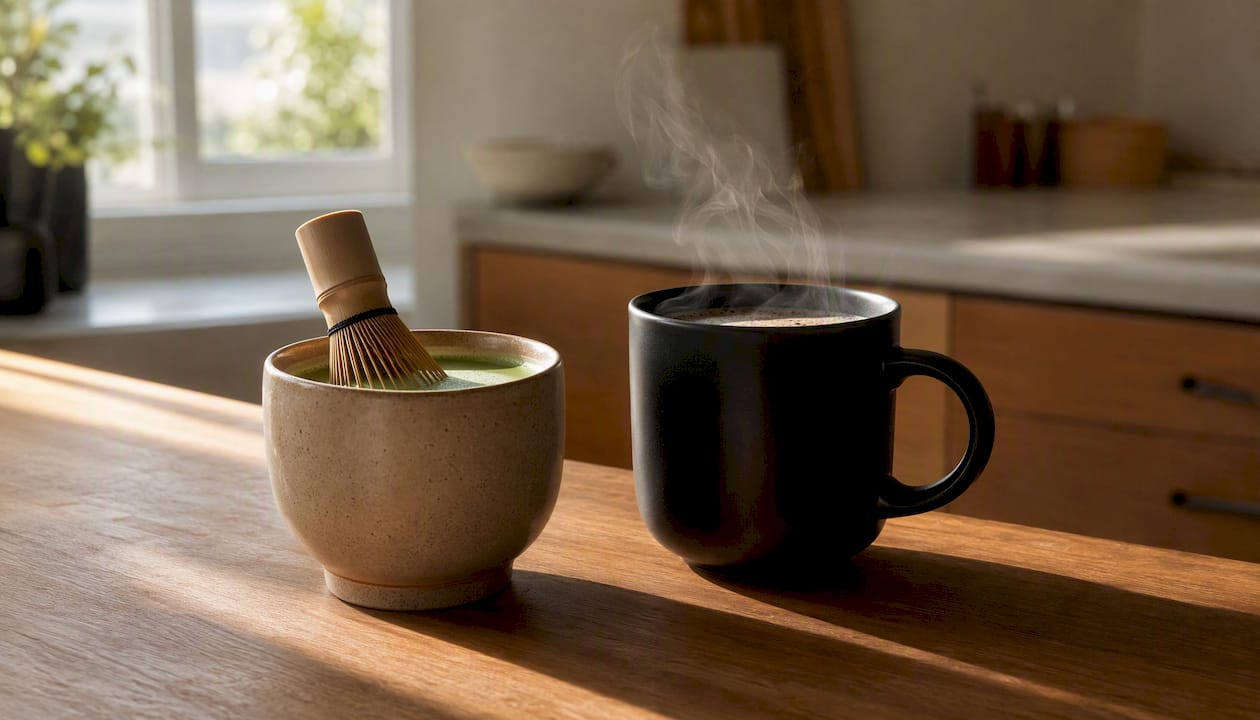
| Drink | Typical Serving | Approx. Caffeine |
|---|---|---|
| Matcha latte (1 tsp) | 8 oz | 60–70 mg |
| Matcha latte (2 tsp) | 16 oz | 120–140 mg |
| Brewed coffee | 8 oz | 80–140 mg |
| Espresso | 1 oz shot | 60–80 mg |
| Common energy drink | 8–16 oz | 80–140 mg |
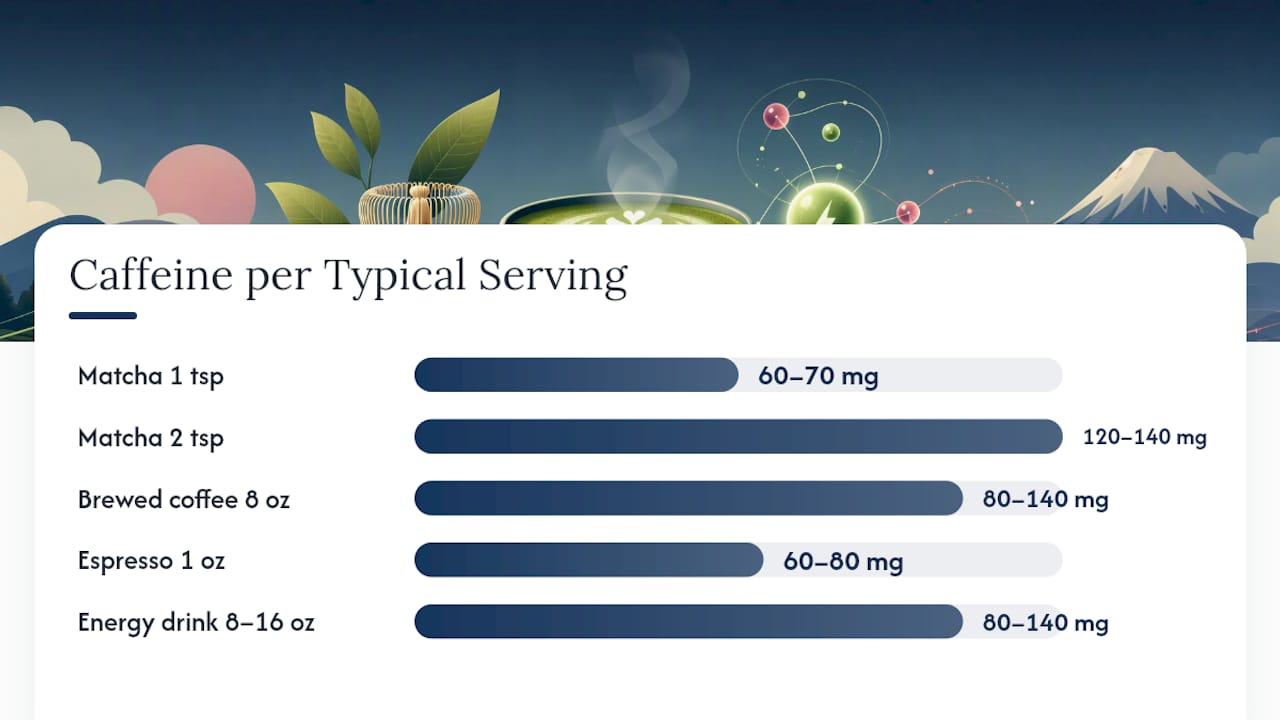
Brewed coffee in an 8 oz cup commonly lands between 80 and 140 mg, which means a single-teaspoon matcha latte is genuinely lighter. A two-teaspoon café latte, though, sits squarely in coffee territory. Energy drinks vary widely, but many 16 oz cans exceed 150 mg, often without the moderating compounds matcha carries.
The perceived effect difference comes down to L-theanine, an amino acid found almost exclusively in tea leaves. Even when the milligram count is similar to a shot of espresso, matcha tends to produce a calmer, more sustained alertness rather than a sharp spike. That is not a marketing claim; it reflects how L-theanine interacts with caffeine at the neurological level, which the next section covers in more detail.
For readers who also enjoy chai, the caffeine profiles across tea-based beverages differ meaningfully from coffee, and understanding those differences helps you build a daily caffeine plan that actually fits your lifestyle.
Why does matcha feel different from coffee?
The short answer: L-theanine changes everything. This amino acid, naturally present in matcha leaves, promotes alpha brainwave activity, the same relaxed-but-alert state associated with light meditation. When it binds with caffeine’s stimulating effects, the result for most people is focus without the edge.
Common effects people report from a matcha latte include:
- Calm alertness rather than the wired, heart-racing sensation some people get from espresso
- Sustained focus that tends to hold for several hours rather than peaking sharply and then dropping
- Fewer jitters for people who are moderately caffeine-sensitive, because L-theanine appears to blunt the anxiety-adjacent side effects of caffeine
- A gentler come-down, with less of the crash that follows a large coffee
That said, individual responses vary. People with slow caffeine metabolism, driven by a variant of the CYP1A2 enzyme, process caffeine more slowly and can feel its effects for longer and more intensely, even from a modest matcha dose.
Matcha’s L-theanine tends to produce a 4–6 hour sustained energy curve rather than the rapid spike-and-crash pattern associated with coffee, making it a genuinely different physiological experience even when the caffeine milligrams are comparable. Think of it as a slow, steady burn rather than a quick flare.
The typical matcha effect curve looks something like this: a gentle rise over 30–60 minutes, a sustained plateau through the middle hours, and a gradual, smooth decline. Compare that to coffee’s sharper ascent and steeper drop, and you can see why many people find matcha’s sustained energy easier to work with across a full morning.
What are the safe caffeine limits for Canadians?
Health Canada aligns with widely cited international guidance: healthy adults can generally consume up to 400 mg of caffeine per day without adverse effects.
Certain groups need to be more careful:
- Pregnant people should aim to keep total daily caffeine below 300 mg, and many health authorities recommend staying under 200 mg as a conservative ceiling. A two-teaspoon matcha latte at 120–140 mg can consume a significant portion of that limit in a single drink.
- Breastfeeding people are generally advised to limit caffeine, as it passes into breast milk and can affect infant sleep.
- Children and adolescents have no established safe caffeine threshold in Canada, and Health Canada advises that children should avoid caffeine-containing beverages where possible.
- People with anxiety disorders may find that even moderate caffeine amplifies symptoms, regardless of L-theanine’s moderating effect.
- Those on certain medications, including some antibiotics (like ciprofloxacin) and psychiatric medications, can experience altered caffeine metabolism, making standard doses feel stronger or last longer.
Timing matters as much as total dose. Caffeine’s half-life in healthy adults is approximately 5–6 hours, which means a 2 PM matcha latte still has roughly half its caffeine circulating at 7–8 PM. For most people, cutting off caffeinated drinks by early-to-mid afternoon protects sleep quality without requiring any sacrifice to the morning ritual.
A practical rule: if you want to be asleep by 10 PM, your last matcha latte is ideally before 2 PM.
How to make or order a lower-caffeine matcha latte
Reducing caffeine in a matcha latte does not mean giving up the drink. A few simple adjustments can cut the dose significantly while keeping the flavor and ritual intact.
- Use half a teaspoon instead of a full one. A ½ tsp serving (about 1 g of powder) brings caffeine down to roughly 19–44 mg, comparable to a weak cup of tea. This is the single most effective adjustment.
- Choose culinary-grade matcha. Culinary-grade powder is typically made from older, less shade-grown leaves with a lower caffeine concentration per gram. The flavor is slightly more bitter, but the caffeine reduction is real.
- Make a “half matcha” latte. Use ½ tsp matcha and fill the rest of the cup with steamed oat milk or a milk alternative. The drink still has color, flavor, and L-theanine, just at a lighter dose.
- Add more milk or ice. Dilution does not reduce milligrams, but it slows absorption and softens the perceived intensity, which helps caffeine-sensitive drinkers manage the experience better.
- Swap one daily matcha for a caffeine-free alternative. For flavor-forward, low-caffeine options, caffeine-free chai blends offer a warm, spiced alternative that satisfies the ritual without adding to your daily caffeine total.
Pro Tip: For readers who want the calm-focus feeling of matcha without the caffeine variability, a mushroom-based latte blend, like Emberk’s mushroom latte, uses functional adaptogens to support focus and energy at a lower, more predictable caffeine level. It is worth trying on days when you want clarity without the guesswork.
What do lab measurements actually tell us about matcha caffeine?
The numbers in this article are not estimates pulled from thin air. Peer-reviewed lab analysis using High-Performance Liquid Chromatography (HPLC), the gold-standard method for measuring caffeine in plant material, gives us the most precise figures available.
One published analysis measured caffeine in dry matcha powder at 2,213.492 µg per gram, which converts to approximately 2.21 mg per gram. That figure is notably lower than some consumer-facing ranges, reflecting the fact that caffeine concentration varies significantly by cultivar, growing region, and processing method. A single lab sample is one data point, not a universal standard.
| Source Type | Reported Caffeine per Gram | Notes |
|---|---|---|
| Peer-reviewed lab (HPLC) | ~2.21 mg/g (2,213 µg/g) | Single sample; varies by cultivar |
| Consumer-facing health explainers | 19–44 mg/g | Wide range across grades and origins |
| Practical serving math (1 tsp / 2 g) | 38–88 mg per serving | Most useful for real-world estimation |
The wide gap between the lab sample and the consumer-facing range reflects real-world variability, not measurement error. Different cultivars, shade-growing durations, and processing methods produce genuinely different caffeine concentrations. For practical purposes, the 38–88 mg per standard serving range is the most useful estimate for a home latte, with café-strength pours potentially reaching 120–140 mg or more.
A note on finding your personal matcha sweet spot
Here is something worth sitting with: most caffeine advice treats 400 mg as a ceiling to stay under, but the more useful question is what dose actually feels good to you. For some people, a single teaspoon of matcha at 60–70 mg is the perfect morning companion, producing clear focus without any edge. For others, even that amount feels like too much on an empty stomach.
My suggestion is a simple one-week experiment. Start with ½ teaspoon of matcha in your latte for three days and note how you feel at the one-hour mark, the three-hour mark, and before bed. Then step up to a full teaspoon for the next three days and compare. You will likely find a dose that feels like the right fit without needing to count milligrams obsessively. Measure the powder by weight, track your total daily caffeine from all sources, and give yourself permission to adjust. That is not overthinking it. That is just paying attention.
Emberk’s mushroom latte is worth trying if you want less jitter
This article is published by Emberk, a Canadian brand that makes organic functional lattes and coffees infused with six mushrooms, including Lion’s Mane, Reishi, and Cordyceps. We are sharing this because it is directly relevant to what you just read.
If you want the calm-focus feeling that matcha’s L-theanine provides but find that caffeine variability is hard to manage, Emberk’s mushroom latte blend is designed for exactly that situation. It delivers low-to-moderate caffeine alongside functional adaptogens that support mental clarity and stress resilience, with no added sugars, no fillers, and no guessing about powder weight. Browse the full Emberk collection to compare options, or go straight to the matcha latte product page to check ingredients and order.
Sources
The following sources were used to build the caffeine figures, serving math, and safety guidance in this article.
- Matcha Green Tea: Chemical Composition, Phenolic Acids, Caffeine and Fatty Acid Profile
- Does Matcha Have Caffeine?
- How Much Caffeine Is in Matcha? (Per Tsp, Gram & Latte)
- Caffeine in Matcha — Content and Absorption — Matcha Tower
- Matcha Tea Latte Nutrition — Calories & Benefits 2026
This article is general information, not a substitute for advice from a qualified doctor. Consult a qualified healthcare professional about your own circumstances before acting on anything here.
FAQ
Is a matcha latte high in caffeine?
Not compared to a large coffee. A standard one-teaspoon matcha latte contains roughly 60–70 mg of caffeine, while a two-teaspoon café version reaches 120–140 mg, both within the 400 mg daily limit for healthy adults.
Why do you feel calm and focused after matcha instead of jittery?
Matcha contains L-theanine, an amino acid that promotes alpha brainwave activity and moderates caffeine’s stimulating effects, producing a smoother, 4–6 hour energy curve rather than a sharp spike and crash.
Is matcha better for anxiety than coffee?
For many caffeine-sensitive people, yes. L-theanine tends to blunt the anxiety-adjacent side effects of caffeine, though individual responses vary based on CYP1A2 enzyme metabolism and overall caffeine sensitivity.
Why does Gen Z love matcha so much?
Matcha offers a lower-jitter alternative to espresso drinks, a distinct earthy flavor, and a strong visual identity on social media, all of which align with a generation that is more focused on wellness and intentional consumption than previous ones.
0 comments