

Yes, certain adaptogens genuinely support productivity, but not the way a shot of espresso does. Ashwagandha, Rhodiola rosea, Bacopa monnieri, and Lion’s mane have the strongest human evidence for steadier attention and less mental fatigue. Ashwagandha and Bacopa build their effects over weeks; Rhodiola works faster, often within days. None of them are stimulants, and none replace a conversation with your doctor if you’re on medication, pregnant, or nursing.
TL;DR:
- Adaptogens like ashwagandha and Bacopa require weeks of consistent use to show significant cognitive benefits, whereas Rhodiola can produce noticeable effects within days.
- Standardized extracts, such as 600 mg/day of ashwagandha, match clinical trial doses and are key for replicating proven results.
- The primary focus should be on matching the adaptogen to your specific stress or cognitive issue, like fatigue or anxiety, for best outcomes.
- Combining adaptogens with moderate caffeine (like in mushroom coffee) may support alertness without overstimulation or crashes, provided doses are consistent and tracked.
- Pregnant, breastfeeding, or on specific medications should consult a healthcare professional before trying adaptogens due to possible interactions.
Table of Contents
- What Adaptogens Actually Do for Productivity
- Evidence-Backed Adaptogens for Productivity: What the Trials Show
- How to Choose and Use Adaptogens for Your Productivity Goal
- Safety, Interactions, and Who Should Be Cautious
- Capsules, Powders, and Adaptogenic Beverages: Which Format Fits Your Routine
- Where Mushroom Coffee Fits Into an Adaptogen Routine
- An Editorial Take on Adaptogens for Productivity
- Try a Steadier Morning Routine With Emberk
- Sources
- FAQ
What Adaptogens Actually Do for Productivity
Think of your stress response as a dimmer switch, not an on/off button. That switch lives in your HPA axis, the hypothalamic pituitary adrenal system that governs how much cortisol your body releases when a deadline hits or your inbox explodes. Adaptogens don’t flip that switch off. They help it respond to the right degree, at the right time, and reset faster once the pressure passes.
This is the “stress threshold model” that researchers like Panossian and Wikman describe: adaptogens raise the point at which everyday stress starts to erode your performance. In their review of adaptogen mechanisms, multiple plant compounds showed measurable anti-fatigue effects and increased capacity for sustained mental work, both in animal models and in available human data. The mechanism isn’t a jolt of energy. It’s closer to raising your baseline so the same workload feels less depleting.
That distinction matters when you’re comparing adaptogens to caffeine. Caffeine blocks adenosine receptors, which is why it produces that fast, noticeable lift, and why it also produces the crash a few hours later when adenosine floods back in. Adaptogens work on a slower, cumulative timeline. Ashwagandha needs weeks of consistent use to show up in memory and attention testing. Rhodiola is the outlier, with some anti-fatigue benefits appearing within days of starting supplementation.
A 2023 systematic review of plant-based nootropics and adaptogens looked across Bacopa, ginseng, Rhodiola, and Withania (ashwagandha’s botanical name) and found real signal, but also real gaps. Human trials tend to be smaller than pharmaceutical studies, dosing varies between products, and not every promising herb has been tested with the same rigor. That’s not a reason to dismiss adaptogens. It’s a reason to know exactly which ones have trial data behind them, and which are still riding on tradition and preliminary findings.
Botanicals for cognitive support have become a fixture in the wellness aisle, and a review of brain-health supplement ingredients notes how common herbs like Bacopa and ginseng have become in that category. Popularity and evidence quality aren’t the same thing, though, which is exactly why the next section separates the two.
Evidence-Backed Adaptogens for Productivity: What the Trials Show
Four adaptogens keep surfacing in productivity conversations for a reason: they’ve actually been tested in humans, with doses you can map to what’s sold in stores. Here’s what each one has going for it, and where the evidence runs thin.
Ashwagandha (Withania somnifera). This is currently the best-documented adaptogen for cognitive performance. A 2024 randomized, placebo-controlled trial gave 120 participants 600 mg per day of KSM-66 ashwagandha extract for eight weeks. The results were specific: significant improvements in episodic memory, working memory, and attention accuracy compared to placebo. Attention accuracy showed the strongest statistical signal in the study. The catch is timing. Nobody in that trial felt different on day one. The benefits accumulated over two months of daily dosing, which tells you ashwagandha is a maintenance herb, not a rescue remedy for a rough Tuesday.
Rhodiola rosea. If ashwagandha is the slow burn, Rhodiola is the adaptogen built for same-week results. Clinical research on Rhodiola consistently points toward reduced mental fatigue and improved attention specifically under stress conditions, which is a meaningfully different claim than “improves cognition in general.” Rhodiola seems to shine when you’re grinding through a demanding stretch, a launch week, exam season, a hard quarter, rather than as a daily baseline booster. Onset tends to be faster than ashwagandha’s, sometimes within days rather than weeks.
Bacopa monnieri. Bacopa has a longer history in cognitive research than most adaptogens, and the results are genuinely mixed. Some trials show memory and learning gains with sustained dosing; others show more modest effects, particularly in already-healthy adults without baseline cognitive strain. The more consistent finding across reviews of Bacopa research is that it functions less like a memory amplifier and more like an anxiety dampener that indirectly protects memory performance. If distraction and low-grade anxious noise are eating your focus, Bacopa’s mechanism fits that problem better than a straightforward “boost memory” pitch.
Lion’s mane. This one carries the most excitement and the thinnest human trial base of the group. Lion’s mane contains compounds studied for neurotrophic support, meaning they may encourage the growth factors involved in maintaining healthy brain cell connections. The evidence here is mostly preclinical and small pilot studies in humans, so the honest framing is “plausible and promising,” not “proven.” Benefits, where they show up, appear to build over weeks to months rather than delivering anything acute.
Here’s how the trial doses typically map to what you’ll find on a supplement label:
- Ashwagandha: 600 mg/day of a standardized extract like KSM-66, matching the 2024 RCT dosing associated with measurable cognitive gains.
- Rhodiola rosea: Clinical research commonly uses standardized rosavin/salidroside extracts, generally in the 200 to 600 mg/day range depending on the product’s extract ratio.
- Bacopa monnieri: Trials frequently use 300 mg/day of a standardized bacoside extract, taken consistently over 8 to 12 weeks.
- Lion’s mane: Human pilot studies have used daily doses in the range of several hundred milligrams to a few grams of mushroom extract or powder, though standardization varies widely between products.
One detail matters more than any single dose number: standardized extracts are what the trials actually tested. A jar of raw ashwagandha powder with no extraction standard isn’t guaranteed to behave like KSM-66 in a clinical trial. If you want to replicate published results, check the label for the specific standardized extract name, not just the herb.
How to Choose and Use Adaptogens for Your Productivity Goal
Start with the actual problem, not the herb everyone’s talking about. Matching the adaptogen to your specific HPA-axis complaint, daytime fatigue, anxiety-driven distraction, or a memory and learning gap, meaningfully improves your odds of feeling something.
- Identify your primary issue. Are you dragging by 2 p.m. regardless of sleep? Getting derailed by low-grade anxiety mid-task? Or struggling specifically to retain and recall new information? Each points toward a different herb.
- Match timing to your problem. Daytime fatigue during a demanding stretch responds best to Rhodiola, given its faster onset. Anxiety-driven distraction and memory retention respond better to ashwagandha or Bacopa, both of which need weeks of consistent dosing to show their effect.
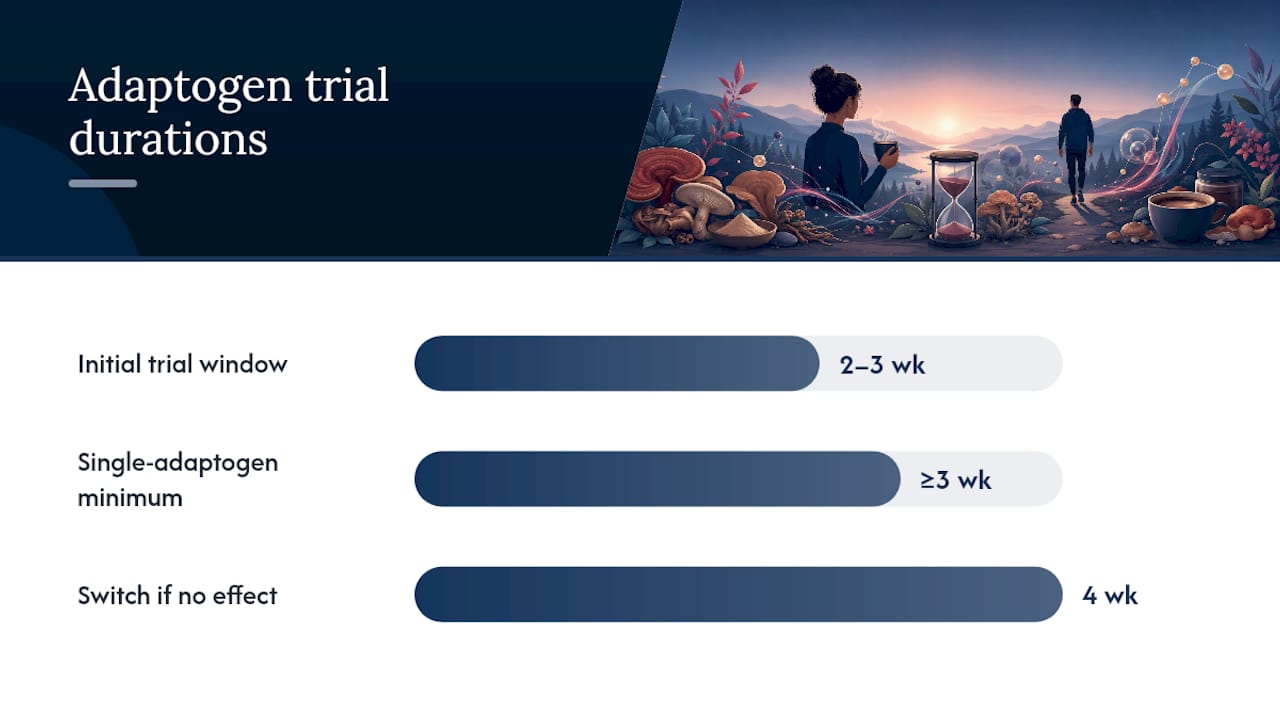
- Start at the low end of the clinical range. Begin with the lowest dose used in trials, for example 300 mg of ashwagandha rather than jumping straight to 600 mg, and give it at least two to three weeks before judging whether it’s working.
- Track something specific. Rate your afternoon focus, your anxiety level, or your recall on a simple 1 to 10 scale daily. Vague impressions (“I feel better?”) are hard to trust; a two-week log isn’t.
- Adjust one variable at a time. If you’re not seeing anything after four weeks at trial-comparable doses, that herb probably isn’t your match. Switch, don’t stack three new things at once.
On stacking: Rhodiola pairs reasonably well with moderate caffeine since both support alertness without the same mechanism overlap, but keep total caffeine modest to avoid overstimulation. L-theanine paired with a low-dose caffeine source is a well-known combination for smoothing out jittery edges, and it layers fine alongside ashwagandha or Bacopa since none of them compete for the same receptors. Avoid stacking multiple new adaptogens in the same week. If something goes sideways, either an odd stomach reaction or unexpected drowsiness, you won’t know which ingredient caused it.
Pro Tip: Run a single-adaptogen trial for a minimum of three weeks before adding anything else to your routine. Adaptogens work on physiological timelines, not caffeine timelines, and judging Bacopa after four days is judging it before it’s had a chance to work.
Safety, Interactions, and Who Should Be Cautious
Adaptogens are generally well tolerated in trial populations, but “generally well tolerated” isn’t the same as “risk free for everyone.” A few patterns show up consistently enough to flag.
Reported side effects tend to be mild and dose-related: mild stomach upset with ashwagandha, occasional headache or jitteriness with Rhodiola at higher doses, and drowsiness reported by a minority of Bacopa users, particularly early in use. Lion’s mane’s side-effect profile is less established simply because fewer large human trials exist.
The interaction list matters more than the side-effect list:
- Thyroid medication: Ashwagandha may influence thyroid hormone levels, which is a real concern if you’re on levothyroxine or another thyroid drug and dosing isn’t monitored.
- Immunosuppressants: Ashwagandha’s immune-modulating activity means it should be avoided or discussed with a doctor if you’re on immunosuppressive therapy, including for autoimmune conditions or post-transplant care.
- Blood thinners and blood pressure medication: Several adaptogens, Rhodiola and ashwagandha included, may have mild blood-pressure or clotting effects that warrant caution alongside anticoagulants.
- Sedatives: Bacopa’s calming profile can compound with other sedating medications or supplements.
Pregnancy and breastfeeding deserve a hard pause. None of the four adaptogens covered here have robust safety data in pregnant or nursing populations, so the standard, sensible guidance is to avoid them in that window unless a doctor specifically clears it. The same caution applies if you have an autoimmune condition or a surgery scheduled in the coming weeks, since some adaptogens affect immune activity and blood clotting in ways that matter in a surgical context.
A practical monitoring rule: if you notice new gastrointestinal symptoms, unusual fatigue, mood changes, or anything that feels off within the first two weeks of starting an adaptogen, stop and reassess before continuing. The 2024 ashwagandha trial ran eight weeks with a favorable safety profile in healthy adults, but “healthy adult trial population” is a narrower group than “everyone reading this article.”
Capsules, Powders, and Adaptogenic Beverages: Which Format Fits Your Routine
The form you choose changes how easily you can hit, and track, a clinically relevant dose.
- Capsules and standardized extracts are the most precise option, since the label states the exact milligram amount and extract standard, letting you match trial dosing directly. This is your best bet if you’re specifically trying to reproduce a study’s results.
- Tinctures and powders offer more flexibility for adjusting dose gradually or blending multiple adaptogens, though they demand more attention from you to actually measure consistent amounts.
- Functional beverages and mushroom coffee solve the consistency problem in the opposite direction: convenience. A pre-measured cup removes the guesswork, and pairing a moderate caffeine dose with adaptogens like Lion’s mane can smooth out the harsher edges some people get from black coffee alone. The best adaptogenic drinks tend to work well as a morning anchor precisely because they fold the herb into a habit you already have, rather than adding a new pill to remember.
Whichever format you pick, the practical move is the same: note the exact dose, note the time of day, and give it the multi-week window the research suggests before drawing conclusions. If you’re already using coffee strategically for focus, adding an adaptogen to that existing ritual is usually easier to stick with than starting a separate supplement routine from scratch.
Where Mushroom Coffee Fits Into an Adaptogen Routine
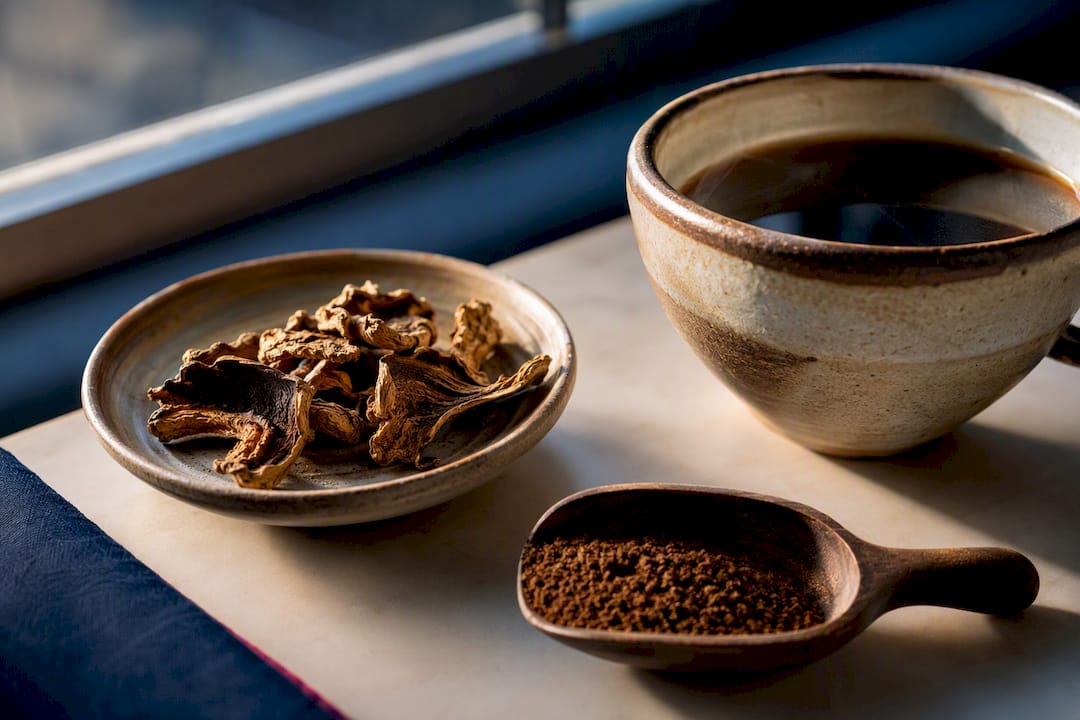
Emberk built its coffee around a straightforward idea: pair a lower, steadier dose of caffeine with functional mushrooms rather than relying on caffeine alone to carry your morning. Each blend includes six fruiting-body mushrooms, Lion’s Mane, Chaga, Reishi, Turkey Tail, Maitake, and Cordyceps, sourced with no fillers and no added sugar, so what you’re drinking is the mushroom itself rather than a diluted extract propped up with additives.
Lion’s mane is the one with direct relevance to the productivity conversation above: its neurotrophic research is still early, but plausible, and a daily coffee habit is a realistic way to sustain intake over the weeks-to-months window that kind of benefit seems to need. The lower caffeine load matters too, since it’s designed to avoid the same afternoon crash that a stimulant-heavy cup can produce.
Some practical starting points:
- Try a Mushroom Coffee Travel Pack for a low-commitment way to test how your body responds before committing to a full bag.
- Keep your dose and timing consistent for at least two to three weeks, echoing the same trial-length logic that applies to capsule-based ashwagandha or Bacopa.
- Track your afternoon energy and focus the same way you would with any adaptogen trial, since that’s where a steadier baseline should show up first.
An Editorial Take on Adaptogens for Productivity
The biggest misunderstanding we see is people expecting an adaptogen to feel like a drug. It won’t, and that’s not a flaw. Ashwagandha’s own trial data took eight weeks to show up in memory and attention testing. Rhodiola is faster but still built for enduring a hard stretch, not for replacing your alarm clock.
Standardized extracts matter more than most people assume when they’re shopping. A dose that doesn’t match what was actually studied is a guess, not a strategy. If you’re on thyroid medication, immunosuppressants, or you’re pregnant or nursing, that guess isn’t worth the risk without a clinician weighing in first.
What we’d push back on is treating adaptogens as a shortcut, without incorporating other healthy habits like choosing from top office plants that boost productivity and wellness. They’re a support system for a body that’s already managing its stress load reasonably well otherwise, sleep, movement, and workload included. Track your response for a few weeks before deciding anything worked or didn’t. That patience is the whole method.
— Emberk
Try a Steadier Morning Routine With Emberk
If capsules and separate supplement bottles feel like one more thing to manage, Emberk offers a simpler entry point: your coffee already carries the adaptogen. Six fruiting-body mushrooms, including Lion’s Mane, ride alongside a lower, steadier dose of caffeine, so you get the ritual you already have without stacking on a new pill routine or riding the crash that comes with a heavier caffeine hit.
For a low-risk way to test how your body responds, the Mushroom Coffee Travel Pack at $25 is built for exactly that: a short trial run before you commit further. If lattes fit your routine better, the Mushroom Latte at $34 covers the same six-mushroom blend in a creamier format, and the full product lineup, including Matcha Latte, is available at Emberk’s site. Give it the same two-to-three-week window the research on these herbs suggests, track your afternoon focus, and see what steadier actually feels like.
This article is general information, not a substitute for advice from a qualified doctor. Consult a qualified healthcare professional about your own circumstances before acting on anything here.
Sources
- Kale et al., Journal of Psychoactive Drugs (2024) — randomized placebo-controlled trial of ashwagandha
- Effects of Adaptogens on the Central Nervous System and the Molecular Mechanisms Associated with Their Stress—Protective Activity (Panossian & Wikman)
FAQ
Which adaptogen is best for ADHD?
No adaptogen is approved or clinically established as an ADHD treatment. Bacopa monnieri has some research interest for attention and learning support, but it should be discussed with a clinician alongside, never as a replacement for, established ADHD care.
What herbs can help improve productivity?
Ashwagandha, Rhodiola rosea, Bacopa monnieri, and Lion’s mane have the strongest human evidence among adaptogens, each targeting a different piece of the productivity puzzle, from anti-fatigue support to memory and attention.
What is the most powerful adaptogen?
There’s no single “most powerful” adaptogen since each one targets a different mechanism. Ashwagandha currently has the most robust recent trial data for attention and memory, at 600 mg/day of a standardized extract like KSM-66 over eight weeks.
Can you overdo adaptogens?
Yes. Stacking multiple new adaptogens at once, exceeding trial-tested dose ranges, or combining them carelessly with medications like thyroid drugs or immunosuppressants increases the risk of side effects and interactions, so starting low and tracking your response matters.
Does Emberk’s mushroom coffee contain clinically studied adaptogens?
Emberk’s blends include Lion’s mane among six fruiting-body mushrooms, paired with a lower, steadier caffeine dose, though full product pricing and specifics are listed directly on Emberk’s site.
0 comments