

Third-party testing genuinely improves transparency, but only when you can see the full scope: which contaminants were measured, by which lab, and on which lot. The single most useful document to request from any coffee brand is a lot-specific certificate of analysis (COA) that names the analytes and the lab’s accreditation. Emberk, which lab-tests its organic mushroom coffee ingredients, is an example of a brand that emphasizes transparency through such documentation.
TL;DR:
- Only lot-specific certificates of analysis from accredited labs can verify which contaminants, like OTA, pesticides, or heavy metals, a coffee brand has tested for.
- A current, detailed COA with named analytes and testing methods offers more reliable transparency than vague claims or outdated reports.
- Canadian surveillance shows trace OTA in some coffees but levels do not pose a health risk, emphasizing the importance of transparency over alarm.
- Organic certification confirms farming standards but does not guarantee contaminant levels, making both certification and testing necessary for safety.
- Asking brands for current, lot-specific COAs and verifying lab accreditation helps ensure the coffee’s safety and transparency.
Table of Contents
- 1. What third-party testing actually means for coffee
- 2. How do you read a certificate of analysis?
- 3. What does the Canadian evidence on mycotoxins actually show?
- 4. Organic certification and lab testing prove different things
- 5. Six questions to ask before you trust a testing claim
- 6. Storage and brewing choices that protect your cup
- 7. Where Emberk fits into ingredient quality and transparency
- Reading risk data without losing sight of it
- A tested, organic option for your morning routine
- FAQ
- Sources
1. What third-party testing actually means for coffee
When a brand says its coffee is “third-party tested,” it means an outside laboratory, not the company’s own staff, ran the analysis. That distinction matters more than it sounds. In-house testing can still be accurate, but it carries an obvious conflict of interest: the people grading the homework also wrote it. An independent lab has no financial stake in the result, which is why regulators and quality-focused buyers treat third-party results as the more trustworthy baseline.
But “tested” is a word that can mean almost anything until you ask what was actually measured. A lab might screen for a single contaminant or run a full panel across several contaminant classes. According to one industry testing overview, coffee producers typically draw from these categories:
- Mycotoxins, including ochratoxin A (OTA), a toxin produced by mold that can develop during growing, drying, or storage.
- Pesticide residues, left over from crop treatment during cultivation.
- Heavy metals, such as lead or cadmium, which can be present in soil and absorbed by the plant.
- Acrylamide, a compound that forms naturally during roasting, discussed in more detail in Emberk’s piece on instant coffee chemistry.
- PFAS and residual solvents, less commonly tested but relevant for some processing methods.
Here’s the part that trips up most shoppers: a brand can genuinely and honestly say “we test for mold” while only screening for OTA and nothing else. That’s not dishonest, but it’s incomplete if you assumed “tested” meant a full safety sweep. The same testing overview makes a point worth repeating: a badge means little without a visible list of what it actually covers. Before you trust a “third-party tested” claim, the real question isn’t whether testing happened. It’s “tested for what, and by whom?”
2. How do you read a certificate of analysis?
A certificate of analysis is the document a lab issues after testing a specific sample. It’s the paper trail that turns a marketing claim into something you can verify yourself, and learning to read one takes about five minutes once you know what to look for.
Pro Tip: Ask for the COA tied to the exact lot number printed on your bag, not a generic or outdated report from a previous harvest.
Here’s a practical checklist for evaluating one:
- Check the lot number. A meaningful COA is tied to a specific production batch, not a general “representative sample” from months or years ago.
- Confirm the sample and analysis dates. Testing from two years ago tells you little about the bag on your counter today.
- Read the analyte list carefully. Look for named contaminants like OTA, specific pesticides, or specific heavy metals, rather than vague language like “safety screened.”
- Note the testing method. Labs typically list the analytical method used (often an abbreviation like HPLC or LC-MS/MS), which lets a chemist verify the approach was appropriate.
- Look at reporting limits and units. Results are usually expressed in parts per billion (ppb) or micrograms per kilogram (µg/kg), alongside the lowest level the method could reliably detect.
- Verify the lab’s contact information and accreditation. A credible COA names the laboratory, not just “an independent lab,” and ideally notes ISO/IEC 17025 accreditation.
That last point deserves its own explanation. ISO/IEC 17025 is the international standard for testing and calibration laboratory competence. A lab holding this accreditation has demonstrated, to an outside auditor, that its equipment, staff training, and procedures meet a recognized benchmark. You can typically verify a lab’s accreditation status through the accrediting body’s public registry, which takes a few minutes and settles the question definitively.
Watch for a few red flags. A COA with no lot number, no dates, or no named analytes is closer to a marketing graphic than a scientific document. So is a report that says “passed all safety tests” without listing what those tests were. If a brand cannot produce a current, lot-specific COA when asked, or only offers a summary paragraph instead of the actual lab document, treat that as meaningful information in itself. Reading a COA is a skill that transfers well beyond coffee, and the same logic applies to supplement testing claims, where consumers face an identical gap between “tested” and “tested for what.”
3. What does the Canadian evidence on mycotoxins actually show?
Ochratoxin A gets a lot of attention in conversations about “mold-free” coffee, and it deserves some context rather than alarm. OTA is a toxin that certain molds can produce, and coffee beans are one of the foods where it can show up, particularly when growing or storage conditions allow mold to develop.
Health Canada’s 2025 risk assessment concluded that current dietary exposure to ochratoxin A is of low concern, and the agency did not recommend new regulatory maximum levels for coffee at this time. Health Canada’s ochratoxin A assessment means the conversation about OTA in coffee is worth having, but it isn’t a reason to treat an ordinary cup as hazardous.
That conclusion lines up with what surveillance testing has actually found. The Canadian Food Inspection Agency’s targeted surveys sampled 8,384 retail products across the country and detected OTA in some coffee samples, without finding levels that indicated a health risk during the surveyed period. A few things are worth separating here:
- Detection is not the same as danger. Finding trace OTA in a sample means the lab’s method was sensitive enough to find it, not that the level posed a risk.
- Surveillance covers many foods, not just coffee. The 8,384-sample survey spanned multiple product categories, with coffee as one piece of a larger picture.
- No regulatory maximum exists for coffee specifically, because Health Canada’s current assessment did not find exposure levels that justified one.
So where does that leave a health-conscious shopper? Not in a position to panic, but also not in a position to assume all coffee is automatically equivalent. This is exactly where third-party testing earns its value: not as a shield against an imminent threat, but as a way to compare brands on transparency and manufacturing control. A brand that can show you a current, lot-specific COA is demonstrating oversight that a brand without one simply isn’t.
4. Organic certification and lab testing prove different things

It’s a common assumption that “organic” and “safety tested” are the same claim wearing different labels. They aren’t, and understanding the difference matters if contaminant safety is genuinely your priority.
Organic certification is a farming and production standard. Under the Canada Organic Regime, products making organic claims in interprovincial or international trade must be certified, the Canada organic logo is restricted to products with at least 95% organic content, and the label must identify the certifying body by name. That’s a meaningful set of rules governing how the coffee was grown and processed, covering things like permitted substances, soil management, and prohibited synthetic inputs.
What it does not inherently cover is mycotoxin levels, pesticide residue from neighboring farms, or heavy metal content in the soil. An organic farm can still produce beans that develop mold during a humid harvest season, just as a conventional farm can produce beans that test clean on every contaminant panel. These are two separate questions: how was it grown, and what’s actually in the final product?
- Organic certification answers: was this grown and processed under an approved standard, verified by a named certifying body?
- Third-party lab testing answers: what specific contaminants, at what levels, are present in this particular lot?
- Neither one, alone, answers both questions.
If safety from contaminants like mold toxins is your main concern, look for both documents: organic certification with a named certifying body on the label, and a current COA with disclosed analytes. A brand that offers only one of the two is giving you half the picture, even if that half is genuinely solid.
5. Six questions to ask before you trust a testing claim
You don’t need a chemistry background to vet a brand’s testing claims. You need a short list of specific questions and the willingness to ask them before you buy.
Pro Tip: Send your questions in writing (email or a direct message) so you get a documented answer instead of a vague verbal reassurance.
- What is the lot number for the bag I’m considering, and does the COA match it?
- Which laboratory performed the testing, and is it ISO/IEC 17025 accredited?
- What testing method was used for each analyte?
- Which specific analytes were tested, and what are the reporting limits?
- Is this COA specific to this production lot, or a general reference document?
- What were the sample collection and analysis dates?
A simple script covers all six at once: “Could you send me the current certificate of analysis for lot number [X], including the testing lab’s name, accreditation status, and the full list of analytes tested? I’d also like to confirm the sample and analysis dates.” That single message, sent to customer service or through a product page’s contact form, usually tells you everything you need within a day or two.
If a brand responds with a summary statement like “we test every batch for quality and safety” but can’t produce the actual document, that’s useful information. It doesn’t necessarily mean something is wrong with the coffee, but it does mean the “tested” claim can’t currently be verified, which should factor into your decision the same way a missing nutrition label would.
6. Storage and brewing choices that protect your cup
What happens after you buy the coffee matters almost as much as what happened before. Mold growth and quality degradation both thrive in the same conditions: warmth, humidity, and light.
Store coffee in a cool, dry, airtight container, away from direct sunlight and away from the stove or dishwasher where steam collects. Whole beans or ground coffee kept in a cabinet or pantry will stay fresher and lower-risk than coffee left on a sunny counter in its original bag, especially once that bag has been opened and resealed with a clip.
- Buy smaller bag sizes if you don’t go through coffee quickly, so you’re not storing an open bag for months.
- Prefer brands with visible roast dates, since freshness correlates with both flavor and reduced opportunity for degradation.
- Favor brands that disclose lot numbers on packaging, which makes requesting a matching COA much easier if you ever want to check.
On the brewing side, water that’s too hot (above roughly 205°F) can pull out bitter compounds and degrade flavor rather than extract it cleanly. Stick to filtered water and a moderate brew temperature for the smoothest cup, and finish opened bags within a few weeks for the best balance of taste and freshness. None of this replaces lab testing, but it’s the part entirely within your control.
7. Where Emberk fits into ingredient quality and transparency
This coffee is built on organic ingredients and lab-tested components, aligning with the transparency-first category this article has been describing. The blends combine coffee with six functional fruiting-body mushrooms, Lion’s Mane, Chaga, Reishi, Turkey Tail, Maitake, and Cordyceps, sourced with an emphasis on sustainability and formulated with no fillers.
For readers who want to understand the thinking behind that approach, Emberk has written directly about the verification question in its explainer on mycotoxin-free coffee, which covers what lab measurements and COAs actually verify, and where functional mushrooms fit into a wellness-focused routine in its overview of medicinal mushrooms.
- Organic, high-altitude grown ingredients form the base of every blend.
- Six species of fruiting-body mushrooms, used without fillers or added sweeteners, are the defining ingredient choice.
- Reduced caffeine content is intended to provide steadier energy without the jitters or crash sometimes associated with regular coffee.
As with any brand making testing claims, the most useful next step for a cautious shopper is the same one outlined earlier: ask for the current, lot-specific documentation directly.
Reading risk data without losing sight of it
Health Canada’s own conclusion on ochratoxin A is a measured one: current dietary exposure is of low concern, not a hazard requiring urgent regulatory action. That’s worth holding onto, because it’s easy for contaminant discussions to drift into fear regardless of what the underlying data supports.
At the same time, “low concern” isn’t the same as “irrelevant.” It’s precisely the kind of finding that should push consumers toward documentation rather than away from it. A brand that can produce a lot-specific COA with named analytes and an accredited lab is demonstrating a level of quality control that a vague “we care about safety” statement cannot. The gap between those two things is where your purchasing decision should actually live.
Prioritize documented scope overconfident language on a label. A coffee brand that lab-tests its organic ingredients and can show you the paperwork, which describes Emberk’s own approach, is simply easier to evaluate honestly than one asking you to take its word for it.
— Emberk
A tested, organic option for your morning routine
If you’ve read this far, you already know what to look for: organic sourcing, disclosed lab testing, and a brand willing to show its work. This lineup, including Mushroom Coffee, Mushroom Latte, and Matcha Latte, is built around organic, high-altitude ingredients and six fruiting-body mushrooms with no fillers, offering a tested alternative to a conventional cup.
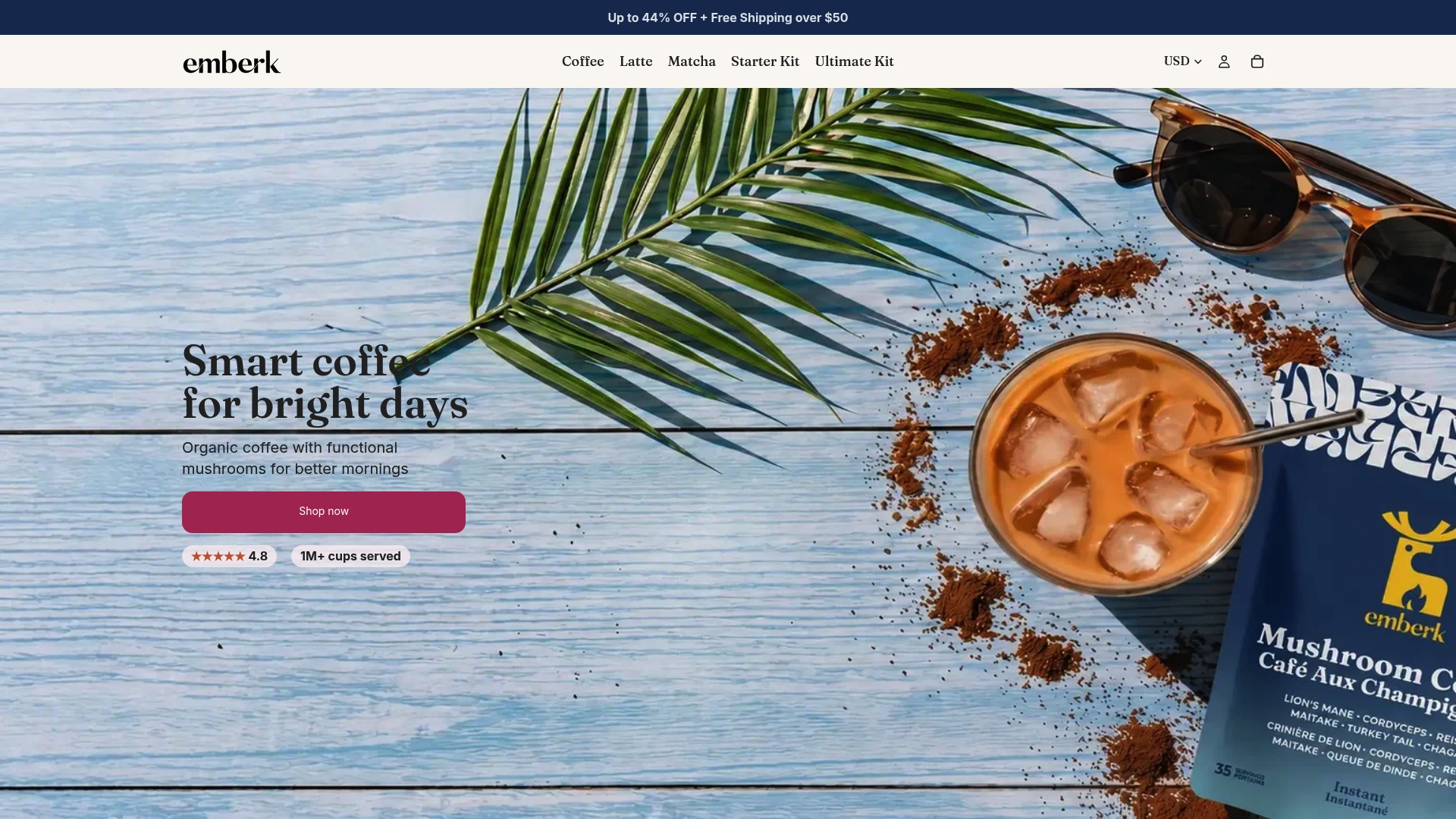
- The Mushroom Coffee blends Lion’s Mane and adaptogens into an instant format for $34 one-off.
- The Mushroom Latte and Matcha Latte each run $34 one-off, dairy-free with coconut milk.
- The Mushroom Coffee Travel Pack is priced at $25 one-off for single-serve convenience.
- The full range is browsable on the Emberk blends collection.
If safety documentation matters to your decision, which this entire article has argued it should, reach out and request the current lot-specific COA before you commit to a subscription. Visit Emberk’s product page to see the current lineup and place your first order.
FAQ
Which coffee brands are third party tested?
Third-party testing practices vary by brand and are rarely standardized across the industry, so the most reliable way to confirm a specific brand’s claim is to request its current certificate of analysis directly. Look for a lot-specific COA naming the lab, the analytes tested, and the lab’s accreditation status rather than relying on a general “tested” label.
What is the healthiest coffee brand to buy?
There is no single scientifically ranked “healthiest” coffee brand, since health depends on factors like contaminant testing, organic sourcing, and roast quality, which vary by product and lot. The most useful approach is comparing documented testing scope and organic certification across the brands you’re considering rather than searching for one universal answer.
What is the safest brand of coffee to buy?
Safety is best judged brand by brand through documentation rather than reputation alone, since even reputable brands can vary in testing scope and transparency. Prioritize brands that can produce a current, lot-specific COA with named analytes, reporting limits, and an ISO/IEC 17025 accredited lab backing the results.
Which coffee has the least amount of chemicals?
No coffee is guaranteed to contain zero residues, since contaminants like OTA and trace pesticides can occur at varying levels depending on growing and processing conditions. Coffees grown under organic certification and verified through third-party testing for pesticides, mycotoxins, and heavy metals are the most transparent option for comparing chemical exposure across brands.
Is third-party testing necessary for coffee?
Third-party testing isn’t legally required for most coffee sold at retail, but it is one of the clearest ways a brand can demonstrate quality control beyond its own claims. For health-conscious buyers, it functions less as a legal requirement and more as a transparency signal worth actively seeking out.
Sources
- Ochratoxin A in selected foods — targeted survey results (CFIA)
- Ochratoxin A in foods: Health risk assessment and risk management approach — Health Canada
0 comments