

Six-mushroom coffee blends organic coffee with six functional mushroom extracts, typically Lion’s Mane, Chaga, Reishi, Turkey Tail, Cordyceps, and a sixth variant like Maitake or Shiitake, to promote what fans call calm alertness rather than a jittery caffeine spike. The evidence is genuinely promising in lab and animal research but still thin in human trials on the blends themselves. Brands like Emberk that disclose extraction methods and dosages give you the best shot at real benefit.
TL;DR:
- Human research on multi-mushroom blends is limited, and effects seen in lab or animal studies may not directly transfer to drinking coffee daily.
- The caffeine content in six-mushroom coffee typically ranges between 40 and 60 mg per serving, offering steadier energy without sharp peaks or crashes.
- Many products use lower-quality ingredients like mycelium on grain instead of fruiting body extracts, which can reduce the potency of beneficial compounds.
- People on blood thinners, immunosuppressants, or with kidney issues should consult a doctor before consuming mushroom coffee regularly.
- Choosing products with transparent extraction methods, exact dosage disclosure, and organic certification improves safety and potential effectiveness.
Table of Contents
- What’s Actually in a Six-Mushroom Coffee Blend?
- How Much Caffeine Is in Mushroom Coffee?
- Does the Science Actually Support These Benefits?
- Is Mushroom Coffee Safe to Drink Every Day?
- What Should You Look for When Buying Mushroom Coffee?
- How Do You Brew Mushroom Coffee?
- Why a Well-Made Six-Mushroom Coffee Is Worth the Try
- Try Emberk’s Six-Mushroom Coffee for Yourself
- Sources
- FAQ
What’s Actually in a Six-Mushroom Coffee Blend?
Think of each mushroom in the blend as a specialist with one job, not an all-purpose miracle worker. That distinction matters when you’re reading a label and trying to figure out what you’re actually paying for.
- Lion’s Mane: studied for its potential role in supporting cognitive clarity and focus
- Chaga: rich in antioxidants, often marketed for immune and cellular support
- Reishi: traditionally used as a calming adaptogen tied to stress resilience
- Turkey Tail: contains polysaccharides researchers associate with immune modulation
- Cordyceps: linked in early research to endurance and sustained energy
- Maitake, Shiitake, or King Trumpet: the rotating sixth mushroom, usually included for additional immune or metabolic support
Formulation matters as much as ingredient list. Some products are instant powders you dissolve in hot water; others are ground coffee infused with mushroom extract you brew like normal grounds. Many also fold in MCT oil or probiotics for added function. Before buying, check whether the label specifies fruiting body extract or mycelium grown on grain. That single phrase tells you more about quality than almost anything else on the package.
How Much Caffeine Is in Mushroom Coffee?
Most six-mushroom coffee blends land in a moderate caffeine range per serving, which is roughly half of what you’d get in a standard 8-ounce cup of regular coffee, which typically runs closer to 95 mg. That gap explains why so many people describe the effect as steadier, without the sharp rise and afternoon crash that regular coffee can bring.
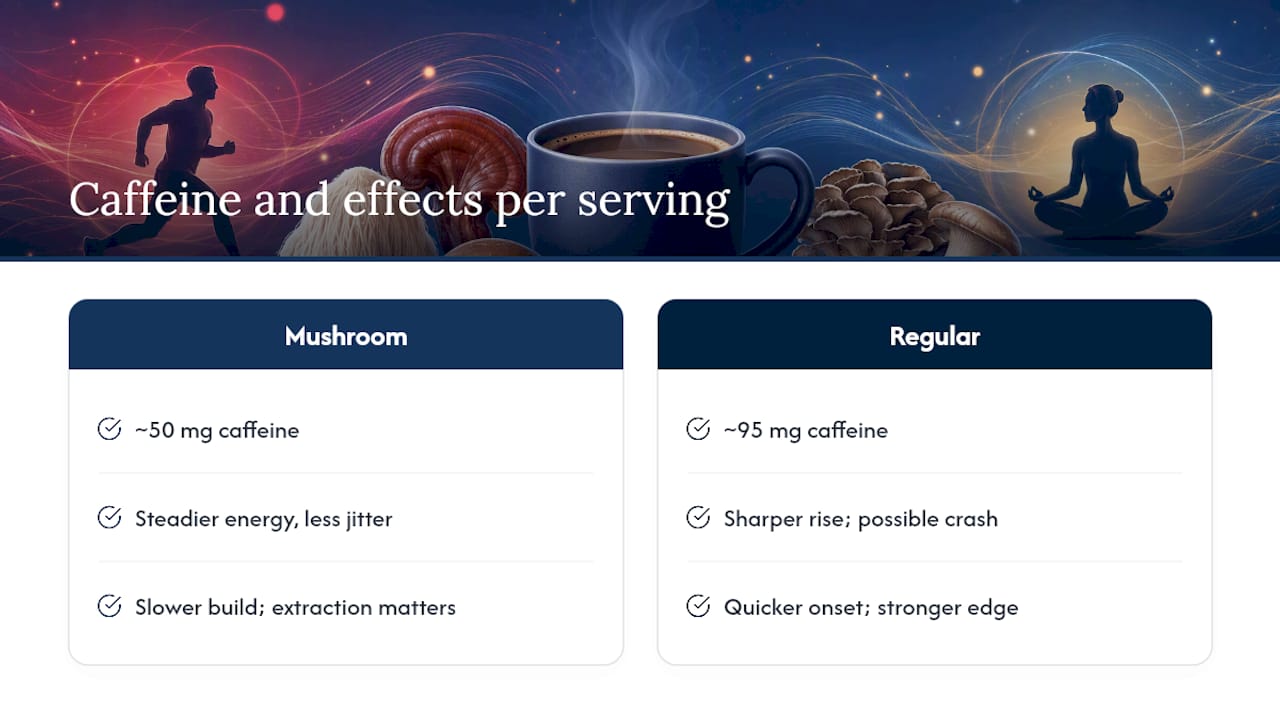
The subjective experience tends to build rather than hit all at once. Users often describe a sense of calm alertness, less edge, less racing heart, but still enough lift to get through a morning of meetings. That said, individual sensitivity varies widely. Body weight, tolerance, sleep quality, and even how strong you brew it all shift how the same 50 mg of caffeine feels to two different people. Extraction method matters too. A hot-water extracted mushroom powder releases compounds differently than a raw powder blend, which can subtly change both taste and how quickly you feel the effects.
Does the Science Actually Support These Benefits?
Here’s where honesty matters more than hype. The research on individual mushroom species is genuinely encouraging. Small human trials on Lion’s Mane have measured cognitive endpoints like memory and attention, and cordyceps has shown up in endurance-related research. But there’s an important gap between those studies and what’s sitting in your mug.
Human research is still limited, and many of the beneficial findings on functional mushrooms come from lab dishes or animal models, not people drinking a daily blend.
That’s the core caveat from Harvard Health’s review of mushroom coffee, and it’s the single most important thing to understand before you get excited about any specific claim.
A few things worth knowing if you want to evaluate the evidence like a skeptic instead of a believer:
- Clinical studies on Lion’s Mane and cordyceps often use specific doses and extract types that consumer coffee blends may not match, so a study result doesn’t automatically transfer to your morning cup.
- Reviewers on PubMed have documented cognitive, immune, and anti-inflammatory signals for individual mushroom species, but rarely test them in combination the way six-mushroom blends do.
- Bioavailability, meaning how much of the active compound your body actually absorbs, depends heavily on extraction method. Even a coffee that lists all six mushrooms on the label may deliver very little usable content if it relies on cheap mycelium-on-grain powder instead of extracted fruiting bodies.
None of this means six-mushroom coffee is snake oil. It means the effect you feel likely comes from a combination of lower caffeine and adaptogenic compounds working together gently, rather than one ingredient delivering a dramatic, isolated result. If you go in expecting nuanced support rather than a miracle, you’re less likely to be disappointed and more likely to notice what’s actually happening.
Is Mushroom Coffee Safe to Drink Every Day?
For most healthy adults, six-mushroom coffee is considered safe to drink daily. But “most people” isn’t “everyone,” and a few groups need to pay closer attention before adding it to their routine.
- People on blood thinners should talk to their doctor first. Reishi and chaga have known antiplatelet properties that could compound the effect of anticoagulant medication.
- People on immunosuppressants need caution too, since mushroom polysaccharides are often marketed specifically for immune modulation, which could theoretically interfere with those drugs.
- People with diabetes on medication should monitor blood sugar closely, since some mushroom compounds may have mild effects on glucose metabolism.
- People with kidney disease should be cautious, particularly with chaga, which contains oxalates that may raise kidney stone risk in susceptible individuals.
- Pregnant or nursing individuals should check with their provider before adding any new adaptogen to their diet.
- Anyone with a known mushroom allergy should obviously skip the category altogether.
If none of that applies to you, the safest approach is still to start with a half serving for the first few days, then work up to a full serving over a week or two. Give it a real trial of four to six weeks before deciding whether it’s doing anything, since adaptogenic effects tend to build gradually rather than announce themselves on day one. Watch for unusual bruising, digestive upset, or anything that feels off, and stop if something doesn’t sit right.
Pro Tip: Keep the product label or a photo of the ingredient panel on your phone. If you ever need to call your doctor about a new medication or an upcoming procedure, being able to rattle off exact mushroom species and extraction type saves a lot of back-and-forth.
What Should You Look for When Buying Mushroom Coffee?
Not all six-mushroom coffee is created equal, and the differences aren’t always obvious from the front of the package. The real information lives in the fine print, so here’s what actually separates a well-made product from a marketing gimmick.
- Fruiting body extraction, not mycelium-on-grain. Hot-water extracted fruiting bodies are generally considered higher quality than mycelium grown on rice or oats, which can dilute the actual mushroom content with starch.
- Milligram or beta-glucan disclosure. A trustworthy brand states exact mg per serving or beta-glucan percentage instead of hiding behind a vague “proprietary blend.”
- Organic certification. This reduces your exposure to pesticide residue, which matters more with mushrooms since they can absorb compounds from their growing substrate.
- Clear caffeine content per serving. If a label won’t tell you how much caffeine is in your cup, that’s a red flag worth taking seriously.
- Lab testing and transparency. Look for brands that publish third-party test results or explain their sourcing openly rather than just claiming quality.
Here’s how that translates into a quick decision framework:
| What to check | Why it matters | Red flag |
|---|---|---|
| Extraction method | Determines bioavailable compound content | Label doesn’t specify fruiting body or mycelium |
| mg or beta-glucan per serving | Confirms real dosage, not a marketing claim | “Proprietary blend” with no numbers |
| Caffeine content | Sets accurate expectations for energy level | No caffeine amount listed at all |
| Lab testing | Verifies purity and potency claims | No mention of third-party testing |
Once a product clears those four checks, you’re in reasonably good hands. A purchase guide can help you compare brands side by side if you want a deeper reference before buying.
How Do You Brew Mushroom Coffee?
Instant six-mushroom coffee is the simplest entry point: dissolve one packet in 8 to 10 ounces of hot water, stir, and adjust to taste. Ground mushroom coffee blends brew the same way as regular drip coffee, just at a slightly coarser grind if the package recommends it.
- Standard cup: one packet or one to two tablespoons of grounds per 8 ounces of hot water.
- Chocolate-infused iced version: brew double strength, cool, then blend with cacao powder, ice, and your milk of choice for a refreshing afternoon option.
- Mushroom latte: combine your brewed mushroom coffee with steamed oat or almond milk, and stir in a splash of MCT oil if you want extended satiety.
Drink it with breakfast rather than on an empty stomach if you’re sensitive to caffeine or new to functional mushrooms, as explained in this guide on why order freshly prepared meals that emphasizes the importance of pairing functional foods with your morning routine. This small habit reduces the odds of stomach upset while you get used to the blend.
Why a Well-Made Six-Mushroom Coffee Is Worth the Try
The honest case for six-mushroom coffee isn’t that it’s magic. It’s that the combination of lower caffeine and adaptogenic compounds gives your nervous system a gentler ride than a double espresso, and the research on individual species like Lion’s Mane and cordyceps gives real reason for cautious optimism.
What separates a good product from a mediocre one comes down to sourcing and transparency: fruiting body extraction, disclosed dosages, and organic ingredients, the same proof points Emberk built its blend around. Over a million cups served provide evidence that people keep coming back. Give any blend four to six weeks before judging it, and if you’re on medication, loop in your doctor first.
— Tatiana
Try Emberk’s Six-Mushroom Coffee for Yourself
Emberk gives you a way to actually verify what you’re drinking instead of guessing, which is the real advantage over unlabeled blends crowding store shelves right now.
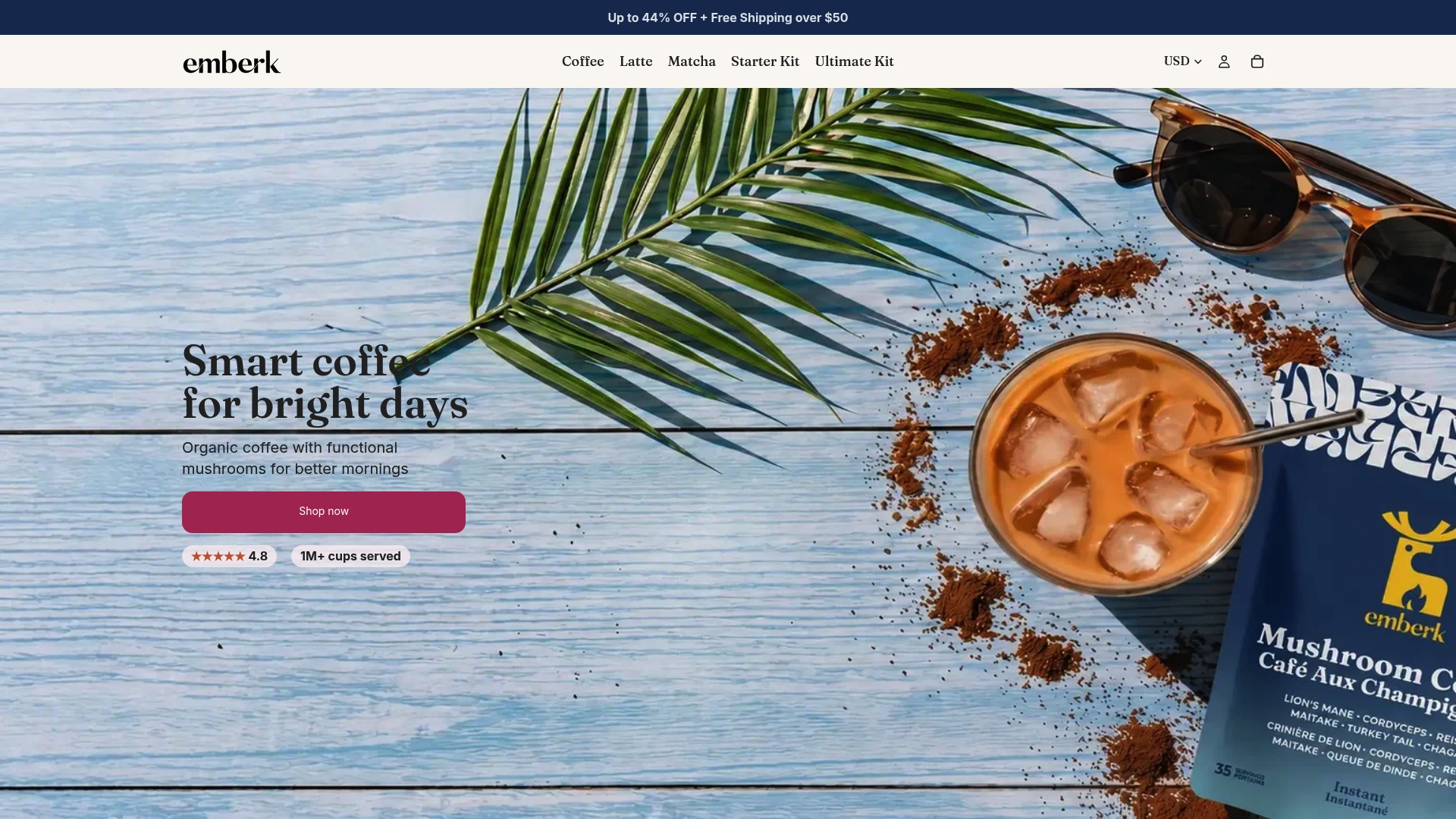
Every Emberk blend uses 100% fruiting body extracts of Lion’s Mane, Chaga, Reishi, Turkey Tail, Maitake, and Cordyceps, lab-tested and sourced without fillers or artificial ingredients. Caffeine sits in that gentle 40 to 60 mg range, and the lineup includes instant coffee, lattes, and matcha, with optional probiotics and MCT oil for anyone building a fuller wellness routine.
This checks every box from the buying guide above: disclosed extraction method, transparent sourcing, no proprietary mystery dosages. First-time drinkers often notice the steadier energy within the first week, though the fuller adaptogenic effect tends to show up closer to that four-to-six-week mark. Order a one-time bag to test it, or set up a subscription for your six-mushroom coffee blend so you never run out mid-week. Browse the full collection of mushroom coffee products to find the format that fits your morning best.
Sources
- Is mushroom coffee healthy? — AARP
- Mushroom coffee: Worth a taste? — Harvard Health
- Mushroom coffee benefits: Medical News Today
This article is general information, not a substitute for advice from a qualified doctor. Consult a qualified healthcare professional about your own circumstances before acting on anything here.
FAQ
What is the downside to mushroom coffee?
The main downside is limited human research on blended products, plus the risk of interactions for people on blood thinners, immunosuppressants, or diabetes medication. Digestive discomfort can also occur in people sensitive to new adaptogens.
What does Harvard Health say about mushroom coffee?
Harvard Health notes that most benefit claims for functional mushrooms come from lab or animal studies rather than robust human trials on the blends themselves, so expectations should be cautious.
Is it safe to drink mushroom coffee every day?
Mushroom coffee is generally safe for daily use in healthy adults, though people with kidney issues, clotting disorders, or those on certain medications should consult a doctor first.
Why is mushroom coffee good for you?
Mushroom coffee combines lower caffeine, around 40 to 60 mg per serving, with mushroom compounds like beta-glucans that show promising cognitive and immune-related signals in early research, producing a calmer energy than regular coffee for many drinkers.
0 comments