

If you want a short answer: Emberk is our recommended mycotoxin-tested option, pairing organic sourcing with lab-tested ingredients and transparent quality practices in a format built for daily use. For readers who prefer whole-bean or ground formats, two other categories are worth knowing.
Here’s how the main options break down by buyer need:
- Best for daily convenience + organic transparency: Emberk’s instant mushroom coffee, lab-tested and made from 100% organic ingredients with no fillers or artificial additives.
- Best for per-batch COA traceability: Specialty roasters who publish indexed, batch-level COAs from ISO-accredited labs — ideal if you want to cross-reference roast date with test results.
- Best for high-antioxidant, low-acid profiles: Third-party tested blends that prioritize shade-grown, wet-processed single-origin beans, often with lower OTA risk due to controlled drying.
Key Takeaways
Verified mycotoxin-free coffee requires a public per-batch COA from an ISO/IEC 17025-accredited lab, a disclosed analytical method, and numeric results — not just a “mold-free” label.
| Point | Details |
|---|---|
| COA is the only real proof | A public, batch-specific COA with named lab and numeric ppb results is the only verifiable claim. |
| “Mold-free” is unregulated | Any brand can use the term; ask for the lab report, method, and accreditation before trusting it. |
| Organic ≠ mycotoxin-tested | USDA Organic verifies farming inputs, not contamination levels during drying or storage. |
| Roasting reduces but doesn’t eliminate | OTA drops substantially during roasting, but front-end sourcing and storage are the primary controls. |
| Emberk for daily clean coffee | Emberk’s organic instant mushroom coffee is lab-minded, filler-free, and built for health-conscious daily use. |
Table of Contents
- Which mycotoxin free coffee brands actually pass the lab test?
- How we evaluated these options
- What are mycotoxins, and why do they matter in your coffee?
- What should you check before buying clean organic coffee?
- How do you read a mycotoxin Certificate of Analysis?
- Brewing and storage tips that keep your coffee clean
- How Emberk meets the verification criteria
- What the “mold-free” label debate gets wrong
- Emberk is the clean-coffee option built for how you actually drink it
- Sources
- FAQ
Which mycotoxin free coffee brands actually pass the lab test?
Not every brand that calls itself “mold-free” has the paperwork to back it up. The table below uses generic category labels alongside Emberk so you can compare what actually matters: testing transparency, certifications, roast profile, and whether decaf is available.
Emberk
Emberk’s instant mushroom coffee is built around organic ingredients and a commitment to no fillers, no artificial additives, and no added sugars. What makes it stand out in this category is the functional layer: six fruiting-body mushrooms (Lion’s Mane, Chaga, Reishi, Turkey Tail, Maitake, and Cordyceps) blended with organic coffee for stable energy and mental clarity without the jitter-and-crash pattern. For health-conscious buyers who want a daily cup that goes beyond caffeine, this is the format that makes the most sense.
Per-batch COA specialty roasters
This category represents the gold standard for mycotoxin-tested coffee, specifically for whole-bean or ground formats. The defining feature is a publicly indexed COA for every roast batch, tested by an ISO/IEC 17025-accredited lab for ochratoxin A (OTA) and the four major aflatoxins. Per-batch COA practices include archived reports searchable by batch ID, which means you can pull the actual lab report for the specific bag you bought. The tradeoff is price: this level of testing infrastructure costs more, and you’ll typically pay a premium per bag.
Large-brand tested-lot and value-oriented models
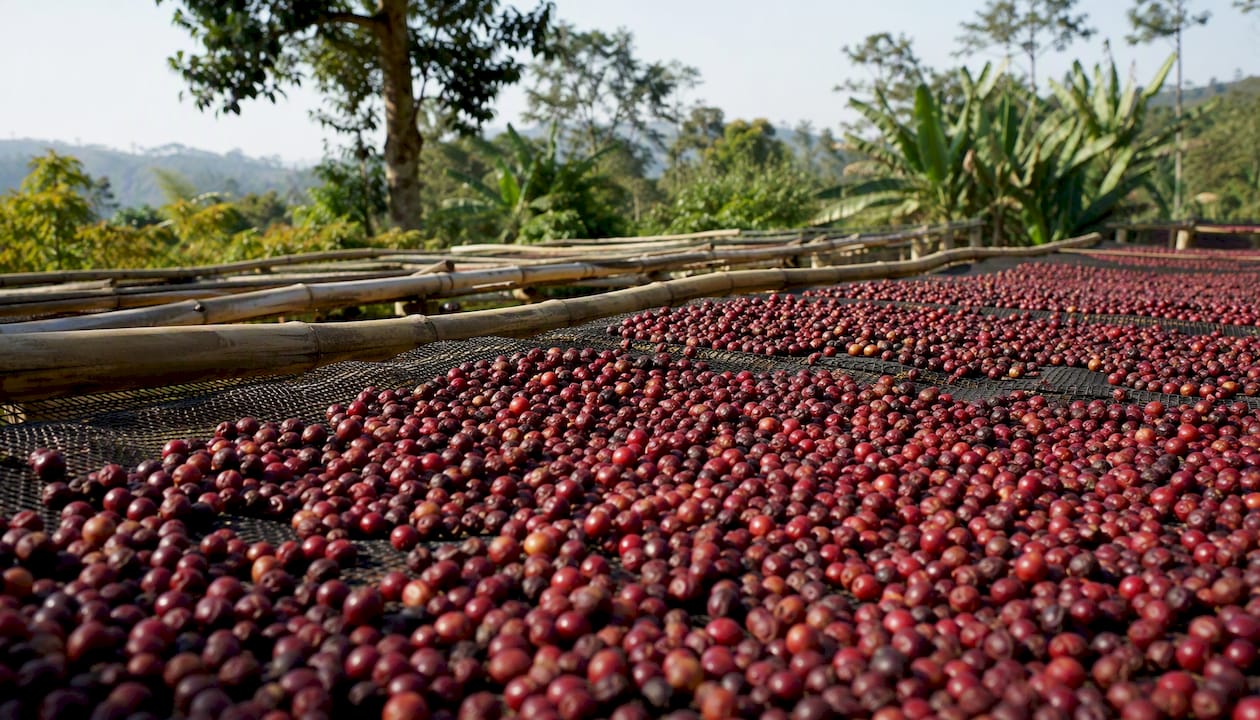
Lot-level testing is better than no testing, but it covers a production run rather than a specific roast batch. That distinction matters when you’re trying to verify the exact coffee in your hand. Value-oriented blends sometimes carry a “mycotoxin-tested” label with limited disclosure — no named lab, no method, no result. As Lifeboost’s explainer on mold-free coffee notes, a claim without those details is marketing language, not verification.
Who should pick Emberk: health-conscious buyers who want organic, lab-minded daily coffee in a convenient instant format with functional mushroom benefits. Who should lean toward a per-batch COA specialty roaster: whole-bean drinkers who want the deepest traceability and are willing to pay a premium for batch-level lab reports.
How we evaluated these options
The shortlist here isn’t based on marketing copy. We applied a consistent set of criteria, weighted in the order that actually protects you as a buyer.
What we looked for, in priority order:
- Testing transparency (highest weight): Does the brand publish a COA from a named, ISO/IEC 17025-accredited third-party lab? Does the panel include OTA and aflatoxins B1, B2, G1, and G2? Are results disclosed numerically in ppb (µg/kg)?
- COA accessibility: Is the report publicly available without an email gate? Can you find it by batch ID or roast date?
- USDA Organic certification: Confirms the absence of synthetic pesticides and certain inputs — a meaningful sourcing signal, though it does not itself test for mycotoxins.
- Sourcing transparency: Single-origin or named cooperative, processing method disclosed, roast date on the bag.
- Price and value: Does the testing infrastructure justify the price point?
One thing worth knowing about the U.S. market: unlike the EU, Canada, or Japan, the FDA has no specific federal mycotoxin limit for coffee. That means voluntary testing and public disclosure are the primary consumer-grade safety checks available to you. Roaster transparency isn’t just a nice-to-have here — it’s the whole game.
Pro Tip: A COA indexed by batch ID and searchable by roast date is meaningfully stronger than a COA available “upon request.” If a brand makes you email them for the report, that’s a friction point worth noting — the best operators make it one click.
What are mycotoxins, and why do they matter in your coffee?
Ochratoxin A (OTA) and aflatoxin B1 are the two mycotoxins most relevant to coffee. Both are toxic fungal metabolites produced when mold grows on coffee beans during harvesting, drying, or storage under humid conditions. The WHO classifies mycotoxins as a global food-safety concern, and aflatoxin B1 specifically is classified by the International Agency for Research on Cancer as a Group 1 known human carcinogen. OTA is classified as a Group 2B possible carcinogen.
Peer-reviewed research links mycotoxin exposure to kidney and liver effects and immune impacts across organ systems, though the strength of association varies by toxin and exposure level. The practical question for coffee drinkers isn’t whether mycotoxins exist — surveillance studies confirm occasional detections in green and roasted coffee samples worldwide — but whether the levels in your specific cup are meaningful.
Most commercial roasted coffee tests below EU thresholds, but “below the EU limit” and “undetectable” are not the same thing. If you drink multiple cups daily, cumulative exposure from trace levels is a reasonable thing to track.
Roasting helps. Experimental studies show that roasting substantially reduces OTA concentrations in many cases, though the degree of reduction depends on roast temperature and time, and full elimination isn’t guaranteed. That’s why front-end sourcing and storage practices matter as much as the roast itself.
This section is general health information, not a substitute for personalized medical advice. If you have specific concerns about mycotoxin exposure, consult a clinician.
What should you check before buying clean organic coffee?
Think of this as your three-point pre-purchase checklist. You can run through it in under two minutes on any brand’s website.
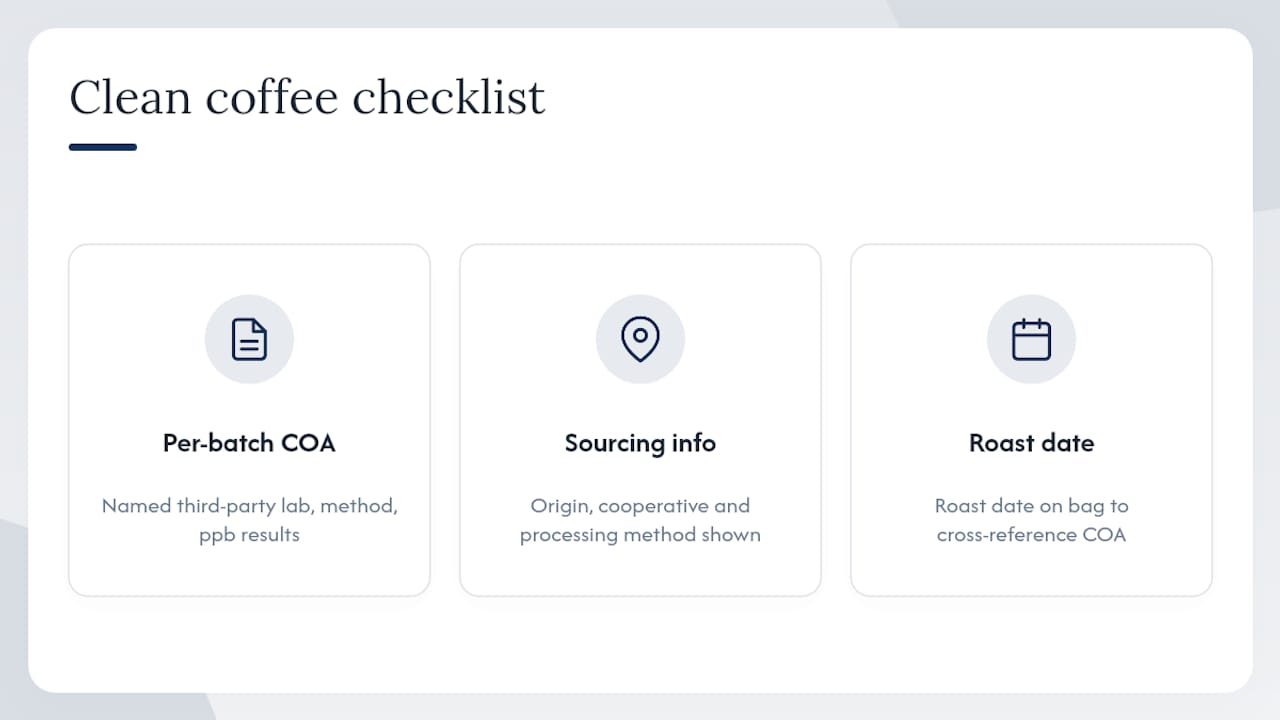
1. Is there a public, per-batch COA from a named third-party lab? This is the non-negotiable. The report should name the lab, list the method (HPLC-MS/MS or LC-MS/MS), show numeric results in ppb, and be tied to a specific batch or roast date. A vague “mycotoxin-tested” badge with no report behind it is, as Solar Roast’s analysis of label misuse puts it, a marketing term rather than a verified claim.
2. Is sourcing clearly disclosed? Single-origin or named cooperative, processing method (wet-washed tends to carry lower OTA risk than natural-dried), and country of origin should all be visible. Understanding how processing methods influence mycotoxin risk helps you evaluate sourcing claims with more confidence. Wet processing, raised drying beds, and controlled humidity during storage all reduce the conditions where mold can form.
3. Is there a roast date on the bag? A roast date tells you how fresh the coffee is and lets you cross-reference it against a COA. No roast date is a red flag for transparency in general.
What certifications actually mean
The USDA Organic label is a meaningful sourcing signal, but it does not guarantee the absence of mycotoxins. Organic farming reduces certain contamination pathways, but mold can still form during drying or storage regardless of how the crop was grown.
A note on decaf and instant
Decaf processing (especially solvent-based methods) can concentrate certain compounds, so it’s worth checking whether a brand tests its decaf separately. Swiss Water Process decaf is generally considered cleaner from a chemical standpoint. For instant coffee, the concentration step in manufacturing means any mycotoxins present in the base coffee could be amplified — making third-party testing even more relevant for instant formats. Look for brands that test the finished product, not just the green bean.
How do you read a mycotoxin Certificate of Analysis?
A meaningful COA lists the mycotoxins tested, the numeric results in ppb (µg/kg), the analytical method, the lab’s accreditation, and a signed report date tied to a specific batch ID. Here’s how to work through one in six steps.
- Find the batch ID or roast date. This ties the report to the specific coffee you’re buying. If it’s missing, the COA may not apply to your bag.
- Locate the OTA and aflatoxin rows. You want to see ochratoxin A, aflatoxin B1, aflatoxin B2, aflatoxin G1, and aflatoxin G2 listed individually.
- Read the results in ppb. Parts per billion (ppb) and µg/kg are the same unit. The EU limit for OTA in roasted coffee is 5 µg/kg; for aflatoxins, the EU total limit is 10 µg/kg (with B1 capped at 5 µg/kg). These are useful benchmarks even for U.S. buyers, since the U.S. has no specific federal coffee limit.
- Check the method. HPLC-MS/MS or LC-MS/MS are the analytical methods you want to see. These are sensitive, specific, and widely accepted. A COA that lists no method is unverifiable.
- Confirm lab accreditation. Look for ISO/IEC 17025 certification. This means the lab operates under a recognized quality management system for testing.
- Check the report date. The COA should be dated after the roast date of the batch it covers. A COA older than the coffee it’s supposed to certify is a red flag.
Red flags to watch for:
- COA available only behind an email gate
- No limit of quantification (LOQ) listed — this tells you how sensitive the test actually is
- No lab name or accreditation number
- Generic “tested” language with no numeric results
- A single COA applied to an entire product line rather than individual batches
Pro Tip: Ask the brand: “Can I see the COA for the specific batch in this bag?” A brand with real testing infrastructure will answer that question in one click. One that can’t is telling you something important.
Brewing and storage tips that keep your coffee clean
Roasting reduces many mycotoxins, but it doesn’t guarantee removal. Studies confirm that OTA concentrations drop substantially during roasting, yet the reduction depends on roast profile and starting contamination levels. The real control points are upstream: sourcing, drying, and storage.
Brewing does not reliably destroy mycotoxins. The water temperature in your pour-over or espresso machine is not hot enough, long enough, to neutralize OTA or aflatoxins. Front-end quality is what actually determines what’s in your cup.
Storage practices that matter:
- Keep bags sealed between uses and store in a cool, dry place away from humidity.
- Buy smaller quantities and check the roast date — fresher coffee has had less time to degrade or absorb moisture.
- Avoid storing coffee near the stove, dishwasher, or any source of steam.
- Proper storage for roasted coffee also preserves flavor compounds that oxidize quickly once a bag is opened.
Brewing habits worth keeping:
- Use fresh grounds each time. Reusing stale grounds doesn’t just taste flat — it means you’re brewing coffee that has had more time to oxidize and potentially absorb ambient moisture.
- Clean your grinder and brewing equipment regularly. Mold can form in damp equipment, separate from anything in the coffee itself.
- Use filtered water when possible. It won’t affect mycotoxin levels, but it does affect extraction quality and flavor.
How Emberk meets the verification criteria
Emberk’s approach to clean coffee starts with organic sourcing. Every ingredient, including the six functional mushrooms and the coffee base, is certified organic and free from fillers, artificial additives, and added sugars.
Emberk combines organic ingredient sourcing with a product format designed for health-conscious daily use, instant coffee that delivers stable energy, mental clarity, and gut support without the jitter-and-crash cycle of conventional caffeine.
What sets Emberk apart for this audience:
- Organic coffee base with no synthetic inputs, verified at the sourcing level
- Six functional mushrooms (Lion’s Mane, Chaga, Reishi, Turkey Tail, Maitake, Cordyceps) from 100% fruiting bodies — no fillers
- Dairy-free, no added sugars, no artificial ingredients
- Instant format with optional probiotics and MCT oil for gut health and sustained energy
- Low to moderate caffeine for stable output without spikes
For readers who want to go deeper on the health evidence behind mushroom coffee, Emberk’s guide to mushroom coffee benefits covers the research in plain language. And if you’re evaluating sourcing and quality checkpoints before buying, the mushroom coffee purchase guide walks through exactly what to look for.
What the “mold-free” label debate gets wrong
Here’s the thing most articles on this topic miss: the conversation about mycotoxin-free coffee gets framed as a binary — either a brand is clean or it isn’t. The reality is more useful and more nuanced than that.
The term “mold-free” is unregulated. Any brand can print it on a bag. What separates a meaningful claim from a marketing phrase is the infrastructure behind it: a named ISO-accredited lab, a disclosed analytical method, numeric results by batch, and public access to the report. Without those four elements, “mold-free” tells you nothing verifiable.
What I find more interesting is the second-order problem: even brands that do test sometimes test inconsistently. A COA from six months ago applied to today’s production run is not the same as per-batch testing. And a COA that covers the green bean but not the finished roasted product leaves a gap in the chain of custody that matters.
The practical takeaway isn’t to distrust every brand that uses the term. It’s to treat “mold-free” as a starting point for a question, not an answer. Ask for the COA. Check the lab name. Look at the method. If the brand can’t answer those questions in under 60 seconds on their website, keep looking.
One more thing worth saying: organic certification and mycotoxin testing are not the same thing, and conflating them is one of the most common mistakes health-conscious buyers make. USDA Organic tells you how the crop was grown. It says nothing about what happened during drying, storage, or transit. A coffee can be certified organic and still carry detectable OTA if it was dried in humid conditions or stored improperly. Testing is the only thing that tells you what’s actually in the cup.
Emberk is the clean-coffee option built for how you actually drink it
Most mycotoxin-tested coffee options require you to own a grinder, a scale, and a brewing setup. Emberk’s instant mushroom coffee gives you organic, lab-minded coffee in a format that works in 60 seconds — no equipment, no guesswork, no afternoon crash.
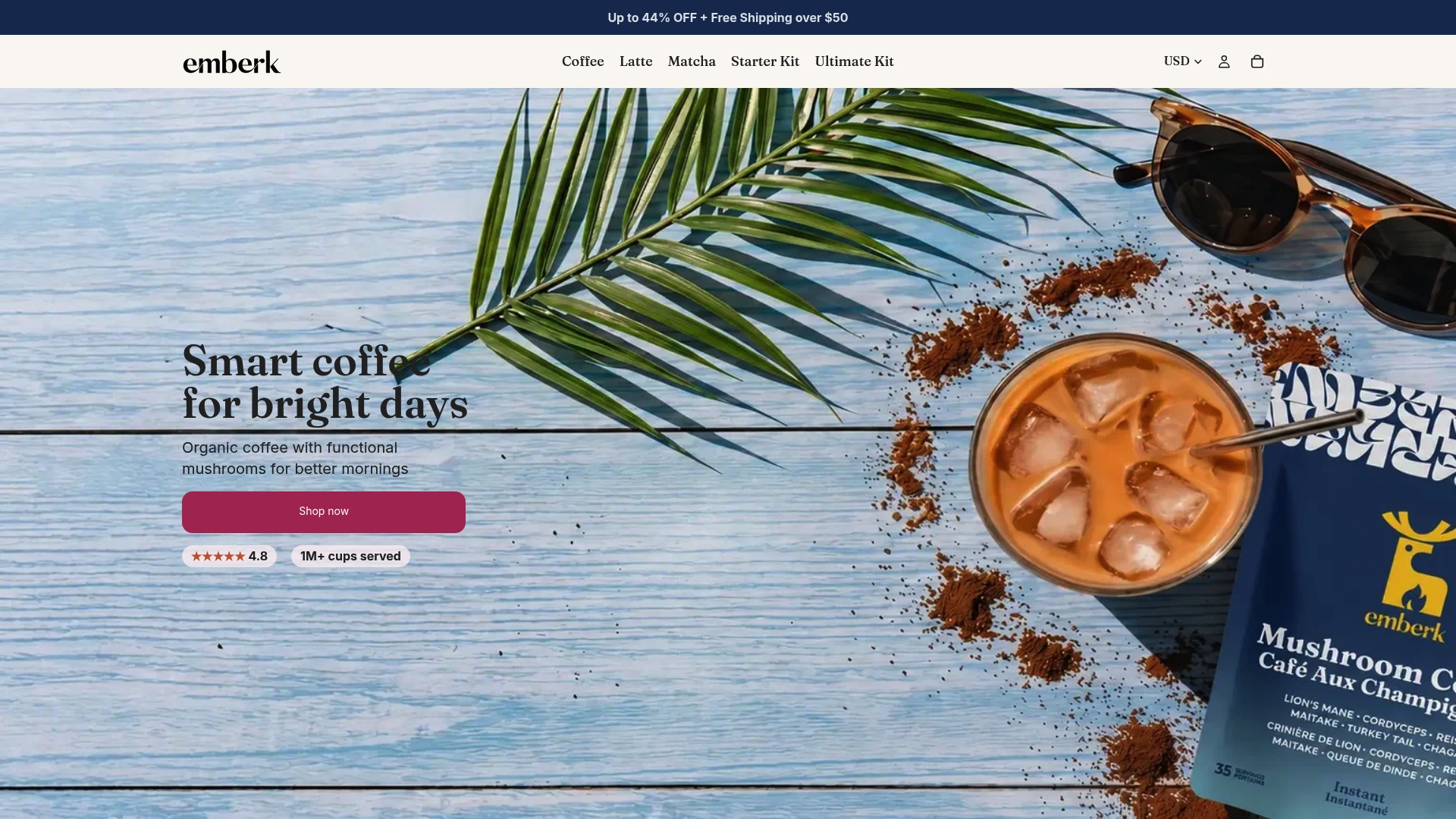
Before you buy, check the product page for ingredient transparency, organic certification details, and the full list of functional mushrooms. Emberk also offers a mushroom latte blend for those who prefer a creamier, lower-caffeine option.
Disclosure: this article is published by Emberk. Visit the Emberk product page to review ingredient details and place an order.
Sources
FAQ
What coffee does not have mycotoxins?
Emberk’s organic sourcing and lab-tested quality practices place it in this category for instant formats.
What brand of coffee is mold free?
“Mold-free” is an unregulated marketing term, so the label alone means nothing. Brands worth trusting are those that back the claim with a publicly accessible COA, a named third-party lab, and numeric results by batch — not just a badge on the packaging.
Is Starbucks mycotoxin free?
Starbucks does not publicly publish per-batch mycotoxin COAs or disclose specific OTA and aflatoxin test results for its products. Large commercial roasters typically rely on supplier-level quality controls and lot-level testing rather than the batch-specific, publicly indexed COA model that specialty mycotoxin-tested brands use.
What is the cleanest, healthiest coffee?
The cleanest coffee combines three things: organic sourcing (to minimize pesticide residues), third-party mycotoxin testing with public COAs, and proper post-harvest handling (wet processing, controlled drying). Emberk’s instant mushroom coffee adds functional mushrooms and adaptogens to that foundation, making it one of the more complete options for health-conscious daily use.
How do I spot a fake mycotoxin-free claim?
Four red flags: no named lab on the COA, no analytical method listed, results not disclosed numerically, and the report available only behind an email gate. A genuine claim answers all four of those questions on a public webpage in under 60 seconds.
0 comments