

Short answer: no. Mushroom coffee has not been shown to cause meaningful weight loss on its own. Some mushroom species, like reishi and oyster mushrooms, show modest or mixed signals in clinical studies, but the evidence quality is low. Keep reading to see what the research covers, what the risks are, and how to test it on yourself.
TL;DR:
- Human studies show only a tiny and uncertain reduction in BMI from reishi, with no consistent evidence that mushroom coffee significantly influences body fat or waist size.
- Most research supporting metabolic benefits is from animal and lab studies, with human trials being small, short, and inconsistent, making claims about weight loss unsupported.
- Caffeine and mushroom compounds may modestly affect metabolism, blood sugar, and stamina, but these effects are weak and not proven to translate into weight loss.
- Mushroom coffee is generally safe but can cause digestive upset, interact with medications, or pose kidney-stone risks for susceptible individuals, especially in high oxalate species like chaga.
- To evaluate if mushroom coffee suits you, try a single-product for four to twelve weeks, track weight and subjective changes, and prioritize healthy habits over expecting direct weight loss.
Table of Contents
- What Is Mushroom Coffee and Which Mushrooms Go Into It?
- What Does the Research Actually Show About Mushrooms and Body Weight?
- How Could Mushroom Coffee Support Weight Management?
- What Are the Risks and Who Should Avoid It?
- How Do You Try Mushroom Coffee and Know if It’s Working?
- What Should You Look for in a Quality Mushroom Coffee?
- Try Emberk’s Mushroom Coffee for Clarity, Not a Magic Fix
- Realistic Expectations From Someone Who Makes This Stuff
- Sources
- FAQ
What Is Mushroom Coffee and Which Mushrooms Go Into It?
Mushroom coffee is regular coffee blended with mushroom extract or powder, not chunks of actual mushroom floating in your mug. Think of it as coffee that picked up a few extra passengers along the way, each one bringing its own reputation from centuries of traditional use.
The most common species you’ll see on a label:
- Reishi (Ganoderma): linked to stress support and modest metabolic claims
- Lion’s mane: marketed heavily for focus and cognitive support
- Cordyceps: associated with stamina and exercise endurance
- Chaga: prized for its antioxidant content
- Turkey tail: contains immune-supporting polysaccharides
- Oyster mushroom (Pleurotus): drawing interest for cardiometabolic effects
You’ll find these as single-species powders, multi-mushroom blends, instant sachets, or brewed formats. Extraction method matters too. Fruiting body extracts, mycelium extracts, and whole mushroom powders don’t deliver the same concentration of active compounds, which is worth knowing before you compare products. Most mushroom coffee blends also run lighter on caffeine, typically 35 to 50 milligrams per cup versus roughly 95 milligrams in a standard cup of drip coffee.
What Does the Research Actually Show About Mushrooms and Body Weight?
Here’s where the evidence-based crowd and the marketing copy start to diverge. A 2025 systematic review pooling 17 randomized controlled trials on Ganoderma lucidum, better known as reishi, found a modest reduction in BMI among 971 participants, with a weighted mean difference around negative 0.43. That number sounds encouraging until you read the fine print: the researchers rated the certainty of that evidence as very low, and reishi supplementation showed no consistent effect on body fat percentage or waist circumference.
The reishi weight signal is real but tiny, and the confidence behind it is weak. A BMI shift of 0.43 points is the kind of change that could disappear entirely with a slightly different study design or a larger sample.
Oyster mushroom research tells a related but distinct story. A systematic review of clinical trials on Pleurotus ostreatus found improvements in glucose and lipid markers, meaning some people saw better blood sugar and cholesterol numbers. Body weight itself, though, generally didn’t budge. Many of those trials also carried high or unclear risk of bias, which means the improvements might reflect study design quirks as much as biology.
Zoom out further and the pattern holds. Most of the genuinely promising data on mushrooms and metabolism comes from animal studies and lab-dish (in vitro) research, not from people drinking mushroom coffee every morning. Human randomized trials testing the beverage form specifically are almost nonexistent. Harvard Health Publishing has flagged this exact gap, noting that claims mushroom coffee causes weight loss are unsupported by robust human trials and often extrapolated from traditional use or unrelated mushroom studies.
The quality issues compound each other. Small sample sizes, short study durations, wildly different doses between trials, and inconsistent preparation methods all make it hard to draw a straight line from “mushrooms did something in a lab” to “mushroom coffee will shrink your waistline.” That gap between mushroom-level evidence and mushroom-coffee-level evidence is the single most important distinction in this entire conversation.

How Could Mushroom Coffee Support Weight Management?
Even without direct proof, there are plausible pathways worth understanding. None of these guarantee results, but they explain why the category earns cautious interest rather than outright dismissal.
- Caffeine’s metabolic nudge: caffeine modestly raises metabolic rate and can blunt short-term appetite, though mushroom blends typically carry less caffeine than regular coffee, which may weaken this effect
- Beta-glucans and triterpenes: these mushroom compounds show possible effects on glucose and lipid metabolism in preclinical and limited human research, though the human signal remains low-certainty
- Reishi’s stress angle: lower cortisol could theoretically reduce stress-driven eating, but human evidence for this chain of events is thin
- Cordyceps and stamina: better exercise capacity could support more activity, though the supporting studies tend to be small and inconsistent
- Processing losses: instant sachets may reduce or alter the very compounds researchers study in concentrated extract form
Pro Tip: If energy and appetite control matter more to you than the scale, pay attention to how you feel two to three hours after your cup, not just what the number reads at the end of the week.
What Are the Risks and Who Should Avoid It?
Mushroom coffee is generally well tolerated, but it isn’t risk-free for everyone. Know these before you start:
- Digestive upset is the most commonly reported issue, especially when starting a new species or a concentrated extract.
- Diuretic effects from some mushroom compounds can compound with caffeine’s own mild diuretic action.
- Medication interactions are a real concern for anyone on blood thinners or diabetes medications, since certain mushroom compounds affect blood sugar and clotting.
- Oxalate content, particularly in chaga, can raise kidney-stone risk for people already prone to them.
- Regulatory status matters: if you’re shopping in Canada, check for a Natural Product Number (NPN), which confirms the product is registered as a Natural Health Product and follows labeling requirements.
Pregnant or breastfeeding readers, anyone on prescription medication, and people with kidney concerns should check with a healthcare provider before adding mushroom coffee to a daily routine. Quality control varies widely between brands, so favor products with third-party testing and fruiting-body sourcing over vague “mushroom blend” labels.
How Do You Try Mushroom Coffee and Know if It’s Working?
Treat this like a small personal experiment rather than a leap of faith. Pick one product, ideally a single-species powder if you want clean data, and commit to it for four to twelve weeks before judging results. Changing three variables at once (a new coffee, a new diet, a new workout plan) tells you nothing about which one actually helped.
Skip the sugar and heavy cream. Both can mask any subtle metabolic effect and add calories that work against whatever benefit the mushrooms might offer.
- Track your weight and waist circumference weekly, not daily, since daily fluctuations are mostly water weight
- Note subjective changes too: energy levels, appetite, afternoon crashes, and sleep quality
- Follow the product’s labeled dosage, since clinical studies used widely varying doses that rarely match a single-serve sachet
- Compare the ongoing cost against simply eating whole mushrooms a few times a week for fiber and nutrients
Pro Tip: Weigh yourself the same time of day, same conditions, and log a rolling seven-day average instead of chasing single-day numbers. That trend line tells you far more than any one morning on the scale.
Cleveland Clinic’s guidance echoes this practical framing: mushroom coffee likely isn’t harmful for most people, but eating whole mushrooms delivers more complete nutrition and often costs less over time.
What Should You Look for in a Quality Mushroom Coffee?
Product transparency won’t prove weight-loss efficacy, but it does reduce the risk of wasting money on filler-heavy blends with inconsistent dosing. Emberk builds its coffee, latte, and matcha lines around six functional fruiting-body mushrooms, sourced organically with no fillers added. That kind of sourcing detail matters for consistency and safety even though it makes no claim about pounds lost.
When you’re comparing labels, a short checklist helps:
- Does it specify fruiting body rather than just “mycelium” or vague “mushroom extract”?
- Is the full ingredient list visible, with no proprietary blend hiding actual amounts?
- Is caffeine content per serving clearly stated?
- Does the brand mention third-party lab testing or certificates of analysis?
- If sold in Canada as a Natural Health Product, is an NPN listed on the label?
Products that check these boxes give you more confidence in what you’re actually drinking, which is a separate question from whether that drink will change your weight. For a deeper look at how these extracts get processed and what claims hold up, Emberk’s guide to mushroom coffee benefits breaks down the formulation side in more detail.
Try Emberk’s Mushroom Coffee for Clarity, Not a Magic Fix
Some brands offer mushroom coffee, mushroom lattes, matcha lattes, and travel packs built around multiple functional mushroom species, organic sourcing, and no fillers or added sugars. The caffeine runs lower than a standard cup, which is designed to give you steady energy instead of the jitter-and-crash cycle regular coffee can bring.
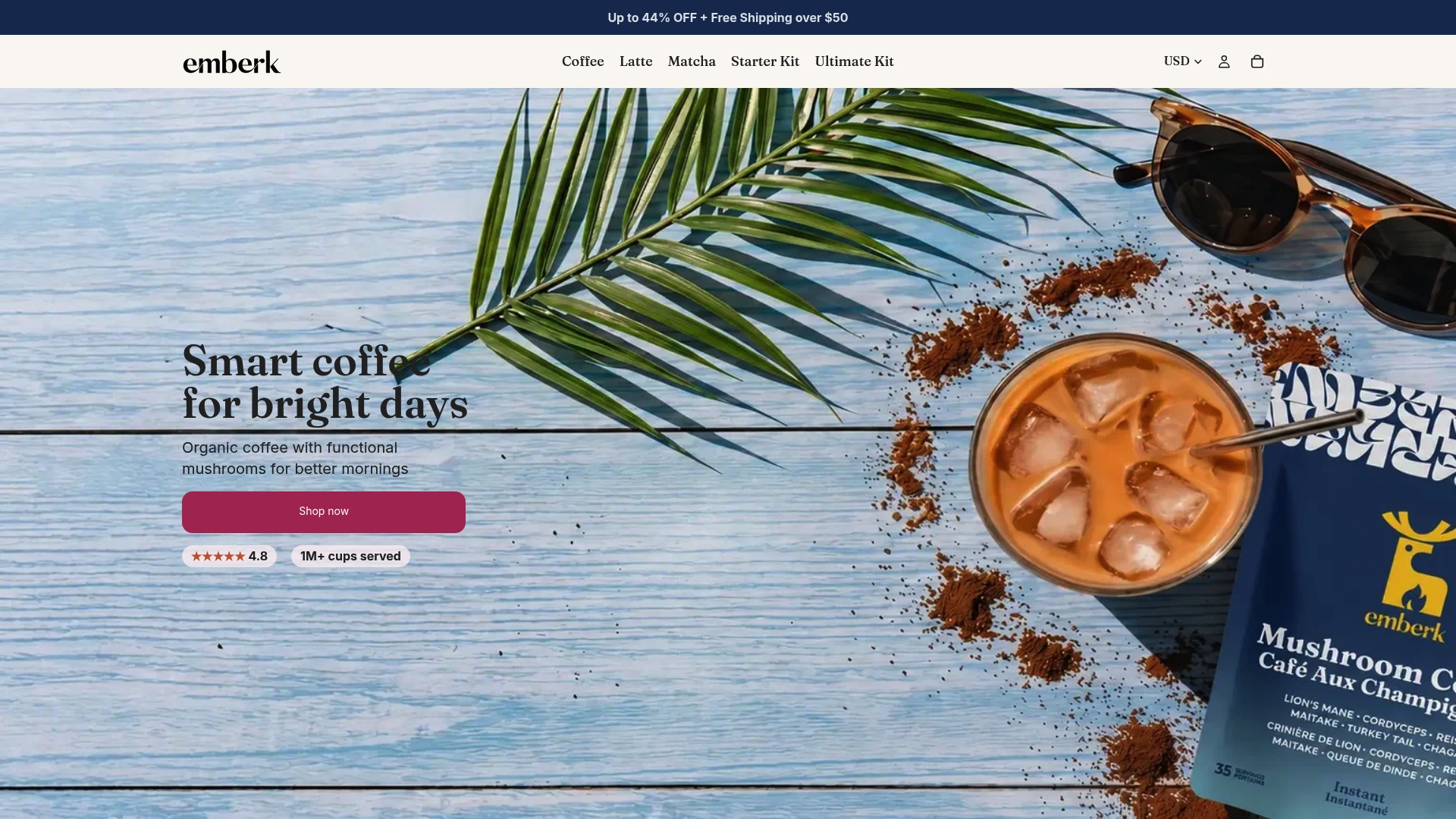
Here’s the honest part: none of that formulation work translates into a guarantee of weight loss. What it does offer is a cleaner, more transparent cup to pair with the habits that actually move the needle, meaning consistent meals, regular movement, and decent sleep. If you’re curious whether a lower-caffeine, mushroom-based swap fits your morning routine, the Mushroom Coffee blend is $34 for a one-off order, and the Mushroom Coffee Travel Pack runs $25 if you want to test it before committing to a full bag. Browse the full lineup at Emberk and see which format fits how you actually drink your coffee.
Realistic Expectations From Someone Who Makes This Stuff

We built Emberk around clarity and stable energy, not around a promise to melt off pounds. That distinction matters to us because the research simply doesn’t support the bigger claim, and we’d rather earn your trust with an honest cup than an inflated one.
If you try mushroom coffee, pair it with real habits: consistent meals, regular movement, decent sleep. Talk to a healthcare provider if you’re managing a condition or taking medication. A better cup of coffee is a genuinely good thing. Just don’t expect it to do the work your fork and your sneakers still have to do.
— Emberk
Sources
- The Nutritional Significance of Ganoderma lucidum on Human Health: A GRADE‑Assessed Systematic Review and Meta‑Analysis of Clinical Trials
- Effect of the Intake of Oyster Mushrooms (Pleurotus ostreatus) on Cardiometabolic Parameters—A Systematic Review of Clinical Trials
- Mushroom coffee: Worth a taste? — Harvard Health Publishing
- Mushroom coffee: Should you be drinking it? — Cleveland Clinic
FAQ
Does Mushroom Coffee Really Help You Lose Weight?
No. Current human research does not support mushroom coffee as a direct cause of meaningful weight loss. Reishi supplementation showed a modest BMI reduction in pooled trials, but the certainty of that evidence was rated very low, and no consistent effect on body fat or waist size appeared.
What Is the Downside of Mushroom Coffee?
The main downsides are digestive upset, possible interactions with blood thinners or diabetes medications, and oxalate content in species like chaga that may raise kidney-stone risk for susceptible people. It also tends to cost more than eating whole mushrooms regularly, and lower caffeine content means less of a metabolic boost than regular coffee.
Which Coffee Is Best for Belly Fat Loss?
No coffee, mushroom-infused or otherwise, has strong evidence for targeting belly fat specifically. Regular caffeine can modestly support metabolic rate and appetite control, and swapping to a lower-caffeine option like Emberk’s mushroom coffee may reduce jitters and crashes that disrupt sleep and activity, which indirectly supports weight goals over time.
How Long Does It Take to See Results From Mushroom Coffee?
Most people trying mushroom coffee for energy or clarity notice subjective changes within one to two weeks. For any measurable effect on weight-related metrics, plan on tracking consistently for four to twelve weeks, since the clinical trials showing modest metabolic signals ran over comparable timeframes.
0 comments