

Yes, you can combine lion’s mane and coffee, and millions of people already do. The pairing makes intuitive sense: caffeine delivers fast, familiar alertness while lion’s mane, a medicinal mushroom known scientifically as Hericium erinaceus, works on longer-term neurotropic pathways that support focus and cognitive resilience. Together, they form the backbone of what the functional-beverage world calls mushroom coffee.
Two caveats belong right up front, though. First, most mushroom-coffee products deliver lower doses of lion’s mane than the standardized extracts used in clinical trials, so expecting dramatic immediate results sets you up for disappointment. Second, if you take anticoagulants, immunosuppressants, or any medication that interacts with adaptogens, or if you are pregnant or breastfeeding, check with a clinician before adding this to your routine.
This guide is for health-conscious coffee drinkers who want an honest, evidence-aware look at what the research actually supports, how to read a product label, and how to brew a cup worth drinking. The evidence is promising but still early, and we will tell you exactly where the science is solid and where it is still catching up.
- Combining lion’s mane with coffee is generally safe for healthy adults.
- Clinical benefits come from standardized extracts, not necessarily from low-dose blends.
- Product quality varies widely; label literacy matters.
Pro Tip: If you are new to mushroom coffee, start with a single serving for three to five days before adding a second daily cup, so you can notice any digestive sensitivity before it becomes a habit.
Key Takeaways
Combining lion’s mane and coffee is safe for most healthy adults and works best when you choose a fruiting-body extract product with transparent dosing and third-party lab verification.
| Point | Details |
|---|---|
| Combining is generally safe | Lion’s mane and coffee pair well for most healthy adults; consult a clinician if you take medications or are pregnant. |
| Dose gap is real | Clinical trials used 500–3,000 mg of standardized extract; most mushroom-coffee servings deliver significantly less. |
| Fruiting body matters | Look for “fruiting body” on the label; mycelium-based products contain fewer active compounds. |
| Third-party COAs are non-negotiable | A certificate of analysis from an independent lab confirms label accuracy and contaminant safety. |
| Emberk meets the checklist | Emberk’s blend uses 100% fruiting-body mushrooms, lab-tested ingredients, and transparent per-mushroom dosing. |
Table of Contents
- What the Research Actually Says About Lion’s Mane and Coffee
- What Is Mushroom Coffee and What Formats Will You Find?
- What Does Lion’s Mane Coffee Actually Taste Like?
- Safety, Side Effects, and Who Should Be Cautious
- How to Choose a Quality Mushroom Coffee Product
- How to Use Lion’s Mane Coffee: Dosing, Timing, and Two Simple Recipes
- The Case for Treating Mushroom Coffee as a Habit, Not a Supplement
- Emberk’s Mushroom Coffee Is Built Around the Buying Checklist
- Sources
- FAQ
What the Research Actually Says About Lion’s Mane and Coffee
Lion’s mane earns its reputation from a specific set of bioactive compounds: hericenones and erinacines, which are small enough to cross the blood-brain barrier and may stimulate nerve growth factor (NGF) production, plus beta-glucans and polysaccharides linked to immune modulation. Think of NGF as the crew that maintains the brain’s communication roads. When that crew is active, neurons stay better connected, which is the theoretical basis for lion’s mane’s cognitive reputation.
Human trial results are real but modest. Small controlled trials on older adults with mild cognitive impairment used standardized extracts and observed improvements in cognitive scores over 8–16 weeks, though sample sizes were small. That timeline matters: lion’s mane is not a shot of espresso. Its neurotropic effects, if they occur, build gradually.
The dose gap is the most important thing to understand here. Clinical trials typically use standardized lion’s mane extract daily in doses significantly higher than what a typical mushroom-coffee serving may contain, especially when the product lists a combined “mushroom blend” weight rather than a per-mushroom figure. Harvard Health notes that while medicinal mushrooms show some evidence for immune and antioxidant activity, direct studies of finished mushroom-coffee products are scarce, meaning benefits are largely inferred from individual mushroom research rather than from the blended beverage itself.
For readers curious about the full picture of what lion’s mane’s active compounds actually do, that background is worth reading before you buy.
What Is Mushroom Coffee and What Formats Will You Find?
Mushroom coffee is simply coffee, ground or instant, blended with powdered or extracted mushroom ingredients. The distinction between a raw mushroom powder and a concentrated extract matters more than most product pages let on.
A raw powder is ground dried mushroom material. An extract concentrates the bioactive compounds, either through hot-water extraction (which pulls out beta-glucans and polysaccharides) or through a dual extraction combining hot water and alcohol (which also captures fat-soluble hericenones and erinacines). A product using only raw powder may contain far fewer of the compounds that researchers actually study.
The formats you will encounter on the market:
- Instant packets: Pre-measured, dissolve in hot water, and usually the most consistent for dosing. Great for travel or desk drawers.
- Ground or whole-bean blends: Brewed like regular coffee; mushroom powder is mixed into the grounds. Flavor integration tends to be smoother, but dose per cup depends on your brew ratio.
- Single-serve pods: Convenient but often the least transparent about mushroom content per serving.
- Powdered latte mixes: Designed to mix with hot water or milk; often include additional adaptogens, sweeteners, or creamers. Check the ingredient list carefully.
One labeling trap catches a lot of buyers: a product might list “mushroom blend 500 mg” across six or eight fungi, meaning the actual lion’s mane content per serving could be well under 100 mg. Always look for a per-mushroom breakdown, not just a total blend weight. The Gilded Cup’s instant mushroom coffee is one example of an instant format worth comparing when you are evaluating how different brands handle this.
What Does Lion’s Mane Coffee Actually Taste Like?
The honest answer: milder than you might expect. Lion’s mane has a subtle earthiness with faint umami undertones, closer to a mild white mushroom than to the forest-floor intensity of, say, chaga. At low inclusion rates, most people cannot identify it as “mushroom” at all.
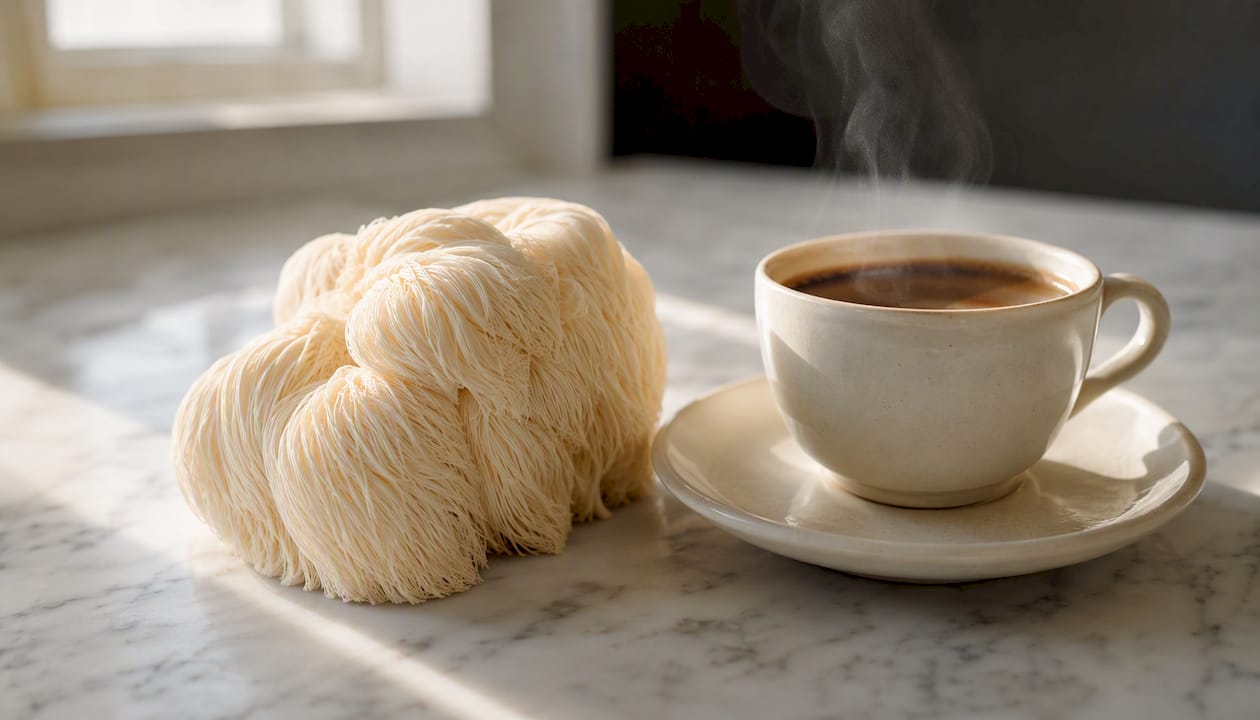
A specialty-coffee sensory study tested formulations at 0.5% and 1.0% Hericium erinaceus and found both were well received by consumer panels while staying within expected physicochemical ranges for specialty coffee.
Roast level plays a real role. A darker roast’s bitterness and chocolate notes tend to absorb the earthiness entirely. A light or medium roast lets more of the mushroom’s character come through, which some drinkers enjoy and others find distracting. Adding oat milk, almond milk, or a small amount of cacao powder masks residual earthiness without overpowering the coffee itself. Many people find the mushroom latte format particularly approachable for this reason, since the creamier base softens any edge.
Pro Tip: Before committing to a full bag, order a single-serve packet or sample size. Brew it plain first, then try it with your usual milk or creamer. You will know within two cups whether the flavor works for you.
Safety, Side Effects, and Who Should Be Cautious
For most healthy adults, lion’s mane with coffee is well tolerated. Short-term trials have not flagged major adverse events, and the most commonly reported issues are mild: occasional digestive discomfort, nausea, or skin sensitivity in people with mushroom allergies.
The caffeine side of the equation deserves its own attention. Johns Hopkins Medicine cites up to 400 mg of caffeine per day as a generally safe upper limit for healthy adults. Mushroom coffee typically contains less caffeine than a standard cup, but if you are stacking it with additional espresso, pre-workout drinks, or caffeinated tea, your daily total can creep up faster than you realize. Tracking total caffeine across all sources is a simple habit that prevents the jittery, anxious feeling that makes people swear off coffee in the first place.
Drug interactions are a real consideration. Lion’s mane may have mild anticoagulant properties and could interact with blood-thinning medications like warfarin. Its immune-modulating beta-glucans are a reason for caution if you take immunosuppressants, such as after an organ transplant. These are not reasons to avoid mushroom coffee categorically, but they are reasons to have a five-minute conversation with your doctor first.
Specific populations who should consult a clinician before use: pregnant or breastfeeding individuals, children, anyone with a known mushroom allergy, and people with autoimmune conditions or compromised immune systems. This is general information, not medical advice; confirm current guidance with a qualified healthcare provider.
How to Choose a Quality Mushroom Coffee Product
The label is your first filter, and most products fail it. Here is what to look for.
“Fruiting body” on the label is the single most important phrase. Fruiting bodies are the visible mushroom caps that contain the highest concentrations of hericenones, erinacines, and beta-glucans. Mycelium, the root-like network, is often grown on grain substrates and can contain significant starch content with fewer active compounds. A product that says “mycelium biomass” or simply “mushroom” without specifying fruiting body is a yellow flag.
Extract type matters next. A hot-water extract captures beta-glucans and polysaccharides. A dual extract, using both hot water and alcohol, also captures the fat-soluble hericenones and erinacines that are central to lion’s mane’s neurotropic reputation. If the label says “extract” without specifying the method, ask the brand directly or look for a certificate of analysis (COA).
Third-party lab testing is non-negotiable for a product you plan to use daily. A COA from an independent lab confirms that what is on the label is actually in the product, and that heavy metals, pesticides, and microbial contaminants are within safe limits. Organic certification adds another layer of assurance about agricultural inputs.
Your practical checklist when scanning a product page:
- Specific mg of lion’s mane per serving (not just total blend weight)
- “Fruiting body” stated clearly
- Extract type specified (hot-water or dual)
- Third-party COA available or linked
- Organic certification
- No fillers, artificial ingredients, or added sugars
- Caffeine content per serving listed
Pro Tip: Search the brand’s website for “COA” or “certificate of analysis.” Brands that invest in third-party testing almost always make those documents easy to find. If you cannot locate one after two minutes of searching, that tells you something.
For a deeper look at how medicinal mushrooms fit into preventive health, the evidence on beta-glucans and immune support goes well beyond cognitive function.
How to Use Lion’s Mane Coffee: Dosing, Timing, and Two Simple Recipes
Dosing and timing
Product labels are your starting point, but context matters. If a mushroom coffee delivers 250 mg of lion’s mane per serving and clinical trials used 1,000–3,000 mg of standardized extract, you are getting a fraction of the research dose. That does not make the product useless, but it does mean that stacking your mushroom coffee with a dedicated lion’s mane capsule (standardized to a specific extract percentage) is the most practical way to approach research-level intake without abandoning your morning ritual.
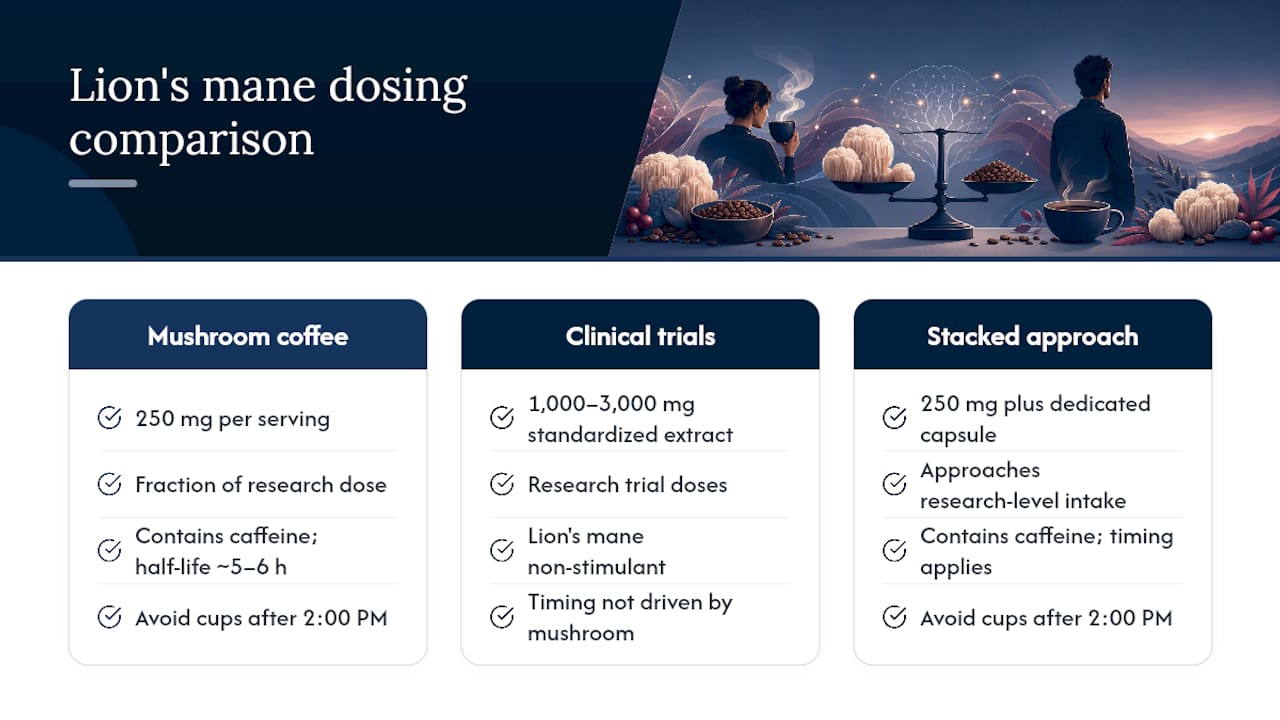
Timing is straightforward: morning or early afternoon. Caffeine’s half-life is roughly five to six hours in most adults, so a cup after 2:00 PM risks disrupting sleep, which undermines the cognitive benefits you were chasing in the first place. Lion’s mane has no known stimulant effect, so the timing constraint comes entirely from the caffeine.
Hot lion’s mane mushroom brew
- Heat 8 oz of water to just below boiling (around 200°F).
- Add one serving of your mushroom-coffee blend, either an instant packet or one to two tablespoons of ground blend in a pour-over or French press.
- Brew as you normally would.
- Stir in a splash of oat milk or a teaspoon of coconut oil if you want to smooth the flavor and slow caffeine absorption slightly.
- Drink within 20 minutes for the best flavor.
Iced lion’s mane coffee
- Brew a double-strength serving using half the water you normally would.
- Let it cool for five minutes, then pour over a full glass of ice.
- Add cold oat milk or a cacao-oat milk blend for an earthy-chocolate note that complements the mushroom flavor beautifully.
- For a ready-made version with built-in flavor balance, the chocolate-infused iced mushroom coffee recipe from Emberk is worth bookmarking.
Pro Tip: If you want to get closer to clinical dosing without changing your coffee routine, take a 500 mg standardized lion’s mane capsule alongside your morning cup. You get the ritual of mushroom coffee plus a meaningful dose of the active compounds researchers actually study.
The Case for Treating Mushroom Coffee as a Habit, Not a Supplement
There is a version of the mushroom-coffee conversation that gets lost in the noise of clinical dosing and bioactive compound percentages. The honest truth is that for many people, the most meaningful benefit of a daily mushroom coffee ritual is not a measurable spike in NGF. It is the replacement of a habit that was causing problems, whether that is afternoon crashes, jitteriness, or the anxious edge that comes from a third cup of straight espresso, with something that feels intentional and slightly better.
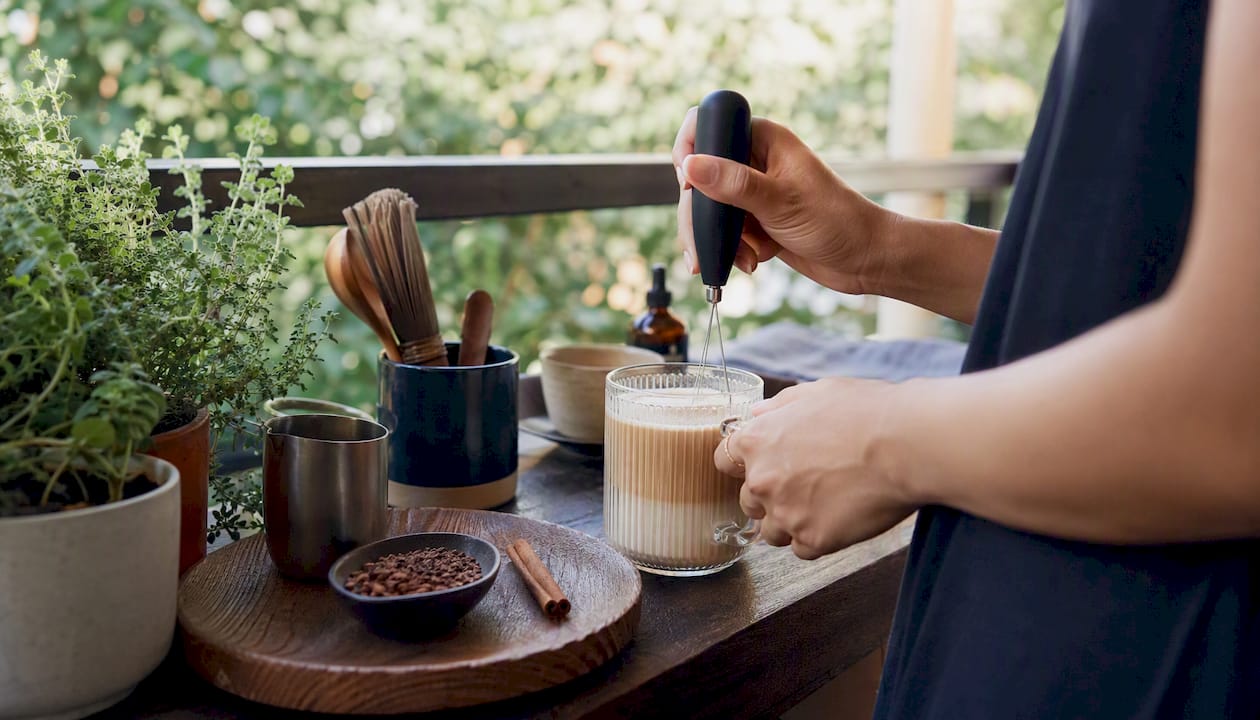
That framing is not a concession. It is actually what the evidence supports most clearly. Nutritional therapists and dietitians cited by the BBC note that mushroom coffees often function as a wellness add-on, and that the primary effect for many users may be psychological or sensory: the ritual, the routine, the sense of doing something good for yourself. That is a legitimate benefit, even if it does not show up in a randomized controlled trial.
Where I think the conventional wisdom goes wrong is in treating mushroom coffee as either a miracle or a fraud. The real picture is more interesting. The bioactive compounds in lion’s mane are genuinely studied, the mechanisms are plausible, and the sensory evidence shows that well-formulated products are enjoyable to drink. The gap between product doses and clinical doses is real, but it is a reason to be a smart buyer, not a reason to dismiss the category. Choose a product with fruiting-body extract, a third-party COA, and transparent per-mushroom dosing, and you are making a reasonable, evidence-aware choice. Add a standardized capsule if you want to close the dose gap. And give it eight weeks before you decide whether it is working.
Emberk’s Mushroom Coffee Is Built Around the Buying Checklist
If you have read this far, you know exactly what to look for in a mushroom coffee. Emberk’s mushroom coffee blend checks every box on that list: 100% fruiting-body mushrooms across six functional species including lion’s mane, lab-tested with third-party verification, organic ingredients, no fillers or artificial additives, and low-to-moderate caffeine for stable energy without the jitter-and-crash cycle.
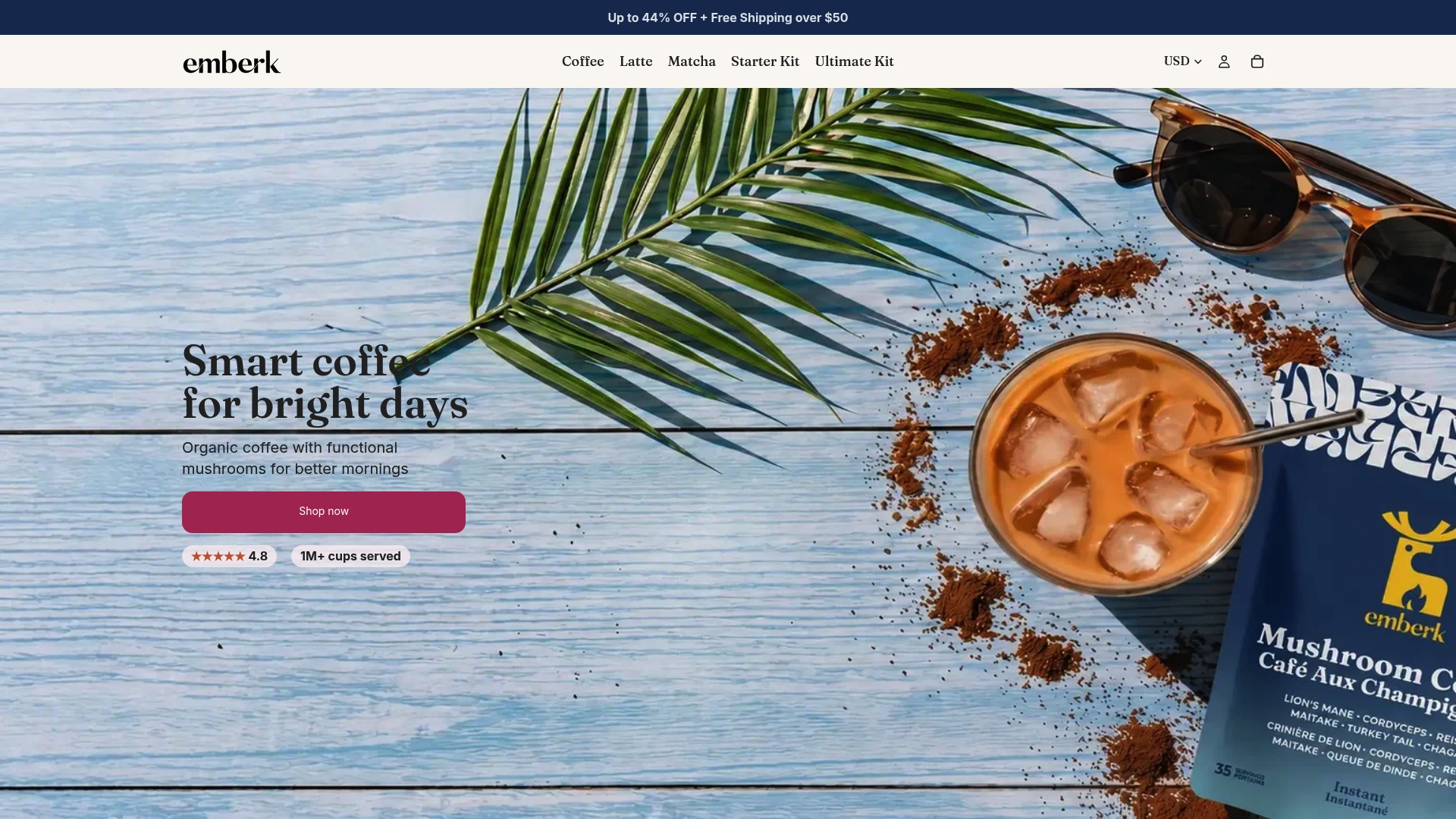
What makes Emberk a practical first choice is the transparency. Each serving lists individual mushroom content, not a hidden blend weight, so you know what you are actually getting. The instant format means consistent dosing every morning, no brewing variables, no guesswork. And with over a million cups served, the formula has been refined for both flavor and function. Browse the full mushroom coffee collection to find the format that fits your routine, or start with a single bag to test the flavor before committing to a subscription.
Sources
The sources below represent the primary evidence base for this article, spanning clinical trials, analytical chemistry, sensory research, and public-health guidance.
- BBC — nutrition expert coverage of lion’s mane and functional coffees
- Harvard Health — Mushroom coffee: worth a taste?
- Sensory and physicochemical evaluation of specialty coffee formulations including lion’s mane mushroom (Hericium erinaceus) | Vitae
- Pubs
- PubMed — Clinical trial literature on Hericium erinaceus (example trial reference)
- Johns Hopkins Medicine — 9 reasons why the right amount of coffee is good for you
This article is general information, not a substitute for advice from a qualified doctor. Consult a qualified healthcare professional about your own circumstances before acting on anything here.
FAQ
Can you take lion’s mane and coffee together?
Yes, combining lion’s mane with coffee is generally safe for healthy adults and is the basis of the mushroom-coffee category. The main caveat is that most commercial blends deliver lower doses of lion’s mane than those used in clinical trials.
What should you not mix lion’s mane with?
Lion’s mane may interact with anticoagulant medications like warfarin and with immunosuppressants, so those combinations warrant a conversation with your doctor. People with mushroom allergies should also avoid it.
Is lion’s mane similar to Adderall?
No. Lion’s mane works through neurotropic pathways, potentially supporting NGF production over weeks, while Adderall is a prescription stimulant with immediate, pharmacologically distinct effects. They are not comparable in mechanism, speed, or intensity.
Does mushroom coffee raise cortisol?
Mushroom coffee contains caffeine, which can temporarily raise cortisol, as any caffeinated beverage does. Lion’s mane itself has no established cortisol-raising effect; some adaptogens in multi-mushroom blends, like reishi, are studied for stress modulation rather than cortisol elevation.
0 comments