

Fruiting body mushroom coffee is worth trying if you want steadier focus and fewer caffeine crashes, but only when the label actually says “fruiting body” and skips the filler grain. The evidence behind lion’s mane, reishi, and the rest is promising, not proven, so keep expectations realistic. For a dependable starting point made from organic fruiting bodies, Emberk is a solid choice, and anyone on blood thinners or other medications should check with a doctor first.
TL;DR:
- Quality mushroom coffee should specify “fruiting body” next to each species on the label, not just generic “mushroom extract” or “blend.”
- Most research suggests lion’s mane may support cognitive function, but human studies are limited and doses in coffee are lower than in trials.
- Extracting compounds via hot water, alcohol, or both improves potency, with dual extraction providing a broader profile of bioactive ingredients.
- Mushroom coffee typically has less caffeine than regular coffee, making it suitable for those seeking steady energy without jitters or crashes.
- Buyers should prioritize transparent labels, organic certification, extraction method, and third-party verification to ensure product quality.
Table of Contents
- What Is Fruiting Body Mushroom Coffee, Exactly?
- How Do You Tell Fruiting Body From Mycelium on a Label?
- What Does the Research Actually Say About These Mushrooms?
- Does Mushroom Coffee Have Less Caffeine Than Regular Coffee?
- What Should You Look for When Buying Fruiting Body Mushroom Coffee?
- What Does Fruiting Body Mushroom Coffee Taste Like?
- Are There Safety Risks or Interactions to Know About?
- Our Take on What Actually Matters in This Category
- Try a Fruiting Body Blend Built Around Transparency
- Sources
- FAQ
What Is Fruiting Body Mushroom Coffee, Exactly?
Fruiting body mushroom coffee is regular coffee blended with dried powder or extract from the mushroom’s fruiting body, the visible, umbrella-shaped part you’d recognize if you found it growing on a log. Brands add it to instant or ground coffee so you get your usual cup, plus whatever bioactive compounds that species offers. Harvard Health describes it simply as coffee mixed with medicinal mushroom powders like lion’s mane, reishi, chaga, and cordyceps.
Here’s where it gets interesting. Not all mushroom powder is created equal, and the part of the mushroom matters more than most people realize.
Mushrooms grow through three stages: mycelium (the root-like network that spreads through soil or grain), the fruiting body (the mushroom itself, which pops up to release spores), and the spores. Fruiting bodies concentrate the compounds most associated with cognitive and immune benefits, including beta-glucans and hericenones in lion’s mane, or triterpenes in reishi. Mycelium grown on grain, by contrast, often carries starch from its growing substrate along for the ride.
Quality brands typically process fruiting bodies through hot water extraction, alcohol extraction, or a dual extraction that pulls both water-soluble and alcohol-soluble compounds. The method matters:
- Hot water extraction pulls out beta-glucans and polysaccharides efficiently.
- Alcohol extraction captures triterpenes and other compounds water alone won’t dissolve.
- Dual extraction combines both methods for a broader compound profile.
- Simple drying and grinding (no extraction) keeps the whole mushroom intact but may be less concentrated.
This is why experts and consumer guides consistently point buyers toward fruiting-body extracts over myceliated grain products. Healthline notes that mycelium biomass often includes starch fillers that dilute the very compounds you’re paying for.
How Do You Tell Fruiting Body From Mycelium on a Label?
Reading a mushroom coffee label takes about as long as reading a nutrition facts panel, once you know what you’re scanning for. The words matter enormously here because “mushroom extract” alone tells you almost nothing about what’s actually in the bag.
Look for these three checks, in order:
- Search for the phrase “fruiting body” directly next to each mushroom species. A label that says “organic lion’s mane fruiting body extract” is telling you exactly what you’re getting. A label that just says “lion’s mane” or “mushroom blend” is not.
- Scan for grain-related words like “myceliated oats,” “myceliated rice,” or “mycelium biomass.” These phrases mean the product was grown on grain and harvested before fruiting, which means you’re getting mostly starch with trace mushroom compounds mixed in.
- Check for an extraction ratio, like “8:1” or “10:1.” This tells you how many pounds of raw fruiting body went into producing one pound of extract, a rough proxy for potency.
A vague ingredient line like “proprietary mushroom blend” without species names or plant-part specification is one of the biggest red flags in this category. Healthline’s breakdown of the fruiting body versus mycelium debate makes the same point: transparency on the label is the clearest signal of quality you’ll find without sending a product to a lab yourself.
Pro Tip: Flip the bag over and look at the ingredient list before you look at the marketing claims on the front. Front-of-package words like “immune support” or “focus blend” are marketing. The ingredient panel is the truth.
What Does the Research Actually Say About These Mushrooms?
The honest answer is that the science is encouraging but incomplete, and mushroom coffee itself has barely been studied as a finished product. Most research looks at concentrated mushroom extracts in isolation, not a cup of coffee with mushroom powder stirred in, so the doses and formats don’t always match what’s in your mug.
What the research actually covers: A 2023 review in Molecules examined bioactive compounds across several medicinal mushroom species and found genuinely promising activity, but the authors were clear that more human trials are needed before any of these compounds could be called proven treatments.
Lion’s mane has the most direct human data of the group, though “the most” still means a handful of small studies. Some trials suggest it may support cognitive function, but sample sizes tend to run small and often use concentrated extracts far beyond what you’d get from one cup of coffee, according to research indexed on PubMed. Think of the compound as a possible signal booster for brain cell communication, not a switch that flips clarity on.
Cordyceps shows up in exercise and energy research more than cognitive studies. The evidence here comes primarily from small trials measuring endurance markers in athletes, and again, those doses were typically higher and more concentrated than what ends up in a daily coffee blend.
Reishi, chaga, and turkey tail carry immune-modulating and antioxidant reputations that trace back mostly to lab and animal studies, with a smaller number of early human trials layered on top. Broader research on mushroom bioactivities confirms these effects exist in some form, but dosage and extract quality vary so much between studies that it’s hard to say exactly how much of any compound you’d need for a noticeable effect.
The bigger caveat applies across the board: even where the underlying compounds look genuinely useful, mushroom coffee as a category remains under-studied, and the amount of active compound in your morning cup is almost certainly lower than what researchers used in a lab setting. That doesn’t mean it does nothing. It means you should expect a gentle, cumulative effect rather than an overnight transformation. Our deep dive into mushroom coffee benefits breaks down what a realistic timeline for noticing changes tends to look like.
Does Mushroom Coffee Have Less Caffeine Than Regular Coffee?
Yes, typically. Most mushroom coffee blends replace part of the ground coffee with mushroom powder, which naturally dilutes the caffeine content per serving compared to a full-strength cup of drip coffee. Emberk’s own blends land in a lower range designed for steady energy rather than a sharp spike, and you can see exact numbers on the mushroom coffee caffeine breakdown page.
Here’s the mechanism worth understanding: caffeine gives you the jolt, but it’s often the crash afterward that people are trying to avoid. Adaptogenic mushrooms like reishi and cordyceps are thought to work on the body’s stress response system rather than the nervous system directly, so pairing a lower caffeine dose with these compounds may smooth out the peaks and valleys some people feel with regular coffee. This is a plausible explanation, not a guarantee. Individual response varies.
Who tends to benefit most from this format?
- Caffeine-sensitive professionals who want alertness without the jittery edge.
- People who already drink two or more cups of coffee daily and are looking to taper without giving up the ritual.
- Anyone chasing “calm focus” rather than a hard energy spike, like writers, developers, or parents managing a long day.
- People prone to afternoon crashes after their usual coffee.
Who should pause and check with a doctor first? Pregnant or breastfeeding individuals, anyone on blood thinners, and people with a history of kidney stones all fall into a consult-first category, which the safety section below covers in more detail.
What Should You Look for When Buying Fruiting Body Mushroom Coffee?
Treat this like a shopping checklist you can run through in under a minute, whether you’re standing in a store aisle or scrolling a product page. The non-negotiables come first.
Must-haves:
- The words “fruiting body” printed next to each mushroom species on the ingredient list, not buried in marketing copy.
- Organic certification, ideally from a recognized certifying body rather than a vague “organic ingredients” claim.
- A certificate of analysis (COA) or third-party lab report available on request or posted publicly.
- A clearly declared serving size, so you know exactly how much powder you’re getting per cup.
- A stated extraction method, whether that’s hot water, dual extraction, or another named process.
Nice-to-haves that separate good brands from great ones:
- Milligram amounts listed per species, not just a total blend weight.
- Third-party testing for heavy metals and contaminants, since mushrooms can absorb whatever is in their growing environment.
- Transparent sourcing information, including where the mushrooms were grown and by whom.
Sourcing transparency matters more in mushroom farming than people expect, partly because growing conditions directly affect potency. The same principles that apply to local and transparent sourcing in food generally apply here: knowing where an ingredient came from and how it was handled tells you something a marketing claim never will.
On pricing, resist the pull of the cheapest bag on the shelf. Myceliated grain products cost less to produce because growing mycelium on rice or oats is faster and cheaper than cultivating full fruiting bodies. A price that seems too good for a “six mushroom blend” is often a sign the manufacturer cut corners on the part of the mushroom that matters most.
Pro Tip: Ask any brand directly for their certificate of analysis if it isn’t posted on the site. A company confident in its sourcing will hand it over without hesitation.
For a full walkthrough of this checklist with more detail on interpreting COAs, see the mushroom coffee purchase guide.
What Does Fruiting Body Mushroom Coffee Taste Like?
Expect an earthy undertone, not a mushroom-forward flavor bomb. Most fruiting body powders in coffee-friendly doses read as mild, slightly woodsy, and easy to mask with the usual additions like oat milk, cinnamon, or a touch of sweetener. Reishi tends to carry the most noticeable bitterness of the common species, while lion’s mane is close to flavorless.
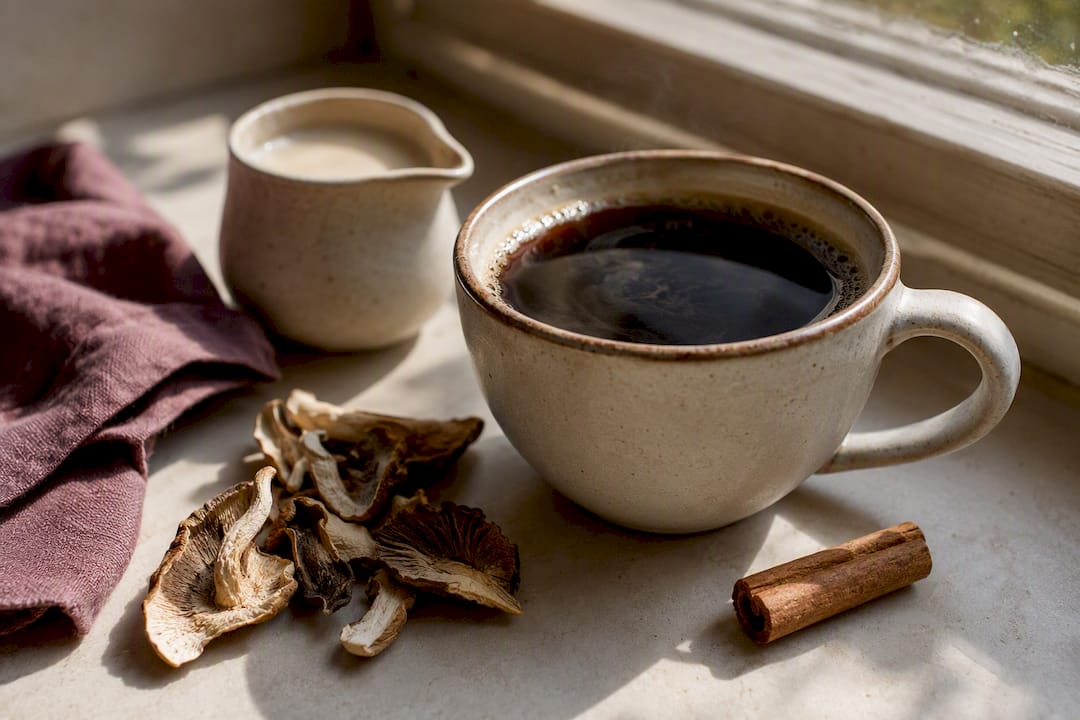
The one technical hurdle is texture. Mushroom powders can clump or turn gritty if you dump them straight into a hot cup, so a quick pre-mixing step solves that almost every time, a trick recipe sources like The Fabled Alchemist recommend consistently.
Hot Mushroom Latte
- Add one scoop of mushroom coffee powder to two tablespoons of hot (not boiling) water in your mug.
- Whisk or stir vigorously until it forms a smooth, lump-free slurry.
- Add 8 to 10 ounces of hot water or steamed milk of your choice.
- Stir again and add cinnamon or a small amount of sweetener if you like.
Iced Cold Brew Version
- Make the same hot water slurry first, since mushroom powder won’t dissolve properly in cold liquid alone.
- Let the slurry cool for two to three minutes.
- Pour over ice and top with cold milk or water.
- Add a splash of vanilla extract for a smoother finish.
Are There Safety Risks or Interactions to Know About?
Fruiting body mushroom coffee is low risk for most healthy adults, but “low risk” isn’t the same as “no risk,” and a few specific interactions deserve attention before you make it a daily habit.
Two interactions worth flagging: Reishi may interact with blood thinners and other medications that affect clotting, and chaga is notably high in oxalates, which raises a consideration for anyone with a history of kidney stones. Time’s health coverage and other medically reviewed sources flag both points consistently.
A few groups should talk to a clinician before starting: pregnant or breastfeeding individuals, anyone immunocompromised or on immunosuppressant medication, and people currently taking prescription drugs, especially blood thinners like warfarin.
For everyone else, a simple trial protocol works well:
- Start with half a normal serving for three to seven days.
- Watch for digestive upset, headaches, or unusual fatigue.
- Move to a full serving only once you know how your body responds.
- Stop and consult a doctor if you notice anything concerning, rather than pushing through it.
Our Take on What Actually Matters in This Category
The mushroom coffee conversation gets muddled fast because so much marketing leans on the mushroom’s reputation rather than its form. A bag can legally say “reishi” and “cordyceps” on the front while using mycelium grown on grain, and most shoppers have no way to tell the difference without knowing exactly what to look for.
At Emberk, our formulas use six functional fruiting-body species, organic sourcing, and lab testing, and we built that approach directly around the same checklist covered in this article: fruiting body language on the label, a stated extraction method, and no filler grain standing in for the real ingredient. We think that alignment matters more than any single ingredient claim, because a product built on transparent sourcing tends to earn trust the slow way, cup by cup, rather than through a bold headline.
None of this replaces individualized medical advice, and results vary from person to person depending on diet, sleep, and overall health. What we can say is that a fruiting-body-first approach gives you the best odds of actually getting what the label promises, and that’s the standard we hold ourselves to.
— Emberk
Try a Fruiting Body Blend Built Around Transparency
Emberk’s coffee, lattes, and matcha are made from 100% organic fruiting-body mushrooms across six species, lab-tested with no fillers, artificial ingredients, or added sugars, which is exactly the standard this guide walks you through checking for on any label.
If you’ve read this far, you already know what separates a quality fruiting-body blend from a diluted one: clear labeling, a real extraction method, and lab verification you can actually see. The Mushroom Coffee blend delivers Lion’s Mane alongside five other adaptogens for $34, or start smaller with the Mushroom Coffee Travel Pack at $25 if you’d rather sample it before committing to a full bag. Prefer something creamier? The Mushroom Latte and Matcha Latte are both dairy-free and made with coconut milk, each priced at $34. Browse the full lineup on the Emberk homepage and pick a subscription option if you want your next bag to show up automatically.
This article is general information, not a substitute for advice from a qualified doctor. Consult a qualified healthcare professional about your own circumstances before acting on anything here.
Sources
- Mushroom coffee: Worth a taste? - Harvard Health
- What Is Mushroom Coffee, and Is It Healthy? - Time (2026)
- PMC article (Molecules review) - 2023 review on medicinal mushrooms
- Is mushroom coffee healthy? - Healthline
FAQ
Which Mushroom Coffees Use Fruiting Bodies?
Quality brands specify “fruiting body” directly next to each mushroom species on the ingredient list rather than using a vague “mushroom extract” label. Emberk formulates all six of its functional mushrooms from organic fruiting bodies with no myceliated grain filler, which you can verify on its product pages.
What Is the Downside to Drinking Mushroom Coffee?
The main downsides are limited human research specific to mushroom coffee as a finished product, and the risk of buying a product that uses mycelium grown on grain instead of the fruiting body. Certain species also carry interaction risks, like reishi with blood thinners or chaga’s high oxalate content for people prone to kidney stones.
Do These Mushroom Coffees Actually Work?
Some human trials show promising signals, particularly for lion’s mane and cognitive function, but most studies use concentrated extracts at doses higher than a typical cup delivers. Realistic expectations mean a gradual, subtle effect on focus and energy stability rather than an immediate transformation, as our deep dive into the evidence explains in more detail.
Which Is Better, Mycelium or Fruiting Body?
Fruiting body extracts are generally considered the higher-quality option because they concentrate the beta-glucans, triterpenes, and other bioactive compounds without the starch filler that comes from mycelium grown on grain. That’s why label transparency around plant part is one of the clearest quality signals a shopper can check before buying.
How Much Does Emberk’s Mushroom Coffee Cost?
Emberk’s Mushroom Coffee is $34 for a one-time purchase, with a smaller Travel Pack available for $25 for anyone who wants to try it first. Current pricing for all product lines, including lattes and matcha, is listed on the Emberk site.
0 comments