

If your stomach reacts to coffee, your best bets are cold brew, darker roasts, low-acid labeled coffee, decaf, or a mushroom or chicory blend. Pair whichever you choose with two habits: brew through a paper filter and never drink it on an empty stomach. Beyond that, your own body is the real test, and persistent or severe symptoms deserve a conversation with a doctor, not another home fix.
TL;DR:
- Cold brew, dark roasts, decaf, and mushroom or chicory blends typically cause less stomach irritation, especially when brewed with a paper filter.
- Using a paper filter during brewing reduces stomach-irritating oils and diterpenes, while lower water temperatures and coarser grounds also decrease acidity extraction.
- Consuming coffee with food and avoiding large portions can significantly lessen symptoms, but severe or persistent issues warrant medical consultation.
- Lower-caffeine options like mushroom coffee or small cold brews generally produce less acid and are gentler for sensitive stomachs.
- Individual reactions vary, so testing one brewing method or additive at a time and tracking symptoms can help identify personal triggers.
Table of Contents
- Why Coffee Can Upset Your Stomach
- Low-Acid Coffee Options Worth Trying
- Brewing Tricks That Cut Acidity at Home
- Do Milk and Sweeteners Make It Better or Worse?
- When to Stop Adjusting and Call a Doctor
- What We Think Sensitive Stomachs Actually Need
- Try a Gentler Cup: Emberk’s Mushroom Coffee
- Sources
- FAQ
Why Coffee Can Upset Your Stomach
Coffee is naturally acidic, and that acidity is only part of the story. Caffeine itself can prompt your stomach to produce more acid while relaxing the lower esophageal sphincter (LES), the muscular valve that’s supposed to keep stomach contents where they belong. When that valve loosens, acid has an easier path upward, which is why so many coffee drinkers associate their morning cup with a burning feeling later.
Coffee also contains compounds called diterpenes and chlorogenic acids, oils and plant chemicals that some people’s stomachs simply handle worse than others. Think of your stomach lining as a security checkpoint: most substances pass through fine, but certain coffee compounds set off alarms in sensitive systems while barely registering in others.
Here’s what clinical evidence actually says about how strong that link is:
- A review of coffee’s gastrointestinal effects found no consistent population-level evidence that coffee causes gastritis or ulcers.
- Individual sensitivity varies widely, which means two people can drink the same cup with completely different results.
- Cleveland Clinic notes that caffeine and coffee’s natural acids can independently increase gastric acid and relax the LES, adding up to a double hit for reflux-prone drinkers.
That mixed evidence is actually good news. It means your stomach isn’t broken, and you likely have real room to adjust rather than quit.
Low-Acid Coffee Options Worth Trying
Not all coffee hits your stomach the same way, and the differences come down to chemistry, not marketing. Here’s how the main categories stack up:
- Cold brew. Steeping grounds in cold or room-temperature water for 12 to 24 hours extracts fewer of the acidic compounds that hot brewing pulls out fast. The result tastes smoother and less sharp, and Northwestern Medicine lists it among the go-to options for sensitive stomachs. Just watch your portion, since cold brew concentrate is often stronger than a regular cup.
- Darker roasts. Longer roasting times break down more chlorogenic acid, which is part of why a French roast tastes rounder and less bright than a light roast. That chemical shift is also why dark roasts tend to sit easier for sensitive drinkers.
- Decaf. Removing most caffeine takes one trigger for LES relaxation off the table, but decaf isn’t a guarantee. Cleveland Clinic points out that other compounds in coffee can still stimulate acid production even without caffeine.
- Mushroom and chicory blends. Functional mushroom coffee and chicory root brews cut the coffee content itself, which lowers both acidity and caffeine load while keeping the ritual of a warm cup in your hands.
When you’re reading labels, “low acid” claims are worth more when a brand explains why, whether that’s a specific roast profile, a slow-extraction process, or a lab-tested pH result, rather than just printing the phrase on the bag.
Pro Tip: Start with a half-caf or decaf blend if you’re not ready to give up your usual roast entirely. It’s an easier transition than jumping straight to something unfamiliar.
Brewing Tricks That Cut Acidity at Home
How you brew matters as much as what you brew. Paper filters trap oils and diterpenes that metal mesh filters let straight through, and Cleveland Clinic specifically credits paper filtration with reducing some of coffee’s stomach-irritating compounds. If you use a French press or metal-filter AeroPress, swapping in a paper filter is one of the simplest changes you can make this week. For a deeper look at filter types and how they affect extraction, this guide to coffee filtration breaks down the mechanics well.
A few other adjustments worth testing:
- Cold brew at home: use a 1:4 ratio of coarse grounds to water, steep 12 to 18 hours in the fridge, then dilute the concentrate before drinking.
- Lower your water temperature slightly and shorten steep time if you’re brewing hot; both reduce extraction of acidic compounds.
- Coarsen your grind. A finer grind pulls more acid and oils faster, so going slightly coarser can soften the cup.
- Serve it warm, not scalding. Very hot coffee can irritate an already sensitive stomach lining faster than a moderate temperature.
Pro Tip: If you’re testing multiple changes, adjust one variable at a time, like just the filter or just the grind, so you actually know what fixed the problem. Our guide to low caffeine coffee walks through more of these brewing tweaks in detail.
Do Milk and Sweeteners Make It Better or Worse?
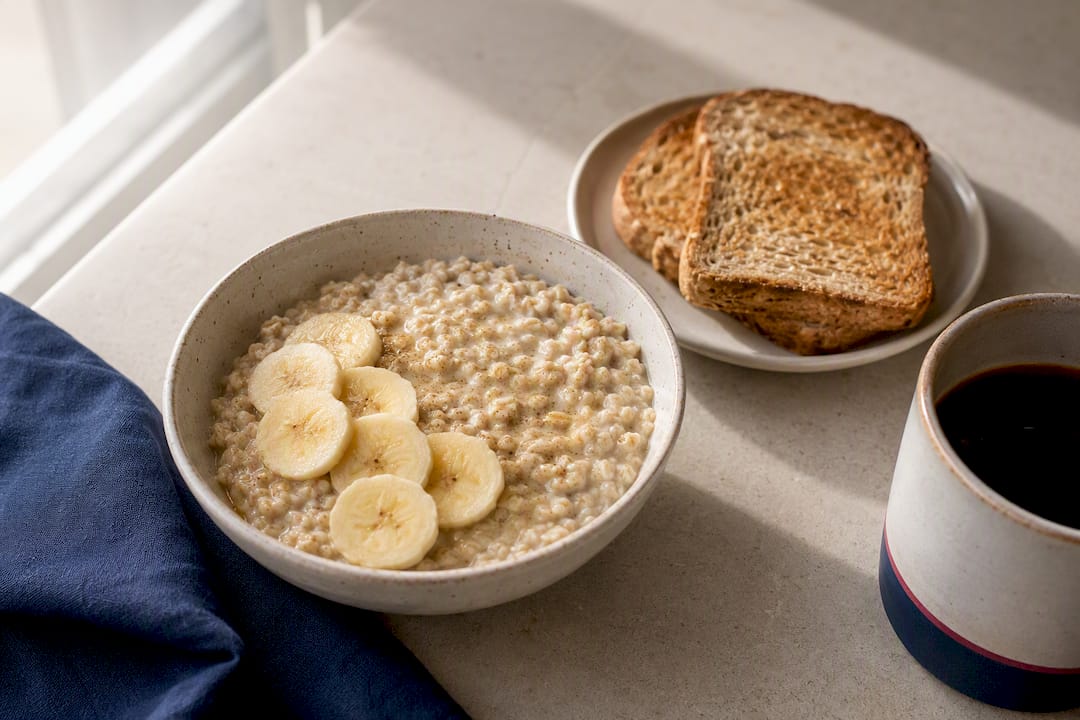
What you add to your cup and when you drink it can matter as much as the coffee itself. Eating something before your coffee, oatmeal, a banana, or whole-grain toast, gives your stomach a buffer instead of hitting it straight with acid and caffeine, a point Cleveland Clinic makes directly about drinking on an empty stomach.
Dairy is more complicated than it looks. Milk proteins can bind to some of coffee’s phenolic compounds, and Verywell Health notes this didn’t increase reflux in some observations. But if you’re lactose intolerant, that same dairy can trigger its own set of symptoms, so a lower-fat or plant-based milk is often the safer swap.
A few more habit fixes:
- Skip sugary syrups and artificial sweeteners if they seem to trigger bloating or discomfort; a dash of cinnamon adds flavor without the same risk.
- Keep portions moderate. A smaller cup is easier on your stomach than a 20-ounce mug, regardless of what’s in it.
- If coffee keeps causing problems no matter what you change, chicory coffee or rooibos tea can deliver a similar ritual without the acid or caffeine.
When to Stop Adjusting and Call a Doctor
Home fixes have limits. Seek care promptly if you notice severe abdominal pain, vomiting that won’t stop, blood in vomit or stool, or unexplained weight loss. Those aren’t coffee-sensitivity symptoms to brew around; they’re signs to see a clinician.
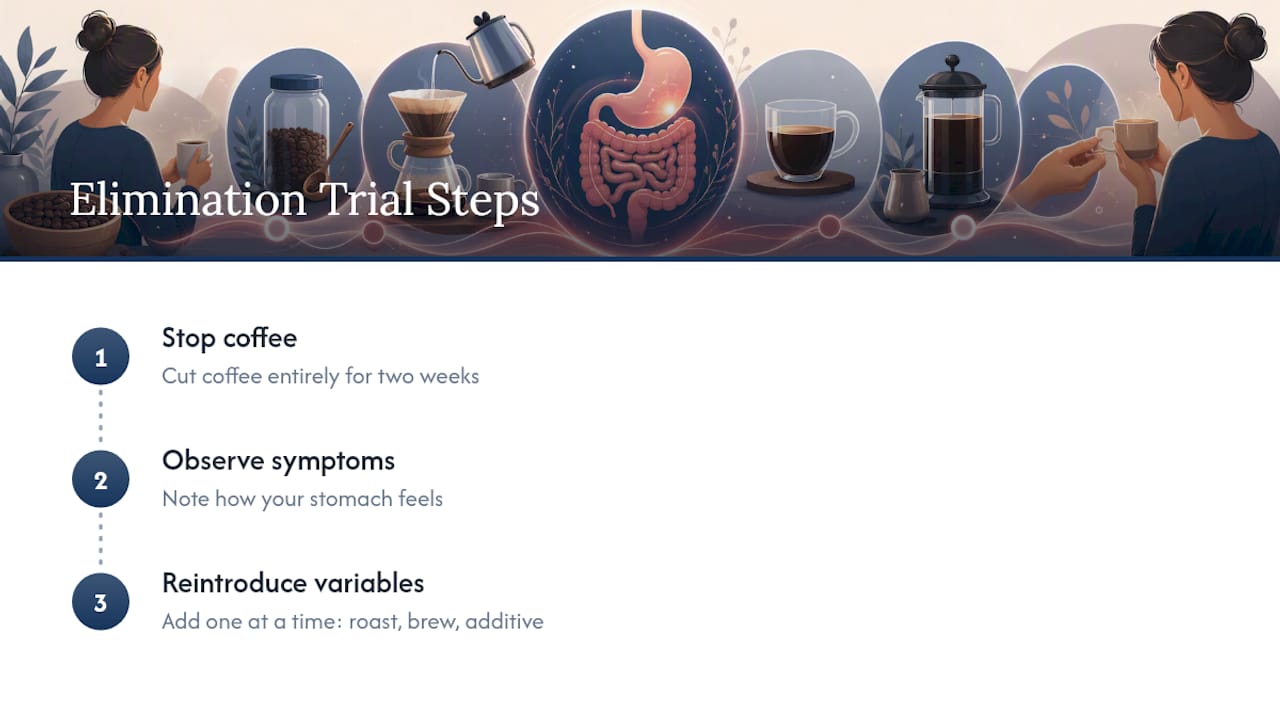
Caffeine can also interact with certain medications, so it’s worth asking a pharmacist or doctor if you take prescriptions for heart conditions, anxiety, or thyroid issues. If you want a real answer instead of a guess, try a simple elimination trial: cut coffee entirely for two weeks, note how your stomach feels, then reintroduce one variable at a time, roast, brew method, or additive, so you can actually pinpoint your trigger. This mirrors the approach reviewed in Nutrients, which found that individual trial and error tends to outperform blanket rules.
What We Think Sensitive Stomachs Actually Need
We built Emberk around a simple observation: most people don’t want to give up their coffee ritual; they want a version of it that doesn’t fight back. Our blends carry lower-to-moderate caffeine, skip dairy entirely, and pair organic coffee with mushroom blends sourced sustainably with no fillers. That combination won’t solve every case of stomach sensitivity, since individual response is still the deciding factor here, but it’s a reasonable option to test alongside the brewing and habit changes above, not instead of them. Numerous customers report positive experiences with it.
— Emberk
Try a Gentler Cup: Emberk’s Mushroom Coffee
If a lower-caffeine, dairy-free option sounds like the right next test for your stomach, Emberk’s mushroom coffee is worth a two-week trial alongside the filter and timing changes covered above.
Unlike a straight decaf swap, this blend combines organic coffee with functional mushrooms, so you keep steady energy without the acid load of a full-strength dark roast. Emberk skips fillers and artificial additives, sourcing every mushroom sustainably, which matters if you’re already narrowing down what triggers your symptoms. Browse the full product lineup to find a sample size or subscription that fits, brew it exactly as you would your usual coffee, and track how your stomach responds over one to two weeks before deciding if it’s a permanent swap.
This article is general information, not a substitute for advice from a qualified doctor. Consult a qualified healthcare professional about your own circumstances before acting on anything here.
Sources
- Does Coffee Cause Acid Reflux? — Cleveland Clinic
- Review on coffee and gastrointestinal effects — Nutrients (PMC)
- Why Coffee Can Upset Your Stomach — Northwestern Medicine
- How to brew coffee that won’t upset your stomach — Verywell Health
FAQ
What type of coffee is best for a sensitive stomach?
Cold brew, darker roasts, decaf, and mushroom or chicory blends tend to cause the least irritation, especially when brewed through a paper filter.
What caffeine drink is easiest on the stomach?
Lower-caffeine options like a mushroom coffee blend or a small cold brew are generally gentler than a strong hot-brewed espresso, since they deliver less caffeine-driven acid stimulation per cup.
How do I make coffee gut-friendly?
Brew through a paper filter, choose a darker roast or cold brew, eat something before your first cup, and keep additives simple, favoring plant-based milk over heavy cream if dairy bothers you.
Is coffee always bad for a sensitive stomach?
No. Evidence shows no consistent link between coffee and conditions like gastritis, and many people tolerate it fine once they adjust roast, brew method, and timing.
How can I tell if coffee is really the cause of my stomach issues?
Try a two-week elimination period without coffee, track your symptoms, then reintroduce one variable at a time, like roast or brew method, to isolate the actual trigger.
0 comments