

Most mushroom coffee is vegan, since coffee and mushroom extract are both plant-based. The exceptions come from what gets blended in afterward: collagen peptides, milk powder, honey, or a splash of dairy creamer at the café counter can quietly disqualify an otherwise plant-based cup. The fix is simple. Read the full ingredient panel, not just the front label, and pay attention to how the drink gets prepared.
TL;DR:
- Most mushroom coffee is vegan if it contains only plant-based ingredients like coffee and mushroom extract, but added items like collagen, milk powder, or honey disqualify it.
- Labels claiming “natural flavors” or “dairy-free creamer” can hide animal derivatives, making ingredient panel checks essential for verification.
- Common non-vegan additives include animal-derived collagen, dairy-based creamer, gelatin, honey, and vitamin D3 sourced from lanolin, often sneaked in under vague terminology.
- Even vegan mushroom coffee can be compromised at the point of preparation if dairy milk or creamer, honey, or non-vegan toppings are added at cafes or at home.
- Emberk’s blends are dairy-free from the start, using only fruiting-body mushroom extract and transparent sourcing, eliminating hidden additives and simplifying vegan verification.
Table of Contents
- What Determines Whether Mushroom Coffee Is Vegan
- Common Non-Vegan Ingredients Hiding in Mushroom Coffee Blends
- How Your Latte Order Can Undo a Vegan Product
- How to Verify Vegan Status Before You Buy
- Best Plant-Based Milks for a Vegan Mushroom Latte
- Why Some People Feel Weird After Mushroom Coffee
- How Emberk Approaches Vegan-Friendly Mushroom Coffee
- Quick Verdict and Buy-Ready Checklist
- The Real Gap Between Vegan Marketing and Vegan Fact
- Get a Vegan Mushroom Coffee Built to Skip the Guesswork
- Sources
- FAQ
What Determines Whether Mushroom Coffee Is Vegan
Coffee is a plant. Mushroom extract, whether it comes from Lion’s Mane, Chaga, or Cordyceps, is a fungus. Neither one involves an animal at any point in its production, so the base of nearly every mushroom coffee on the market starts out plant-based by default. The question of vegan mushroom coffee almost never hinges on the coffee or the mushrooms themselves. It hinges on everything added around them.
Manufacturers build mushroom coffee blends for texture, shelf stability, and taste, and that’s where non-vegan ingredients sneak in. A “latte mix” sachet might carry milk powder for creaminess. A “beauty blend” might carry collagen for its marketed skin benefits. A plain black mushroom coffee powder, by contrast, usually has nothing to hide because there’s nothing added to hide behind.
Sourcing matters here too, though for a different reason than most shoppers expect. Mushrooms grown for extract come from either the fruiting body (the visible mushroom cap and stem) or mycelium (the root-like network grown on grain substrate). The American Mushroom Institute explains how fruiting bodies develop into the mature, potent form most extraction methods target. Fruiting-body sourcing isn’t a vegan issue on its own, but brands that specify it tend to be more transparent across the board, including about what else is in the bag.
Vague labeling is the real risk. Terms like “natural flavors” or “non-dairy creamer” sound harmless but can legally include animal-derived processing aids or dairy-adjacent compounds depending on formulation. If a label won’t tell you what’s in the flavor system, that’s worth a second look.
Before you buy, run down a short list:
- Does the ingredient panel list only coffee, mushroom extract, and plant-based additions?
- Is there a “creamer,” “latte mix,” or “protein blend” claim anywhere on the package?
- Does the brand specify fruiting-body sourcing, or is sourcing left unstated?
- Are any ingredients described vaguely, like “natural flavors” or “dairy-free creamer” with no further detail?
Pro Tip: Skip the front-of-pack marketing entirely on your first scan. Flip straight to the ingredient panel. Brands know “plant-powered” and “wellness blend” sell better than a list of stabilizers, so the packaging front is the least reliable part of the product.
Common Non-Vegan Ingredients Hiding in Mushroom Coffee Blends
Plain mushroom coffee rarely has a vegan problem. Blended, flavored, or “functional” versions are where the additives that break a plant-based diet tend to show up, and several of them are easy to miss on a quick scan.
The most direct offenders show up by name once you know to look:
- Collagen or collagen peptides, common in “beauty” or “skin” blends and always animal-derived.
- Milk powder, whey, or sodium caseinate, used to add creaminess without a splash of actual milk.
- Gelatin, occasionally used as a thickener or capsule material in supplement-style formats.
- Honey, added as a sweetener in some flavored blends.
A second tier of ingredients is less obvious and catches even careful shoppers off guard. Vitamin D3 is frequently sourced from lanolin, a substance derived from sheep’s wool, while vitamin D2 is plant-derived. If a product lists “vitamin D3” without specifying the source, it’s worth asking. “Natural flavors” is a legally vague catch-all that can, in rare cases, include animal-derived compounds, and pre-portioned “latte mix” sachets often carry powdered dairy creamer that never appears in bold text on the front of the box.
Marketing language itself is a decent early-warning system. Words like “creamy,” “protein-boosted,” or “beauty blend” correlate strongly with the kind of formulations built around dairy or collagen inputs, according to consumer-facing guides on checking mushroom coffee ingredients. A straightforward “mushroom coffee” or “black mushroom blend” label, by comparison, tends to carry a much shorter, cleaner ingredient list. That pattern alone won’t confirm anything, but it’s a reasonable filter for deciding which products deserve a closer read.
How Your Latte Order Can Undo a Vegan Product
A perfectly vegan mushroom coffee powder can still end up in a non-vegan drink, and this is where most accidental slip-ups happen. It’s not the product. It’s what gets poured on top of it.
At cafés and at home, the usual culprits are dairy creamer, half-and-half, whipped cream, and honey-based drizzles or syrups. Even a “healthy” flavored syrup can carry dairy derivatives depending on the brand. None of that is the mushroom coffee’s fault, but it changes what ends up in your cup.
The fix takes three steps:
- Confirm the base is vegan by checking the powder’s ingredient list before you order or brew.
- Choose a plant-based milk like oat, soy, or almond instead of dairy, cream, or half-and-half.
- Ask about sweeteners and toppings specifically. Whipped cream and some flavored drizzles at coffee shops default to dairy unless you request otherwise.
At a café counter, a simple question covers most of the risk: “Is this syrup or creamer dairy-free, and can I get it with oat milk instead?” Baristas hear that question constantly and usually have a ready answer.
How to Verify Vegan Status Before You Buy
The fastest signal is a certified vegan logo or an explicit “vegan” claim printed on the package. A brand that pursues vegan certification has already done the ingredient audit for you, checking not just the obvious inputs but processing aids and shared-equipment risks that don’t always make it onto a standard label.
When that certification isn’t present, the ingredient panel becomes your primary tool. Read every line, not just the bolded ones, and treat any unspecified “flavor,” “creamer,” or “protein” claim as a reason to dig further rather than assume the best.
A quick verification routine covers most situations:
- Look for a certified vegan or “Vegan Friendly” mark on the packaging first.
- Scan the full ingredient panel for the disqualifying additives covered above.
- Check whether the brand states its mushroom source as fruiting body or mycelium, since transparent brands tend to disclose both.
- If anything is ambiguous, contact the brand directly rather than guessing.
Reaching out doesn’t have to be complicated. Four short questions cover almost every edge case:
- “Is your vitamin D3, if present, sourced from lanolin or a plant-based source?”
- “Do you use any dairy-derived processing aids, even in trace amounts?”
- “Is this product made on shared equipment with dairy or honey-containing products?”
- “Can you confirm the full ingredient list matches what’s printed on the package?”
Pro Tip: Save those four questions in your phone’s notes app. Copy and paste them into a brand’s customer support chat or Instagram DM whenever you’re unsure. Most responsive brands answer within a day, and a slow or evasive response is itself useful information.
Best Plant-Based Milks for a Vegan Mushroom Latte
Oat milk is typically the strongest choice for a mushroom coffee latte, and it’s not a close call. Its neutral flavor doesn’t compete with earthy mushroom notes, and it froths and holds foam in a way that mimics dairy more closely than most alternatives. Testing of non-dairy milks used in coffee shop settings consistently ranks barista-style oat milk near the top for texture and foam stability, which is exactly what a latte-style mushroom drink needs.
That said, oat isn’t the only reasonable option; for comprehensive ideas on plant-based menu curation and pairing, see seasonal vegan menu ideas.
- Soy milk offers the highest protein content among common plant milks and steams well, making it a solid pick if you want a heartier drink.
- Almond milk is lower in calories and has a lighter body, but it can separate slightly in hot espresso-style drinks.
- Coconut milk adds a distinct sweetness and richness that pairs well with Chaga or Cacao-forward blends but can overpower more delicate flavors.
Format matters as much as milk choice. A plain black mushroom coffee powder gives you full control since you’re adding your own milk and sweetener. A pre-made vegan latte mix, or a ready-to-drink plant-based latte, offers convenience but requires the same label-checking discipline covered earlier, since “latte mix” is exactly the category most likely to carry hidden dairy derivatives. Emberk’s mushroom latte formulation is built dairy-free from the start, which sidesteps that particular guessing game for anyone who wants the latte format without the extra label-reading.
Why Some People Feel Weird After Mushroom Coffee
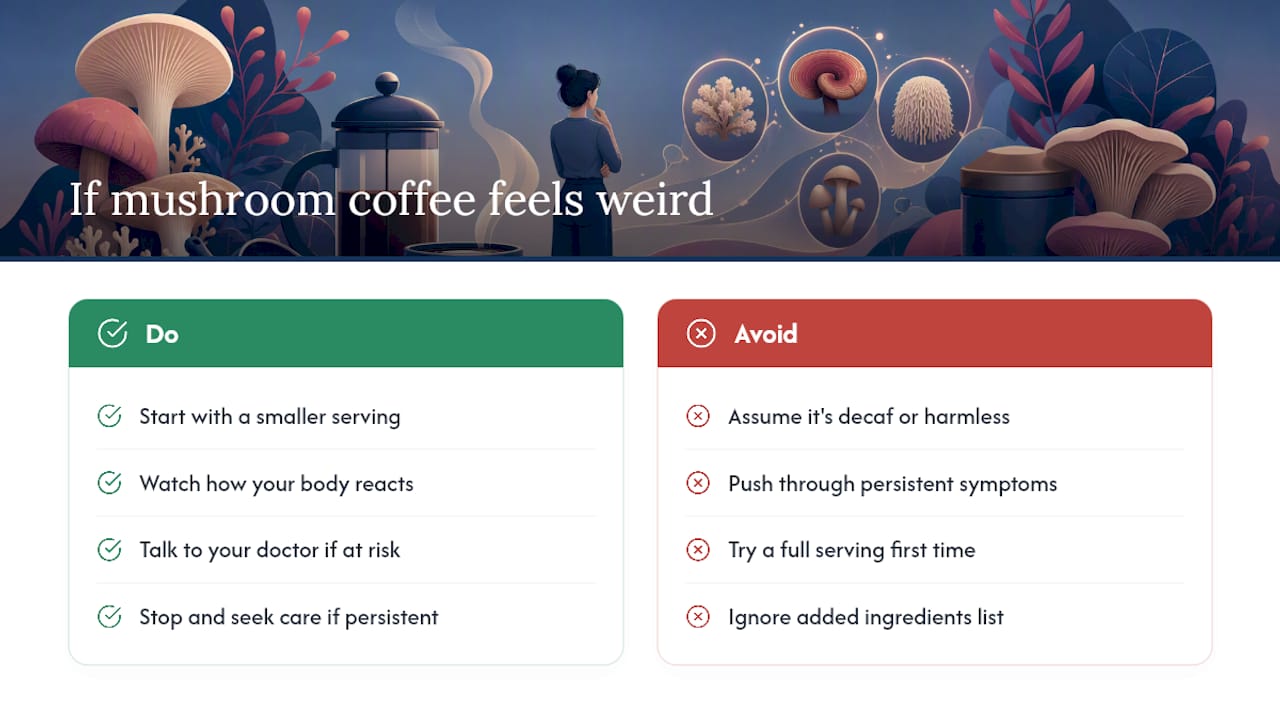
Feeling off after a cup isn’t unusual, and there’s a reasonably clear list of explanations. Caffeine is the first suspect. Even a moderate dose can cause jitteriness, a racing heart, or mild anxiety in people sensitive to it, and mushroom coffee still contains caffeine unless specifically labeled decaf. UCLA Health’s overview of mushroom coffee notes that clinicians recommend moderation and awareness of caffeine content precisely because the “mushroom” branding sometimes leads people to underestimate how much caffeine they’re still consuming.
Adaptogen effects are the second explanation, and they’re murkier. Ingredients like Reishi or Cordyceps are marketed for stress support and sustained energy, but the clinical evidence behind those specific consumer-level claims remains limited. Peer-reviewed research into fungal bioactivity supports genuine scientific interest in how these compounds behave at a mechanistic level, but that’s a long way from confirming what a single daily cup does for any one person. Some people report calmer, steadier energy. Others notice nothing distinct at all, and a smaller group reports mild digestive upset, particularly when trying a new mushroom blend for the first time.
Added ingredients are the third and most overlooked cause. If a blend includes MCT oil, unfamiliar fiber sources, or a sweetener your gut isn’t used to, the “weird” feeling might have nothing to do with the mushrooms at all.
Clinicians generally advise starting with a smaller serving than the package suggests, especially the first few times, and paying attention to how your body responds before scaling up to a full daily cup. Anyone pregnant, managing an autoimmune condition, or currently on prescription medication should talk to a doctor before adding mushroom coffee to a routine, since interactions between adaptogens and certain medications haven’t been thoroughly studied in controlled settings. If symptoms are persistent rather than mild and short-lived, that’s a reason to stop and check in with a clinician rather than push through.
How Emberk Approaches Vegan-Friendly Mushroom Coffee
Emberk’s blends are formulated dairy-free from the start, using fruiting-body mushroom extract rather than mycelium grown on grain filler. That sourcing choice lines up directly with the transparency point raised earlier: fruiting-body extraction tends to signal a brand willing to disclose exactly what’s in the bag, and Emberk states that sourcing on its mushroom coffee product page rather than leaving it vague.
Every formulation skips the additives that typically trip up vegan shoppers elsewhere in the category. No collagen, no milk powder, no added sugars, and no filler ingredients padding out the mushroom content. That checklist from earlier in this piece, certified sourcing, a clean ingredient panel, and no ambiguous “natural flavor” catch-alls, maps closely onto what Emberk publishes for each product.
One honest caveat is worth stating plainly: Emberk doesn’t present independent, third-party clinical trials specific to its own blends here, and the broader research on adaptogen mushrooms remains an evolving field rather than settled science. That’s consistent with the clinical guidance already covered. A brand being transparent about the limits of its own claims is part of what a genuinely trustworthy label looks like.
Quick Verdict and Buy-Ready Checklist
Most mushroom coffee is vegan at the ingredient level, but the label and the way you prepare the drink both need a quick check before you can call it confirmed.
| Step | What to check | Why it matters |
|---|---|---|
| 1 | Certified vegan or “vegan” label on pack | Fastest, most reliable signal |
| 2 | Full ingredient panel, not just the front | Additives hide in the details |
| 3 | Watch for collagen, milk powder, honey, whey | Most common disqualifiers |
| — | Confirm vitamin D source if listed | D3 can come from lanolin |
| — | Choose plant-based milk at point of use | Preparation can undo a vegan product |
| — | Contact the brand if anything is unclear | Closes any remaining gap |
If you’re managing a health condition, pregnant, or on medication, loop in a doctor before making mushroom coffee a daily habit, regardless of how clean the ingredient list looks.
The Real Gap Between Vegan Marketing and Vegan Fact
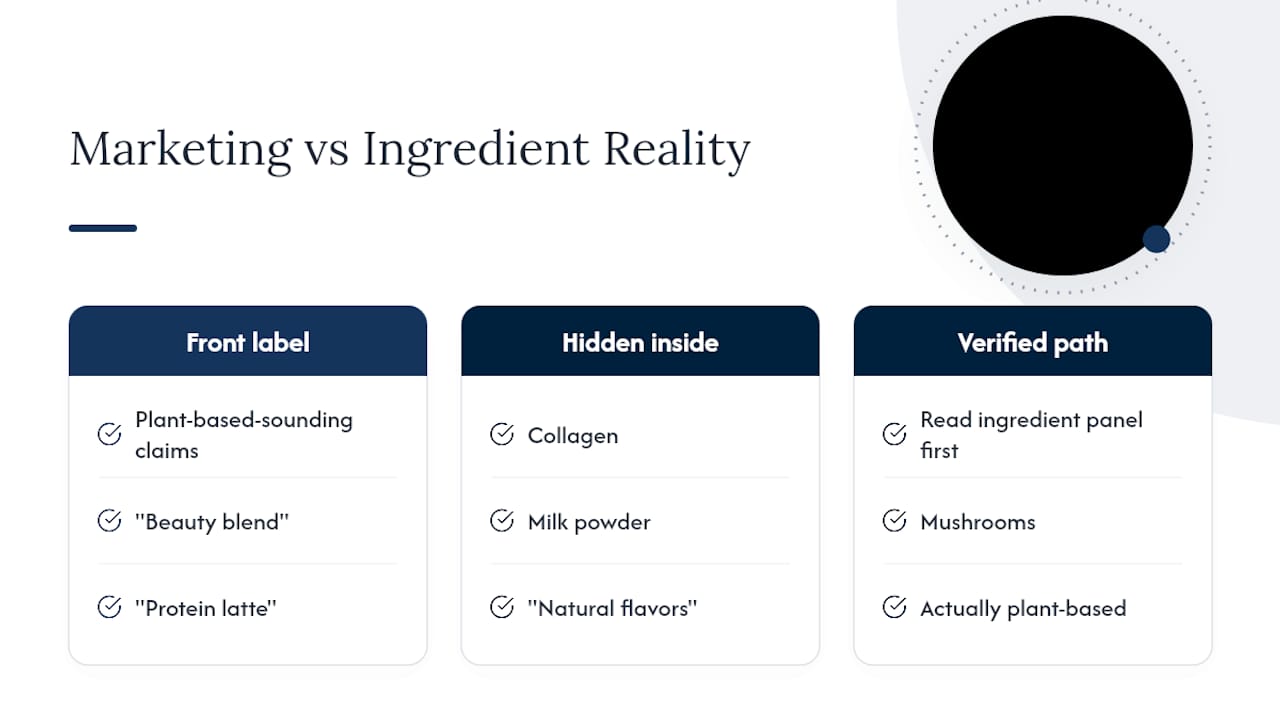
The biggest misconception in this category isn’t about mushrooms at all. It’s the assumption that “plant-based sounding” and “actually plant-based” are the same thing. They’re not, and the gap between them is exactly where collagen, milk powder, and vague “natural flavors” hide in plain sight.
Conventional advice tends to stop at “check if it’s vegan,” which is technically correct and practically useless. Nobody knows what checking actually means until they’ve seen a real ingredient panel next to a real disqualifying additive. That’s the gap this checklist is built to close: not vague reassurance, but a repeatable habit of scanning past the front label every single time, even for brands you already trust.
If there’s one priority above the rest, it’s this: read the ingredient panel before you read the marketing copy. A “beauty blend” or “protein latte” claim on the front tells you almost nothing about what’s actually inside. The back of the package, the boring part most people skip, is where the real answer lives.
— Tatiana
Get a Vegan Mushroom Coffee Built to Skip the Guesswork
Emberk removes the label-reading step entirely by formulating every blend dairy-free from day one, with 100% fruiting-body mushroom extract and zero fillers, so there’s no collagen or milk powder to hunt for in fine print. That matters most for anyone who just read through a checklist of hidden additives and would rather not repeat that exercise every time they restock their pantry.
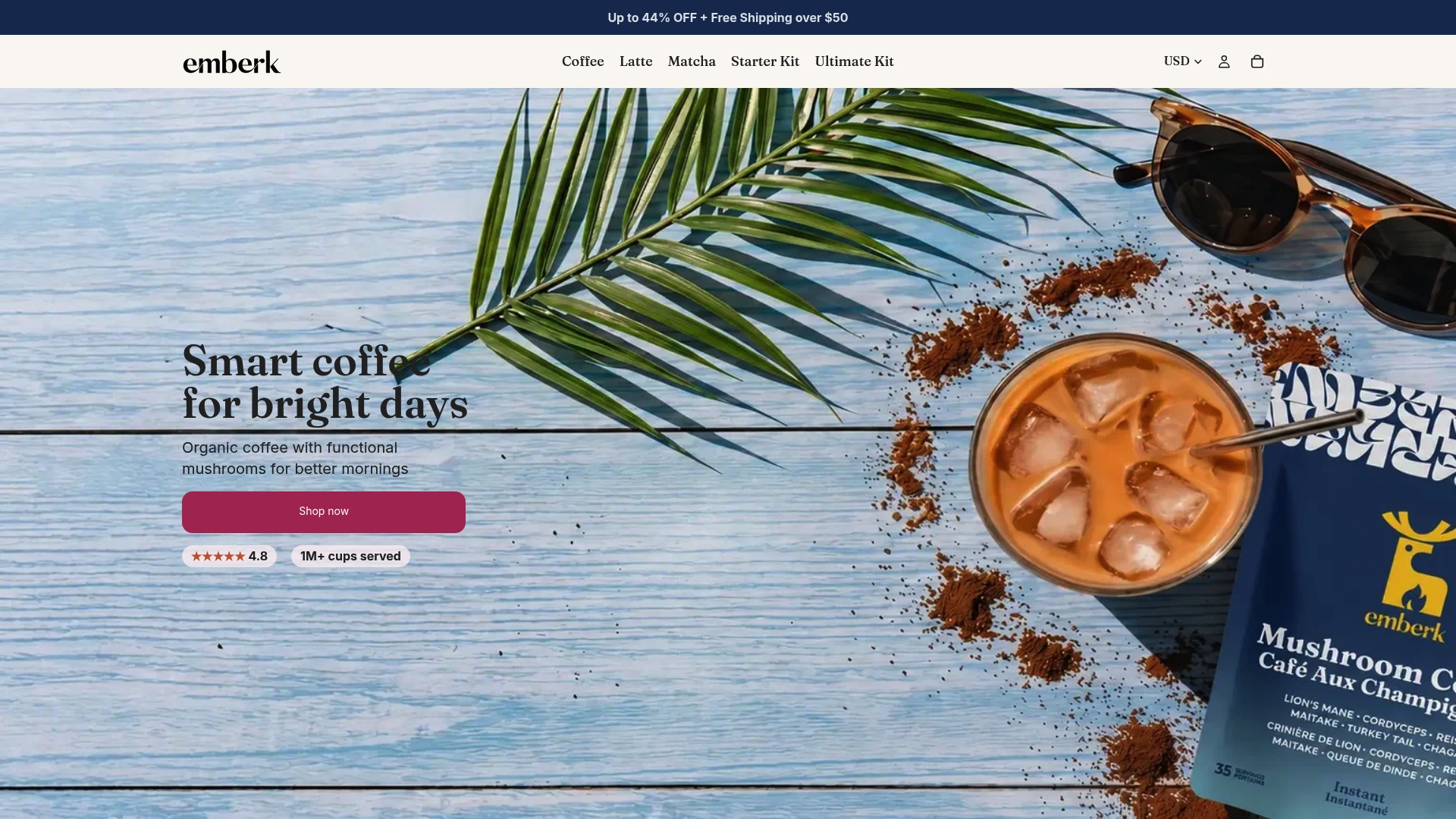
The lineup covers both formats this article walked through: a plain mushroom coffee for anyone who wants full control over their milk and sweetener, and a ready-made mushroom latte for anyone who wants the creamy format without formulating it themselves. Each cup blends Lion’s Mane, Chaga, Reishi, Turkey Tail, Maitake, and Cordyceps with organic coffee, lab-tested and sourced without shortcuts. Browse the full product lineup and pick the format that fits your morning, or check current seasonal offers before you order your first bag.
Sources
- Should you switch to mushroom coffee? – UCLA Health
- Science Advances article on fungal bioactivity
- How mushrooms grow – American Mushroom Institute
- Starbucks non-dairy milks ranked — Tasting Table
FAQ
Is mushroom coffee vegan?
Most mushroom coffee is vegan, since coffee and mushroom extract are both plant-based, but always check the full ingredient list for additives like collagen, milk powder, or honey before assuming a specific product qualifies.
Which mushroom coffee is vegan?
Plain black mushroom coffee powders are the most reliably vegan format, while “latte mix” or “beauty blend” versions require closer label checking since they more often contain dairy-derived creamers or collagen. Emberk formulates its coffee and latte blends dairy-free with no added collagen or milk powder.
What are the potential downsides of drinking mushroom coffee?
The main downsides are the same as regular coffee: caffeine sensitivity, jitteriness, or mild digestive upset when trying a new blend, plus clinical evidence for many adaptogen benefits is still developing rather than firmly established.
Why do I feel weird after drinking mushroom coffee?
Unusual sensations are most often caused by caffeine sensitivity, an unfamiliar reaction to adaptogen ingredients like Reishi or Cordyceps, or an added ingredient like MCT oil that your body isn’t used to.
What do doctors say about mushroom coffee?
Clinicians generally describe mushroom coffee as safe in moderation but note that evidence for many marketed benefits remains limited, and they recommend starting with smaller servings and checking for medication interactions, especially during pregnancy or with existing health conditions.
0 comments