

Yes, mushroom coffee is usually keto-friendly. Most plain, unsweetened blends land at 0 to 1 gram of net carbs per serving, which fits comfortably inside a daily carb budget of 20 to 50 grams. The catch is in the word “usually.” Added sugars, sweetened creamer mixes, and filler ingredients like maltodextrin can quietly push a product out of keto territory, so you still need to read the label rather than trust the marketing on the front of the bag. We’ll walk through exactly how to check, plus what to watch for if you’re on medication or have kidney concerns.
Key Takeaways
Mushroom coffee is typically keto-friendly because plain, unsweetened blends deliver 0 to 1 gram of net carbs per serving, but added sugars and fillers can change that fast.
| Point | Details |
|---|---|
| Check net carbs first | Most plain mushroom coffee has 0 to 1 gram of net carbs per serving, well within keto limits. |
| Watch for hidden fillers | Maltodextrin, dextrose, and flavored creamer mixes are the most common ways a product stops being keto-friendly. |
| Lower caffeine can help | A roughly 1:1 mushroom-to-coffee ratio often means about half the caffeine of regular coffee, which may reduce jitter. |
| Confirm quality signals | Look for 100% fruiting body claims, third-party lab testing, and a clear mushroom dose on the label. |
| Emberk meets the checklist | Emberk’s mushroom coffee uses six functional mushrooms, no added sugar, low net carbs, and lab testing for contaminants. |
Table of Contents
- Is Mushroom Coffee Keto Friendly? What’s Actually in the Cup
- How Many Carbs Does Mushroom Coffee Have?
- What Benefits Does Mushroom Coffee Actually Offer?
- Reasons Mushroom Coffee Fits (or Doesn’t Fit) Keto
- How to Make Mushroom Coffee More Keto-Friendly
- What Are the Downsides and Interaction Risks?
- Choosing a Truly Keto-Friendly Mushroom Coffee
- Is Mushroom Coffee Keto-Friendly? The Bottom Line
- A Publisher’s Perspective on Mushroom Coffee and Keto
- Try a Keto-Friendly Mushroom Coffee Built Around This Exact Checklist
- Sources
- FAQ
Is Mushroom Coffee Keto Friendly? What’s Actually in the Cup
Mushroom coffee is a blend of ground or instant coffee mixed with powdered extracts or fruiting-body powder from medicinal mushrooms. It has nothing to do with culinary mushrooms like portobello or shiitake, and nothing to do with psychedelic species either. It’s coffee, functionally upgraded with adaptogenic fungi that have a long history in traditional wellness practices, now packaged for your morning routine.
The mushrooms themselves come in a few common forms. You’ll see them listed as an extract (concentrated and processed to pull out specific compounds), a fruiting-body powder (the whole mushroom, dried and ground), or a dual extract (processed with both water and alcohol to capture a broader range of bioactive compounds). The species vary by brand, but a handful show up again and again:
- Lion’s Mane — often marketed for focus and mental clarity
- Reishi — associated with relaxation and stress support
- Chaga — prized for its antioxidant content
- Cordyceps — linked to energy and stamina claims
- Turkey Tail — studied for immune-related compounds
- Maitake — sometimes included for its earthy flavor and nutrient profile
Formulations differ more than most shoppers realize, with some using instant mixes like instant coffee with mushroom to deliver convenient, keto-friendly options. Some brands build a genuine 1:1 mushroom-to-coffee ratio using real fruiting-body powder, with nothing else added. Others lean on flavored instant mixes that pad the ingredient list with sweeteners, non-dairy creamer powders, or thickeners, which is exactly where the carb count starts creeping upward. Reporting on the category has noted that mushroom coffee blends coffee with powdered medicinal mushrooms such as lion’s mane, reishi, chaga, and cordyceps, often marketed around steadier energy, but the evidence behind those claims is still thinner than what exists for either mushrooms or coffee studied on their own.
How Many Carbs Does Mushroom Coffee Have?
Most plain mushroom coffee sits at 0 to 1 gram of net carbs per serving, and that’s the number that actually matters for a ketogenic diet. Net carbs are calculated by taking total carbohydrates and subtracting fiber and any sugar alcohols, since those don’t spike blood sugar the way digestible carbs do. Manufacturers of unsweetened instant blends routinely report negligible carbohydrate counts per serving, which is why the category has a reputation as a low-carb swap for regular coffee in the first place.
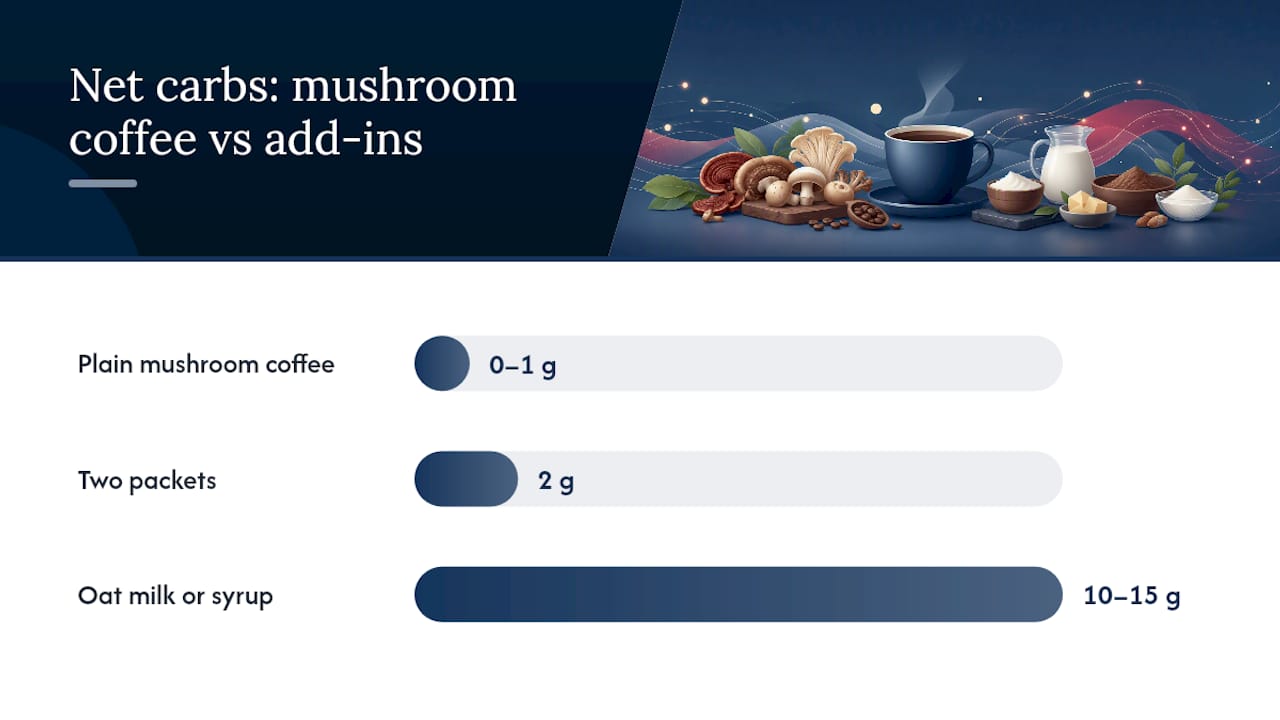
Serving size is where people get tripped up. A single packet might list 1 gram of total carbs, but if you’re mixing two packets into a larger mug, you’ve just doubled that number. It’s a small detail, but it’s the difference between staying under your daily limit and blowing through it before lunch.
Here’s a sample nutrition facts panel you might see on a typical unsweetened mushroom coffee packet, followed by the math:
The math here is simple: 1 gram total carbs minus 0 grams fiber minus 0 grams sugar alcohols equals 1 gram net carbs. That’s about as clean as a beverage gets on keto.
When you’re checking a label yourself, run through this sequence every time:
- Check the serving size first. Everything else on the label is relative to it.
- Look at total carbohydrates, then subtract fiber and sugar alcohols to get net carbs.
- Scan for added sugars listed separately. Zero should mean zero, but always confirm.
- Search the ingredient list for maltodextrin, dextrose, or corn syrup solids. These are common fillers that add carbs without necessarily showing up as “sugar.”
- Note the caffeine content if you’re also managing intake for sleep or anxiety reasons.
If you’re cross-checking baseline nutrition values for coffee or specific mushroom powders, the USDA FoodData Central database is a reliable way to verify what a label claims against independently logged nutrition data.
One more thing that changes the math fast: what you add to the cup. A splash of oat milk or a flavored syrup can turn a 1 gram net carb coffee into a 10 or 15 gram one before you’ve taken your first sip. We’ll cover exactly which add-ins keep the carb count low in a later section.
What Benefits Does Mushroom Coffee Actually Offer?
The marketing around mushroom coffee leans heavily on four claims: sharper focus, steadier energy without the crash, immune support, and general stress resilience. Some of that has real science behind individual mushroom compounds. Very little of it has been tested on mushroom coffee blends specifically, which is a distinction worth sitting with before you expect dramatic results from your morning cup.
- Focus and cognition — Lion’s Mane has some promising lab and animal research behind it, but large human trials on the whole-blend beverage form are scarce.
- Steadier energy, less jitter — This one has a more straightforward explanation: many mushroom coffee blends simply contain less caffeine than a regular cup, which naturally softens the spike-and-crash pattern.
- Immune support — Turkey Tail and Reishi contain compounds studied for immune modulation, mostly in preclinical or small-scale research.
- Antioxidant effects — Chaga is often highlighted here, though most supporting data comes from lab studies rather than long-term human outcomes.
- Stress adaptation — The “adaptogen” framing for Reishi and Cordyceps is popular in wellness circles, but the human evidence base remains limited.
The caffeine point deserves a closer look, because it’s the most consistently reported benefit and the easiest to explain. Brands that use a roughly 1:1 mushroom-to-coffee ratio typically end up with about half the caffeine of a standard cup, which lines up with why so many people report less jitter and an easier feeling on the stomach compared with regular coffee. That’s a mechanical effect of caffeine dose, not a mysterious property of the mushrooms themselves.
Mushroom coffee mixes remain considerably less studied than either regular coffee or isolated mushroom extracts taken on their own. Coffee has decades of population-level research behind it, including associations with lower risk of Type 2 diabetes and liver disease. Mushroom coffee, as a combined product, simply hasn’t been studied long enough or widely enough to make comparable claims.
That gap doesn’t mean the category is a scam. It means you should treat mushroom coffee as a reasonable adjunct to a health-conscious routine, not a substitute for medical treatment or a proven cure for anything.
Reasons Mushroom Coffee Fits (or Doesn’t Fit) Keto
The honest answer is that mushroom coffee is keto-friendly by default, but not automatically. The mushrooms themselves add essentially no carbs. What breaks ketosis is almost always something else in the mix.
On the pro side, plain mushroom coffee typically delivers very low net carbs, can be purchased completely unsweetened, and its lower caffeine load may help some people manage appetite and sleep quality more easily while adapting to a ketogenic diet. Those three factors are why the category has built a genuine following among low-carb eaters, not just wellness trend chasers.
On the con side, plenty of products on store shelves include added sweeteners, flavored creamer powders, collagen blends with hidden carb sources, or fruit-derived flavorings that quietly raise the carb count. A “vanilla latte” mushroom coffee mix is a completely different nutritional animal than a plain instant packet, even though they sit next to each other on the shelf.
Use this simple rule of thumb when you’re deciding: if a serving has 1 to 2 grams of net carbs or less and no added sugars, treat it as keto-friendly. If it’s higher than that, or if sugar shows up anywhere in the ingredient list, skip it or save it for a non-keto day.
Before you buy or brew, run this quick scan:
- Net carbs per serving: 2 grams or less
- Added sugars: zero
- Ingredient list: no maltodextrin, dextrose, or syrup solids
- Serving size: matches how much you’ll actually drink
- Flavor claims on the front label: verify against the nutrition panel on the back, since “naturally flavored” doesn’t guarantee zero carbs
How to Make Mushroom Coffee More Keto-Friendly
Even a clean, unsweetened mushroom coffee can be tuned to fit your macros better, especially if you’re following a stricter version of keto that emphasizes higher fat intake. The additions you choose make all the difference.
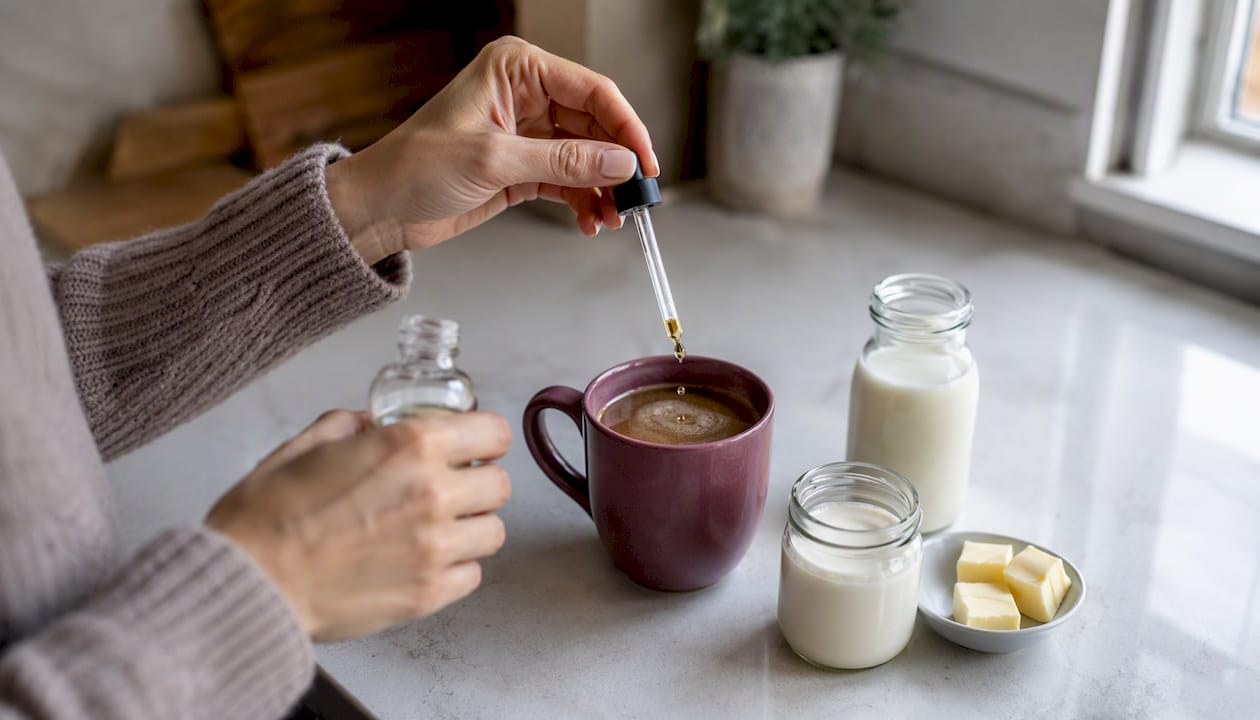
Good keto-friendly add-ins include heavy cream (rich in fat, minimal carbs), unsweetened almond or coconut milk (check the label since some “unsweetened” versions still carry a gram or two of carbs), MCT oil or grass-fed butter for a fat boost that mimics the classic bulletproof coffee style, and unflavored collagen protein if you want extra satiety without added carbs.
What to avoid is just as important: sweetened instant mixes, flavored coffee creamers with added sugar, any syrup labeled “vanilla” or “caramel” unless it’s specifically a zero-carb sweetener blend, and mushroom coffee products that list maltodextrin as a bulking agent.
Two quick recipes to try:
Keto Mushroom Bulletproof Coffee — Brew one serving of plain mushroom coffee, then blend in 1 tablespoon of MCT oil and 1 tablespoon of grass-fed butter until frothy. Net carbs stay under 2 grams while fat content jumps significantly, which is ideal for a fat-first morning on strict keto.
Iced Keto Mushroom Coffee — Brew mushroom coffee double-strength, cool it, then pour over ice with a splash of heavy cream or unsweetened coconut milk. Add a drop of liquid stevia if you want sweetness without the carbs. This pairs well with the chocolate-infused iced mushroom coffee approach if you want a richer, dessert-like version.
Pro Tip: Batch-prep a flavored MCT-and-cream emulsion (blend MCT oil, heavy cream, and a keto sweetener like monk fruit in a jar and shake well) and refrigerate it. Pour a spoonful into your mushroom coffee each morning instead of buying flavored creamers, which almost always sneak in added sugar you didn’t ask for.
What Are the Downsides and Interaction Risks?
The biggest limitation with mushroom coffee isn’t a specific side effect. It’s that the blended beverage form simply hasn’t been studied much. Most of what we know about medicinal mushrooms comes from research on isolated extracts in lab or animal models, with a limited number of human trials, not from testing the coffee-mushroom combination that you’re actually drinking.
That evidence gap matters more for certain people than others. A few specific risks are worth knowing before you make mushroom coffee a daily habit:
- Reishi and blood thinners — Reishi has properties that may affect blood clotting, and it can interact with medications like blood thinners, so anyone on anticoagulant therapy should talk to a provider before adding it in.
- Chaga and kidney stones — Chaga is notably high in oxalates, and people with a history of kidney stones should be cautious with chaga-containing products regardless of how low-carb the drink otherwise is.
- Allergic reactions — Mushroom allergies exist, and reactions can range from mild digestive upset to more serious responses.
- Contaminant uptake — Mushrooms absorb whatever is in their growing environment, including heavy metals like lead, arsenic, and mercury if they’re grown or sourced poorly.
That last point is why sourcing and testing transparency matter so much in this category. Before buying, check for third-party lab testing, a clear statement that the product uses 100% fruiting body (rather than mycelium grown on grain, which can dilute the actual mushroom content), and screening for contaminants.
If you’re on any prescription medication, pregnant or breastfeeding, or have a history of kidney stones, talk with a healthcare professional before adding mushroom coffee to your routine. The low-carb profile that makes it appealing for keto doesn’t cancel out the need for that conversation.
Choosing a Truly Keto-Friendly Mushroom Coffee
Shopping for mushroom coffee on keto comes down to reading past the front-of-package claims and into the actual nutrition and ingredient panels. Here’s the checklist we’d run through every time:
- Net carbs per serving: 2 grams or less, ideally closer to zero
- Added sugars: none listed anywhere on the label
- Fillers: no maltodextrin, dextrose, or unnamed “natural flavors” padding the ingredient list
- Serving size: confirm it matches how much you’ll drink in one sitting
- Caffeine content: check if you’re also tracking intake for sleep or anxiety reasons
- Ingredient transparency: the brand should tell you exactly which mushrooms, in what form, and at what dose
Beyond the carb count, the quality signals that separate a serious product from a marketing gimmick are fairly consistent: 100% fruiting body mushrooms (not mycelium-on-grain filler), third-party lab testing for heavy metals and contaminants, a stated mushroom dose or extraction ratio rather than a vague “proprietary blend,” and publicly available certificates of analysis you can actually request or view.
In the interest of full disclosure, Emberk publishes on this topic and also sells mushroom coffee blended with six functional mushrooms, including lion’s mane, chaga, reishi, turkey tail, maitake, and cordyceps. It’s built around the same checklist above: no added sugars, low net carbs per serving, lab testing for contaminants, and a clear ingredient list with no fillers. It’s a relevant reference point precisely because it was designed against the same standards this article walks you through, not the other way around.
For anyone who wants a lower-caffeine, dairy-free format, the Emberk mushroom latte is worth a look, and both formats are available as a one-time purchase or an ongoing subscription through the brand’s own site.
Pro Tip: Ask any mushroom coffee brand directly for its certificate of analysis if it isn’t posted on the product page. A brand confident in its sourcing will hand it over without hesitation; one that stalls or deflects is telling you something.
Is Mushroom Coffee Keto-Friendly? The Bottom Line
Mushroom coffee is usually keto-friendly, provided it’s unsweetened and genuinely low in net carbs, which most plain formulations are. The mushrooms aren’t the problem. What you add to the cup, or what’s hidden in a flavored instant mix, is where things go wrong.
Before your next purchase, run through the basics: check the label for net carbs and added sugars, skip anything with maltodextrin or syrup solids, and build in healthy fats like MCT oil, butter, or heavy cream if you’re following a stricter keto approach. If you’re on medication or have a kidney stone history, have that conversation with your provider first.
If you want to know exactly how your body responds, a simple blood ketone or glucose check before and after your usual cup will tell you more than any label ever could.
A Publisher’s Perspective on Mushroom Coffee and Keto
Publishing this on behalf of Emberk means we have a stake in the answer, and we think that’s worth saying plainly rather than burying it. What we’ve found researching this space is that the keto community tends to overcorrect in one of two directions: either treating any “mushroom” claim as automatically healthy, or dismissing the whole category because the research on blended products is still thin.
Neither instinct serves you well. The carb math is the easy part; it’s on the label. The harder part is separating what’s genuinely useful (lower caffeine load, a cleaner ingredient list than most flavored coffee alternatives) from what’s still unproven (specific cognitive or immune claims tied to a single cup). Our own approach has been to test formulations the way we’d want a skeptical, label-reading customer to test them: check the panel, question the “proprietary blend” wording, and never assume a health halo replaces a nutrition fact.
This is educational information, not medical advice. Your body, your medications, and your history with things like kidney stones are factors only you and your provider can weigh accurately.
Try a Keto-Friendly Mushroom Coffee Built Around This Exact Checklist
Everything in this guide points to the same short list: low net carbs, no added sugar, real fruiting-body mushrooms, and lab testing you can actually verify. Emberk’s mushroom coffee was built around that list from the start, blending six functional mushrooms with organic coffee, no fillers, and no added sugar in the finished product.
If you’d rather skip the caffeine-heavy version, the dairy-free mushroom latte gives you a lower-caffeine option built on the same standard. Both are available as a one-time order or a recurring subscription, and the full product lineup is there if you want to compare formats side by side. Start with a single bag, check the label against the checklist yourself, and see how your morning routine responds before committing to a subscription.
Sources
- Is Mushroom Coffee Healthy? Here’s What to Know
- Mushroom coffee: What it is, benefits, downsides
- Medicinal Mushrooms: An Evidence Overview (NCBI Bookshelf)
FAQ
What is the downside to drinking mushroom coffee?
The main downside is limited research on the blended beverage itself, plus the risk of hidden sugars or fillers in flavored mixes. Certain mushrooms also carry specific cautions, like chaga’s oxalate content for people prone to kidney stones.
Will I lose weight if I drink mushroom coffee?
Mushroom coffee isn’t a proven weight-loss tool on its own. Any effect likely comes from it being a low-carb, low-calorie replacement for sugary coffee drinks rather than from the mushrooms themselves.
What type of coffee is best for a keto diet?
Plain black coffee, or a mushroom coffee blend with 0 to 2 grams of net carbs and no added sugar, both work well on keto. The key is avoiding sweeteners, flavored syrups, and high-carb creamers.
How many carbs does mushroom coffee have?
Most plain, unsweetened mushroom coffee has 0 to 1 gram of net carbs per serving. Flavored or sweetened versions can carry significantly more, so always check the nutrition label rather than assuming.
0 comments