

Yes, adding chaga to coffee is a reasonable choice for most healthy adults, mainly because it cuts caffeine per cup while adding antioxidant compounds coffee alone doesn’t provide. Start with a small serving, especially if you take medication or have kidney or autoimmune concerns, and lean toward dual-extract or lab-tested products over raw powder stirred into your mug.
- Verdict: Worth trying, with a low starting dose.
- Best for: Coffee drinkers who want steadier energy without the crash.
- Skip or check first: Anyone on blood thinners, pregnant, or with a kidney stone history.
- Where to go next: Jump to the brewing methods or safety section below for specifics.
Key Takeaways
Chaga in coffee reduces caffeine content while contributing antioxidant compounds, but the strongest results come from dual-extract or lab-tested products used at a low starting dose.
| Point | Details |
|---|---|
| Lower caffeine, added antioxidants | Chaga has no caffeine itself, so common 1:1 blends cut caffeine roughly in half while adding polyphenols and beta-glucans. |
| Flavor pairs with darker roasts | Chaga’s earthy, faintly sweet profile complements medium and dark roasts without adding bitterness. |
| Extraction method changes potency | Dual-extract powders and slow decoctions likely preserve more bioactive compounds than heat-processed instant blends. |
| Check safety before daily use | Avoid or consult a clinician if you have kidney stones, take blood thinners, or are pregnant or breastfeeding. |
| Ready-made options simplify dosing | Emberk’s mushroom coffee offers a lab-tested, fruiting-body blend for readers who want to skip DIY extraction. |
Table of Contents
- What Is Chaga, and What Forms Show Up in Coffee?
- Why Does Chaga Pair So Well With Coffee?
- What Does Chaga Coffee Taste Like, and How Do You Make a Chagaccino?
- How Do You Brew Chaga Coffee at Home?
- Are There Safety Risks With Chaga and Coffee?
- How Do You Choose a Quality Chaga Coffee Product?
- What Does the Research Actually Show?
- Bottom Line: Is Chaga Coffee Worth Trying?
- An Editor’s Honest Take on Chaga Coffee
- A Simpler Way to Try Chaga Coffee at Home
- Sources
- FAQ
What Is Chaga, and What Forms Show Up in Coffee?
Chaga (Inonotus obliquus) is a hard, charcoal-like fungus that grows on birch trees across Siberia, Northern Europe, and parts of Canada. It’s not a mushroom in the classic cap-and-stem sense. It looks more like burnt bark clinging to a tree trunk, and people in Northern Europe and Russia have simmered it into tea for generations. During wartime shortages in Finland, it was even brewed as a coffee substitute when real coffee beans were hard to get.
Today you’ll run into chaga in several forms, and the differences matter more than most labels let on:
- Raw chunks for home decoction (long simmering, the traditional method).
- Water extracts, usually a fine powder dissolved from a water-based process.
- Dual extracts, made with both water and alcohol to pull a wider range of compounds.
- Whole fruiting-body powder, ground straight from the dried organism.
- Instant blends, pre-mixed with coffee for convenience.
Extraction method changes flavor intensity, shelf stability, and how much of chaga’s compound profile likely survives into your cup.
Pro Tip: Check the label for the words “fruiting body” rather than “mycelium on grain,” and look for a stated extract ratio (like 8:1) plus mention of third-party lab testing. Vague labels usually mean a weaker, less consistent product.
Why Does Chaga Pair So Well With Coffee?
Two separate reasons explain chaga’s rise in specialty coffee, and they rarely get discussed together. One is functional, one is purely about taste, and both hold up under scrutiny.
On the functional side, chaga carries antioxidant compounds like polyphenols and melanin, along with polysaccharides called beta-glucans that show antioxidant and immunomodulatory activity in preclinical research. Mushroom powder itself has zero caffeine, so when brands blend it roughly 1:1 with ground coffee, the result is typically about half the caffeine of a standard cup. That’s a practical perk, not a clinical one, but it’s real: fewer jitters, less of an afternoon crash from an early overdose of caffeine.
The taste case is just as strong. Chaga has a mild, earthy, faintly sweet, almost vanilla-like flavor that meshes naturally with medium and dark roasts instead of fighting them. It doesn’t add bitterness the way some other mushroom powders can, which is a big reason cafés started experimenting with it in the first place.
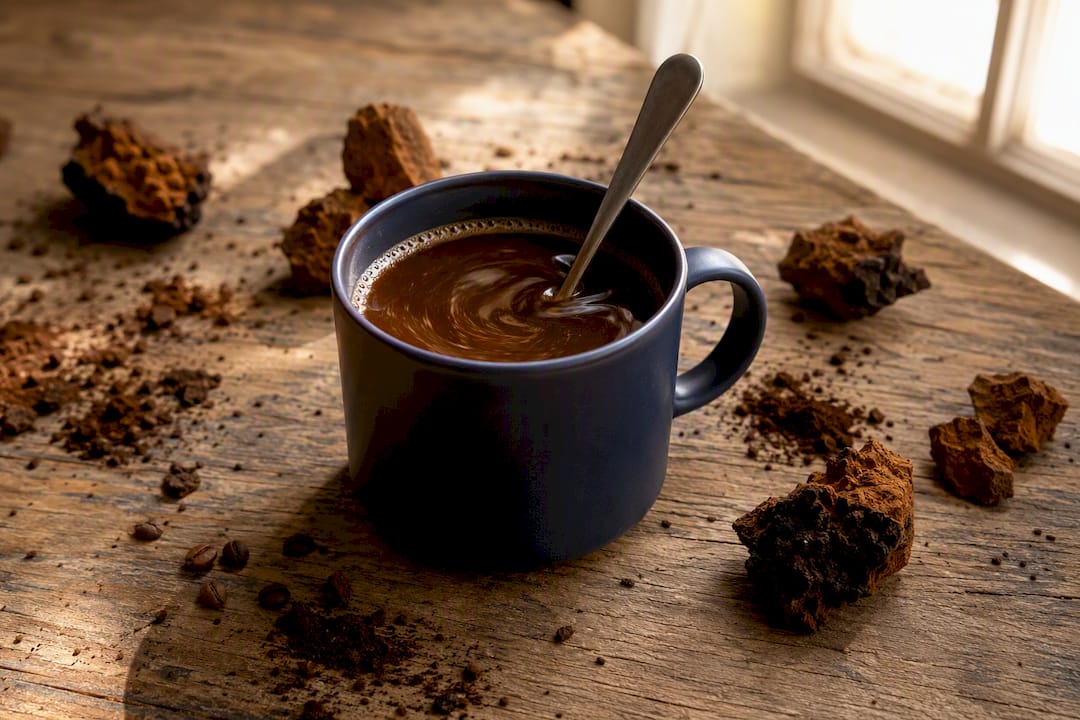
There’s a catch worth knowing before you get too excited about the health claims. High-heat processing used in many instant coffee and instant mushroom blends can degrade some of chaga’s more sensitive bioactive compounds compared to a slow, traditional decoction. Convenience and potency sit on a bit of a seesaw here, and it’s worth keeping that trade-off in mind as you pick a product.
What Does Chaga Coffee Taste Like, and How Do You Make a Chagaccino?
Think earthy, slightly nutty, with a soft sweetness that reads almost like vanilla or toasted grain. It’s mellow rather than sharp, which is exactly why it complements roast styles that already lean smoky or chocolatey.
Common café-style uses include:
- Chagaccino: a latte-style drink where chaga extract dissolves into steamed milk and espresso.
- Mocha variation: pairing chaga with cocoa for a richer, dessert-like cup.
- Iced mushroom coffee: chaga blended into cold brew or shaken over ice for warm-weather sipping.
A simple chagaccino at home:
- Brew a shot or two of espresso (or strong coffee) as usual.
- Stir in half a teaspoon of chaga extract powder until fully dissolved.
- Steam or froth milk of your choice (oat and almond both work well here).
- Pour milk over the espresso mixture and add a light dusting of cinnamon if you want extra warmth.
If the earthiness feels too strong on its own, a splash of milk or a pinch of cinnamon rounds it out fast. For a chocolate spin, this chocolate-infused iced mushroom coffee recipe is worth trying.
How Do You Brew Chaga Coffee at Home?
There’s no single right method. Which one you pick depends on how much control you want over dose, and how much time you’re willing to spend.
- Instant mushroom-coffee blends: Just add hot water. Most pre-mixed products call for one packet or scoop per 8 to 12 ounces of water, and the mushroom powder is already dissolved into a coffee base, so these blends dissolve easily in hot or cold liquids.
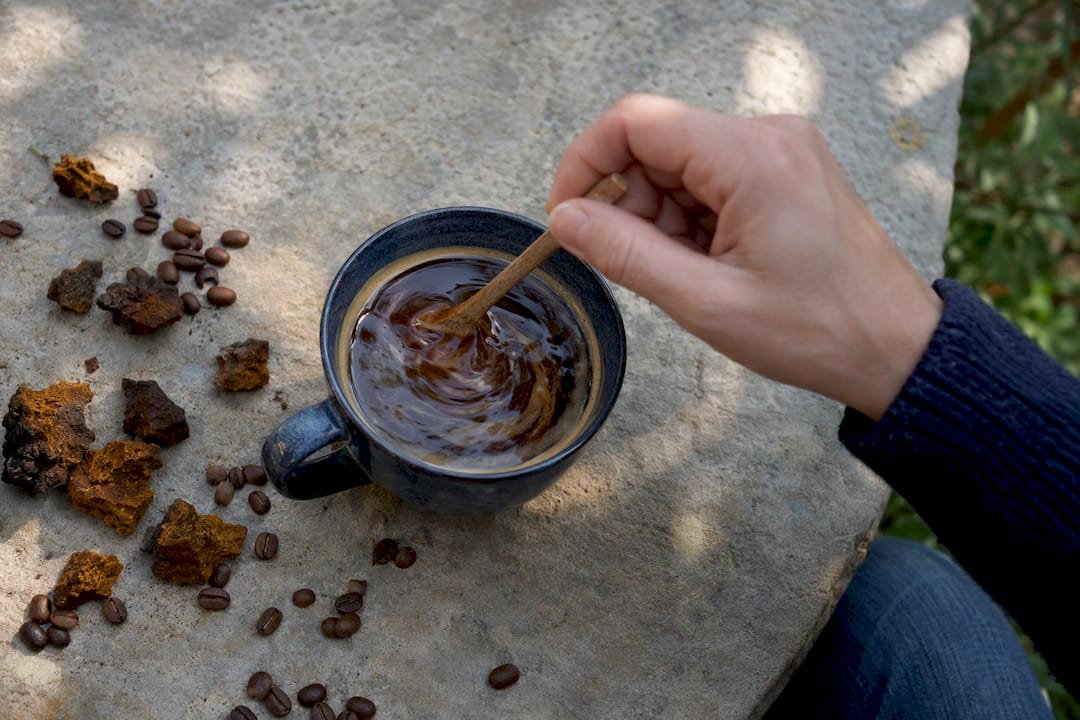
- Traditional decoction: Simmer raw chaga chunks in water at a low temperature for 1 to 2 hours (some traditional methods go longer, up to several hours), using roughly a tablespoon of chunks per 2 cups of water. Strain and use this dark, tea-like liquid as your coffee base or mix it directly with brewed coffee.
- Espresso and latte adaptations: Dissolve a dual-extract chaga powder directly into a fresh espresso shot before adding milk, which avoids clumping better than adding it straight to cold milk.
- Cold brew with chaga: Add chaga extract powder to your cold brew concentrate and let it sit in the refrigerator for 12 to 18 hours, then strain through a fine mesh filter to catch any undissolved sediment.
For dosing, many products land somewhere in the 250 to 1,000 milligram range per serving of chaga extract, and starting at the lower end for your first week is the smarter move regardless of the product.
Pro Tip: If bioavailability matters to you, reach for a dual-extract powder or a pre-made decoction rather than dumping raw ground chaga straight into your mug. Water alone doesn’t pull out every compound chaga has to offer.
Are There Safety Risks With Chaga and Coffee?
Chaga isn’t risk-free for everyone, and a few specific concerns deserve real attention before you make it a daily habit.
- Kidney stones: Chaga is notably high in oxalates, which raises stone risk for people with a history of kidney stones or existing kidney disease.
- Blood sugar and blood pressure: Chaga may have a mild lowering effect on both, which matters if you’re already on medication targeting either.
- Blood thinners: Chaga has compounds that could theoretically affect clotting, so combining it with anticoagulants needs a conversation with a pharmacist first.
- Pregnancy and breastfeeding: There isn’t enough safety data here, so it’s best avoided during this period.
- Autoimmune conditions: Chaga’s immune-modulating effects could interact with certain autoimmune medications, depending on your specific condition.
A short but important rule: if you take a prescription medication of any kind, ask your pharmacist about chaga before adding it to your routine. It’s a five-minute conversation that can head off a real interaction, especially with diabetes drugs or blood thinners.
Curious about specific interactions or dosing edge cases? The FAQ section below covers the questions people ask most.
How Do You Choose a Quality Chaga Coffee Product?
Not all chaga on shelves is created equal, and the differences aren’t always obvious from packaging alone. A few checkpoints separate a solid product from a weak one:
- Fruiting body vs. mycelium: Fruiting-body extracts generally carry a higher concentration of the compounds people actually want; mycelium-on-grain products often dilute that with starch filler.
- Extract ratio: Look for a stated ratio (like 10:1) rather than vague marketing language.
- Third-party testing: Reputable brands test for heavy metals and pesticides, since chaga is wild-harvested and can absorb contaminants from its environment.
- Serving size clarity: The label should state milligrams per serving, not just “a scoop.”
Because chaga grows slowly on birch trees over years, responsible sourcing matters more here than with many other functional ingredients. Overharvesting depletes wild populations faster than they can regenerate.
On the convenience spectrum, instant blends are fastest, ground blends brew like regular coffee, pure extract powders give you the most dose control, and decoction-ready chunks stay closest to tradition. If you want a ready-made option that handles the sourcing and testing questions for you, Emberk’s mushroom coffee uses lab-tested, 100% fruiting-body mushrooms with no fillers, which checks most of the boxes above without any guesswork on your end.
What Does the Research Actually Show?
The lab evidence for chaga is genuinely interesting. The limits of that evidence are just as important to understand before you expect too much from your morning cup.
- Preclinical studies point to antioxidant activity from polyphenols and melanin, plus immune-signaling effects from beta-glucan polysaccharides.
- A pharmacology review of common medicinal mushrooms found antioxidant, anti-inflammatory, and immunomodulatory activity across the board, but flagged inconsistent study quality and a real shortage of human trials.
- A 2025 review on mushroom coffee specifically noted promising antioxidant and anti-inflammatory signals in preclinical work, but stated plainly that human clinical evidence remains thin.
- Processing matters too: heat-intensive manufacturing common in instant blends can reduce the concentration of some of these sensitive compounds before the product even reaches your cup.
None of this means chaga does nothing. It means the leap from “promising in a petri dish” to “proven in daily human use” hasn’t been fully made yet, so it’s worth treating specific health claims with some skepticism and prioritizing products that are at least lab-verified for purity.
Bottom Line: Is Chaga Coffee Worth Trying?
Chaga coffee is worth trying for anyone who wants steadier energy and fewer caffeine jitters without giving up their coffee ritual entirely.
- Check for kidney issues, blood thinner use, or pregnancy before starting.
- Begin with a small serving from a lab-tested product for your first week.
- A ready-made blend removes most of the dosing guesswork for beginners.
An Editor’s Honest Take on Chaga Coffee
The flavor surprised me more than any health claim did. Chaga doesn’t taste medicinal or bitter. It’s quietly earthy, almost like a good dark roast got a little rounder. Fold it into your morning routine and you’ll likely notice the caffeine coming down easier before you notice anything else, if you notice anything dramatic at all. Realistic expectations matter here: this is a gentle shift, not an overnight transformation. If you want the flavor without the trial-and-error, Emberk’s recipes and product pages are a solid place to start.
A Simpler Way to Try Chaga Coffee at Home
Skipping the raw chunks and simmering pots is the fastest way to actually stick with chaga, and that’s exactly the gap Emberk fills. Instead of sourcing your own extract, testing ratios, and hoping the label is honest, Emberk builds chaga into a ready-to-drink blend that’s already lab-tested and dosed for you.
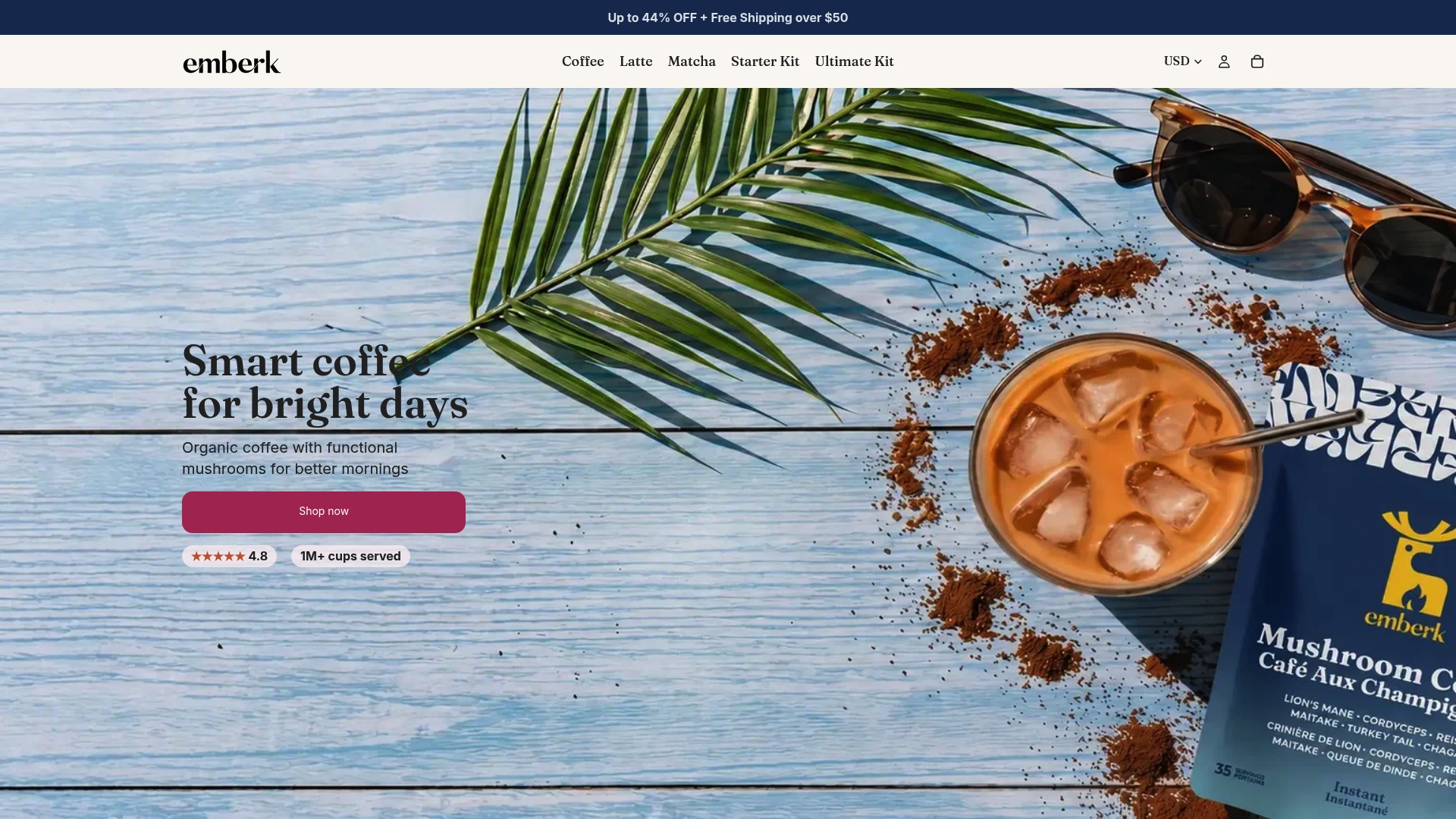
Every Emberk blend uses 100% fruiting-body mushrooms with no fillers, dairy-free formulas, and low to moderate caffeine designed for stable energy rather than a spike-and-crash cycle. The lineup includes:
- Instant mushroom coffee for a fast morning pour.
- A latte mix for anyone who prefers a creamier cup.
- Subscription plans for people who don’t want to reorder manually.
Sourcing is sustainable, and every batch goes through third-party testing, so you’re not left guessing about purity the way you might with loose powder from an unfamiliar seller. If you’re ready to see how chaga tastes in a cup that’s already dialed in, check out Emberk’s mushroom coffee lineup and pick the format that fits your morning.
Sources
- Mushroom coffee: Worth a taste? | Harvard Health
- Exploring the natural health benefits of Chaga mushroom coffee | Barista Magazine
- Inonotus obliquus (Chaga) research review — NCBI PMC
- Pharmacology review of medicinal mushrooms | Frontiers in Pharmacology
This article is general information, not a substitute for advice from a qualified doctor. Consult a qualified healthcare professional about your own circumstances before acting on anything here.
FAQ
Is Chaga Good in Coffee?
Yes, for most healthy adults chaga blends well with coffee, lowering caffeine per cup while adding antioxidant compounds, though the human clinical evidence for specific benefits is still limited.
What Should You Not Mix With Chaga?
Avoid combining chaga with blood-thinning medications or diabetes drugs without medical guidance, since chaga may amplify effects on clotting and blood sugar.
What Is the Downside to Mushroom Coffee?
The main downsides are chaga’s high oxalate content, which raises kidney stone risk for susceptible people, and the fact that heat-heavy processing in instant blends can weaken some of its bioactive compounds.
What Is the Best Way to Take Chaga?
A dual-extract powder or a slow traditional decoction typically preserves more of chaga’s compounds than raw powder stirred into hot water, making either a stronger choice than instant blends alone.
0 comments