

Beta glucans in coffee can support your immune defenses and offer modest metabolic benefits, but they won’t hit you with the jolt of a double espresso. The research behind fungal beta glucans (the kind found in mushrooms like Chaga and Cordyceps) points to real, if subtle, effects on immune resilience and mood, while cereal beta glucans do more for cholesterol. The catch: roasting and brewing can strip away a meaningful chunk of the beta glucan content, so the source and processing method matter as much as the ingredient list. Emberk builds its blends with that variability in mind.
TL;DR:
- Fungal beta glucans in mushroom coffee are absorbed at much lower doses (2.5 to 1000 milligrams daily) compared to cereal beta glucans used for cholesterol, which require 3 to 5 grams per day.
- Roasting and brewing processes can significantly reduce the beta glucan content, so brands that do not specify extraction methods may deliver less active compound in the final beverage.
- The immune-boosting effects of fungal beta glucans are supported by systematic reviews of numerous trials, but the preparation and dosage vary widely across products.
- Mushroom species used, extraction processes, and third-party testing are key factors to consider when evaluating the actual beta glucan content on labels.
- For cholesterol management, whole grains like oats and barley are much more effective than mushroom coffee, which mainly targets immune and gut health.
Table of Contents
- What Are Beta Glucans, and Why Does the Source Matter?
- What Does the Research Actually Show?
- How Does Roasting Affect Beta Glucan Content in Your Cup?
- How Do You Read a Label and Dose This Sensibly?
- Why We Add Beta Glucans to Every Cup of Emberk
- Ready to Try Beta Glucan Coffee for Yourself?
- Sources
- FAQ
What Are Beta Glucans, and Why Does the Source Matter?
Beta glucans are polysaccharides, essentially long chains of sugar molecules linked together in a specific pattern, found naturally in oats, barley, baker’s yeast, and mushrooms. Think of them as tiny scaffolding structures. The shape of that scaffolding changes what your body does with it.
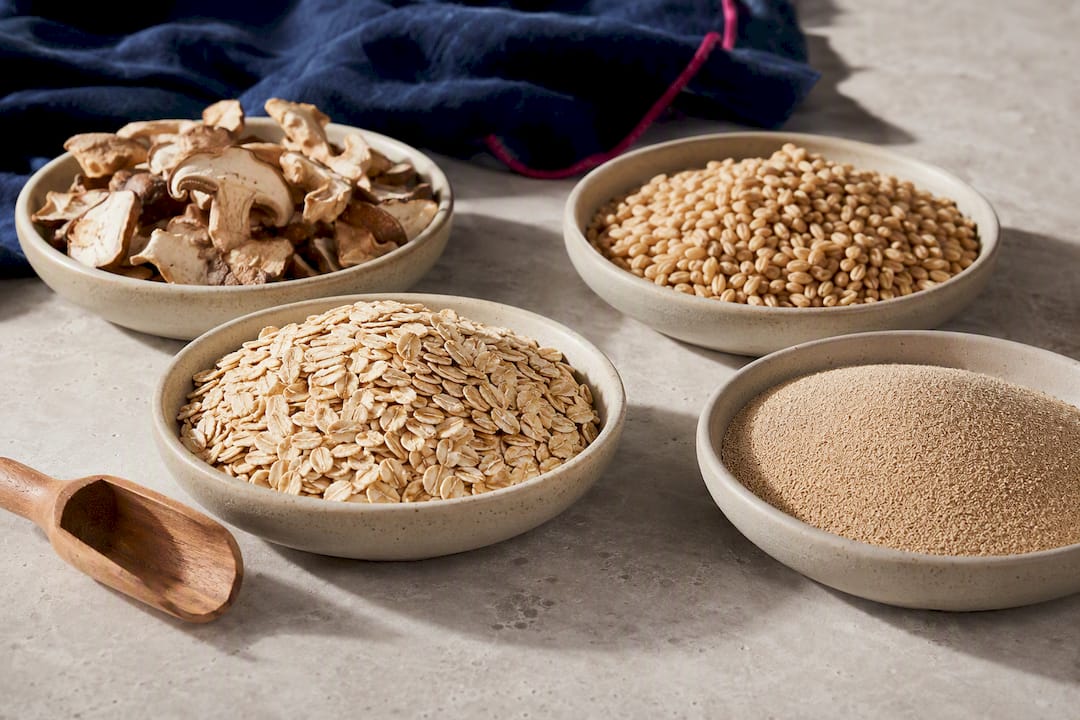
Cereal beta glucans, the kind in oatmeal, are built with a 1,3/1,4 molecular linkage. That structure makes them excellent at forming a gel in your gut, which is why they’re so effective at lowering LDL cholesterol and slowing the glucose spike after a meal.
Fungal and yeast beta glucans use a different linkage, 1,3/1,6, and that branching pattern is what allows immune cells to recognize and respond to them. It’s the same basic building block, but the architecture determines the job.
A few variables decide how well any beta glucan actually performs once it’s in your cup:
- Molecular weight — heavier molecules tend to interact differently with immune receptors than lighter fragments.
- Degree of branching — more branches generally mean stronger immune signaling in fungal sources.
- Extraction method — hot water extraction, alcohol precipitation, and enzymatic methods all pull out different amounts and different purities of the compound.
That’s why “mushroom coffee” isn’t one uniform product. Two coffees can both list Chaga on the label and deliver wildly different amounts of usable beta glucan.
What Does the Research Actually Show?
The strongest evidence for fungal beta glucans sits in immune support. A systematic review of 34 randomized controlled trials found that fungal beta glucan supplementation was generally well tolerated and linked to strengthened immune defense, with some trials also reporting improved mood and general wellbeing. That’s a meaningfully large body of trial data for a compound that still gets treated as a wellness footnote.
Cereal beta glucans have their own, separate track record. A 2020 dose-response study using 3 to 5 grams per day of oat beta glucan found reductions in total cholesterol, LDL, and triglycerides after six weeks in overweight and obese participants. The FDA backs this up with an official recommendation of 3 grams per day of cereal beta glucan for heart health, a threshold that has nothing to do with the milligram-level doses used in most mushroom trials.
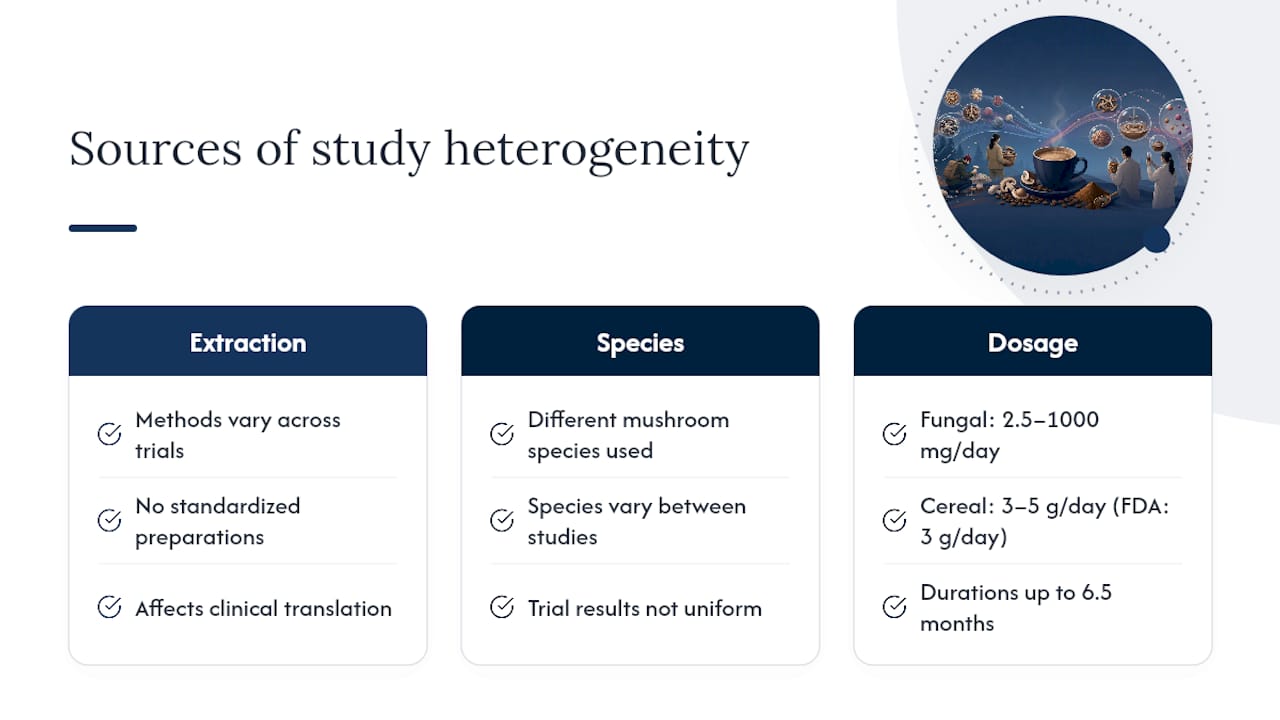
Quick comparison: Cereal beta glucan trials for heart health work in the gram range (3 to 5 g/day). Fungal beta glucan trials for immune support work in the milligram range, from 2.5 mg up to 1000 mg daily, sometimes sustained for 6.5 months.
Beyond cholesterol, beta glucans appear to feed beneficial gut bacteria, which then produce short-chain fatty acids linked to lower systemic inflammation and better postprandial glucose control. Researchers describe this largely as a prebiotic effect working through the gut-immune axis rather than a direct pharmacological one.
The honest caveat here: preparations across studies are wildly heterogeneous. Extraction method, mushroom species, and dosage all vary from trial to trial, and a 2020 review of beta glucan’s metabolic and immunomodulatory properties points out that clinical translation still needs standardized preparations before anyone can make blanket claims. Promising, not proven across the board.
How Does Roasting Affect Beta Glucan Content in Your Cup?
Here’s the detail most product pages skip entirely: the beta glucan content in raw mushroom material is not what ends up in your mug. A 2020 processing study on functional Cordyceps coffee measured raw Cordyceps at 3.79% beta glucan by weight.
Interestingly, the same study found the brewed coffee retained higher antioxidant activity (82.21% scavenging capacity versus 62.89% in the raw material), so processing isn’t purely a story of loss. Some compounds actually become more active once heat and extraction change their chemical structure.
A few steps in production drive most of the variability:
- Roasting temperature and duration — higher heat for longer periods degrades more polysaccharide structure.
- Extraction and infusion method — how the mushroom compound is combined with coffee (pre-brew infusion versus post-brew blending) changes final concentration.
- Particle size and filtration — finer grinds extract more, but filtration can strip solids back out.
A newer, still experimental approach involves culturing mushroom mycelium directly onto green coffee beans before roasting, an attempt to let the fungal structure integrate with the bean itself rather than sit on top of it. This method hasn’t been validated in published clinical work, so treat it as an interesting production trend rather than a proven improvement.
Pro Tip: If a brand won’t tell you whether its beta glucan figure is measured from the raw mushroom or the finished, brewed product, assume it’s the raw number, and assume your actual cup delivers less.
How Do You Read a Label and Dose This Sensibly?
Most mushroom coffee labels tell you almost nothing useful. Here’s what actually matters when you’re comparing products:
- Check the source species and part used. Fruiting body extracts generally carry higher, more studied concentrations of beta glucan than mycelium grown on grain, so look for that distinction on the label.
- Look for a specific number. A percentage or milligram figure per serving lets you compare against trial ranges instead of trusting a vague “immune support” claim.
- Confirm third-party lab testing. Independent verification is the only way to know the label number reflects the finished product, not the raw ingredient.
- Check for fillers. Maltodextrin, rice flour, and cheap starches are common bulking agents that dilute the actual mushroom content.
On dosing: fungal beta glucan trials generally run from 2.5 mg to 1000 mg daily, while cereal beta glucan guidance for heart health sits at 3 grams per day. A typical serving of mushroom coffee will land somewhere in that fungal milligram range, not anywhere close to the cereal gram threshold, so don’t expect cholesterol-lowering effects on the scale of an oatmeal-based trial.
Tolerability across the reviewed trials was generally good, but if you’re managing an autoimmune condition, taking immunosuppressants, or pregnant, talk to your doctor before adding a new supplement, including mushroom coffee, to your routine. Effects tend to be cumulative rather than immediate. You’re building immune resilience and metabolic support over weeks, not chasing a jitter-free buzz in the next twenty minutes.
Why We Add Beta Glucans to Every Cup of Emberk
We built Emberk around six functional mushrooms, Lion’s Mane, Chaga, Reishi, Turkey Tail, Maitake, and Cordyceps, using 100% fruiting body extracts because that’s where the research-backed beta glucan concentrations actually live. No mycelium-on-grain filler, no starch bulking agents. Just the part of the mushroom the clinical trials were studying.
Customers tell us they notice steadier focus through the afternoon and fewer of the crash-and-anxiety cycles that come with regular coffee, though we’re always upfront that those are individual reports, not clinical outcomes. What we can control is the sourcing and testing. Every batch goes through lab verification to confirm what’s actually in the cup, not just what’s on the label, because we know firsthand how much roasting and extraction can erode a mushroom’s functional content if you’re not paying attention.
— Emberk
Ready to Try Beta Glucan Coffee for Yourself?
If you’ve read this far, you already know the difference between a coffee that lists “mushroom blend” and one that actually tells you what’s inside. Emberk’s Mushroom Coffee uses fruiting body extracts from all six species, lab tested, with no fillers or added sugar, so the beta glucan content on the label reflects what survived processing, not just what went in raw.
If you’re new to functional coffee, start with a single bag of the core Mushroom Coffee blend or grab the Mushroom Coffee Travel Pack to test single servings before committing to a full bag. Watch how your energy and focus feel over two to three weeks rather than judging it after one cup, since the immune and metabolic effects documented in the research build gradually. Prefer a creamier format? The Mushroom Latte delivers the same six-mushroom base in a dairy-free, coconut-milk blend. If you’re on medication or managing a chronic condition, check with your healthcare provider before adding any new mushroom supplement to your routine, then place your first order and see how your mornings change.
This article is general information, not a substitute for advice from a qualified doctor. Consult a qualified healthcare professional about your own circumstances before acting on anything here.
Sources
Oats and barley remain the most concentrated everyday sources of cereal beta glucan, delivering the 3 to 5 gram doses used in cholesterol trials in a single bowl. A cup of mushroom coffee, by contrast, is playing an entirely different game. It’s delivering fungal beta glucan in the milligram range, aimed at immune modulation rather than lipid reduction.
Baker’s yeast supplements and standalone mushroom extract capsules can concentrate fungal beta glucan more efficiently than a beverage, simply because nothing gets lost to brewing or filtration. Coffee’s advantage isn’t raw concentration. It’s that you’re already drinking coffee every morning, so a functional version replaces a habit instead of adding a new pill to your routine.
Barley and whole-grain products sit somewhere in the middle: less potent per serving than a concentrated oat bran product, but still meaningfully higher in cereal-type beta glucan than any coffee-based drink will ever be. If your primary goal is cholesterol management, a bowl of oatmeal or a barley-based product will get you into effective gram-level territory faster than any cup of coffee.
The practical takeaway: use mushroom coffee for the immune and gut-support angle, and lean on whole grains if cholesterol is your main target. Trying to get both from one beverage sets unrealistic expectations for what a cup can deliver.
- Effects of fungal beta‑glucans on health – systematic review (PubMed)
- β‑Glucan metabolic and immunomodulatory properties — PMC (2020)
- Health benefits of beta-glucan — WebMD
- Dose-response study combining oat beta-glucan and green coffee hydroxycinnamates (2020)
FAQ
Does coffee naturally contain beta glucans?
No, regular coffee beans don’t contain beta glucans. The compound comes from added mushroom extract, like Chaga or Cordyceps, which is why the label should specify the mushroom source and extraction type rather than just “mushroom blend.”
How much beta glucan is in a typical cup of mushroom coffee?
It varies widely by brand and processing method, but fungal beta glucan trials generally use doses between 2.5 mg and 1000 mg daily. A processing study on Cordyceps coffee found roasting and brewing reduced beta glucan content from 3.79% in the raw mushroom to 2.03% in the finished beverage.
Can beta glucan coffee replace regular coffee for energy?
Not exactly. Emberk and similar functional coffees use lower to moderate caffeine, so you get steadier energy without the acute jolt or crash of a standard high-caffeine brew. The benefit is sustained clarity over hours, not the instant alertness spike of traditional coffee.
Is beta glucan coffee safe to drink daily?
Fungal beta glucan supplementation has been shown to be generally well tolerated across dozens of clinical trials. Still, anyone with an autoimmune condition, on immunosuppressants, or pregnant should check with a doctor before making it a daily habit.
How much does Emberk’s mushroom coffee cost?
Emberk’s Mushroom Coffee is priced at $34 for a one-time purchase, with a $25 Travel Pack option available for first-time buyers who want to sample it in single servings.
0 comments