

Turkey tail coffee can support immune function and gut health, but the evidence for those benefits comes almost entirely from concentrated mushroom extracts, not from a daily beverage. The active compounds behind turkey tail’s reputation, PSK (polysaccharide-K) and PSP (polysaccharide-peptide), have real clinical backing as adjuvant cancer therapy in Japan, where trial doses run far higher than what’s brewed into a morning cup.
That gap matters. A cup of turkey tail coffee is a reasonable daily habit for general wellness, but it’s not a substitute for clinical-grade dosing if you’re managing a specific health condition.
Here’s what to do with that information:
- Want general immune and gut support? A quality mushroom coffee made from real fruiting bodies is a sensible daily choice.
- Managing a serious health condition? Talk to your clinician about therapeutic dosing rather than relying on a beverage.
Quick fact: Clinical trials using PSK for cancer support in Japan have run for decades as an approved adjuvant, according to the NCBI’s PDQ cancer summary, while beverage-grade turkey tail products have no equivalent trial history behind them.
Key Takeaways
Turkey tail coffee offers realistic, modest immune and gut support for healthy adults, but its clinical reputation rests on concentrated extract doses that a daily beverage cannot replicate.
| Point | Details |
|---|---|
| PSK and PSP drive the science | These polysaccharides show immune-modulating effects in trials, but always at concentrated extract doses. |
| Gut benefits are prebiotic, not dramatic | Beta-glucans feed beneficial bacteria like Bifidobacterium, with effects building gradually over consistent daily use. |
| Beverage doses are not clinical doses | Cancer-support trials used pharmaceutical-grade PSK; no beverage has matched that dosing or trial history. |
| Check labels before buying | Look for fruiting-body sourcing, hot-water extraction, and third-party lab testing to judge product quality. |
| Emberk matches the quality checklist | Its turkey tail coffee uses 100% fruiting-body sourcing and lab testing, fitting the label criteria this article outlines. |
Table of Contents
- Turkey Tail Coffee Benefits for Immune Function: What the Trials Actually Show
- Does Turkey Tail Support Gut Health and the Microbiome?
- Cognitive Clarity, Antioxidants, and How Turkey Tail Plays With Caffeine
- Extract Doses vs. Your Morning Cup: Where the Real Evidence Gap Lives
- Turkey Tail Side Effects, Safety, and Who Should Talk to a Doctor First
- Reading Mushroom Coffee Labels: What Fruiting Body and Extract Ratios Actually Mean
- How Emberk’s Turkey Tail Coffee Matches the Evidence-Based Checklist
- Turkey Tail in Traditional Medicine: A Long History Before the Clinical Trials
- Beyond PSK and PSP: The Other Compounds Doing Quiet Work
- Turkey Tail Coffee vs. Other Medicinal Mushroom Coffees
- How Much Turkey Tail Coffee Should You Drink, and How Often?
- What This Guide Gets Right That Most Mushroom Coffee Marketing Doesn’t
- Ready to Try a Turkey Tail Coffee Built Around the Evidence?
- Sources
- FAQ
Turkey Tail Coffee Benefits for Immune Function: What the Trials Actually Show
Turkey tail’s immune reputation rests on two polysaccharides: PSK and PSP. Both compounds interact with immune cells in ways researchers describe as immunomodulatory, meaning they help calibrate immune activity rather than simply cranking it up. Lab and clinical research links them to increased natural killer (NK) cell activity, enhanced T-cell response, and shifts in cytokine signaling, the chemical messages immune cells use to coordinate a response.
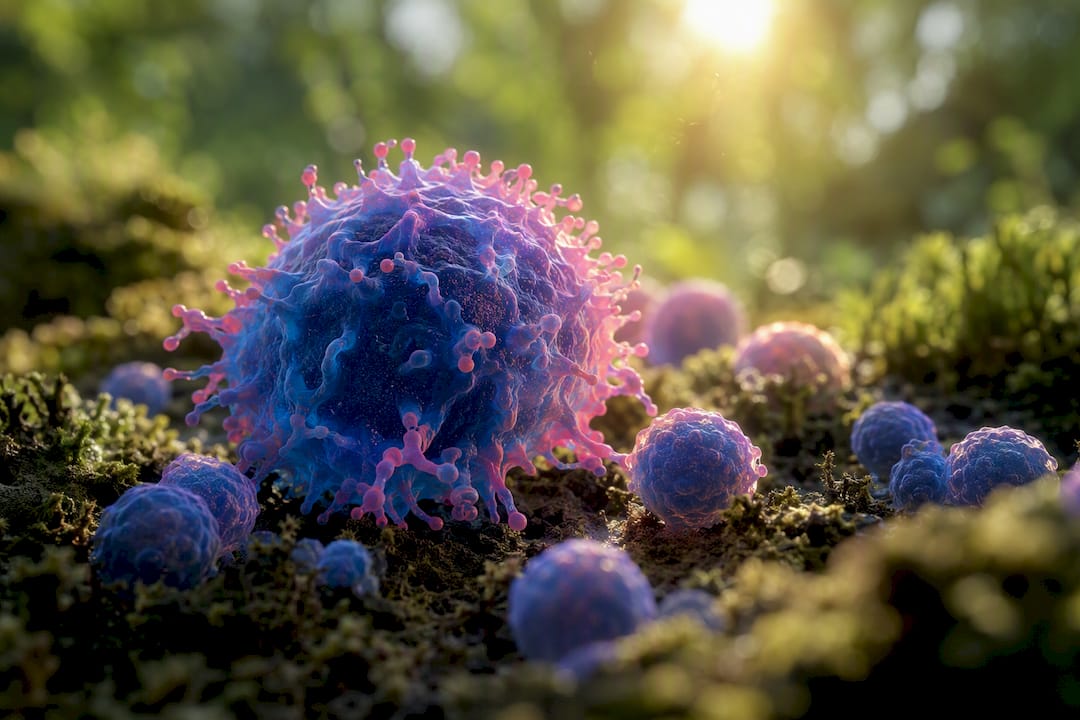
The clinical evidence is genuinely impressive in one specific context. Multiple randomized trials, many run in Japan, tested PSK alongside standard chemotherapy for cancers including gastric and colorectal cancer, with several showing improved survival outcomes when PSK was added to treatment. A broader review of turkey tail’s constituents confirms the immunomodulatory and antioxidant mechanisms behind those results.
Here’s the catch you need to hold onto:
- Those trials used pharmaceutical-grade, concentrated PSK extract, not brewed mushroom coffee.
- Doses were standardized and given under medical supervision, often for months or years.
- A daily cup of mushroom coffee delivers a fraction of that concentration, and the exact amount varies by brand.
Quick fact: PSK is an approved adjuvant cancer therapy in Japan, per the PDQ cancer information summary, but that approval applies to a specific extract dose, not to any consumer beverage.
Does Turkey Tail Support Gut Health and the Microbiome?
Turkey tail contains beta-glucans, a type of fiber-like polysaccharide that beneficial gut bacteria can ferment and feed on. Think of beta-glucans as groceries you’re delivering directly to the microbes you actually want thriving in your gut.
Human intervention studies testing PSP and PSK have found measurable shifts in gut composition, including increases in Bifidobacterium and Lactobacillus populations, the same bacterial families associated with better digestion and a sturdier gut lining. That’s a genuine prebiotic effect, not marketing language.
What should a coffee drinker actually expect?
- A single cup likely offers a mild, gradual prebiotic nudge rather than a dramatic gut overhaul.
- Consistency probably matters more than any one serving. Daily intake over weeks is more likely to move the needle than an occasional cup.
- Concentrated extract studies used doses well above what’s in a beverage, so treat coffee-level effects as supportive, not curative.
Cognitive Clarity, Antioxidants, and How Turkey Tail Plays With Caffeine
Turkey tail carries phenolic compounds and flavonoids, plant-derived antioxidants that work like tiny fire extinguishers, neutralizing the oxidative “sparks” that damage cells over time. The Springer review of Trametes versicolor’s phytochemistry confirms these compounds show real antioxidant activity in lab settings.
Direct cognitive evidence for turkey tail specifically is thinner than for immune or gut effects. Most cognitive claims lean on the antioxidant mechanism and animal research rather than large human trials, so treat “brain benefits” as a reasonable hypothesis, not a settled fact.
Where turkey tail coffee does something noticeable is in how it interacts with caffeine. Because mushroom coffee often runs lighter on caffeine than a standard brew, many drinkers describe steadier energy without the jittery spike and crash of regular coffee.
Pro Tip: If afternoon crashes are your main complaint about coffee, the caffeine dose matters more than the mushroom blend itself. Look for products that state their caffeine content per serving, not just “less caffeine.”
Extract Doses vs. Your Morning Cup: Where the Real Evidence Gap Lives
The single biggest thing to understand about turkey tail research is this: the trials that made it famous used concentrated, standardized extracts, not beverages. PSK trials in Japan typically involved daily doses in the range of grams of purified extract, given under an oncologist’s supervision, often as a multi-year regimen alongside chemotherapy. That’s a pharmaceutical protocol, not a coffee habit.
“Much of the supportive research comes from studies on mushrooms or concentrated extracts rather than consumer beverages,” notes an explainer from Mayo Clinic Press, a distinction that separates clinical promise from marketing enthusiasm.
Regulatory status reinforces that gap. PSK has decades of approved use as an adjuvant cancer therapy in Japan, but neither the FDA nor Health Canada has approved turkey tail, PSK, or PSP as a cancer treatment in North America. That doesn’t mean the compound lacks promise. It means the regulatory bar for a therapeutic claim is far higher than the bar for a wellness beverage.
So how do you judge whether a mushroom coffee product is even in the right neighborhood as those trial-grade extracts? Run it through this checklist:
- Check for dose labeling. A product that states milligrams of extract per serving, or a specific extraction ratio, is being more transparent than one that just lists “turkey tail” in the ingredients.
- Look for third-party lab testing. Independent verification of polysaccharide content or contaminant screening signals a brand willing to back its claims.
- Confirm sourcing transparency. Brands that specify fruiting-body sourcing and extraction method give you more confidence than vague sourcing language.
- Match your goal to the dose. General wellness maintenance is a reasonable use for a beverage; managing a diagnosed condition calls for a conversation with your doctor about extract-grade options.
None of this means mushroom coffee is pointless. It means you should walk in with realistic expectations: a supportive daily habit, not a substitute for clinical care.
Turkey Tail Side Effects, Safety, and Who Should Talk to a Doctor First
Turkey tail has a long safety record as a food-grade mushroom, and most people tolerate it well. Reported side effects tend to be mild and digestive: bloating, gas, or darker stools as your gut adjusts to the added fiber and polysaccharides. Allergic reactions are uncommon but possible, particularly for people with existing mold or mushroom sensitivities.
Certain groups should check with a clinician before adding turkey tail coffee to their routine, since immune-modulating compounds can interact with existing conditions or medications:
- People with autoimmune diseases like lupus or rheumatoid arthritis, since immune stimulation could theoretically worsen symptoms.
- Organ transplant recipients and anyone on immunosuppressant medication, because turkey tail’s immune-activating effects may work against those drugs’ purpose.
- People currently undergoing chemotherapy, who should coordinate any mushroom supplement with their oncology team rather than adding it independently.
- Pregnant or breastfeeding people, given the lack of safety data in these groups specifically.
Two drug interaction categories deserve particular attention. Anticoagulants (blood thinners) may interact with turkey tail’s effects on platelet activity, and immunosuppressants carry the same caution flagged above for transplant patients. If you’re combining turkey tail coffee with other supplements, particularly other medicinal mushrooms or herbal immune boosters, introduce one new product at a time so you can actually track how your body responds.
Pro Tip: If you’re on any prescription medication, snap a photo of the supplement facts panel and bring it to your next appointment. It takes thirty seconds and removes the guesswork for your pharmacist or doctor.
Reading Mushroom Coffee Labels: What Fruiting Body and Extract Ratios Actually Mean
Not all turkey tail products are created equal, and the label tells you most of what you need to know before you buy.
Label literacy checklist:
- Fruiting body vs. mycelium on grain. The fruiting body is the actual mushroom; mycelium grown on grain (like rice or oats) is the root-like network, often bulked up with starchy filler. Fruiting-body extracts generally deliver a more concentrated, verifiable polysaccharide dose.
- “Hot-water extract” language. This extraction method pulls out beta-glucans and polysaccharides more effectively than a simple powder, since these compounds are better dissolved in hot water than cold.
- Extract ratios. A “10:1 extract” means ten pounds of raw mushroom were concentrated into one pound of final product. Higher ratios generally mean more concentrated actives per gram.
- “Standardized to X% polysaccharide.” This is the closest thing to a dose guarantee on a consumer label, and its absence should make you a little more skeptical.
For daily use, start with one serving and pay attention to digestion over the first week or two, since that’s when most people notice any gut adjustment. If you’re using a beverage for general wellness, a cup or two per day is a reasonable range; if you’re pursuing therapeutic goals, that’s a conversation for extract-grade supplements under medical guidance, not your coffee mug.
- Instant powders dissolve fast but rely on the manufacturer’s extraction quality.
- Ground mushroom coffee blends benefit from a longer steep, since hot water extraction for five to ten minutes pulls out more polysaccharide content than a quick stir.
- Capsules offer the most predictable dosing but skip the ritual (and caffeine) that draws people to a mushroom coffee habit in the first place.
How Emberk’s Turkey Tail Coffee Matches the Evidence-Based Checklist
Every criterion in that label checklist above exists because sourcing and extraction quality determine whether a product can plausibly deliver the compounds researchers actually studied. Emberk builds its coffee around that standard rather than around something else.
Emberk’s blend combines organic coffee with six functional mushrooms, including turkey tail, Lion’s Mane, Chaga, Reishi, Maitake, and Cordyceps, all sourced from 100% fruiting bodies rather than mycelium-on-grain fillers. The company lab-tests its mushroom content and skips added sugars, artificial ingredients, and fillers entirely.
- Fruiting-body sourcing: matches the label-literacy priority of choosing concentrated mushroom over grain-based mycelium.
- Lab testing: addresses the third-party verification point on the earlier checklist.
- No fillers, dairy-free formulation: keeps the focus on the mushroom content itself rather than diluted additives.
- Over a million cups served: reflects consistent demand from health-conscious drinkers looking for exactly this profile.
If you want to see how the sourcing and testing details break down further, Emberk’s purchase guide walks through what to check on any mushroom coffee label, not just its own.
Turkey Tail in Traditional Medicine: A Long History Before the Clinical Trials
Long before PSK made it into a Japanese hospital formulary, turkey tail (Trametes versicolor) held a place in traditional Chinese and Japanese herbal medicine, where it was known as yun zhi and kawaratake respectively. Traditional practitioners used it as part of broader formulas intended to support what they described as vital energy and resilience against illness, decades before anyone had isolated a single polysaccharide.
Turkey tail also appears in North American ethnobotanical records, though with a smaller footprint than in East Asian herbalism. Its fan-shaped, multicolored cap, which gives the mushroom its name, made it easy to identify in the wild, growing on dead or dying hardwood trees across temperate forests worldwide.
What’s notable is how directly this traditional use connects to the modern science. Japanese researchers isolated PSK from Coriolus versicolor (an older name for the same species) in the 1970s specifically because of the mushroom’s established reputation in folk medicine, then spent decades running it through the same clinical trial process used for pharmaceutical drugs. That’s a rare case where traditional use and modern clinical research arrived at the same conclusion independently: this mushroom does something meaningful for immune function.
The lesson for today’s mushroom coffee drinker isn’t that tradition proves efficacy. It’s that turkey tail’s modern reputation didn’t come from nowhere. Centuries of use pointed researchers toward a compound worth studying seriously, and that compound turned out to hold up under trial conditions rare for a fungus.
Beyond PSK and PSP: The Other Compounds Doing Quiet Work
PSK and PSP get most of the attention, but turkey tail’s chemical profile runs deeper than two headline polysaccharides. The comprehensive Springer review catalogs a broader set of active constituents that likely contribute to the mushroom’s effects, even if they haven’t landed in a major clinical trial yet.
Beta-glucans deserve their own mention separate from PSK/PSP, since they’re structural polysaccharides that interact with immune cell receptors independently and also feed gut bacteria, doing double duty for both the immune section and the gut section of this article. Triterpenes, a class of compounds also found in mushrooms like reishi, show antimicrobial and potentially anti-inflammatory activity in lab research. Phenolic compounds and flavonoids round out the antioxidant side of turkey tail’s profile, the same fire-extinguisher-style molecules discussed earlier for their role in fighting oxidative stress.
Enzymes are the less-discussed category. Turkey tail produces laccases and other enzymes studied mainly for industrial applications like breaking down lignin in wood, but researchers are increasingly curious whether these enzymatic properties have any downstream biological relevance in the human body.
None of these secondary compounds carry PSK’s clinical trial history. But their presence explains why turkey tail’s benefits are described as broad-spectrum rather than single-mechanism. You’re not getting one active ingredient. You’re getting a mushroom with several plausible avenues of biological activity, some well-studied, some still catching up.
Turkey Tail Coffee vs. Other Medicinal Mushroom Coffees
Turkey tail earns its place in a mushroom coffee blend primarily for immune and gut support, but it’s rarely the only mushroom doing work in a well-formulated cup. Understanding how it complements, rather than competes with, other functional mushrooms helps set realistic expectations.
Lion’s Mane is typically included for cognitive focus and mental clarity, an effect linked to nerve growth factor support rather than the immune pathways turkey tail works through. Cordyceps is prized for energy and stamina, often marketed toward people wanting an athletic edge, while Reishi leans toward stress support and sleep quality, sometimes described as calming rather than energizing. Chaga brings its own strong antioxidant profile, in some ways overlapping with turkey tail’s phenolic content but through a distinct set of compounds.
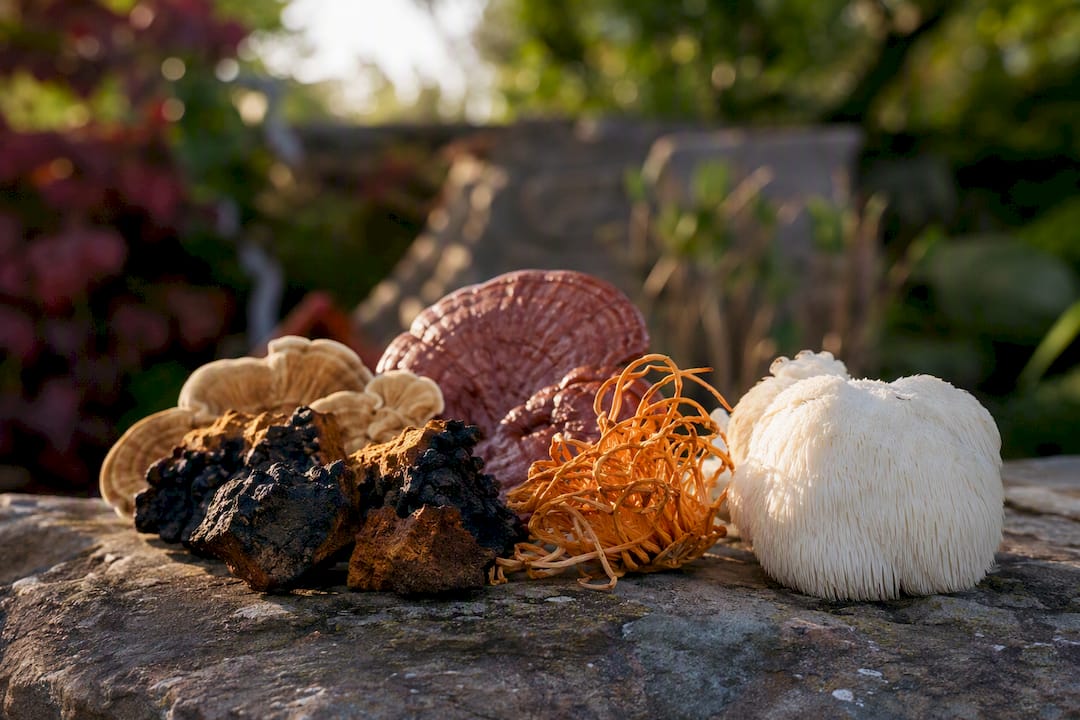
Turkey tail’s specific contribution is the immune and gut axis: NK cell support, cytokine modulation, and the prebiotic effect on Bifidobacterium and Lactobacillus discussed earlier. A single-mushroom coffee built only around turkey tail would skip the cognitive and stress-support benefits other mushrooms bring, which is why most quality blends, including Emberk’s, combine several mushrooms rather than isolating one.
If your primary goal is gut and immune resilience, turkey tail should be a headline ingredient on the label. If you’re chasing focus or stress relief specifically, check that the blend also includes Lion’s Mane or Reishi in a meaningful amount, not just as a trace ingredient at the bottom of the list.
How Much Turkey Tail Coffee Should You Drink, and How Often?
There’s no single, research-established dose for turkey tail coffee, because the clinical trials that established PSK’s benefits used concentrated pharmaceutical extract, not a beverage format. That gap means dosing guidance for coffee has to stay conservative and practical rather than clinical.
For general wellness use, one to two cups per day is a reasonable range for most healthy adults, taken consistently rather than sporadically. The gut and immune effects discussed earlier likely build gradually with regular intake over weeks, not from a single serving. If you’re new to mushroom coffee, starting with one cup daily for the first week lets you gauge digestive tolerance before increasing frequency.
Consistency matters more than quantity here. A cup every day for a month is more likely to produce a noticeable effect than an occasional cup consumed inconsistently, simply because the prebiotic and immune-modulating mechanisms need sustained exposure to shift anything measurable.
If you’re considering turkey tail for a specific therapeutic purpose, whether that’s cancer support, an autoimmune condition, or another diagnosed issue, beverage-level dosing isn’t the right tool for that job. That calls for a conversation with your doctor about concentrated extract options dosed and monitored clinically, the same category of product used in the trials that made PSK famous in the first place.
What This Guide Gets Right That Most Mushroom Coffee Marketing Doesn’t
The honest verdict here is uncomfortable for an industry that loves to cite PSK studies without mentioning the dose gap. Turkey tail’s clinical data is real and it’s strong within its actual context: concentrated, standardized extract, used as an adjuvant, monitored by a physician. Stretching that data to imply a daily latte will do the same thing is where most marketing overreaches.
What conventional advice gets wrong is treating “clinically studied” and “clinically dosed” as interchangeable. They’re not. A product can contain a genuinely researched compound and still deliver a fraction of the dose that produced the research results. That’s not a reason to skip mushroom coffee. It’s a reason to stop expecting it to behave like medicine.
What should you prioritize first? Sourcing transparency over marketing language. A brand that tells you it uses fruiting bodies, states its extraction method, and backs it with lab testing is giving you the closest thing to a trustworthy proxy for trial-relevant compounds. That’s a more useful filter than any specific health claim on the box.
Ready to Try a Turkey Tail Coffee Built Around the Evidence?
Everything in this guide points toward one practical filter: fruiting-body sourcing, transparent labeling, and real lab testing separate a mushroom coffee worth drinking from one riding on vague health claims. Emberk built its coffee around exactly that standard, blending organic coffee with turkey tail and five other functional mushrooms, all sourced from 100% fruiting bodies with no fillers or artificial additives.
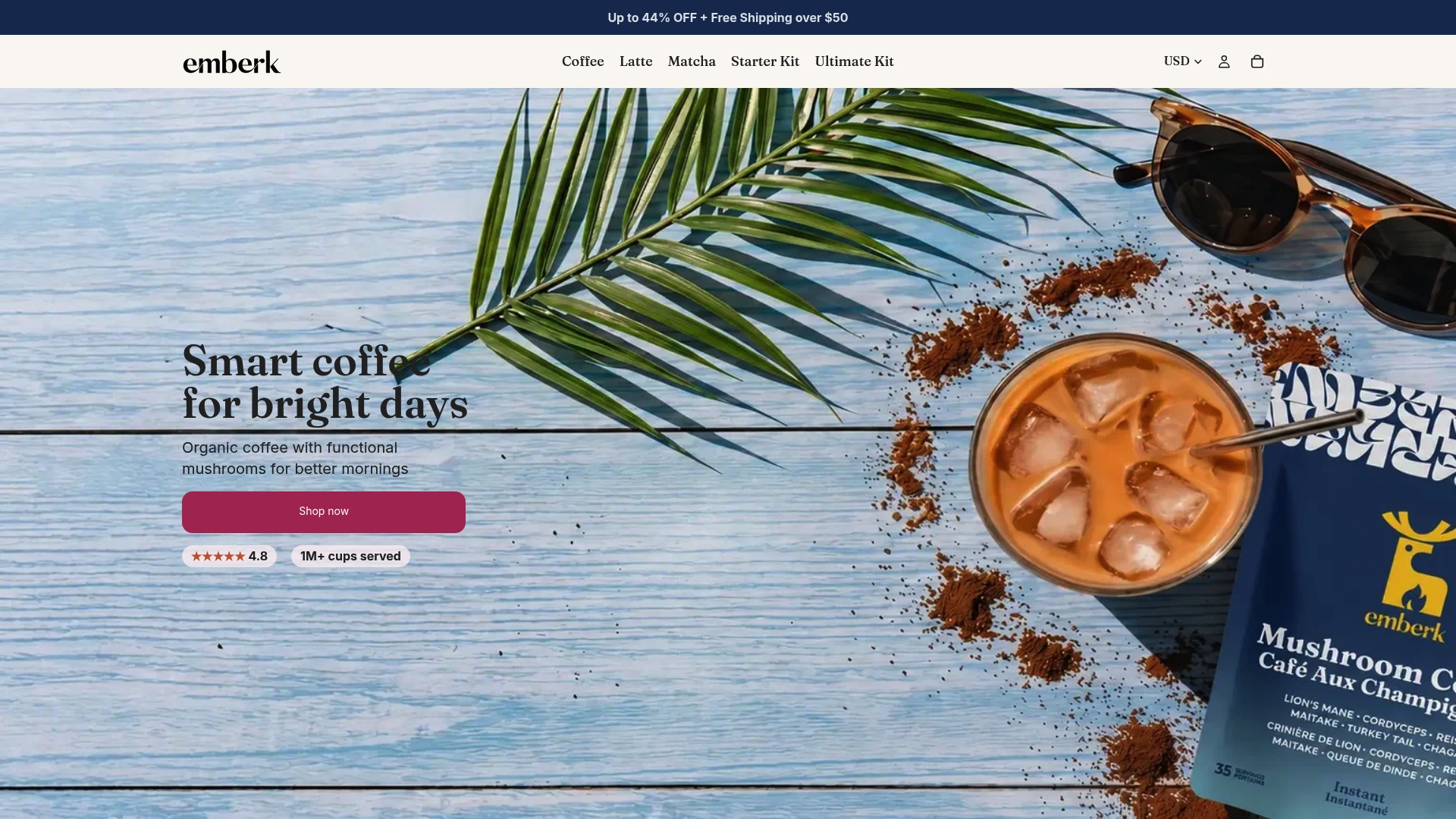
Every batch is lab-tested, so you’re not guessing whether the turkey tail on the label actually shows up in the cup. The blend also includes Lion’s Mane for focus and Cordyceps for steady energy, which means you’re getting the gut and immune support this article covers alongside the cognitive and energy benefits other mushrooms bring. With over a million cups served, it’s a formulation health-conscious drinkers keep coming back to for calm, jitter-free mornings.
If you want to start simple, try Emberk’s mushroom coffee and see how a fruiting-body-based blend fits into your routine. Prefer something creamier? The mushroom latte delivers the same six-mushroom formula in a different format. Either way, you’re choosing a product built to match the label standards this article just walked you through.
Sources
- Medicinal Mushrooms (PDQ®) - PDQ Cancer Information Summaries - NCBI Bookshelf
- A comprehensive review on the health benefits, phytochemicals, and enzymatic constituents for potential therapeutic and industrial applications of Turkey tail mushrooms | Springer
- Can fungi flavor better health? What to know about mushroom coffee - Mayo Clinic
- Turkey Tail Mushroom Benefits: 8 Science-Backed Reasons to Try It | The Healthy RD
FAQ
Is it safe to take turkey tail every day?
For most healthy adults, daily turkey tail intake through food-grade products like mushroom coffee is well tolerated, with mild digestive upset being the most commonly reported issue. Anyone with an autoimmune condition or on immune-affecting medication should check with a clinician before making it a daily habit.
Who should avoid turkey tail mushroom?
People with autoimmune diseases, organ transplant recipients, those on immunosuppressants, pregnant or breastfeeding people, and anyone undergoing chemotherapy should consult a doctor before use, since turkey tail’s immune-modulating effects can interact with these conditions and treatments.
Is it safe to drink mushroom coffee every day?
Daily mushroom coffee is generally safe for healthy adults, and products like Emberk’s blend are formulated with fruiting-body sourcing and lab testing specifically to support that kind of consistent, everyday use. Start with one cup and adjust based on how your digestion responds.
What should you not mix with turkey tail?
Turkey tail may interact with anticoagulants (blood thinners) and immunosuppressant medications, so combining it with either without medical guidance isn’t advisable. If you’re layering multiple mushroom supplements together, introduce them one at a time to track how your body reacts.
Does turkey tail coffee actually boost the immune system like the trials suggest?
The trials showing immune benefits used concentrated PSK/PSP extract at doses far higher than what’s in a beverage, so mushroom coffee likely offers milder, supportive immune benefits rather than the clinical-grade effects reported in cancer adjuvant trials.
0 comments