

Yes, you can absolutely put reishi in coffee, and the result is calmer, more focused energy rather than a caffeine-high cup. Reishi (Ganoderma lucidum) doesn’t cancel out caffeine; it tends to take the edge off the jittery, anxious spike that some people experience with regular coffee, leaving you with what many describe as “smooth alertness.” Here’s what to know before you try it:
- What to expect: Earthy flavor, slightly bitter, and a gentler energy curve compared to plain coffee.
- What it won’t do: Remove caffeine entirely. Mushroom coffee blends still contain caffeine unless you choose a decaf base.
- Safety note first: If you’re pregnant, breastfeeding, taking blood thinners or immunosuppressants, or managing a liver condition, talk to your clinician before adding reishi to your routine. Healthline notes that excessive intake has been linked to rare cases of liver toxicity, making moderation and quality sourcing genuinely important.
Key Takeaways
Reishi in coffee delivers calmer, more balanced energy by pairing caffeine with adaptogenic compounds, but product quality determines whether you’re getting meaningful amounts of those compounds or just a pleasant cup.
| Point | Details |
|---|---|
| Reishi doesn’t remove caffeine | It may reduce jitters and smooth the energy curve, but mushroom coffee still contains caffeine unless decaf-based. |
| Fruiting body beats mycelium | Always choose products sourced from fruiting bodies, not myceliated grain, for meaningful beta-glucan and triterpene content. |
| Safety has real limits | People on blood thinners, immunosuppressants, or with liver conditions should consult a clinician before use. |
| Dose and extraction method matter | Start at ½ tsp per cup; look for dual-extracted products with declared beta-glucan levels and a published COA. |
| Emberk meets the quality bar | Emberk’s mushroom coffee uses fruiting body, dual extraction, and third-party lab testing across six functional mushrooms. |
Table of Contents
- What reishi coffee is and how it actually gets made
- What the science actually supports about reishi coffee benefits
- Who should be cautious and what the safety research shows
- How to read reishi coffee labels and spot the real thing
- How to use reishi in coffee: timing, recipes, and mixing tips
- Reishi’s long history: from ancient remedy to your morning cup
- How reishi coffee compares to other mushroom coffees and herbal alternatives
- What most reishi coffee guides get wrong
- Emberk’s mushroom coffee is worth trying if quality matters to you
- Sources
- FAQ
What reishi coffee is and how it actually gets made
Reishi is a woody, fan-shaped mushroom used in East Asian medicine for centuries. In functional beverages, it shows up as a powder or extract blended into coffee, cacao, or herbal bases. Think of it less like a spice you sprinkle in and more like a concentrated ingredient that goes through real processing before it reaches your cup.
Common product forms you’ll see:
- Powdered whole mushroom: Dried and ground fruiting body; the least concentrated form.
- Single-extract powder: Water extraction pulls out beta-glucans (the immune-supporting polysaccharides). Good, but incomplete.
- Dual-extract powder: Water plus alcohol extraction captures both beta-glucans and triterpenes (the compounds linked to stress adaptation and liver support). This is the gold standard for reishi.
- Instant mushroom coffee blends: Pre-mixed powder combining coffee, reishi extract, and often other functional mushrooms. Just add hot water.
- Coffee-alternative blends: Chicory or dandelion base with reishi for a caffeine-light option.
The production path matters: fruiting body is harvested, dried, then extracted. Dual extraction, as PMC research on bioactive compounds confirms, captures both the water-soluble beta-glucans and the alcohol-soluble triterpenes that give reishi its distinctive profile. Mycelium grown on grain skips much of that richness and adds starchy filler to the final product.
Taste-wise, reishi is earthy and bitter, somewhere between dark cocoa and forest floor. Most blends mask it with cacao, cinnamon, or oat milk, and that combination works surprisingly well. For coffee lovers who enjoy a chocolatey, roasty flavor profile, a reishi blend with cacao powder can feel like a natural extension of what they already love.
What the science actually supports about reishi coffee benefits
Here’s where we need to be honest with you, because the marketing often runs ahead of the evidence. Reishi contains two primary bioactive compound classes: beta-glucans, which act as modulators of the immune system (think of them as gentle coaches for your immune cells), and triterpenes, which have shown anti-inflammatory and adaptogenic effects in preclinical studies. The PMC review on medicinal mushroom bioactive compounds describes these mechanisms in detail, but most of the underlying research involves whole mushrooms or concentrated extracts, not the low-dose blended coffee products on store shelves.
Here’s a practical breakdown of common claims and how the evidence stacks up:
| Claim | Evidence Strength | What the Research Actually Shows |
|---|---|---|
| Immune support | Moderate | Beta-glucans show immunomodulatory effects in preclinical and some human studies, but mostly at supplement doses |
| Reduced caffeine jitters | Weak to moderate | Plausible via adaptogenic effects; no direct RCTs on reishi-coffee blends specifically |
| Stress resilience | Moderate (preclinical) | Triterpenes show adaptogen-like effects in animal models; limited human trials |
| Better sleep/relaxation | Weak | Some traditional use evidence; clinical data in humans is thin |
| Sustained energy | Weak | Likely a secondary effect of fewer jitters, not a direct stimulant effect |
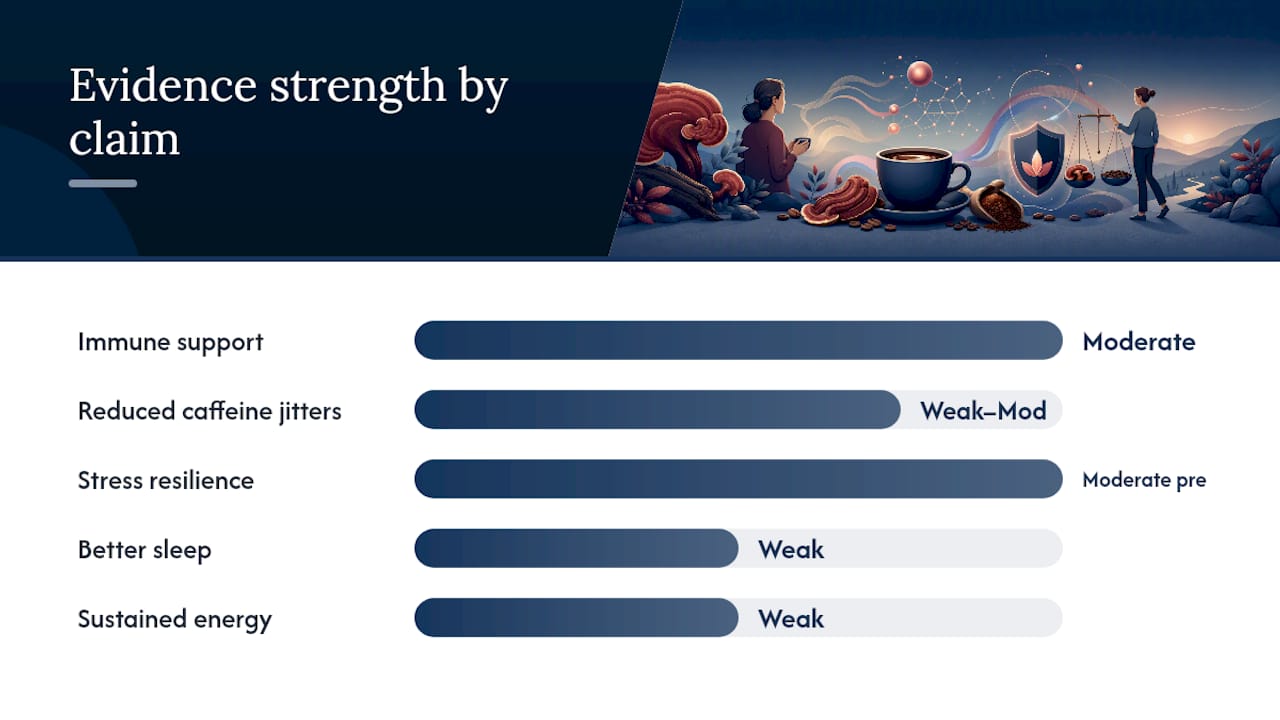
The Cleveland Clinic cautions that drying, extraction, and brewing can change or reduce active compounds, so benefits observed in whole-mushroom research may not carry over to a blended coffee product. A systematic review on PubMed similarly calls for higher-quality human trials before strong efficacy claims can be made.
The bottom line: reishi in coffee is promising, not proven. Product form, extract concentration, and processing quality all determine whether you’re getting meaningful amounts of bioactive compounds or just a pleasant-tasting cup with a mushroom label on it.
Who should be cautious and what the safety research shows
Reishi is well-tolerated by most healthy adults at moderate doses, but “generally safe” doesn’t mean “safe for everyone.” The News-Medical analysis documents case reports of liver toxicity associated with excessive reishi use, which is why quality, dose, and sourcing matter as much as the ingredient itself.
Common side effects to know:
- Digestive upset (nausea, loose stools), especially when starting out or taking higher doses
- Dry mouth or throat
- Dizziness in some individuals
- Allergic reactions, including skin rashes, in rare cases
Drug interactions to watch:
- Blood thinners (warfarin, aspirin therapy): Reishi may have mild anticoagulant properties; combining the two could increase bleeding risk.
- Immunosuppressants: Reishi’s immune-modulating effects could theoretically interfere with medications taken after organ transplants.
- Diabetes medications: Some evidence suggests reishi may lower blood sugar, which could compound the effect of insulin or oral hypoglycemics.
Who should avoid reishi or get medical clearance first:
- Pregnant and breastfeeding people (insufficient safety data)
- Anyone on immunosuppressive therapy or post-transplant medications
- People with known liver disease or elevated liver enzymes
- Children
Stop use and seek care if you notice: jaundice (yellowing of skin or eyes), dark urine, severe abdominal pain, or unexplained fatigue. These are potential signs of liver stress and warrant prompt medical attention.
How to read reishi coffee labels and spot the real thing
Product quality in the mushroom coffee space varies more than most categories. Two products can both say “reishi mushroom coffee” on the front and deliver wildly different amounts of actual bioactive compounds. UCLA Health explains that extraction and processing fundamentally change the chemistry of adaptogens, so the label details are your best guide to what’s actually inside.
What a trustworthy label includes:
- “Fruiting body” sourcing (not “mycelium” or “myceliated grain”): Fruiting body contains the concentrated bioactive compounds; mycelium on grain is mostly starch.
- Dual extraction noted: Look for water and alcohol extraction, which captures both beta-glucans and triterpenes.
- Declared beta-glucan percentage: A quality product states this; a vague “mushroom blend” with no percentages is a red flag.
- Third-party lab testing: Certificate of Analysis (COA) links for heavy metals and microbial testing are the standard. Check for GMP certification, NSF, or USP verification.
- Clear serving size and extract amount: You should be able to calculate roughly how much reishi you’re getting per cup.
Red flags to avoid:
- “Proprietary blend” with no species breakdown
- No COA or lab testing documentation
- “Mushroom powder” with no extraction method listed
- Extremely low price points that make quality sourcing implausible
Pro Tip: Before buying, search the brand name plus “COA” or “certificate of analysis.” Reputable brands publish these documents openly. If you can’t find one after a quick search, that’s your answer.
For a deeper look at what to check before purchasing, Emberk’s mushroom coffee buying guide walks through label evaluation in practical terms. Independent perspectives on food quality standards and testing practices can also help you understand what third-party certification actually means.
How to use reishi in coffee: timing, recipes, and mixing tips
Getting the most from reishi in coffee comes down to three things: starting with the right dose, mixing it properly so it doesn’t clump, and choosing the right base for the time of day.
Dosing to start:
- Begin with ½ teaspoon of a reishi extract powder per cup.
- Assess tolerance for 3–5 days before increasing.
- Most instant extract products work well at ½–1 teaspoon per serving; always check the label for the manufacturer’s recommended amount, since extract concentrations vary.
Two simple recipes:
Morning Balanced Cup
- 8 oz freshly brewed medium roast coffee (or one serving of instant mushroom coffee)
- ½ tsp dual-extract reishi powder
- 1 tsp cacao powder
- Splash of oat milk or coconut milk
- Optional: pinch of cinnamon
Blend everything in a small blender or frother for 20–30 seconds. The blending step is key; it emulsifies the powder and creates a smooth, latte-like texture instead of a gritty layer at the bottom.
Evening Decaf Wind-Down Cup
- 8 oz decaf coffee or chicory-dandelion brew
- ½ tsp reishi extract powder
- 1 tsp cacao powder
- Warm oat milk to taste
Same blending method. The decaf base lets reishi’s calming properties come through without caffeine working against them.
Timing guidance:
- Morning: Reishi with regular or low-caffeine coffee for calm alertness without the spike.
- Afternoon/evening: Switch to a decaf or herbal base to support relaxation rather than wakefulness.
Storage tips: Keep reishi powder in an airtight container away from heat and moisture. Most extracts stay potent for 12–24 months when stored properly; check the “best by” date and avoid leaving the bag open between uses.
Pro Tip: If you find the earthiness too strong, start with cacao as your base flavor. It’s naturally bitter in a complementary way and tends to round out reishi’s more medicinal edge far better than sweeteners alone.
Reishi’s long history: from ancient remedy to your morning cup
Reishi has been used in Chinese, Japanese, and Korean medicine for over 2,000 years, where it earned names like lingzhi (“spirit mushroom” in Mandarin) and reishi (Japanese for “supernatural mushroom”). Emperors and physicians prized it for longevity, immune strength, and calm vitality. It wasn’t a casual ingredient; it was rare, expensive, and reserved for royalty or serious medicinal use.
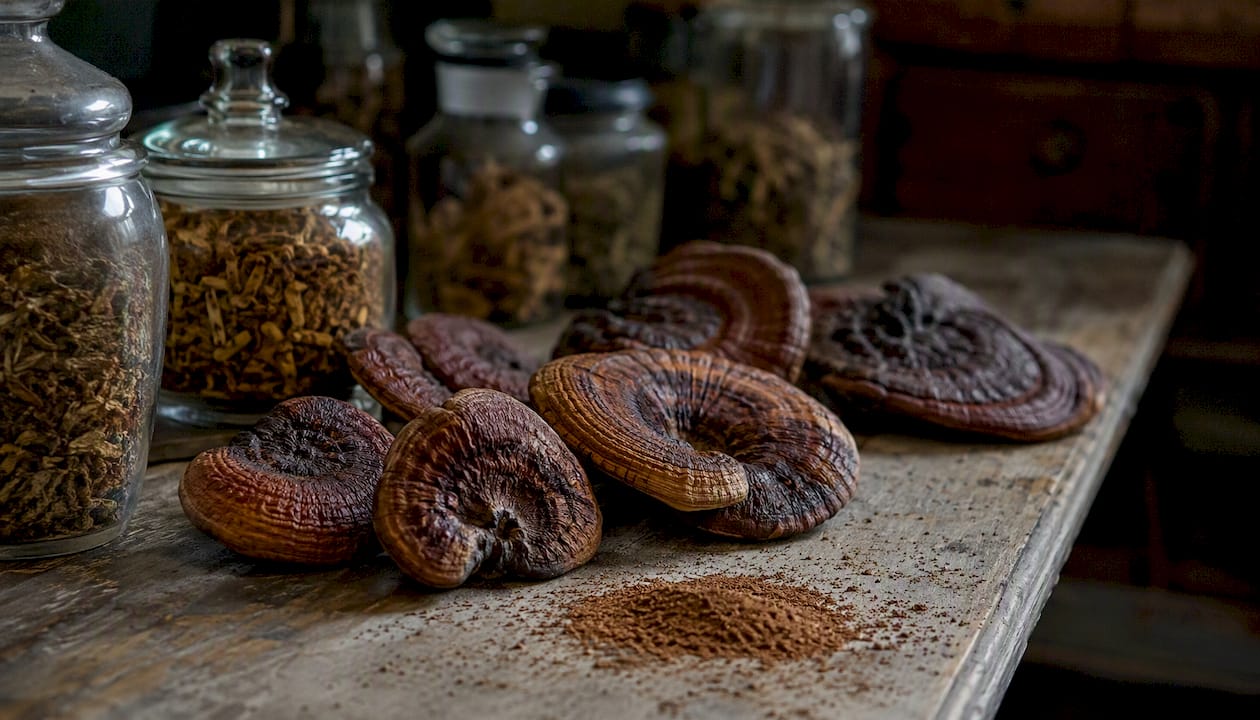
The idea of combining reishi with coffee is a much more recent development, emerging primarily from the functional food movement of the early 2000s and accelerating through the 2010s as Western wellness culture began embracing adaptogens. Coffee, already the world’s most consumed psychoactive beverage, became a natural delivery vehicle: people already drink it daily, so adding a functional ingredient to an existing habit lowers the barrier to consistent use.
What’s interesting is that traditional Chinese medicine never combined reishi with coffee, since coffee wasn’t part of that pharmacopeia. The pairing is a modern, Western-market invention, which is worth keeping in mind when evaluating historical health claims. The mushroom’s traditional uses are real and documented; the specific claim that reishi in coffee delivers those same effects is a newer and less-tested proposition, as Harvard Health and the PMC peer-reviewed literature both acknowledge.
How reishi coffee compares to other mushroom coffees and herbal alternatives
Reishi isn’t the only mushroom showing up in functional coffee blends, and understanding how it differs from its neighbors helps you choose the right product for your actual goals.
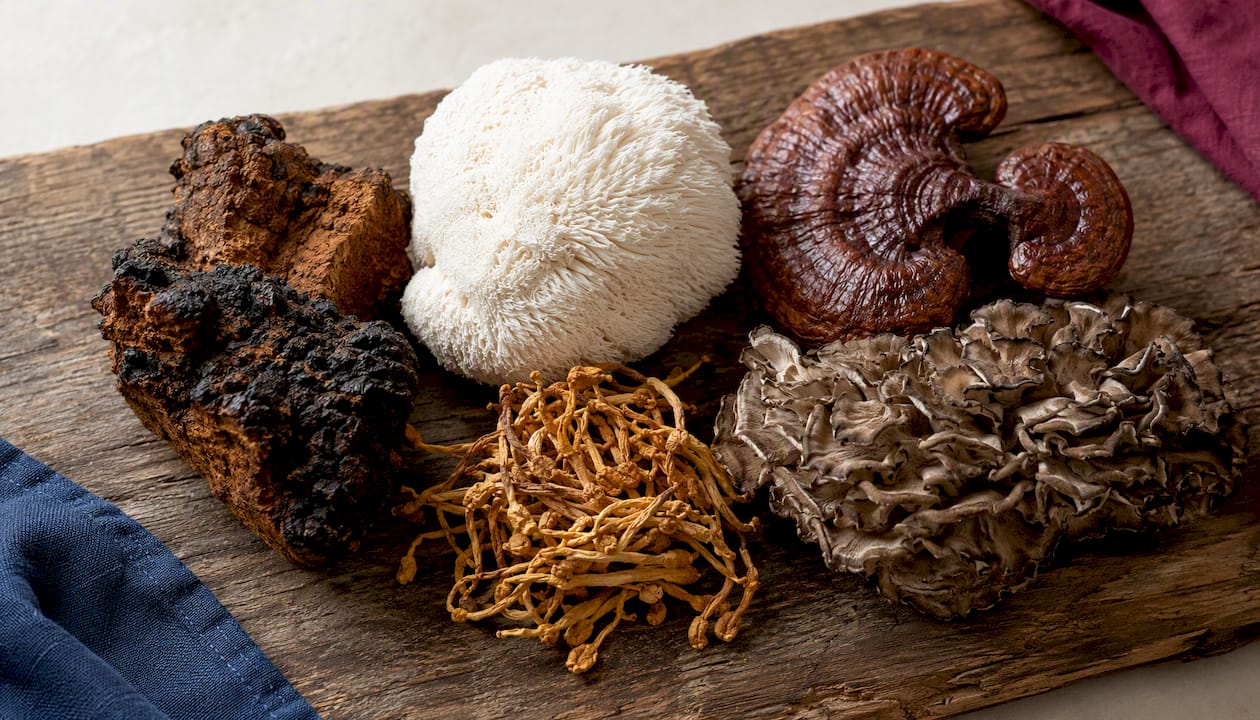
Lion’s Mane is the cognitive-focus mushroom, associated with nerve growth factor (NGF) support and mental clarity. If your primary goal is sharper thinking during work, lion’s mane tends to be the more targeted choice. Chaga leans heavily antioxidant, with a flavor profile that’s actually milder and slightly vanilla-like, making it easier to drink straight. Cordyceps is the energy and endurance mushroom, popular with athletes for its proposed effects on oxygen utilization.
Reishi’s unique position is at the relaxation and resilience end of the spectrum. It’s the mushroom you reach for when you want coffee’s alertness without the anxious edge, or when you’re building a long-term stress-management routine rather than chasing a performance spike. Many quality blends, including Emberk’s, combine reishi with lion’s mane, chaga, cordyceps, turkey tail, and maitake precisely because these mushrooms have complementary profiles. You get focus, endurance, immune support, and calm energy from a single cup rather than having to choose one.
Herbal coffee alternatives like chicory root, dandelion root, or ashwagandha-based blends offer a caffeine-free path with their own adaptogenic or prebiotic benefits. They’re worth considering for evening use or for people who want to reduce caffeine significantly. The trade-off is that they don’t deliver coffee’s flavor or the well-documented cognitive benefits of caffeine itself. For most health-conscious coffee drinkers, a well-formulated mushroom coffee blend sits in a practical middle ground: real coffee, real caffeine, and functional mushroom support without the jittery downside.
What most reishi coffee guides get wrong
Most articles about reishi in coffee either oversell the benefits or dismiss the category entirely, and both miss the point. The honest picture is more nuanced, and more useful.
The overselling problem is real. Brands sometimes imply that adding reishi to your morning cup will deliver the same effects as a clinical-grade supplement dose. It won’t, at least not from most instant blends. As the PMC evidence review makes clear, the gap between preclinical findings and what a processed beverage delivers is significant. Dose, extraction method, and bioavailability all change the equation.
But the dismissal is equally wrong. The argument that “there’s no clinical proof for mushroom coffee specifically” ignores that the bioactive compounds in reishi are real, studied, and present in well-made extracts. The question isn’t whether reishi has biological activity; it does. The question is whether the product you’re buying delivers enough of it, in a form your body can use, to matter.
What I’d tell any health-conscious buyer: stop evaluating mushroom coffee by the marketing and start evaluating it by the label. Fruiting body sourcing, dual extraction, declared beta-glucan levels, and a published COA are the actual signals of a product worth your money. Everything else is packaging. The medicinal mushroom research supports the ingredients; your job is to find a product that actually delivers them.
Emberk’s mushroom coffee is worth trying if quality matters to you
If you’ve read this far, you know what separates a quality reishi coffee from a label with a mushroom drawing on it.
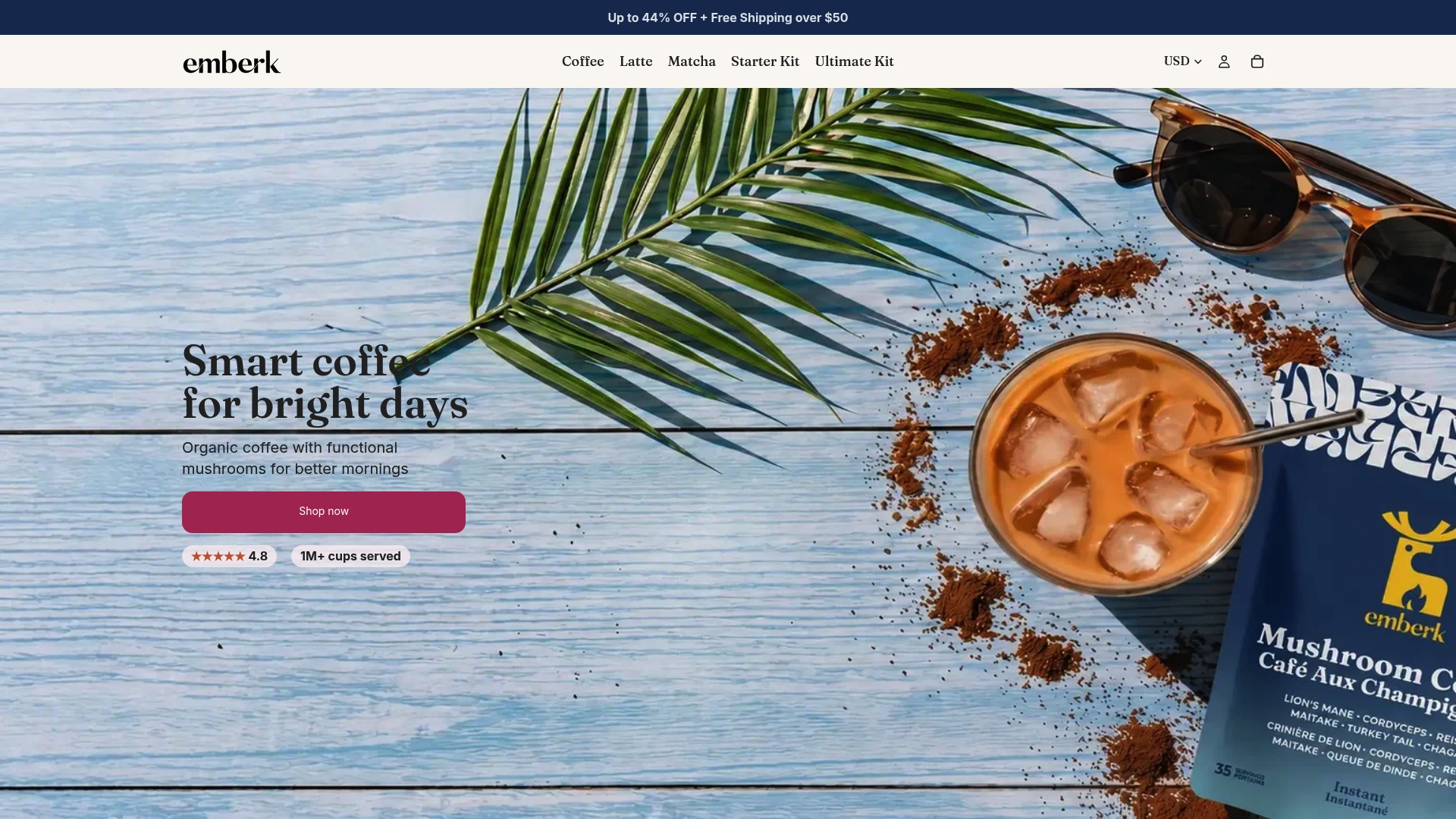
It’s instant, organic, and low-to-moderate in caffeine, which means you get the calm alertness this guide describes without the afternoon crash. Emberk is transparent about its sourcing and testing because that’s what the evidence actually demands from a functional product. If you’re ready to try a reishi coffee blend that holds up to label scrutiny, explore Emberk’s mushroom coffee and see the full product details, including COA access and subscription options.
Disclosure: This article is published by Emberk. The author, Tatiana, is affiliated with Emberk.
Sources
The following sources were used in this article and are worth bookmarking for further reading:
- Mushroom coffee: Should you be drinking it? — Cleveland Clinic
- Mushroom coffee — Harvard Health
- Should you switch to mushroom coffee? — UCLA Health
- PMC article on mushroom extracts and evidence limits
When evaluating any product, ask the brand directly for its COA. A company confident in its testing will share that document without hesitation.
This article provides general wellness information and is not a substitute for professional medical advice. Consult a qualified healthcare provider before adding reishi to your routine, especially if you have underlying health conditions or take prescription medications.
FAQ
Can you mix reishi with coffee?
Yes. Reishi powder or extract blends well with hot coffee and tends to soften the jittery edge of caffeine without removing it. Start with ½ teaspoon of a dual-extracted powder and blend or froth for the smoothest texture.
What should you not mix reishi with?
Avoid combining reishi with blood thinners like warfarin, immunosuppressant medications, or diabetes drugs without medical guidance, as reishi may amplify or interfere with their effects. People with liver disease should also exercise caution, given documented case reports of liver toxicity with excessive intake.
What is reishi coffee good for?
Reishi coffee is most associated with calmer, more balanced energy, immune support, and stress resilience. The beta-glucans and triterpenes in quality reishi extracts have shown immunomodulatory and adaptogenic effects in preclinical research, though direct clinical trials on blended coffee products remain limited.
Does reishi raise estrogen?
Current research does not establish a clear link between reishi consumption and elevated estrogen levels in humans. Some preclinical studies have examined reishi’s effects on hormone-related pathways, but there is no clinical consensus that reishi raises estrogen at typical dietary or supplement doses. If you have a hormone-sensitive condition, consult your clinician before use.
0 comments