

Matcha can support what researchers call “calm alertness” and may ease situational anxiety when you get the dose and quality right. It is not a treatment for diagnosed anxiety disorders, and it should never replace therapy or medication. That distinction matters, so let’s start with the numbers you actually need.
A reasonable starting point is 2 to 4 grams of high-quality matcha daily, which roughly targets 200 mg of L-theanine, the amino acid doing most of the calming work. Give it a few weeks of daily use before you decide whether it’s helping. That’s how the human trials were designed, and it’s how your body actually responds to L-theanine’s slower, cumulative effects.
Before you start:
- Check your caffeine sensitivity. Matcha still contains caffeine, just usually less than coffee per serving.
- Talk to a clinician if you take psychiatric medication, stimulants, or are pregnant or breastfeeding.
- Watch for jitteriness or a racing heart in the first hour. That’s a sign the ratio or dose isn’t right for you.
Quick fact: A randomized trial gave students a moderate daily dose of matcha for several weeks and found significantly lower anxiety scores on the State-Trait Anxiety Inventory, along with reduced salivary alpha-amylase, a marker of stress-hormone activity.
Key Takeaways
Matcha’s calming effect depends on daily consistency, a favorable ratio of caffeine and EGCG to theanine and arginine, and realistic expectations about what short trials can and cannot prove.
| Point | Details |
|---|---|
| Effective dose range | 2 to 4 grams of matcha daily, targeting roughly 200 mg of L-theanine, works best when taken consistently. |
| Trial evidence exists but is limited | A 39-person, 15-day trial showed reduced STAI anxiety scores, but sample sizes remain small across the field. |
| Ratio matters more than grade labels | Stress reduction depends on keeping caffeine plus EGCG low relative to theanine plus arginine. |
| Not a substitute for clinical care | Matcha supports situational stress; diagnosed anxiety disorders need professional treatment alongside any dietary change. |
| Emberk offers a lab-tested, low-jitter alternative | Emberk’s matcha latte and mushroom coffee use tested ingredients built around the same calm-alertness principle. |
Table of Contents
- Matcha for Anxiety: What’s Actually Happening in Your Brain
- What Do Clinical Trials Actually Show About Matcha and Anxiety?
- How Should You Actually Prepare and Time Your Matcha?
- Who Actually Benefits From Matcha, and Who Should Be Careful?
- What Should You Look for When Buying Matcha?
- Small Habits That Preserve (or Kill) Matcha’s Calming Effect
- Why Trust This Breakdown of Matcha and Anxiety
- What I’ve Learned Digging Into the Matcha and Anxiety Research
- A Low-Jitter Option Worth Trying
- Sources
- FAQ
Matcha for Anxiety: What’s Actually Happening in Your Brain
Think of your brain during a stressful afternoon as a busy intersection with too many cars honking at once. Caffeine alone tends to add more traffic. L-theanine, matcha’s signature amino acid, acts more like a traffic officer, letting the useful signals through while calming the chaos around them.
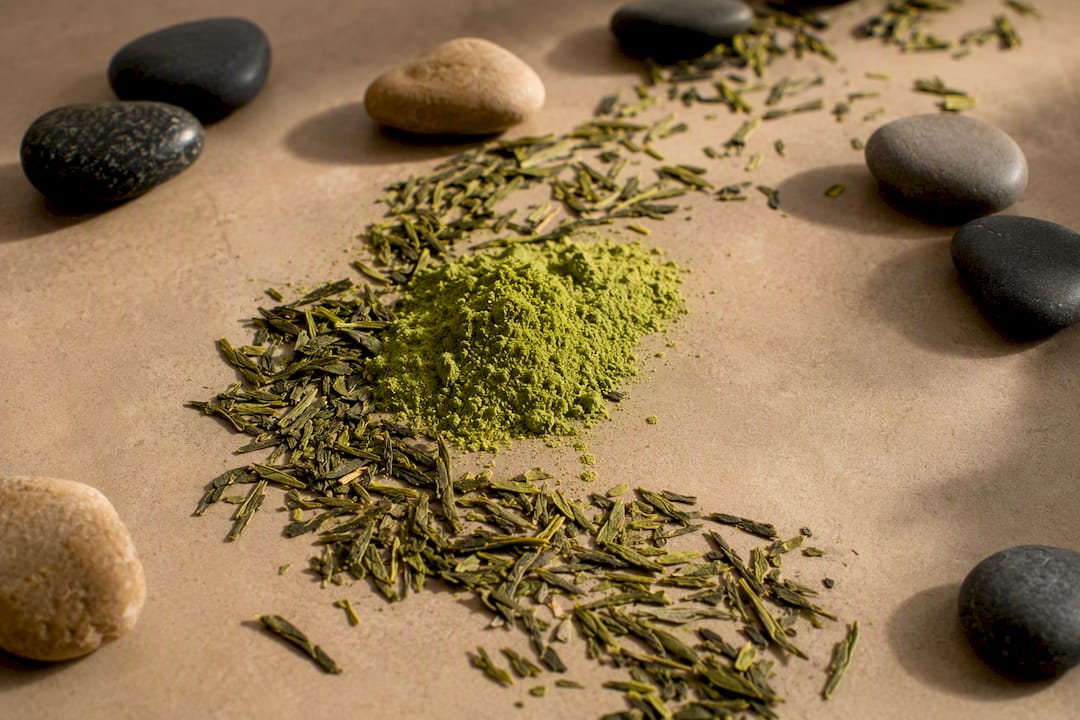
L-theanine increases alpha brain wave activity, the same wave pattern associated with relaxed, wakeful states like the moment right before you drift into a light daydream. It also modulates GABA, dopamine, and serotonin, three neurotransmitters that regulate mood, focus, and the body’s stress response. Studies point to an effective L-theanine range around 200 mg for measurable alpha-wave increases, which is far more than what you’d get sipping a standard cup of brewed green tea. A typical tea bag steeped and tossed delivers some L-theanine, but matcha, because you’re drinking the whole ground leaf rather than a quick infusion, delivers substantially more.
Here’s where it gets more interesting than “just drink tea.” Caffeine can actually work against theanine’s calming effect if there’s too much of it relative to theanine. Researchers describe this as a molar ratio problem: the combined amount of caffeine and EGCG (a catechin with strong antioxidant properties) needs to stay low relative to the combined amount of theanine and arginine for the stress-reducing effect to show up at all. Specifically, studies on animal and human samples found the ratio of caffeine plus EGCG to theanine plus arginine needed to sit below roughly two for a meaningful calming effect to emerge.
That ratio explains a lot about why two matcha powders that look identical on a shelf can produce completely different experiences. A poorly sourced matcha, grown fast and processed cheaply, often skews toward more caffeine and EGCG relative to theanine. A shade-grown, slow-matured matcha tends to skew the other way, because the shading process itself boosts the plant’s amino acid production, including theanine.
EGCG isn’t the villain here. It carries real anti-inflammatory benefits and contributes to matcha’s broader health profile. The issue is only about proportion, not presence. Arginine plays a supporting role too, helping restore some of theanine’s calming action when the overall ratio favors relaxation over stimulation.
Quick comparison of compounds:
- L-theanine – Promotes alpha waves, modulates GABA, dopamine, and serotonin, produces calm without drowsiness.
- Caffeine – Provides alertness but can blunt theanine’s calming effect at high ratios.
- EGCG – Anti-inflammatory catechin, only problematic when it dominates the caffeine side of the ratio.
- Arginine – Amino acid that supports theanine’s relaxing effects when overall composition is favorable.
This is also why matcha behaves differently than either brewed green tea or coffee. Coffee delivers caffeine with almost none of theanine’s counterbalance. Brewed green tea gives you some theanine, but the leaf gets strained out before most of its amino acids dissolve into your cup. Matcha, because you’re consuming the ground leaf itself, carries forward a fuller, more concentrated dose of everything, compounds and ratio included.
What Do Clinical Trials Actually Show About Matcha and Anxiety?
The strongest single piece of evidence is a small but well-designed trial. Researchers gave 39 students 3 grams of matcha daily for 15 days and measured anxiety through the State-Trait Anxiety Inventory (STAI), a widely used psychological questionnaire, alongside salivary alpha-amylase, an enzyme that rises with sympathetic nervous system activation. Both markers dropped significantly compared to placebo, which is about as close as you get to real-world proof that a short daily habit, not a one-off dose, produced the calming effect.
That trial sits within a broader review of human and animal studies on matcha’s therapeutic potential, and it lines up with separate research on continuous intake. One study looked at daily matcha and caffeine intake in middle-aged and older adults under mild acute psychological stress and found that consistent daily use produced measurable benefits in cognitive performance and stress resilience that a single dose simply didn’t replicate. Consistency, not a one-time cup before a big presentation, is what the data supports.
Here’s how the major pieces of evidence compare:
| Study Focus | Dose & Duration | Population | Key Outcome |
|---|---|---|---|
| Matcha and STAI anxiety scores | 3 g/day for 15 days | 39 students | Reduced STAI scores and lower salivary alpha-amylase |
| Continuous matcha/caffeine intake | Daily intake, multi-week | Middle-aged and older adults | Improved cognitive performance under acute stress |
| Component ratio and stress response | Varied matcha samples | Animal models, translated to human samples | Stress reduction tied to caffeine+EGCG:theanine+arginine ratio below ~2 |
That caution, drawn from a PubMed summary of the inconsistencies in current human evidence, is the honest counterweight to the more encouraging trial results. A sample size of 39 is respectable for a controlled trial but small in the bigger picture of nutrition science. Most matcha studies run for a matter of weeks, not months or years, so we don’t yet know how the calming effect holds up, or changes, over longer stretches. And the populations studied, mostly students or older adults under mild stress, don’t necessarily represent someone managing a diagnosed anxiety disorder.
None of that erases the signal. It does mean matcha belongs in the category of “promising, worth trying, not yet definitive,” which is a very different claim than “clinically proven anxiety treatment.” Readers looking for herbal tea for anxiety relief broadly should know matcha has more direct trial support than most herbal options on the market, but it’s still evidence in progress.
How Should You Actually Prepare and Time Your Matcha?
Getting the dose right matters less than most people assume; getting the routine right matters more. Here’s a straightforward approach based on what the trials actually did.
- Start with 2 to 4 grams per day, roughly one to two servings, which maps to an L-theanine intake in the range studies associate with alpha-wave increases.
- Whisk, don’t boil. Water around 160 to 175°F (70 to 80°C) preserves the delicate amino acids and catechins; scalding hot water can degrade some of the compounds you’re trying to benefit from.
- Skip the added sugar, or keep it minimal. Sweeteners spike blood sugar in a way that can work against the calm you’re aiming for.
- Drink it in the morning or early afternoon. Even with less caffeine than coffee, matcha isn’t caffeine-free, and a late-day cup can interfere with sleep, which then works against anxiety management in a roundabout way.
- Commit to daily use for 2 to 4 weeks before judging results. The clearest trial data came from consistent use, not sporadic sipping.
- Measure it properly. A kitchen scale or pre-measured scoops keep your dose consistent day to day, which matters more with matcha than with most beverages because leaf quality varies so widely.
Pro Tip: If you can’t verify a matcha’s amino acid content and don’t want to guess, a measured L-theanine supplement alongside a smaller matcha serving gives you a more predictable dose than relying on an unlabeled powder.
For readers who want the deeper biochemistry behind why L-theanine works the way it does, this primer on L-theanine’s role in relaxed focus and sleep walks through the mechanism in more depth than most tea packaging ever will.
Who Actually Benefits From Matcha, and Who Should Be Careful?
Matcha tends to work best for people dealing with situational stress: a demanding job, a packed schedule, the low hum of everyday overwhelm rather than a diagnosed disorder. If your goal is steadier focus without the jittery crash that follows a second or third coffee, matcha’s calm-alertness profile is exactly the experience the compound ratios are built to produce.
It is not a substitute for professional care if you’re managing generalized anxiety disorder, panic disorder, or another clinically diagnosed condition. The trial evidence, encouraging as it is, comes from short studies on relatively mild, situational stress markers, not from populations with clinical anxiety diagnoses. If you’re already working with a therapist or psychiatrist, matcha can be a reasonable complement to discuss, never a replacement.
A few safety notes worth taking seriously:
- Pregnancy and breastfeeding: Caffeine intake limits apply, and matcha’s concentrated nature means a “cup” can carry more caffeine than it looks like. Check with your doctor about safe amounts.
- Medication interactions: Stimulant medications, certain antidepressants, and some anxiety medications can interact with caffeine or with compounds in green tea. Flag matcha use with your prescriber.
- High EGCG intake: Very high concentrated green tea extract intake has been linked to liver concerns in some case reports; whole-leaf matcha at normal serving sizes is a different exposure level, but it’s still worth mentioning to a doctor if you take other supplements.
- Caffeine sensitivity: If a single cup of coffee makes you wired or anxious, start with the low end of the 2 to 4 gram range and see how your body responds before increasing.
If you notice increased heart rate, new sleep disruption, or heightened anxiety after starting matcha, that’s your body telling you something isn’t matching your chemistry. Stop, and talk to a clinician before trying again at a different dose.
What Should You Look for When Buying Matcha?
Not all matcha delivers the calm-alertness profile the studies describe, and the difference often comes down to what you can’t see on the label. A survey of commercially available matcha samples found that a meaningful share of marketed products had low amino acid content, meaning the theanine-to-caffeine balance that makes matcha calming in the first place simply wasn’t there.
Here’s what actually separates a matcha likely to work from one that won’t:
- Ask for lab-tested composition data. Theanine content, caffeine milligrams per serving, and EGCG levels tell you far more than a “ceremonial grade” sticker.
- Request third-party certificates when available. Independent lab verification is the closest thing to a guarantee that what’s in the bag matches what’s on the label.
- Prefer whole-leaf, shade-grown matcha over blended or imported powders sold cheaply as “matcha.” Shading during growth is what drives up amino acid content in the first place; skip that step and you skip the benefit.
- Weigh cost against consistency. Ceremonial-grade matcha costs more, but if you’re using it specifically for anxiety support rather than flavor, the higher amino acid content is the entire point of paying more.
- Consider a lab-tested blend or supplement if you need a guaranteed dose. Reliable composition at scale is genuinely uncommon in commercial matcha, so if predictable dosing matters more to you than ritual, a tested product or a measured L-theanine supplement may serve you better than an unverified powder.
Supplier transparency is the real signal here, more than grade names or price tags. A brand willing to show you its lab results is telling you something a marketing label never will.
Small Habits That Preserve (or Kill) Matcha’s Calming Effect
The way you prepare and pair matcha can quietly undo the very effect you’re chasing. Sugar is the biggest offender: added sweeteners spike blood glucose, and that spike works against the steady, calm-alertness state L-theanine is trying to create. Heavy dairy can have a similar dampening effect for some people, partly through inflammation pathways and partly through how it interacts with digestion and blood sugar together.
Better pairings tend to be simple:
- Low-sugar plant milks like unsweetened oat or almond, which won’t spike blood sugar the way flavored dairy or sweetened alternatives do.
- A small amount of a complementary adaptogen, such as medicinal mushroom blends, for readers already building a broader low-jitter beverage routine.
- Arginine-supportive foods earlier in the day, like nuts or seeds, which may help support theanine’s calming action given the ratio research discussed earlier.
If you’re switching from coffee, taper rather than quit cold. Replace one coffee a day with matcha for a week, then two, giving your body time to adjust to the lower, steadier caffeine curve instead of a hard drop that can trigger its own withdrawal-related irritability.
Pro Tip: Whisking matcha by hand for even 30 seconds before drinking isn’t just tradition. The pause itself, the smell, the small ritual, appears to reinforce the calming effect through simple expectancy, the same psychological mechanism behind why a warm mug feels soothing before you’ve taken a single sip.
Why Trust This Breakdown of Matcha and Anxiety
This article draws on peer-reviewed human trials, component-ratio research, and composition surveys rather than repeating wellness-industry claims that rarely cite a single study. The goal throughout has been separating what’s well-supported (the 3 gram, 15 day trial showing reduced STAI scores) from what’s still emerging (long-term outcomes, clinical anxiety diagnoses).
Reliable calming effects from matcha come down to two things: a favorable ratio of caffeine and EGCG to theanine and arginine, and consistent daily use rather than a single cup before a stressful meeting.
Emberk’s own approach to functional beverages follows the same logic this research supports. Its coffee blends lean on lab-tested functional mushrooms rather than stimulant overload, aiming for the same low-jitter, steady-energy experience that well-formulated matcha is built to deliver. The underlying principle, that composition and consistency matter more than caffeine content alone, applies whether you’re reaching for matcha or a mushroom-infused coffee blend.
What I’ve Learned Digging Into the Matcha and Anxiety Research
The research on matcha and anxiety is more encouraging than most wellness trends get, but it’s also smaller in scale than the confident claims circulating online would suggest. A 39-person, 15-day trial is real evidence, not marketing spin, but it’s also not the same as a multi-year study across thousands of people with diagnosed anxiety disorders.
What strikes me most is how much the outcome depends on things most shoppers never think to check: the ratio of caffeine and EGCG to theanine and arginine, and whether the matcha was grown and processed in ways that actually preserve those amino acids. Two products can carry the same “ceremonial grade” label and produce completely different experiences in your body. Matcha for anxiety works best as a complementary daily habit, tried with realistic expectations and paired with professional care when anxiety is more than situational stress.
A Low-Jitter Option Worth Trying
If the ratio research in this article convinced you that composition matters more than marketing labels, that’s exactly the philosophy behind Emberk’s approach to functional beverages. Rather than asking you to guess at amino acid content, Emberk builds its matcha latte around lab-tested ingredients, dairy-free and free of added sugars or fillers, so the calm-alertness experience isn’t left to chance.
For readers weighing a switch from regular coffee, Emberk’s mushroom coffee offers a similar low-jitter profile using six functional mushrooms instead of matcha’s compound ratio, useful if you want variety across your week rather than the same cup every morning. Either way, start with a smaller serving if you’re sensitive to caffeine, and check in with a doctor if you’re pregnant, breastfeeding, or on medication that interacts with stimulants. Browse the full product lineup to find the blend that fits your morning best.
Sources
- The therapeutic potential of matcha tea: A critical review on human and animal studies
- Stress-Reducing Function of Matcha Green Tea in Animal Experiments and Clinical Trials
- Effects of Daily Matcha and Caffeine Intake on Mild Acute Psychological Stress-Related Cognitive Function in Middle-Aged and Older Adults
- Swapping coffee for matcha may help ease your anxiety — Verywell Health
FAQ
Does matcha help with anxiety?
Matcha can help with mild, situational anxiety when consumed consistently at 2 to 4 grams daily, largely through L-theanine’s effect on alpha brain waves, but it’s not a substitute for treatment of diagnosed anxiety disorders.
Why do I feel calm after drinking matcha?
The calm often comes from L-theanine buffering caffeine’s stimulant effect, producing what’s commonly described as calm alertness rather than a wired or jittery feeling.
What is the best drink to calm anxiety?
Matcha ranks among the better-studied options because of direct trial data on anxiety scores, though outcomes depend heavily on the matcha’s composition and how consistently you drink it. A low-jitter alternative like mushroom coffee offers a similar steady-energy profile without matcha’s specific compound ratio requirements.
What is the strongest herb for anxiety?
There’s no single herb proven strongest for anxiety across the research; effectiveness varies by compound, dose, and the type of anxiety involved, so matcha’s L-theanine content is one well-studied option rather than a definitive answer.
How much matcha should I drink for anxiety relief?
Most human trial data points to around 3 grams daily, taken consistently for at least two weeks, as a reasonable starting range to assess whether matcha helps your particular stress response.
0 comments