

A low-caffeine pre-workout can absolutely get you through a hard session without the shaky hands, racing heart, or 9 p.m. wide-awake stare at the ceiling. The trick isn’t finding a magic stimulant substitute. It’s picking a formula that leans on ingredients with real, dose-backed research behind them, like citrulline, beta-alanine, and creatine instead of just cutting caffeine and hoping for the best. For most people who want steady energy without the crash, Emberk’s mushroom coffee is a smart, practical starting point.
Here’s why this approach works:
- The dose determines the experience. A low-caffeine range, generally below typical low-dose thresholds recognized for sensitive individuals, keeps you clear-headed instead of wired, which matters a lot if you train in the evening or already know caffeine hits you hard.
- Non-stimulant ingredients do the heavy lifting. Pump agents, endurance compounds, and focus-supporting nootropics replace the jittery buzz with something steadier.
- The label tells you everything. A trustworthy product lists exact milligrams per ingredient instead of hiding behind a vague “proprietary blend.”
A low-to-moderate caffeine coffee built around functional mushrooms and adaptogens can give you calm, sustained focus, minus the crash that sends most people reaching for a second scoop by 2 p.m.
Key Takeaways
Low-caffeine pre-workouts work best when clinically dosed pump, endurance, and focus ingredients replace the stimulant intensity that caffeine alone provides.
| Point | Details |
|---|---|
| Know your range | Very low is 0 to 50 mg, low is 50 to 150 mg, and moderate is 150 to 300 mg per serving. |
| Respect the daily ceiling | Keep total caffeine from all sources under 400 mg per day, lower if you’re sensitive or have a heart condition. |
| Dose the ingredients that matter | Look for 6 to 8 g citrulline, 1.6 to 3.2 g beta-alanine, and 3 to 5 g creatine listed individually on the label. |
| Match format to your schedule | Powders offer dosing control; ready-to-drink coffee alternatives offer convenience for busy mornings. |
| Consider Emberk for daily use | Emberk’s mushroom coffee offers low-to-moderate caffeine with functional mushrooms for calm, steady energy before training. |
Table of Contents
- What Counts as a Low-Caffeine Pre-Workout?
- How Low Does Caffeine Need to Go for Sensitive Users?
- Which Ingredients Replace Caffeine’s Performance Edge?
- Do Stim-Free and Low-Caffeine Pre-Workouts Actually Work?
- How Do You Choose the Right Low-Caffeine Pre-Workout?
- When and How Should You Use a Low-Caffeine Pre-Workout?
- Which Type of Low-Caffeine Option Fits Your Situation?
- What Makes Emberk’s Approach to Low-Caffeine Energy Credible?
- What Safety Checks Matter Before Switching?
- Why I Stopped Chasing the Stimulant Spike
- Try a Steadier Way to Fuel Your Training
- Sources
- FAQ
What Counts as a Low-Caffeine Pre-Workout?
There’s no single regulatory line that separates “low caffeine” from “regular caffeine.” In practice, most nutrition-focused reviewers treat anything under roughly 150 mg per serving as low caffeine for a pre-workout context. That’s compared to the 200 to 400 mg you’ll find in a lot of mainstream stim-heavy formulas, some of which sneak past 300 mg in a single scoop.
Low-caffeine products show up in a few different formats, and each one trades convenience for something else:
- Diluted or half-serving powders. You take half the recommended scoop of a standard pre-workout, which cuts caffeine but also cuts every other ingredient proportionally, so pump and endurance compounds get weaker too.
- Purpose-built low-stim blends. These are formulated from scratch with a smaller caffeine dose and full-strength non-stimulant ingredients, which is a meaningfully different (and usually better) approach than just halving a high-stim product.
- Stim-free powders. Zero caffeine, built entirely around pump and focus ingredients. Good for people who are caffeine-free entirely or training right before bed.
- Ready-to-drink functional coffees and lattes. These lean on naturally moderate caffeine levels alongside adaptogens or mushroom extracts, prioritizing smooth, sustained energy over an acute jolt.
Each format has a tradeoff. Powders give you the most control over dosing but require measuring and mixing. Ready-to-drink coffee alternatives are grab-and-go convenient but you’re accepting whatever caffeine level the brand chose. Stim-free powders are the safest bet for sensitive users but ask more of the non-caffeine ingredients to deliver the “kick” people expect.
Quick reference for serving caffeine bands:
- Very low: amounts comparable to what highly sensitive individuals might tolerate, such as a small cup of tea equivalent
- Low: amounts in the range commonly tolerated by most adults without significant jitteriness, roughly half to a full cup of coffee equivalent
- Moderate: amounts approaching typical stimulant doses used in pre-workout supplements
How Low Does Caffeine Need to Go for Sensitive Users?
There’s no strict medical definition of “low caffeine,” but Healthline’s guidance offers a useful anchor: highly sensitive individuals may notice effects at just 30 to 50 mg per day, while typical adult tolerance runs 200 to 400 mg daily. That’s a wide range, and where you land on it depends heavily on genetics, body weight, and how regularly you consume caffeine already.
Genetics play a bigger role here than most people assume. Research on the ADORA2A gene has linked certain genotypes to heightened anxiety and jitteriness in response to caffeine, meaning some people are wired to feel wrecked by a dose that barely registers for someone else. This isn’t a willpower issue. It’s biology.
The generally accepted safe ceiling is about 400 mg of caffeine per day for healthy adults, according to the Cleveland Clinic, with higher intakes tied to a greater risk of rapid heart rate and elevated blood pressure.
For practical purposes, here’s how the ranges tend to play out:
- 0 to 50 mg: Very low. Appropriate for highly sensitive users, pregnant or breastfeeding individuals (with clinician guidance), and evening training sessions.
- 50 to 150 mg: Low. A comfortable middle ground for most people who want some lift without a stimulant edge.
- 150 to 300 mg: Moderate. Noticeable energy, still under the 400 mg daily ceiling if it’s your only source.
One thing people consistently underestimate: caffeine adds up. A morning coffee, an afternoon soda, and a pre-workout can stack well past 400 mg without anyone intending it to. Cumulative caffeine from food and beverages is one of the most common reasons people think they’re “caffeine sensitive” when they’re actually just overloading.
Which Ingredients Replace Caffeine’s Performance Edge?
Caffeine mostly does one job well: it makes you feel more alert and reduces perceived effort. But a lot of what people actually want from a pre-workout, more blood flow, less muscle fatigue, better focus under fatigue, comes from entirely different compounds that don’t touch your central nervous system the same way. Building a low-caffeine formula around these ingredients, rather than just removing caffeine, is what separates an effective stim-free product from a watered-down one.
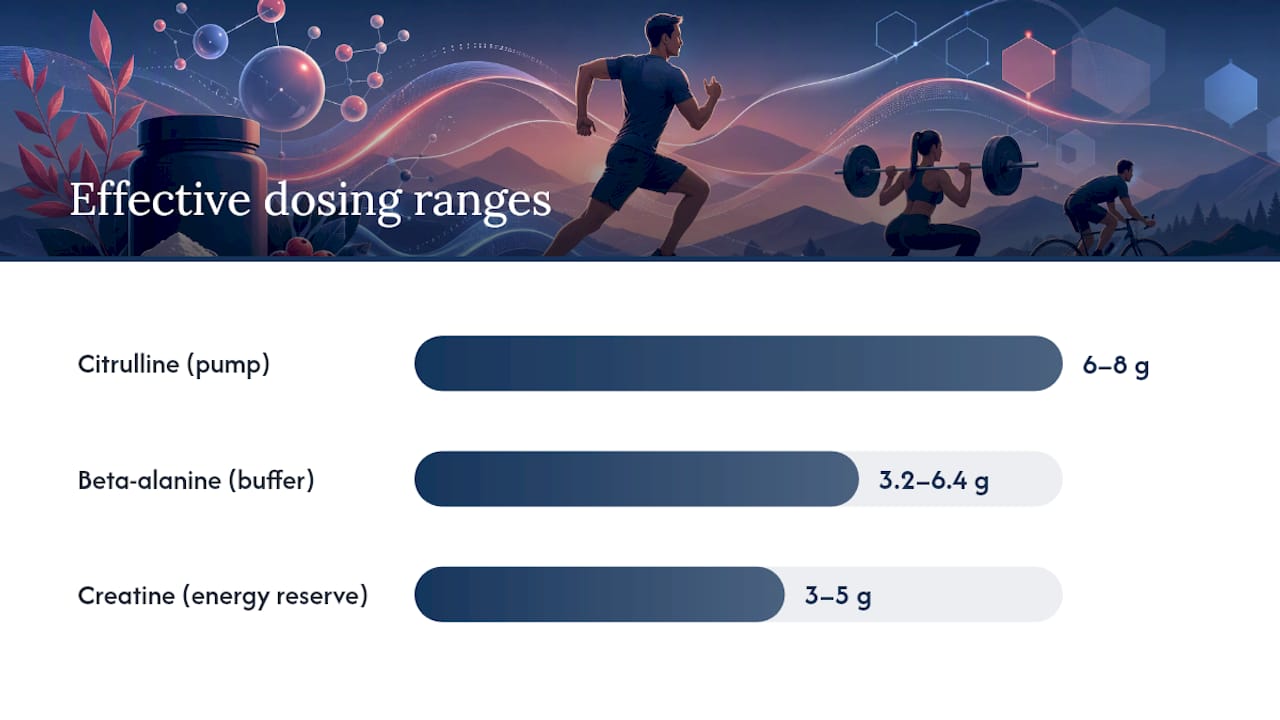
Nitric oxide boosters (the pump ingredients). L-citrulline and citrulline malate raise nitric oxide levels, which widens blood vessels and increases blood flow to working muscles. A review of nitric oxide biology and exercise trials shows measurable improvements in power output and endurance when these compounds are dosed effectively. The commonly cited effective range for citrulline is 6 to 8 grams, which is notably higher than what a lot of mainstream products actually include. Dietary nitrates, often from beet extract, work through a similar blood-flow pathway and show up in doses of roughly 300 to 500 mg of nitrate.
Beta-alanine (the fatigue buffer). This amino acid buffers acid buildup in muscle tissue, which is what causes that burning sensation during high-rep sets or longer sprints. Effective daily intake sits around 3.2 to 6.4 grams total, though most people notice a tingling sensation (harmless, just a nerve response) at single doses above 800 mg. Loading it over several weeks tends to produce more consistent results than a single pre-workout dose.
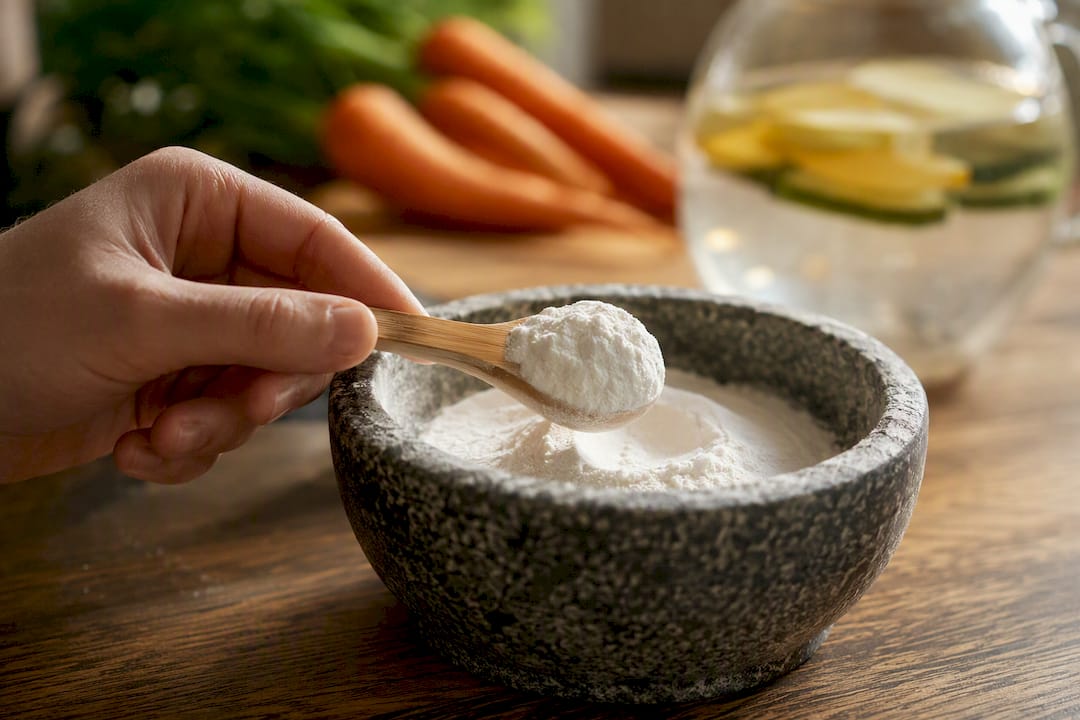
Creatine (the cellular energy reserve). Creatine monohydrate remains one of the most well-studied sports supplements in existence, and a maintenance dose of 3 to 5 grams daily supports strength and power output over time. It’s not an acute “feel it in ten minutes” ingredient. It works by saturating muscle stores over days and weeks, which is exactly why it belongs in a daily habit, not just a pre-workout scoop.
Focus nootropics. Citicoline and alpha-GPC support mental clarity and reaction time during training, and a review of nootropic compounds in exercise contexts found real cognitive benefits, though outcomes depend heavily on dose. Citicoline is commonly used at 250 to 500 mg, and alpha-GPC in the 300 to 600 mg range. L-tyrosine, dosed around 500 to 2,000 mg, supports mental performance specifically under stress or fatigue.
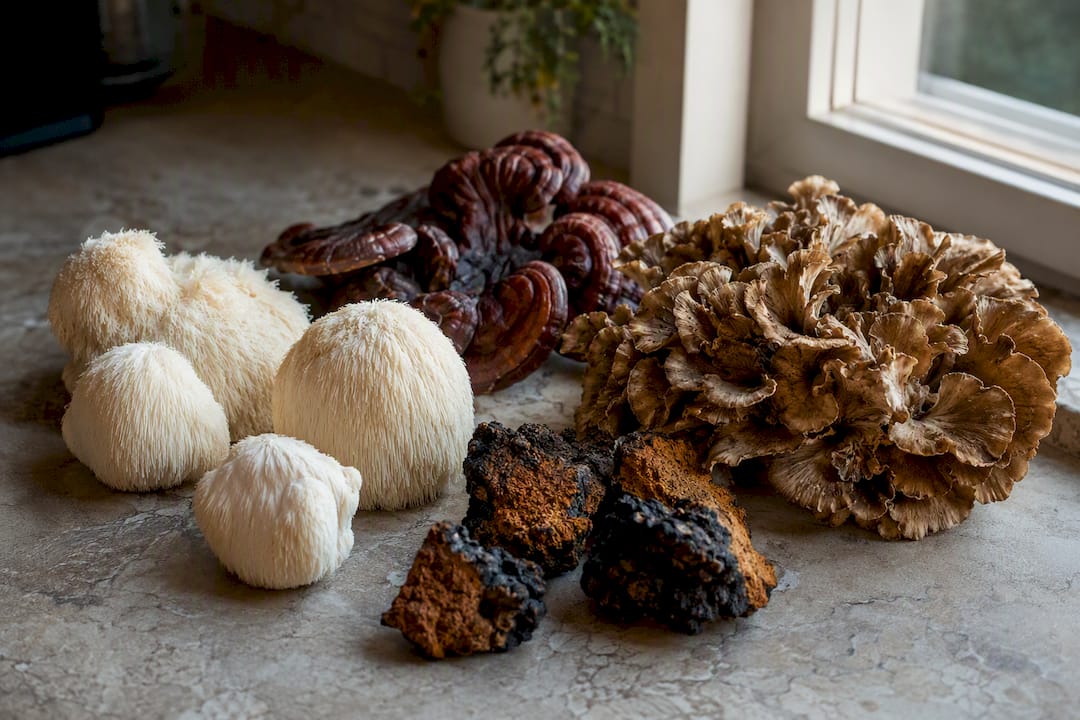
Adaptogens and mushroom extracts. Compounds like Lion’s Mane, Rhodiola, and Reishi are used to support steady mental clarity and stress resilience rather than a sharp stimulant spike. Research on adaptogens and mental performance shows promising subjective improvements, even though the clinical evidence base is still developing compared to something as established as creatine.
Here’s the part that matters most for shopping: a lot of mainstream pre-workouts underdose these ingredients badly. You’ll see “citrulline” on a label at 1 or 2 grams, which is a third of the effective dose, tucked into a proprietary blend that hides the exact amount. Look for products that list milligrams per ingredient, not just a total blend weight.
Pro Tip: If you’re used to the intensity of a high-stim pre-workout, don’t just remove the caffeine and expect the same feeling. Stack a full clinical dose of citrulline malate (6 to 8 grams) with your low-caffeine formula. The vascular pump it creates does a surprisingly good job of replacing that “ready to lift” sensation caffeine used to provide.
Do Stim-Free and Low-Caffeine Pre-Workouts Actually Work?
Yes, though the type of benefit shifts depending on which ingredients you’re relying on. Nitric oxide boosters and creatine have some of the strongest research behind them for measurable performance outcomes like power output, blood flow, and muscular endurance. Beta-alanine’s benefits are more about delaying fatigue in higher-rep or longer-duration efforts than adding raw strength. Nootropics affect the mental side of training: staying sharp and focused when fatigue starts to creep in during the back half of a workout.
The honest caveat here is that these ingredients generally require consistent, correctly dosed use to show their full effect, and quality varies a lot between studies. Creatine and beta-alanine, in particular, work cumulatively over days and weeks rather than delivering an instant jolt the way caffeine does. That’s a real shift in expectations for anyone used to feeling something within twenty minutes of a scoop.
Stimulant-free pre-workouts can be genuinely effective when they combine clinically dosed pump agents, fatigue buffers, and nootropics, rather than trying to replace caffeine with a single substitute ingredient.
Here’s how the comparison typically plays out in practice:
- High-caffeine formulas deliver a fast, subjective sense of alertness and drive, often within 15 to 30 minutes, but that intensity fades and can bring a crash, plus disrupted sleep if used late in the day.
- Low-caffeine formulas built on pump and endurance ingredients deliver a more gradual sense of readiness, with measurable gains in blood flow and reduced fatigue that build over repeated use rather than peaking in a single session.
- Adaptogen-based functional coffees trade the acute jolt for steadier, calmer energy that many users describe as feeling “on” without feeling wired.
The tradeoff is honest: you give up some of that immediate, dramatic stimulant feeling. In exchange, you get a training experience that doesn’t torch your sleep or leave you crashing an hour later.
How Do You Choose the Right Low-Caffeine Pre-Workout?
Picking a good low-stimulant product comes down to reading labels like you actually mean it. Here’s what to check, in order:
- Confirm caffeine per serving, not per container. Some labels list total caffeine across multiple servings, which can mislead you into thinking a product is lower dose than it actually is per scoop.
- Check whether pump and endurance ingredients hit clinical doses. Look specifically for citrulline at 6 to 8 grams, beta-alanine at 1.6 to 3.2 grams per serving, and creatine at 3 to 5 grams, listed individually rather than buried in a blend.
- Look for third-party testing. Independent verification (like Informed Sport or NSF Certified for Sport) confirms what’s on the label matches what’s in the tub.
- Check for hidden stimulants. Ingredients like theacrine, guarana, or yohimbine can add stimulant effects even in a product marketed as “low caffeine.”
- Match the format to your training schedule. A powder gives more dosing flexibility for evening sessions; a ready-to-drink coffee is better for grab-and-go mornings.
Red flags to walk away from:
- A “proprietary blend” with no individual ingredient amounts listed.
- Marketing language promising dramatic strength or fat-loss results with no ingredient-level support.
- Caffeine sources buried under names like “guarana extract” without a milligram equivalent stated.
- A serving size that seems designed to hide a bigger dose (check if it says “per scoop” versus “per two scoops”).
Different readers have different priorities here. If you’re sensitive to caffeine, prioritize a completely stim-free powder or a functional coffee under 50 mg. If you’re training in the evening, the same logic applies, since even a moderate 150 mg dose late in the day can measurably disrupt sleep. If you already drink coffee and want a pre-workout on top of it, do the math on your total daily caffeine before adding another 150 to 200 mg. And if budget is the driving factor, a straightforward creatine and beta-alanine stack, taken daily regardless of training time, often delivers more consistent value than an expensive proprietary powder.
When and How Should You Use a Low-Caffeine Pre-Workout?
Timing shifts depending on what you’re taking. Powders built around pump ingredients like citrulline work best taken 30 to 45 minutes before training, giving nitric oxide levels time to rise. Low-caffeine coffee or latte alternatives can be sipped 20 to 30 minutes out, similar to how you’d time a regular cup of coffee.
Stacking safely means doing basic math on your day, not guessing. If you’ve already had a 95 mg cup of coffee in the morning, a 100 mg low-caffeine pre-workout in the afternoon puts you at 195 mg, comfortably under the 400 mg daily ceiling. But add an energy drink or a second coffee, and you can cross that line without realizing it.
- Acute effects (pump from citrulline, alertness from caffeine or L-tyrosine) show up within 20 to 45 minutes and fade within a few hours.
- Cumulative effects (creatine’s strength support, beta-alanine’s fatigue buffering) build over roughly two to four weeks of consistent daily use, not from a single dose.
- Sleep impact drops significantly once caffeine intake stays under 100 mg and is consumed at least 6 hours before bed.
On cost, the format you choose changes the math more than the ingredient list does. Powders tend to run cheaper per serving since you’re paying mostly for bulk ingredients. Ready-to-drink options and functional coffee or latte blends cost more per serving because you’re paying for convenience and quality sourcing, but you avoid the mixing, scooping, and gritty texture that turns some people off powders entirely.
Which Type of Low-Caffeine Option Fits Your Situation?
Not every low-caffeine product serves the same purpose, and matching format to use-case matters more than chasing the “best” one in isolation.
- Evening training: A stim-free powder or a very-low-caffeine functional coffee (under 50 mg) protects your sleep while still giving you pump and endurance support.
- Caffeine sensitivity or ADORA2A-linked reactivity: Stick with stim-free powders or adaptogen-based coffee alternatives that skip caffeine’s central nervous system effects almost entirely.
- Travel and convenience: Ready-to-drink or instant functional coffees win here, since there’s no measuring, mixing, or shaker bottle involved.
- Stacking with other supplements: A low-caffeine coffee alternative leaves more daily caffeine “budget” for a dedicated creatine or beta-alanine stack taken separately.
This is exactly where Emberk’s mushroom coffee fits into the picture. It’s built around low-to-moderate caffeine paired with functional mushrooms like Lion’s Mane and Cordyceps, giving you calm alertness rather than a stimulant spike, in a format that’s ready in seconds. If you’d rather sip something warm and familiar before a workout instead of mixing a powder, it’s a genuinely practical alternative, especially for morning sessions where you still want some caffeine, just not a jittery amount of it.
Choosing between a stim-free powder, a half-dose high-stim formula, and a functional coffee comes down to one question: do you want your energy to peak and crash, or stay level through the whole session?
For someone who wants dedicated clinical doses of citrulline and beta-alanine on heavy lifting days, a purpose-built stim-free powder still makes more sense. But for the majority of people whose real complaint is “regular pre-workout makes me too jittery,” a well-formulated low-caffeine coffee alternative solves the actual problem more simply.
What Makes Emberk’s Approach to Low-Caffeine Energy Credible?
Emberk’s mushroom coffee blends organic coffee with six functional mushrooms: Lion’s Mane, Chaga, Reishi, Turkey Tail, Maitake, and Cordyceps. Every mushroom used is sourced as 100% fruiting body, not the cheaper mycelium-on-grain filler that shows up in a lot of lower-quality mushroom products, and each batch is lab-tested with no artificial ingredients added. Emberk has served over a million cups, built specifically around the idea that morning energy shouldn’t come with an afternoon crash or an anxious edge.
The mushroom fruiting body sourcing matters more than most shoppers realize. Fruiting bodies contain higher concentrations of the beta-glucans and active compounds that give mushrooms their functional benefits, compared to mycelium, which is mostly starch. That distinction is one of the clearest signals of a product actually built for results rather than marketing.
For anyone curious about the reasoning behind pairing adaptogens with coffee specifically, Emberk’s deep dive into mushroom coffee’s benefits breaks down how the combination smooths out caffeine’s typical spike-and-crash pattern.
Pro Tip: If you’re using Emberk as a pre-workout, brew it 20 to 30 minutes before training and keep it as your only caffeine source that day if you’re sensitive. Because it sits in the low-to-moderate range rather than a stim-heavy dose, it’s generally friendlier to an evening session than a traditional pre-workout, as long as you leave a few hours of buffer before bed.
- Six functional mushrooms in every blend, not a single-mushroom gimmick.
- Lab-tested for purity, with no added sugars or artificial fillers.
- Available in instant coffee, latte, and matcha formats to fit different routines.
What Safety Checks Matter Before Switching?
Before you swap in a low-caffeine pre-workout, run through a quick mental checklist rather than assuming “low caffeine” automatically means “no risk.”
- Add up your total daily caffeine from coffee, tea, soda, chocolate, and supplements, not just your pre-workout, and keep the sum under the 400 mg daily ceiling for healthy adults.
- Flag any heart condition, anxiety disorder, or high blood pressure and talk to a doctor before adding any caffeine source, even a low one.
- Pregnant or breastfeeding individuals should get personalized guidance on caffeine limits rather than relying on general adult thresholds.
- Watch for interactions with stimulant medications, certain antidepressants, or thyroid medications, since caffeine can amplify some of these effects.
If you’ve ever felt your heart race or your hands shake from a “normal” amount of caffeine that didn’t seem to bother anyone else, that’s not in your head. Genetic differences in caffeine metabolism are well documented, and they’re a legitimate reason to dose lower than the general population.
Bring a full list of what you’re taking, supplements, medications, and typical caffeine intake, if you do talk to a clinician about a new pre-workout routine. This article is educational information, not personalized medical advice.
Why I Stopped Chasing the Stimulant Spike
I used to equate a good pre-workout with how hard it hit, the faster my heart rate climbed, the more “ready” I felt. What actually changed my training was noticing how much of that feeling was just adrenaline mimicking readiness, not real physical capacity. Once I shifted toward a low-caffeine approach built on properly dosed citrulline and creatine, the sessions felt steadier, not weaker. Sleep improved almost immediately, since I wasn’t stacking a 300 mg dose on top of an already caffeinated day. The sensitivity thresholds and ingredient dosing that back this approach aren’t a compromise. They’re evidence that you can train hard without needing your nervous system to feel like it’s on fire.
Try a Steadier Way to Fuel Your Training
If you’ve been cycling through high-stim pre-workouts and dreading the crash that follows, Emberk’s mushroom coffee gives you a low-to-moderate caffeine option built around six functional mushrooms instead of a bigger scoop of stimulants. It’s ready in the time it takes to boil water, no shaker bottle, no gritty aftertaste, and no proprietary blend hiding what’s actually in your cup.
Every batch is lab-tested, made from 100% fruiting body mushrooms, and free of added sugars or artificial fillers, so what you read on the label is what you’re actually getting. If mornings before a workout have felt like a tradeoff between energy and jitters, this is a recommended alternative worth trying, not a claim that it beats every stim-heavy product on the market for every use-case. Start with the Lion’s Mane mushroom coffee blend, or browse the full mushroom coffee collection to find the format that fits your routine, including a subscription option if you want it stocked without reordering every month.
Sources
- Caffeine sensitivity: Symptoms, causes, and treatments — Healthline
- Caffeine: How much is too much? — Cleveland Clinic
- Association of the adenosine A2A receptor gene and caffeine-induced anxiety — PubMed
- Nitric oxide and exercise performance: a review — PMC8571142
- Nootropics and exercise performance: review of mechanisms and evidence — PMC9133906
This article is general information, not a substitute for advice from a qualified doctor. Consult a qualified healthcare professional about your own circumstances before acting on anything here.
FAQ
What is the lowest-caffeine pre-workout option?
A completely stim-free powder or a very-low-caffeine functional coffee under 50 mg per serving is about as low as you can go while still getting some energy support, according to sensitivity thresholds cited by Healthline.
Is there a pre-workout without any caffeine at all?
Yes, stim-free pre-workout powders exist and rely entirely on pump agents like citrulline, endurance compounds like beta-alanine, and nootropics for focus instead of any caffeine.
Is 400 mg of caffeine a lot for a pre-workout?
400 mg is at the very top of what the Cleveland Clinic considers a safe daily limit for healthy adults, so a pre-workout that alone contains that much leaves no room for coffee, tea, or soda that day.
Are stim-free or low-caffeine pre-workouts actually effective?
Yes, when they include clinically dosed ingredients like citrulline, beta-alanine, and creatine, these products can meaningfully improve pump, endurance, and focus without relying on a stimulant spike.
Is Emberk’s mushroom coffee a good pre-workout alternative?
For people who want low-to-moderate caffeine with calm, sustained focus rather than a jittery jolt, Emberk’s mushroom coffee is a practical, ready-in-minutes option built around functional mushrooms instead of extra stimulants.
0 comments