

Yes, coffee raises cortisol, but the size and length of that spike depend heavily on how much you drink, when you drink it, and how used to caffeine your body already is. A single cup can nudge cortisol up for a few hours in someone new to caffeine, while a daily three-cup drinker may barely register a blip in the morning, only to see afternoon levels creep higher than expected.
Here’s the short version before we get into the biology:
- Acute effect is real but modest. A typical dose of caffeine triggers a measurable, temporary cortisol rise, especially in people who don’t drink coffee regularly.
- Tolerance is only partial. Daily coffee drinkers develop some resistance to caffeine’s cortisol effect, but research on sustained caffeine intake shows that afternoon elevations can persist even after weeks of regular use.
- Stress changes the math. Caffeine appears to amplify cortisol reactivity during psychologically stressful moments, particularly for habitual drinkers, more than it does at rest.
One more thing worth knowing: researchers typically measure this through saliva samples rather than blood draws, since salivary cortisol tracks the “free,” biologically active hormone and can be collected at multiple points across a day without a needle in sight. That matters for you as a reader, because a small, short-lived rise measured at one time point isn’t the same thing as a chronically elevated pattern that shows up hour after hour. The rest of this piece walks through the mechanism, the dose and timing details, and what you can actually do about it.
Key Takeaways
Coffee raises cortisol acutely in a dose-dependent way, tolerance to that effect is only partial even with daily use, and caffeine tends to amplify cortisol reactivity most during psychosocial stress and repeated doses later in the day.
| Point | Details |
|---|---|
| Coffee raises cortisol acutely | A typical caffeine dose triggers a temporary cortisol rise within 30 to 60 minutes, larger in non-habitual users. |
| Tolerance is partial, not complete | Even after weeks of daily intake, afternoon cortisol elevations can persist despite morning tolerance building up. |
| Timing matters as much as dose | Morning coffee overlaps with your natural cortisol peak; repeated afternoon cups don’t get the same tolerance benefit. |
| Stress amplifies the effect | Habitual caffeine users show greater cortisol reactivity during psychosocial or evaluative stress than during rest. |
| Lower-caffeine options help | Emberk’s mushroom coffee blends offer low to moderate caffeine for readers wanting steadier energy without the spike. |
A cortisol concern that comes with unusual symptoms, like unexplained weight changes or persistent fatigue, calls for a conversation with a doctor rather than a coffee adjustment.
Table of Contents
- How Coffee and Cortisol Are Connected
- How Dose, Timing, and Tolerance Shape Your Cortisol Response
- Does Coffee Make Stress Worse? The Cortisol-Stress Connection
- What Else Moves Your Cortisol Besides Coffee
- How to Drink Coffee Without Overloading Your Cortisol
- Can Mushroom Coffee Really Offer ‘Calm Alertness’?
- A Lower-Caffeine Way to Stay Sharp Without the Afternoon Spike
- Sources
- FAQ
How Coffee and Cortisol Are Connected
Caffeine raises cortisol by blocking adenosine, a molecule your brain uses to signal fatigue, which sets off a chain reaction that reaches your adrenal glands within about 30 to 60 minutes of your first sip. Think of adenosine as your body’s dimmer switch for alertness. Caffeine doesn’t turn the lights on directly; it just jams the switch that normally turns them down. With that brake removed, your central nervous system ramps up sympathetic activity, releasing catecholamines like adrenaline, and your hypothalamic-pituitary-adrenal (HPA) axis, the same stress-signaling network activated by a near-miss on the highway, follows suit by prompting your adrenal glands to release cortisol.
This isn’t a fringe theory. One of the most cited human trials on this topic, led by researcher William Lovallo, gave participants controlled caffeine doses under lab conditions and tracked their cortisol at set intervals afterward. The randomized caffeine-challenge research found that caffeine reliably stimulated cortisol secretion across waking hours, and that the size of the effect tracked closely with how much caffeine someone consumed.
Caffeine stimulates cortisol secretion in a dose-related manner across the waking day, and while habitual users show some blunting of this response, tolerance to the effect is partial rather than complete, even after weeks of steady intake.
That partial tolerance detail matters more than most coffee drinkers realize.
A few things shape how strong the reaction is:
- People new to caffeine or who drink it rarely show the largest cortisol jumps, since their systems haven’t adapted at all.
- Psychosocial stress compounds the effect. Caffeine combined with a stressful task produces a larger cortisol response than either factor alone.
- Body weight and metabolism speed up or slow down clearance, changing how long the effect lingers.
A useful way to think about this: caffeine doesn’t manufacture stress out of nothing. It turns up the volume on whatever stress response your body was already capable of producing. If you’re relaxed, the increase tends to be modest and brief. If you’re anxious, giving a presentation, or running on four hours of sleep, caffeine can push that same physiological alarm system louder than it would go on its own.
How Dose, Timing, and Tolerance Shape Your Cortisol Response
More caffeine produces a bigger cortisol rise, and taking it earlier in a tolerance-building routine matters less than taking it repeatedly throughout the day. A single 100 mg dose (roughly one small cup) produces a noticeably smaller bump than 300 mg spread across two or three cups within a few hours. Here’s how common beverages stack up so you can map your own habits to the doses researchers actually study:
A landmark maintenance-dose trial tested people at 0, 300, and 600 milligrams of caffeine per day over several weeks to see how their cortisol adapted. The dose-response research on caffeine and cortisol found that moderate daily intake (around 300 mg) produced only partial tolerance, meaning cortisol still rose with each dose, just somewhat less than it had at the start. At the higher 600 mg level, tolerance was more complete for morning doses, but afternoon cortisol elevations still showed up after repeated dosing throughout the day.
That timing detail is the part most people miss:
- Morning coffee overlaps with your natural cortisol peak. Your body already produces its highest cortisol of the day within the first hour after waking, a rhythm clinicians call the cortisol awakening response.
- Afternoon or repeated doses don’t get the same tolerance benefit. Even in habitual users, a second or third cup later in the day can trigger a fresh cortisol rise that morning coffee no longer produces as strongly.
- Spacing doses out reduces cumulative load compared to clustering two or three cups back to back.
A hospital-based coffee timing guide from Houston Methodist makes a related point: drinking coffee immediately upon waking means you’re adding caffeine on top of a cortisol curve that’s already near its daily high. Waiting an hour or so, once natural cortisol has started to taper, may line up better with how your body’s rhythm actually works.
Does Coffee Make Stress Worse? The Cortisol-Stress Connection
Caffeine can amplify your cortisol response during a stressful event, and the effect shows up most clearly in people who drink coffee regularly, not occasional users. That finding runs counter to the assumption that habitual drinkers have simply built up enough tolerance to shrug off caffeine’s stress-related effects.

Two separate lines of lab research back this up. In one study using multilevel growth curve modeling across two participant samples, habitual caffeine users showed heightened cortisol reactivity when exposed to a lab-based psychosocial stress task, compared to less frequent users facing the identical challenge. A separate trial using the Trier Social Stress Test, a standardized protocol where participants deliver a speech and solve math problems in front of an evaluative panel, found that regular caffeine use moderated cortisol reactivity specifically under negative-evaluative conditions. Caffeine users in that scenario showed a significantly greater cortisol rise than non-users facing the same social pressure.
What this means depending on your situation:
- If you have naturally high stress reactivity, adding caffeine before a high-pressure meeting or performance may push your cortisol response higher than skipping it would.
- If you have hypertension, the combination of caffeine’s own cardiovascular effect and a stress-amplified cortisol surge is worth discussing with a doctor rather than guessing.
- If your stress is mostly low-grade and background (deadlines, traffic, routine hassle), the amplification effect is likely to be smaller than in an acute, evaluative situation like public speaking.
Pro Tip: If you know you have a stressful, high-stakes event coming up, like a big presentation or a tense conversation, skip the extra cup beforehand. Your usual morning coffee is probably fine, but stacking a second dose right before a known stressor is when caffeine’s amplifying effect on cortisol shows up most.
What Else Moves Your Cortisol Besides Coffee
Coffee is one input among several that shape your daily cortisol pattern, and for many people, sleep and circadian timing matter more than caffeine dose ever will. Cortisol naturally follows a rhythm, climbing sharply in the first hour after waking and gradually declining through the day, a pattern well documented in clinical resources on cortisol physiology. Caffeine layers on top of that rhythm rather than replacing it.
Other major drivers worth knowing about:
- Sleep loss raises baseline cortisol and appears to make your system more reactive to caffeine and stress alike, a kind of double hit for anyone running on short sleep.
- Shift work disrupts the normal circadian cortisol curve entirely, which can make caffeine’s timing effects harder to predict.
- Acute illness or inflammation activates the same HPA axis that caffeine does, so a cold or infection can temporarily push cortisol higher regardless of what you’re drinking.
- Heavy or prolonged exercise produces its own cortisol spike, which is a normal, healthy stress response rather than a red flag.
- Certain medications, corticosteroids being the clearest example, directly affect circulating cortisol and can mask or exaggerate caffeine’s contribution.
- Chronic psychological stress keeps cortisol elevated for extended stretches, and this is where the long-term health implications of sustained cortisol exposure become relevant, touching cardiovascular and metabolic health over time.
If your cortisol concerns go beyond “does my coffee habit matter” and into territory like unexplained weight changes, severe fatigue, or symptoms that make you suspect something like Cushing’s syndrome or adrenal insufficiency, that’s a conversation for a doctor, not a lifestyle tweak. This article covers general, evidence-based patterns; it isn’t a substitute for a clinical evaluation of your own hormone levels.
How to Drink Coffee Without Overloading Your Cortisol
You can keep most of caffeine’s alertness benefit while reducing its cortisol footprint by adjusting timing, dose, and beverage choice rather than quitting outright. None of these tactics require giving up your morning ritual entirely.
Tactics worth trying, roughly in order of impact:
- Delay your first cup by 60 to 90 minutes after waking, letting your natural cortisol awakening response settle before adding caffeine on top of it.
- Cap yourself at one afternoon dose, or skip it entirely, since afternoon and repeated doses don’t benefit from the same tolerance that morning coffee does.
- Reduce serving size rather than cutting coffee out, since the cortisol response scales with dose. Dropping from a large cup to a smaller one can meaningfully soften the spike.
- Choose lower-caffeine options for a second round, like tea, which tends to produce a milder cortisol response than coffee according to comparative beverage research, or a functional coffee blend with less caffeine per serving.
- Pair caffeine with food rather than drinking it on an empty stomach, which tends to blunt sharper physiological swings.
A comparative review of 15 studies on caffeinated beverages found that coffee typically produced the strongest average cortisol increase, roughly 50% above baseline, compared to about 20% for tea and 30% for other caffeinated drinks. That gap lines up with what you’d expect: coffee usually delivers more caffeine per serving than tea, and tea contains L-theanine, an amino acid thought to take some of the edge off caffeine’s stimulating effect.
Pro Tip: If your afternoons feel more wired than they should, try a 48 to 72 hour caffeine step-down once every month or so, cutting your usual intake roughly in half for a couple of days. This kind of short break can partially reset the tolerance you’ve built up, so your normal dose feels more effective again without needing to increase it.
If you know a hard caffeine cutoff after 2 p.m. is unrealistic for your schedule, a half-strength brew or a smaller serving later in the day is a reasonable middle ground. And for anyone whose sensitivity to caffeine seems particularly high, checking the safety thresholds around 400 mg daily caffeine intake can help you figure out where your own ceiling probably sits.
Can Mushroom Coffee Really Offer ‘Calm Alertness’?
Lower-caffeine, mushroom-infused coffee can reduce the jitteriness many people associate with regular coffee, largely because it delivers less total caffeine per cup, though cortisol-specific research on these blends specifically is still limited. That’s an honest caveat worth sitting with before assuming any product solves the cortisol equation on its own.
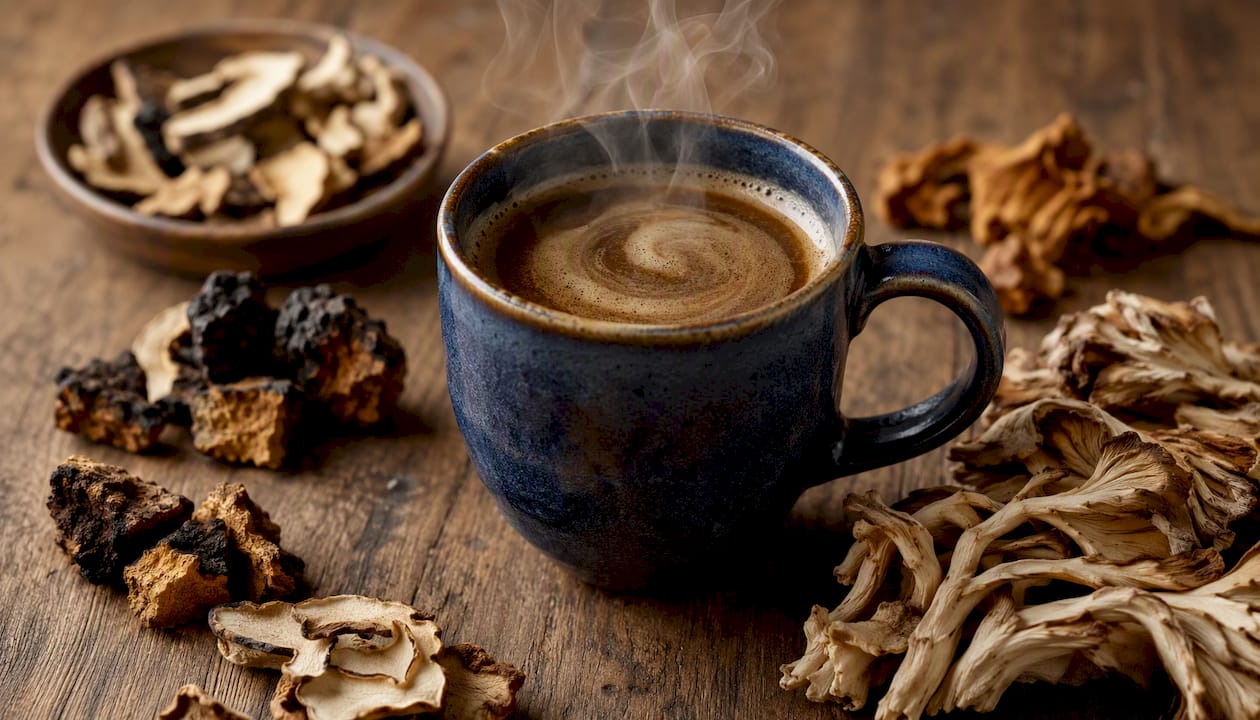
The plausible mechanism is straightforward: if a beverage delivers less caffeine, it should produce a smaller HPA axis response, following the same dose relationship the caffeine-cortisol research already established. Functional mushrooms like reishi and lion’s mane are often discussed for their potential role in supporting a steadier stress response, and some of Emberk’s audience describes feeling more even keeled with mushroom coffee blends than with a traditional cup. But that’s a different claim than saying these ingredients have been shown to lower cortisol in controlled human trials, and the science on adaptogenic mushrooms and cortisol specifically hasn’t caught up to the enthusiasm around them yet.
For a reader trying to reduce their cortisol footprint without giving up their coffee ritual entirely, that lower baseline dose is the most defensible piece of the story.
A lower-caffeine cup is a reasonable, evidence-aligned step toward reducing cortisol impact. It isn’t a cortisol-lowering treatment, and no coffee product, mushroom-infused or otherwise, should be marketed or understood as one.
The honest takeaway: treat a product like this as one lever among several, alongside the timing and dosing habits covered above, rather than a stand-alone fix.
Balancing Alertness and Stress: An Editorial Perspective
The conventional advice on coffee and cortisol tends to collapse into a false binary: either caffeine is a stress-inducing poison you should quit, or the cortisol research is overblown and irrelevant to daily life. Both framings miss what the evidence actually shows, which is a dose-and-timing story, not a moral one. The people who benefit most from paying attention to this aren’t heavy coffee drinkers in general; they’re specifically the ones stacking a second or third dose into the afternoon, or reaching for caffeine right before a stressful meeting, where the amplification effect on cortisol reactivity is best documented. If you’re not doing either of those things, your daily habit probably isn’t the problem. Where product design matters is in giving people a lower-dose option that doesn’t ask them to give up the ritual, ideally one built on real ingredient testing rather than marketing language borrowed from adaptogen trends. If caffeine’s afternoon effects on your stress hormones are something you notice, a smaller, lower-caffeine cup later in the day is a more useful adjustment than cutting coffee entirely.
A Lower-Caffeine Way to Stay Sharp Without the Afternoon Spike
If you’ve read this far and recognized yourself in the “stress-reactive” or “wired by 3 p.m.” category, a lower-caffeine mushroom coffee is built for exactly that situation. Emberk formulates its blends with low to moderate caffeine and six lab-tested functional mushrooms, so you get steady mental clarity without stacking the repeated afternoon doses that tend to produce the strongest cortisol elevations.
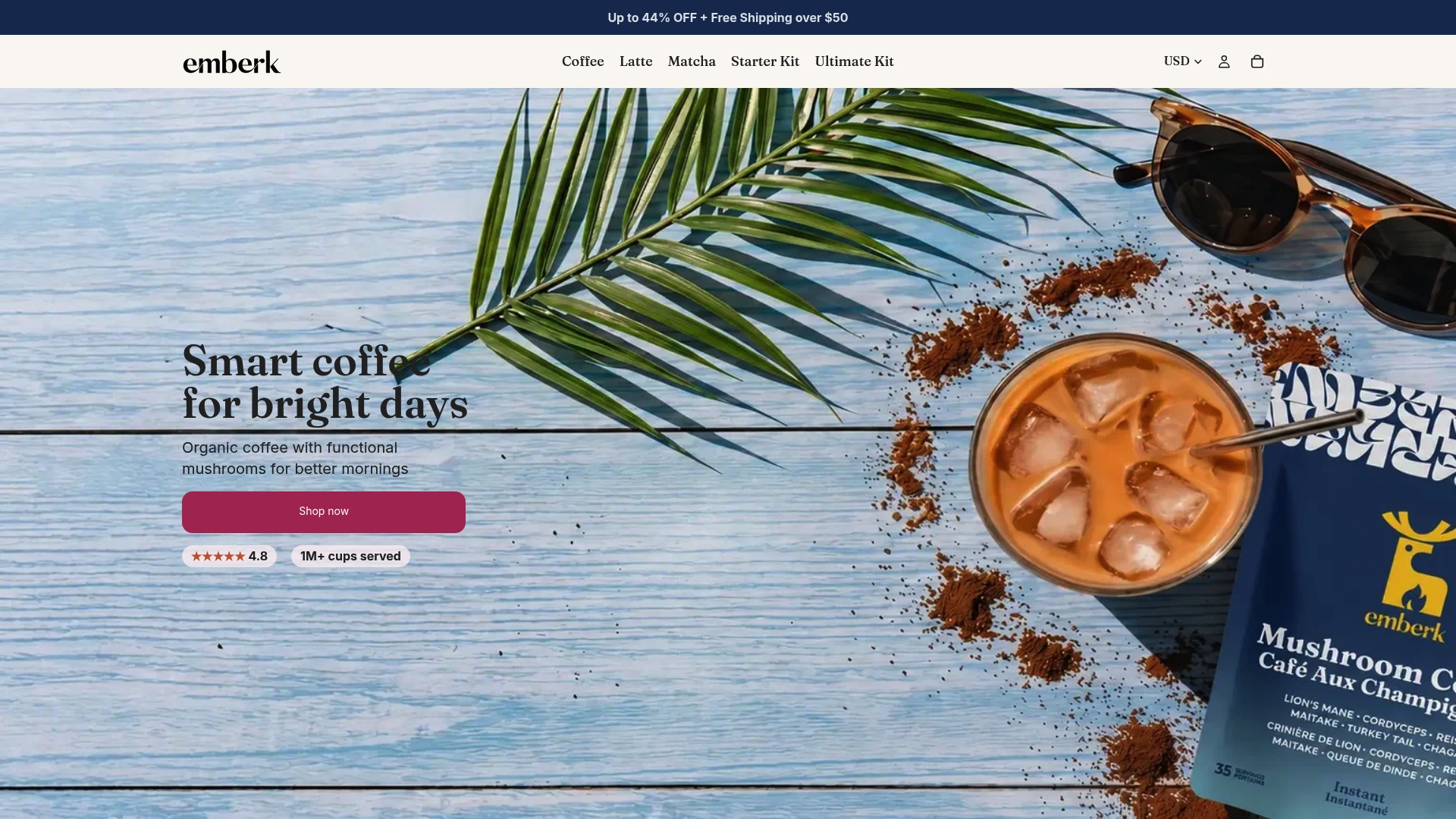
Emberk has served over a million cups to people looking for that steadier, calmer kind of alertness, and the flagship mushroom coffee blend with Lion’s Mane and five adaptogens is the natural starting point if you want to try it. If a creamier, latte-style option fits your routine better, the Emberk mushroom latte offers the same lower-caffeine approach in a different format. Order a bag, or start a subscription, and see whether your afternoons feel any different after a couple of weeks.
Sources
The research behind this article draws on peer-reviewed human trials, lab-based stress studies, and clinical physiology resources rather than general wellness commentary.
- Caffeine Stimulation of Cortisol Secretion Across the Waking Hours in Relation to Caffeine Intake Levels
- Habitual Caffeine Use Is Associated With Heightened Cortisol Reactivity to Lab-Based Stress in Two Samples
- The Moderating Effects of Regular Caffeine Use on Cortisol Reactivity under Explicit Negative-Evaluative Stress
- NCBI bookshelf resource on cortisol physiology and measurement
This article is general information, not a substitute for advice from a qualified doctor. Consult a qualified healthcare professional about your own circumstances before acting on anything here.
FAQ
Will quitting coffee reduce cortisol?
Reducing or quitting coffee can lower the acute cortisol spikes tied to each dose, though your baseline cortisol still follows its normal circadian rhythm regardless of caffeine intake. Since tolerance to caffeine’s cortisol effect is only partial to begin with, quitting mainly removes the additional afternoon elevations that repeated dosing tends to produce.
Can coffee increase your cortisol levels?
Yes, coffee increases cortisol acutely in a dose-dependent way, with the effect strongest in people who don’t drink caffeine regularly and more blunted, but not eliminated, in daily drinkers.
What throws off cortisol levels?
Beyond caffeine, the biggest disruptors are sleep loss, shift work, acute illness or inflammation, certain medications like corticosteroids, and ongoing psychological stress, all of which interact with your natural circadian cortisol rhythm.
What foods make cortisol worse?
Foods and drinks high in sugar or caffeine, including coffee and many energy drinks, can contribute to sharper cortisol spikes, while pairing caffeine with protein or fat tends to blunt some of that swing. A lower-caffeine option, such as a mushroom coffee blend, is one practical way to reduce that dietary contribution without cutting caffeine out completely.
0 comments